

A suit can look great on the hanger and still feel wrong once you put it on. After 50, changes in your shoulders, waist, chest, and posture can make an old suit fit very differently than it once did. That does not mean you need a whole new wardrobe. A few smart fit checks can make a big difference.
This guide shows you how to get the perfect suit fit after 50 without making the suit feel tight or overly loose. You will check the parts that matter most, from the jacket shoulders to the trouser length. You will also see where a tailor can make small changes that improve the fit.
Plan for about 30 minutes to check everything at home. You will need a full-length mirror, your dress shoes, a shirt you would normally wear with the suit, and a measuring tape. The goal is a suit that feels comfortable when you stand, walk, sit, and move your arms.
Put the suit on with the right shirt and shoes before you judge the fit. That gives you a much more useful picture than checking the jacket by itself.
What You Need
At a Glance
- Check the shoulder fit before anything else
- Choose a jacket length that balances your shape
- Set the jacket buttons at the right spot
- Leave room across the chest and stomach
- Shape the waist with small tailor changes
- Get the trousers to sit comfortably
- Finish the suit fit with the right trouser break
Check the shoulder fit before anything else

Put on the jacket and let your arms hang naturally. Look at the seam where the sleeve meets the shoulder. It should sit close to the point where your shoulder ends, with no large bump or dip.
Move both arms forward and back. The jacket should allow normal movement without the shoulder area pulling hard. A shoulder that is too wide can make the whole suit look oversized. A shoulder that is too narrow is much harder for a tailor to fix.
Choose a jacket length that balances your shape
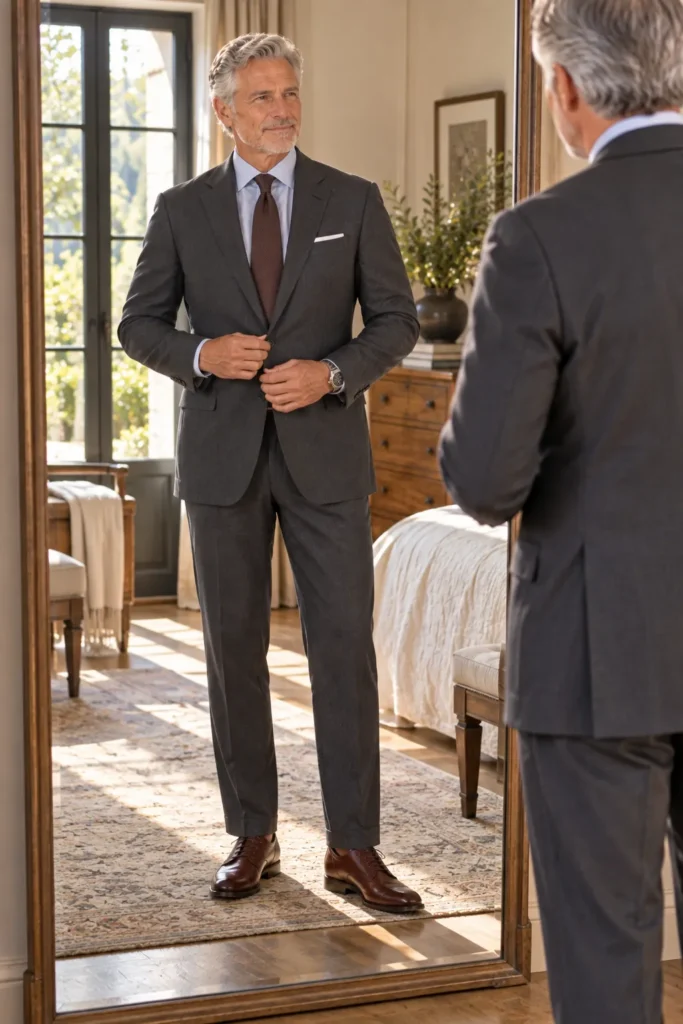
Stand straight in front of a full-length mirror while wearing your normal dress shoes. Let your arms rest at your sides and check where the jacket ends. A good jacket should cover most of your seat without making your legs look unusually short.
Your height and body shape matter here. If you have a fuller middle, avoid a very short jacket because it can draw attention to the waist. If the jacket looks too long, do not assume the tailor can remove a large amount. Small changes are safer.
Set the jacket buttons at the right spot

Button the jacket and stand in your normal posture. The main button should sit around the natural middle of your torso rather than very high or very low. Check the fabric around the button for signs of stress.
A clean fit leaves enough room for the jacket to close without creating an X-shaped pull around the button. You should also be able to place a flat hand between your shirt and the jacket without forcing it. If the button pulls, the jacket may need more room through the stomach or chest.
Leave room across the chest and stomach

Take a slow breath and check the jacket while it is fully buttoned. The fabric should lie flat across your chest and stomach without deep lines pulling from the button. You should have enough room to sit and move without feeling trapped.
Try sitting in a chair for 30 seconds. If the jacket feels tight across your stomach when seated, the fit is too close. A slightly relaxed fit is often more comfortable and still looks sharp, especially if your waist has changed over time.
Check the jacket while standing and sitting. A jacket that looks fine while standing can feel too tight once you sit down.
Shape the waist with small tailor changes

A jacket can have enough room in the chest and stomach and still look too loose around the sides. If you see extra fabric hanging near your waist, ask a tailor to take in the side seams slightly.
Start with a small adjustment rather than asking for a very narrow waist. The goal is a clean line from your chest to your hips. Keep enough room for your shirt underneath and for normal movement. A tailor can remove fabric, but adding it back may not be possible.
Do not ask for a very tight waist just because a slim suit looks sharp in a photo. Your jacket should still close and move comfortably.
Get the trousers to sit comfortably

Pull the trousers into their natural position and fasten the waistband. It should sit securely without digging into your stomach. You should be able to slide a finger between the waistband and your body without forcing it.
Check the rise as well. The fabric should sit comfortably between your waist and upper thighs, with no strong pulling at the front or seat. Walk around the room, sit down, and stand again. If the waistband slides down or feels tight, the trousers need an adjustment before you worry about the leg shape.
Finish the suit fit with the right trouser break
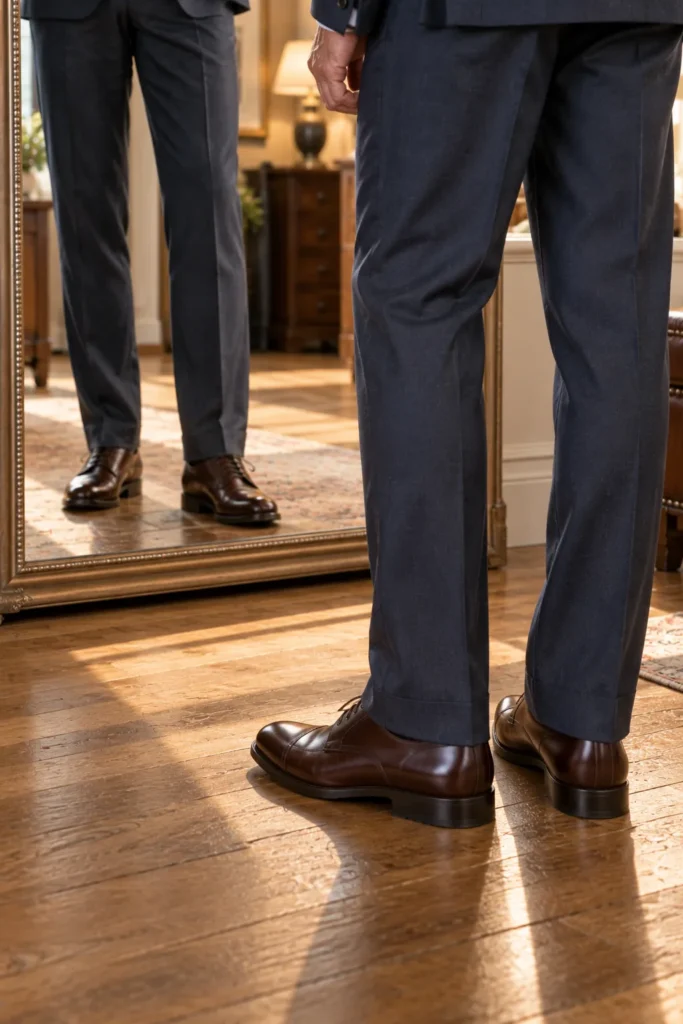
Stand in your dress shoes and look at the trouser hem from the side. The fabric should make a small, clean fold where it meets the shoe. This is called a slight break. Too much fabric creates bunching around the ankle, while a very short hem can make the trousers look disconnected from the shoes.
Walk a few steps and sit down. The hem should stay neat without climbing far above the shoe. If the trousers are too long, have a tailor shorten them rather than rolling or folding the fabric. Your usual dress shoes should be worn during the fitting because different shoes can change how the hem looks.
Troubleshooting Your Suit Fit
| If This Happens | Try This |
|---|---|
| The shoulder seam sits past your shoulder. | Try a smaller jacket or a different shoulder cut. Avoid relying on heavy tailoring here. |
| The jacket pulls around the button. | Look for more room through the chest or stomach before changing the waist. |
| Extra fabric hangs around your waist. | Ask a tailor to take in the side seams a small amount. |
| The trousers feel tight when sitting. | Check the waistband and rise. You may need more room rather than a larger leg size. |
| Trousers bunch heavily over your shoes. | Have the hem shortened to create a cleaner, slight break. |
Common Questions About Suit Fit After 50
Should a suit feel tight to look sharp?
No. A good suit should give you enough room to breathe, sit, and move. A clean shape matters more than a very tight fit.
Can a tailor fix a suit that is too large?
Many loose areas can be adjusted, especially around the waist. Shoulder problems and major length changes are harder, so start with the closest size you can find.
Should I wear my dress shoes during a suit fitting?
Yes. Your shoes affect the trouser length and break. Wear the shoes you expect to use with the suit when checking the hem.
What if my body shape has changed since I bought my old suits?
Focus on comfort and balance instead of forcing your old fit. A little more room through the stomach and a small waist adjustment can make an older suit feel much better.
Quick Suit Fit Reference
What You Need
Suit jacket • Suit trousers • Dress shirt • Dress shoes • Full-length mirror • Measuring tape • Belt • Phone camera or helper
7 Fit Checks
- Check the shoulder fit
- Choose the right jacket length
- Set the jacket buttons correctly
- Leave room across the chest and stomach
- Shape the waist with small tailor changes
- Check the trouser waistband and rise
- Set a clean trouser break
Conclusion
A great suit after 50 should feel comfortable and look clean from every angle.
Check the shoulders first, give your middle enough room, and let a tailor handle the small changes.
Now you know how to get the perfect suit fit after 50 without forcing your body into an old fit.
Save this guide to Pinterest before your next suit fitting, so you can check each part as you go.