

A closet full of clothes can still leave you wondering what to wear. Your favorite shirt may be buried under other clothes, trousers may be hard to find, and jackets may take up more space than they need.
This can make getting dressed each morning feel like a chore.
Organizing a men’s closet over 50 does not mean buying a new wardrobe or spending money on fancy storage tools. The goal is to make the clothes you already own easier to see, reach, and wear.
A few changes can help you find matching pieces faster and keep your closet neat for longer.
I have found that the best place to start is with the clothes you wear most often. Once those pieces have a clear place, the rest of the closet becomes easier to manage.
You can also spot clothes that need repair, items you no longer wear, and gaps in your everyday wardrobe.
This guide covers 10 practical steps, from clearing the closet to planning ready-to-wear outfits. Set aside a few hours, gather some basic supplies, and work through the steps in order.
By the end, your closet should be easier to use and better suited to your daily life.
Time and Difficulty
What You Need
What You Need
Gather these household items before you start organizing.
At a Glance
Your 10-Step Closet Plan
- Empty your closet and check every item
- Remove clothes you no longer wear
- Group clothes by type
- Separate everyday and special occasion clothes
- Choose matching hangers
- Arrange clothes by color
- Fold knitwear to protect its shape
- Use bins and dividers for small items
- Build ready-to-wear outfits
- Keep your closet tidy with a weekly reset
1. Empty Your Closet and Check Every Item

Start with a clear space so you can see what you own. Remove the clothes from your hanging rail, shelves, and drawers. Place them on your bed or a clean table instead of making piles on the floor.
Check each piece for stains, loose buttons, damaged zips, and signs of wear. Keep delicate clothes away from food, drinks, and dusty surfaces. If your closet is large, work on one section at a time so the room does not become too crowded.
Why this helps: You cannot organize clothes well if you cannot see what is already there.
Closet Clearing Checklist
Work on one closet section at a time if you have limited room.
2. Remove Clothes You No Longer Wear

A crowded closet often contains clothes that no longer fit, feel comfortable, or suit your daily life.
Pick up each item and ask yourself if you have worn it in the past 12 months. Also check whether it fits your current body and personal style.
Make three groups: keep, donate, and repair. Put damaged clothes in the repair group only if you plan to fix them.
Place clean items in good condition in the donation bag. Keep special occasion clothing if you still have a real reason to wear it.
Make Three Sorting Piles
Fits well and gets worn
Needs a small fix
Good condition, no longer needed
Donate only clean items in usable condition. Recycle or discard damaged items responsibly.
3. Group Clothes by Type

Once you have chosen the clothes to keep, sort them into clear groups. This makes it faster to find the right item when getting dressed. Put similar clothes together rather than mixing shirts, trousers, and jackets on the same rail.
Use these groups as a starting point:
- Shirts and polo shirts
- Trousers and jeans
- Jackets and blazers
- Knitwear and sweaters
- T-shirts and casual tops
- Shorts and seasonal clothing
Keep each group in one place where possible. If your closet has limited hanging space, fold casual T-shirts and jeans on shelves. Hang blazers and shirts that wrinkle easily.
Give Every Clothing Type a Home
Hang button-down shirts and polos.
Hang or fold by fabric and use.
Hang on sturdy, shaped hangers.
Fold sweaters on a shelf.
Fold and stack in small piles.
Store clean items you rarely use.
4. Separate Everyday Clothes From Special Occasion Pieces

Your everyday clothes should be the easiest items to reach. Keep polo shirts, casual shirts, chinos, jeans, and comfortable shoes in the main part of your closet.
Move suits, formal shirts, and event clothing to a separate section so they do not crowd your daily choices.
If your closet has one hanging rail, divide it into two sections with a small gap between them. Use the left side for everyday wear and the right side for formal pieces. You can also use shelf labels to mark each area.
Split Your Closet Into Two Zones
Everyday Wear
Polo shirts
Casual shirts
Jeans and chinos
Light jackets
Special Occasions
Suits and blazers
Dress shirts
Formal trousers
Ties and accessories
Keep the clothes you wear most often at eye level for quick access.
5. Choose Matching Hangers for a Neat Look

Different hanger shapes can make a closet look crowded, even when it holds a reasonable number of clothes. Matching hangers create a more even line and help you use the hanging space well.
You do not need to replace every hanger at once. Start with the main rail and add more as needed.
Choose slim hangers for shirts, sturdy wooden or shaped hangers for blazers, and clip hangers for trousers. Avoid forcing thick jackets onto narrow hangers because they may lose their shape.
Leave a little space between garments so you can remove one without pulling several others off the rail.
Hanger Guide for Men’s Clothes
For polo shirts, button-down shirts, and light tops.
For blazers, suit jackets, and heavier coats.
For dress trousers that need to stay neat.
6. Arrange Shirts, Trousers, and Jackets by Color

Once your clothes are grouped by type, sort each group by color. This helps you find a navy shirt, white polo, or beige pair of chinos without checking every item.
It also makes it easier to see which colors you own in large numbers.
Start with light shades, move through blues and earth tones, and finish with darker colors.
You can change the order to suit your wardrobe. Keep similar items together, so your blue shirts stay in one group rather than being spread across the closet.
Try This Color Order
Use the same order for shirts, trousers, and other clothing groups.
White
Gray
Light blue
Beige
Brown
Navy
Green
Black
7. Fold Knitwear to Protect Its Shape
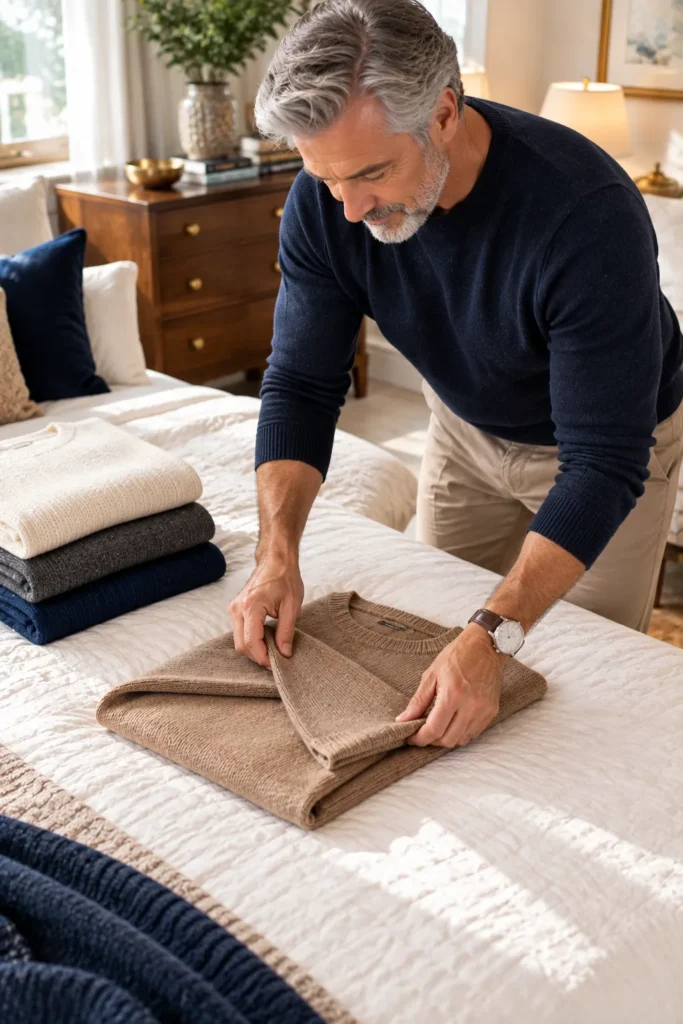
Sweaters and other knitwear need a little care in storage. Heavy sweaters can stretch at the shoulders if they hang for long periods. Folding them also frees up rail space for shirts and jackets that need to hang.
Lay each sweater on a clean, flat surface. Fold the sleeves inward, bring the sides toward the middle, and fold the body into a neat shape that fits your shelf.
Stack heavier sweaters at the bottom and lighter ones on top. Keep the stacks low enough to remove a sweater without making the rest fall over.
Fold a Sweater in Four Moves
Leave a little room above each stack. Tight piles are harder to use and can cause creases.
8. Use Bins and Dividers for Small Items
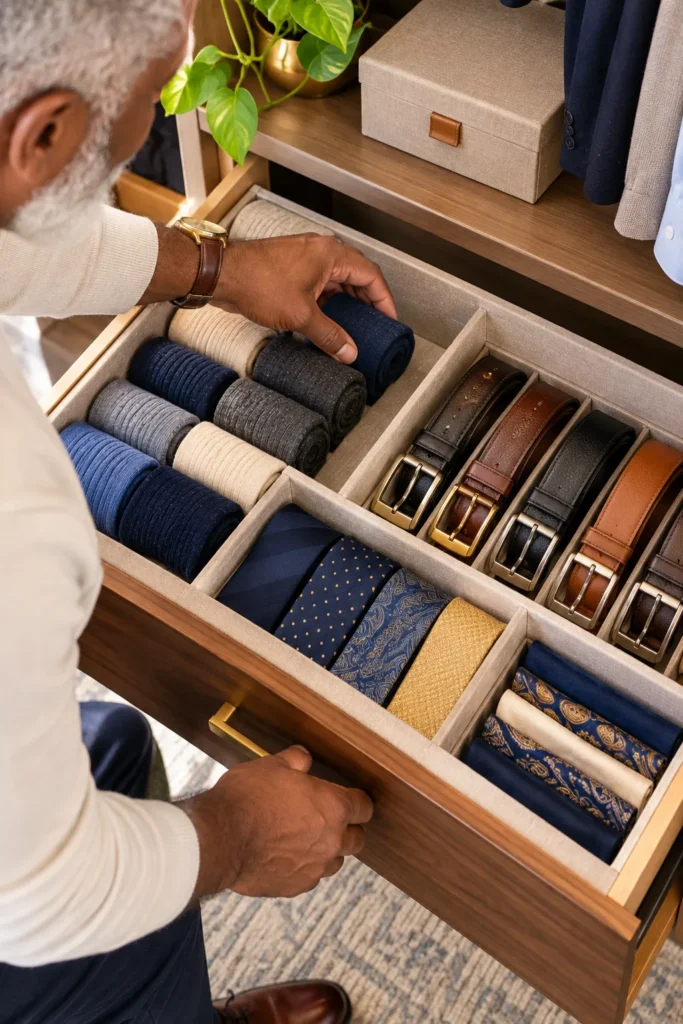
Socks, belts, ties, and pocket squares can make drawers messy because they are small and easy to mix together.
Give each group its own space. Drawer dividers work well, but clean shoe boxes or small containers can do the same job without extra cost.
Roll or fold socks in pairs, place belts in a row, and keep ties together in one section. If you use storage bins on higher shelves, label the front so you can see what is inside without pulling every box down.
Avoid filling bins so tightly that you have to dig through them.
Small-Item Storage Plan
Use one drawer section for everyday pairs.
Place in a small box or hang on hooks.
Keep together in a divided drawer.
Use labeled bins for items you rarely need.
9. Build Ready-to-Wear Outfit Combinations

A tidy closet saves more time if you know which pieces work well together. Choose a few outfits for your usual activities, such as running errands, meeting friends, going to work, or attending a family event.
You do not need a large wardrobe to create useful combinations.
Start with one shirt or polo, choose trousers that match, and add shoes that suit the setting. Try each outfit in front of a mirror to check the fit and color balance.
Keep a note on your phone or group the pieces close together if your closet has enough space.
Three Outfit Combinations to Try
Navy polo + beige chinos
Finish with brown loafers or clean casual shoes.
Light blue shirt + dark jeans
Add a brown belt and leather shoes or boots.
White shirt + navy blazer + gray trousers
Wear dark dress shoes for a more formal finish.
10. Keep Your Closet Tidy With a Weekly Reset

A closet can become messy again if clothes do not return to their proper places. Set aside 10 minutes once a week to put things back in order.
Pick a day that fits your routine, such as Sunday evening, and use the same short checklist each time.
Return clean clothes to their groups, move dirty items to the laundry basket, and fold any piles that have become untidy.
Check that your most-used shirts and trousers are easy to reach. You can also set out the next day’s outfit before bed to save time in the morning.
Your 10-Minute Weekly Reset
Set a timer and work through this list.
Troubleshooting Your Closet
Even after sorting your clothes, a few problems may remain. Use this table to fix the most common ones without starting the whole job again.
Closet Problems and Fixes
| Problem | What to do |
|---|---|
| Clothes are packed too tightly. | Remove unused items and leave room to move hangers. |
| Sweaters stretch on hangers. | Fold heavy knitwear and store it flat. |
| Socks and belts get mixed up. | Use small boxes or drawer dividers. |
| You cannot find a matching outfit. | Group clothes by type and plan a few outfit combinations. |
Common Questions About Organizing a Men’s Closet
How often should a man over 50 organize his closet?
Do a short reset every week and review your clothes at the start of each season. This helps you remove items you no longer need and keep everyday clothes within reach.
How many clothes should a man over 50 own?
There is no set number. Keep enough clothes for your daily life, work, weather, hobbies, and special events. Focus on items that fit well and that you enjoy wearing.
Should I organize clothes by color or type?
Group clothes by type first, then arrange each group by color. This makes it easier to find a shirt or pair of trousers in the shade you want.
Do I need expensive closet organizers?
No. Shoe boxes, spare hangers, and clean storage boxes can handle many storage needs. Buy extra organizers only if you have a problem that your current setup cannot solve.
Quick Reference Card
Men’s Closet Quick Reference
Save this list for your next closet clean-up.
Gather
Hangers · Storage boxes · Donation bag · Labels · Drawer dividers · Clean sorting space
Follow These Steps
- Empty and inspect your closet.
- Remove clothes you no longer wear.
- Group clothes by type.
- Separate everyday and formal wear.
- Choose suitable hangers.
- Sort each group by color.
- Fold knitwear flat.
- Organize small items.
- Plan ready-to-wear outfits.
- Reset the closet every week.
Conclusion
A well-organized closet makes it easier to find clothes that fit your style and daily needs. Start with the items you wear most, give each group a clear place, and keep the setup easy to maintain.
You do not need a new wardrobe to get dressed with less stress. A few good habits can make your clothes work better for you.
Save this guide on Pinterest so you can follow the steps during your next closet clean-up.