

Finding clothes that fit can feel frustrating after 50. Your old favorite shirt may pull across your stomach, your trousers may feel tight at the waist, or a jacket that once looked great may now sit awkwardly on your shoulders.
You might even buy your usual size and find that it feels completely different from the last time you tried it.
If nothing fits right anymore after 50, the answer may be in your measurements, the cut of your clothes, the fabric, or the way a garment has been washed.
Body shape can change over time, but age alone does not explain every fit problem. Clothing sizes also vary between brands, so the number on a label is not always a good guide.
This guide will help you find out what is going wrong and make better choices for your wardrobe.
You will check your measurements, spot common fit problems, choose clothes that give you room to move, and learn which small changes a tailor can make. You do not need to replace your entire wardrobe or spend a lot of money.
Set aside about 30–45 minutes and gather a few items from your closet. By the end, you will have a clearer idea of which clothes to keep, which ones to adjust, and what to look for the next time you shop.
Time and Difficulty Strip
Allow extra time if you plan to try on several outfits. No sewing or special tools are needed.
What You Need
What You Need
Gather these items before checking your wardrobe.
For measuring
✓ Flexible measuring tape
✓ Notebook or phone
✓ Pen for recording measurements
For checking fit
✓ Full-length mirror
✓ One shirt that fits well
✓ A pair of trousers and a jacket
✓ Your usual everyday shoes
At a Glance
At a Glance
Follow these checks in order to find the fit problems in your closet.
Step 1: Check How Your Body Measurements Have Changed
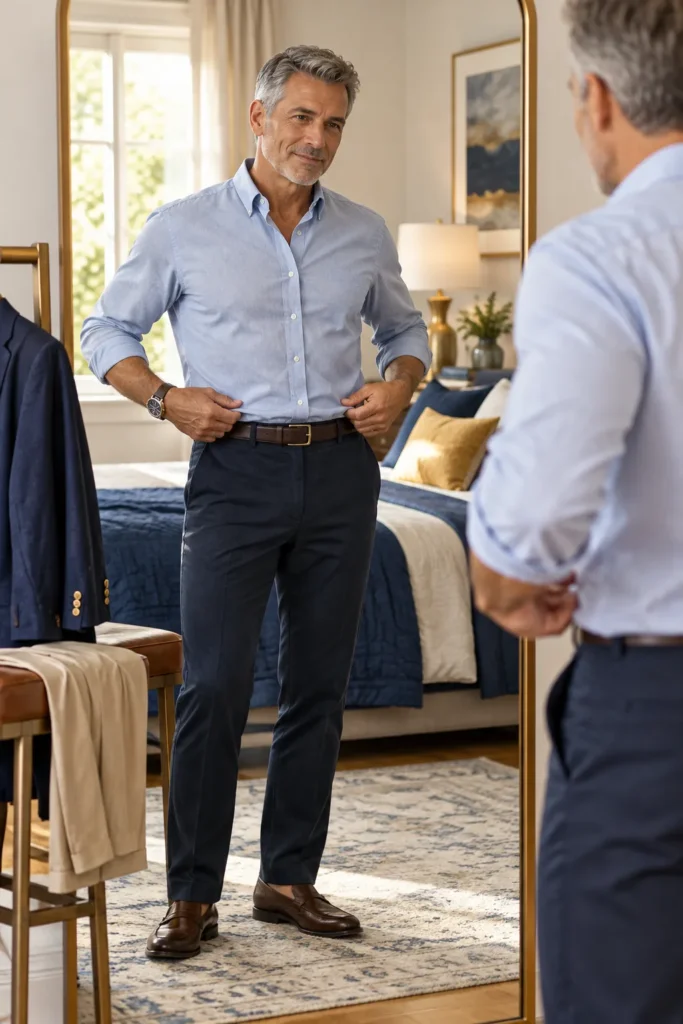
Pull out three garments you used to wear often: a shirt, a pair of trousers, and a jacket. Try each one on in front of a full-length mirror.
Look for pulling buttons, tight armholes, loose waistbands, or fabric hanging in the wrong places. Write down what feels different rather than judging your body by the size printed on the label.
Body shape can change over time, even if your weight stays about the same. Your old clothes may also have shrunk or stretched. This check helps you spot the problem before spending money on replacements.
Pro Tip: Keep a fit record
Write down which areas feel tight or loose. A short note such as “shirt pulls at stomach” gives you a clear check to use when shopping or visiting a tailor.
Step 2: Measure Your Waist Instead of Trusting Your Old Size
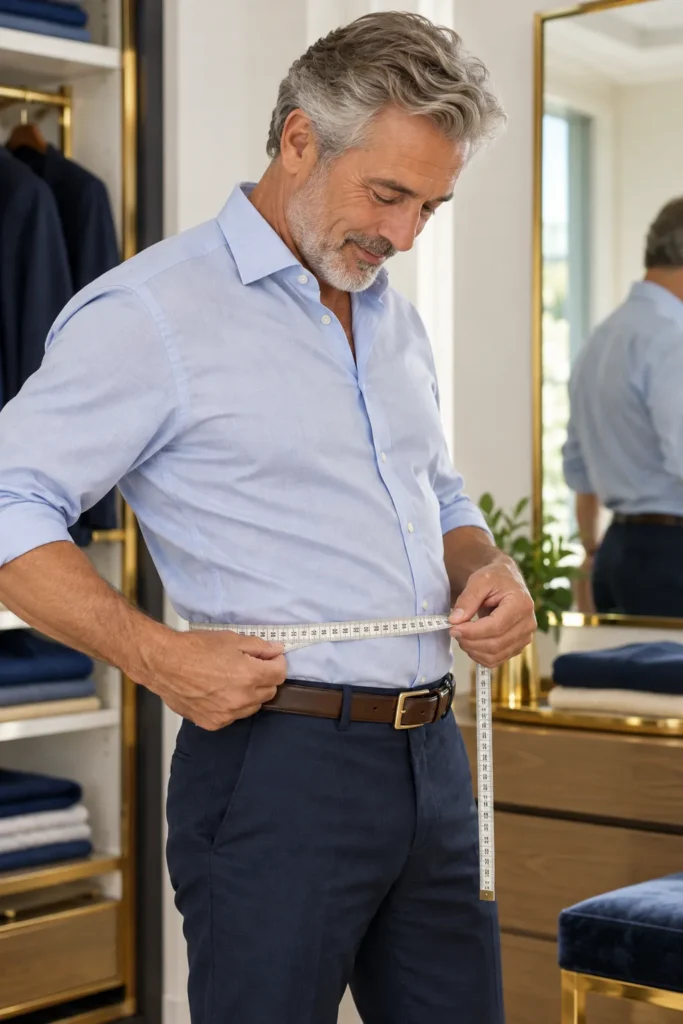
A trouser size that worked five years ago may no longer give you the right fit. Stand in a relaxed position and wrap a flexible tape around your natural waist, which is usually near the middle of your torso, above the hip bones.
Keep the tape level all the way around and leave enough room to breathe normally. Record the number in your phone or notebook.
For trousers, the best waistband position also matters. Some cuts sit near the waist, while others sit lower on the hips. Measure where you prefer the waistband to rest, too, if you plan to buy a different style.
Heads Up: Do not pull the tape tight
A tight tape gives you a smaller number than your body needs. Keep it snug against your clothing or skin without pressing into it, and measure again if the tape slips or tilts.
Step 3: Check Whether Your Shoulders Fit Correctly
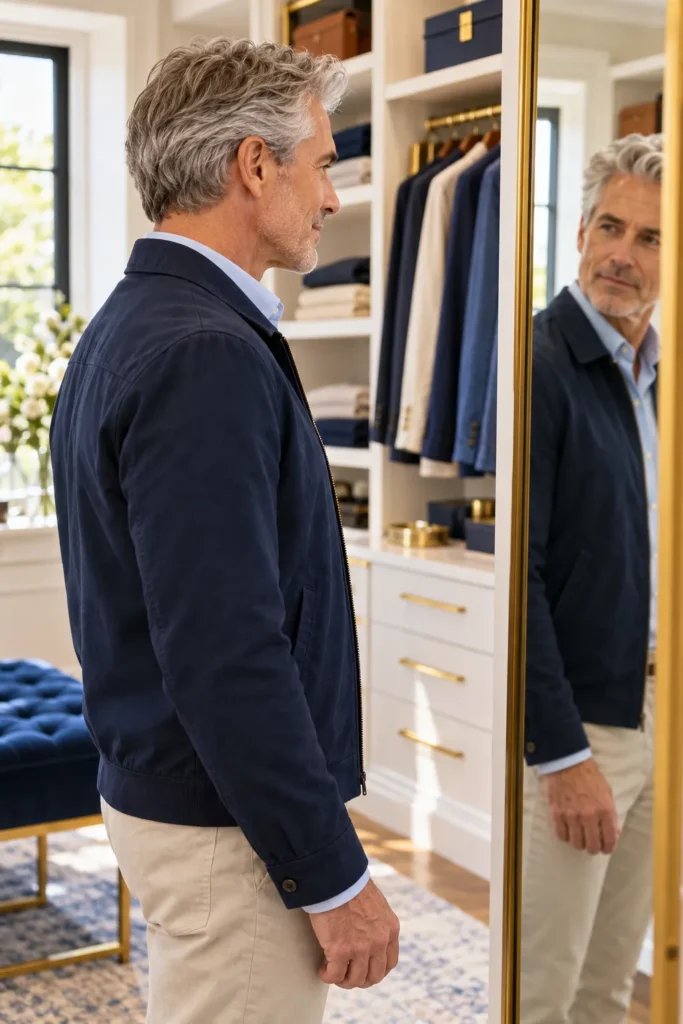
Shoulder fit can make a shirt or jacket look wrong even when the chest and waist feel fine. Put on a shirt that buttons fully and let your arms rest at your sides. Check where the shoulder seam sits.
On most standard shirts, it should fall close to the point where your shoulder begins to slope into your upper arm.
If the seam hangs far down your arm, the shirt may be too large or have a relaxed cut. If it sits too far inward, the shirt may pull across your back or restrict arm movement.
Raise your arms and reach forward to check comfort. For a jacket, shoulder fit is harder to alter, so check this area before buying.
Step 4: Choose Trousers That Fit Your Current Waist and Hips
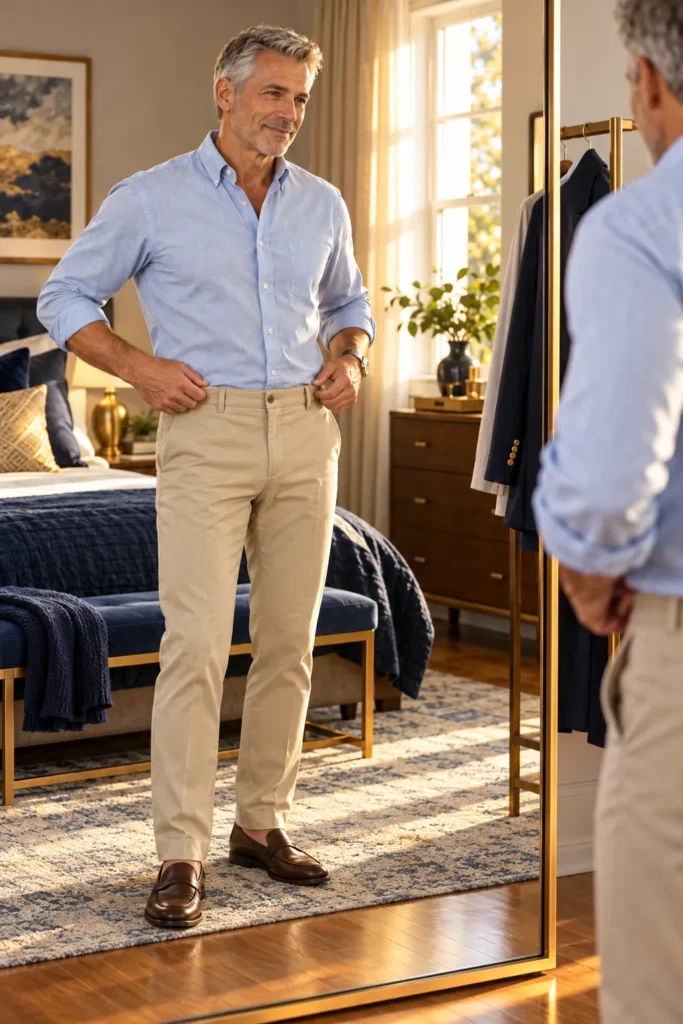
Trousers should sit comfortably at your preferred waist position without digging into your stomach or sliding down as you walk. Try on your usual pair and sit in a chair for 30 seconds.
If the waistband cuts into you, the rise may be too short or the waist may be too tight. If the fabric pulls across your hips or thighs, look for a cut with more room in those areas.
Straight-leg trousers are a useful starting point for many men over 50. They give your legs room without adding too much fabric. Check the fit with your usual belt and shoes before deciding to keep a pair.
Pro Tip: Test the fit while sitting
A pair of trousers can feel fine while standing but become uncomfortable when you sit. Test both positions before removing the tags from a new purchase.
Step 5: Find Shirts That Fit Your Chest and Stomach

A shirt that fits your chest may feel too tight around your stomach. A larger size can fix that problem, but it may leave the shoulders and sleeves too loose. Try a regular-fit shirt or a cut with extra room around the middle.
Button it fully and check that the fabric lies flat without pulling into an X shape between the buttons.
For a casual shirt, leave enough room to reach forward without feeling a stretch across your back. If you tuck your shirt into trousers, check that it stays in place when you sit and stand.
A shirt should give you room to move without hanging like a loose box.
Step 6: Check Your Sleeve and Trouser Lengths
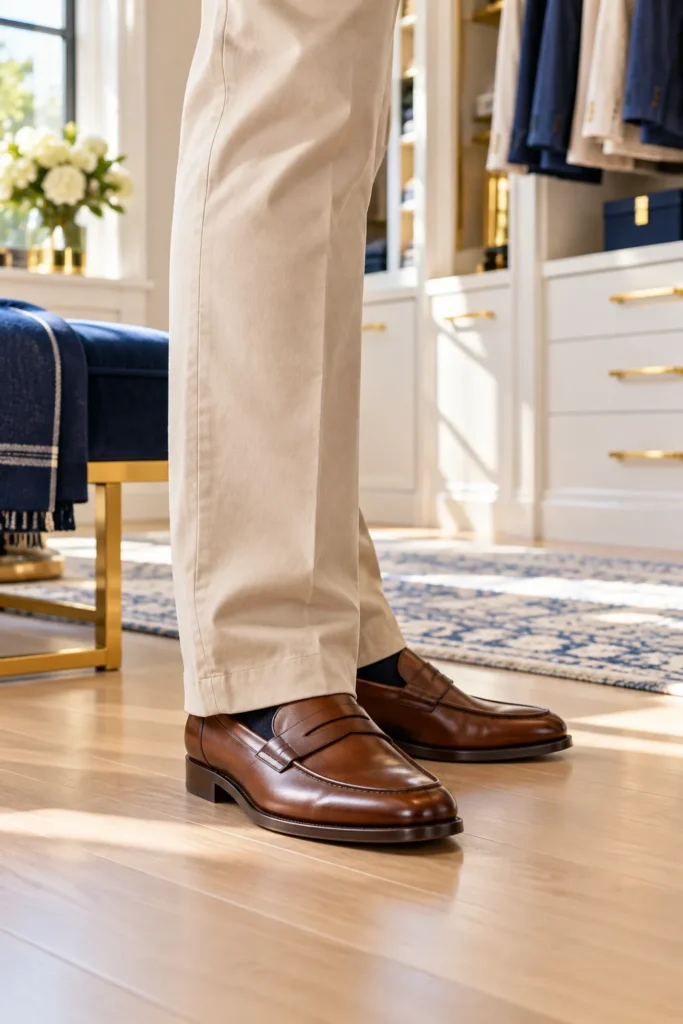
Sleeves and trouser legs can change the look of an outfit even when everything else fits well. Stand naturally in front of a mirror while wearing your usual shoes.
For a long-sleeved casual shirt, the cuff should usually reach your wrist bone. For a jacket, the sleeve often ends a little higher so a small part of your shirt cuff can show.
Your trousers should fall neatly over your shoes without forming a large pile of fabric at the ankles. The exact length depends on the cut and the look you prefer.
If the rest of the garment fits well, a tailor can often shorten sleeves or trouser legs without replacing the whole item.
Step 7: Choose Fabrics That Move With Your Body
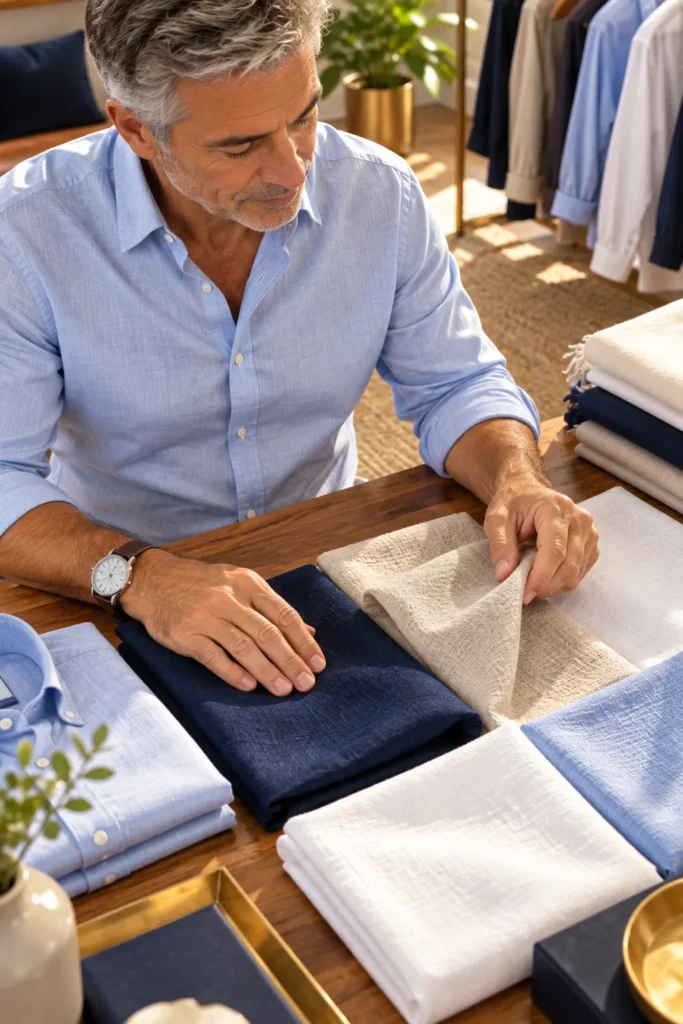
Stiff fabric can make a shirt or pair of trousers feel tight, even when the size is right. Check the fabric label before buying anything new.
Cotton shirts with a little stretch, soft cotton chinos, and wool-blend trousers can offer comfort without looking baggy.
Run your hand over the fabric and gently bend your arm or knee while wearing the garment. Notice whether the material feels stiff or pulls against your body.
For warmer days, breathable cotton and linen blends can help you stay comfortable. For cooler weather, try soft knitwear that allows your arms and shoulders to move freely.
Step 8: Stop Buying Clothes Based on the Size Label

A medium in one brand may fit like a large in another. This is common, so do not assume your usual size will work in every shop.
Take your current measurements with you and compare them with the brand’s size chart before ordering online.
If you shop in person, try two nearby sizes when possible. Check the shoulders, chest, waist, and length rather than choosing the smaller size because you prefer the number on its label.
The right garment should feel comfortable when you sit, walk, and reach forward. Your comfort matters more than the size printed inside.
Pro Tip: Compare garment measurements
When shopping online, compare the listed chest or waist measurements with a garment you already like. Check how the seller measures each item, since some charts show body measurements and others show garment measurements.
Step 9: Check Whether Your Clothes Have Shrunk in the Wash
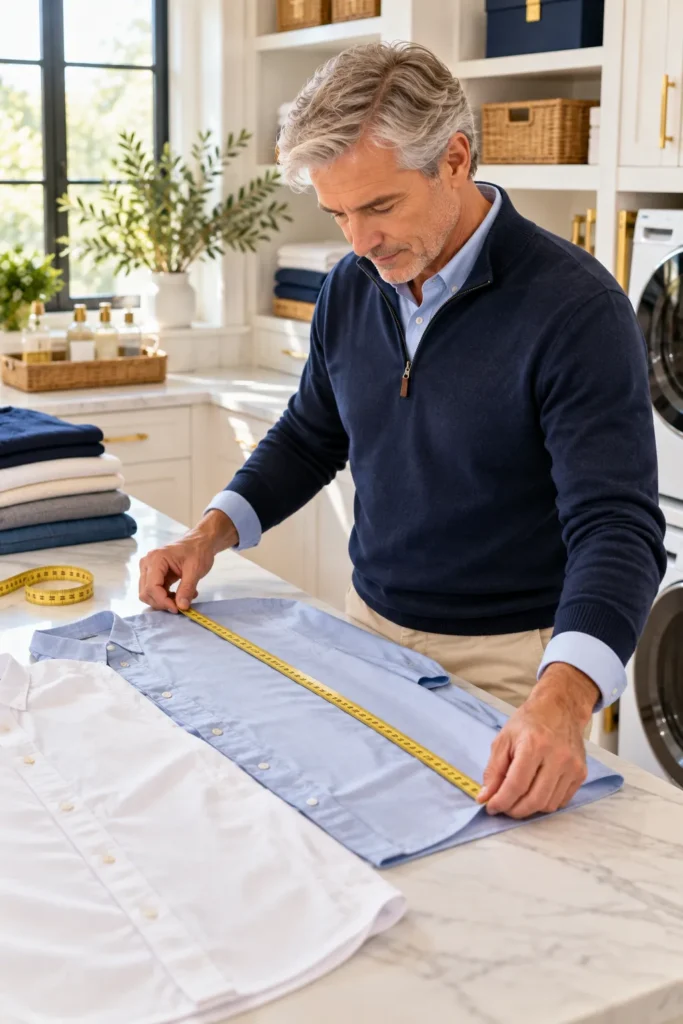
A shirt that used to fit well may become shorter or tighter after several washes. Cotton and wool can shrink if they are washed or dried at temperatures that are too high.
Check the care label on the garment before washing it again.
Compare the item with a similar piece that still fits. Look at the body length, sleeve length, and width across the chest.
If the garment has become smaller, follow its care instructions and use a lower washing temperature if the label allows it.
Avoid putting heat-sensitive clothing in a hot dryer. Once fabric has shrunk, it may not return to its original size.
Heads Up: Heat can shrink fabric
Do not assume every garment can go in a hot dryer. Wool, cotton, and blended fabrics can react differently to heat, so follow the care label rather than using the same wash routine for everything.
Step 10: Use a Tailor to Fix Small Fit Problems
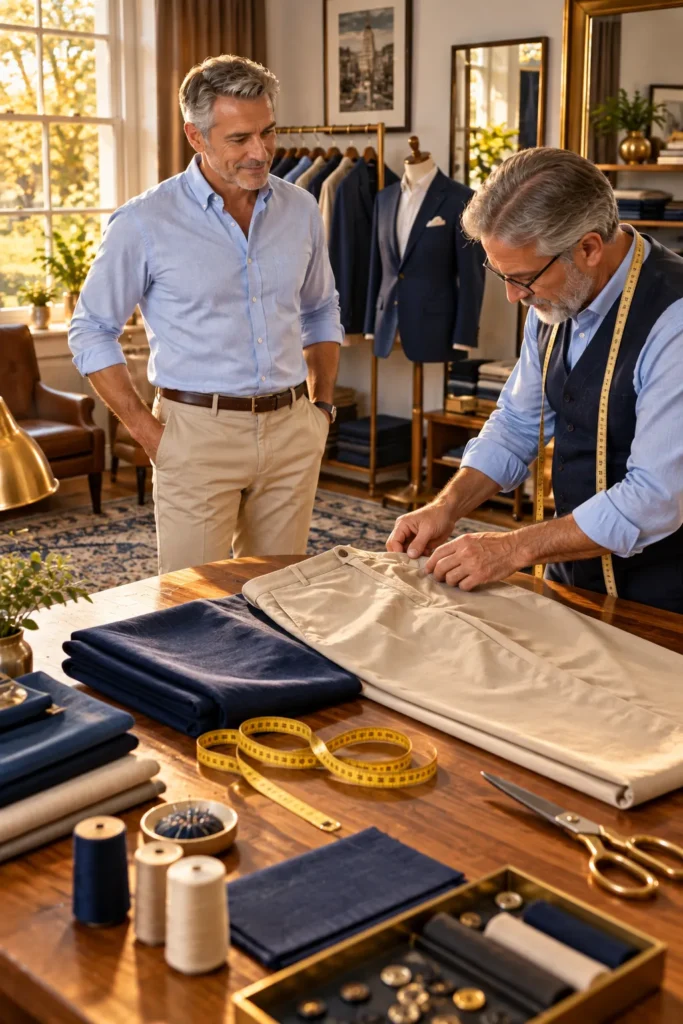
A good fit does not always mean buying new clothes. A shirt that fits well across your shoulders may need a small adjustment at the waist. Trousers may need shorter hems, or a jacket sleeve may be too long.
Take the garment to a local tailor and explain what feels uncomfortable before asking for any changes.
Bring the shoes and shirt you usually wear with the item. This helps the tailor check the length and fit with your full outfit. Ask for the price before approving the work.
Changes to hems, sleeves, and loose waistbands are often easier than fixing shoulders that are too narrow or a jacket that is too small across the chest.
Step 11: Build Outfits Around Your Current Body Shape
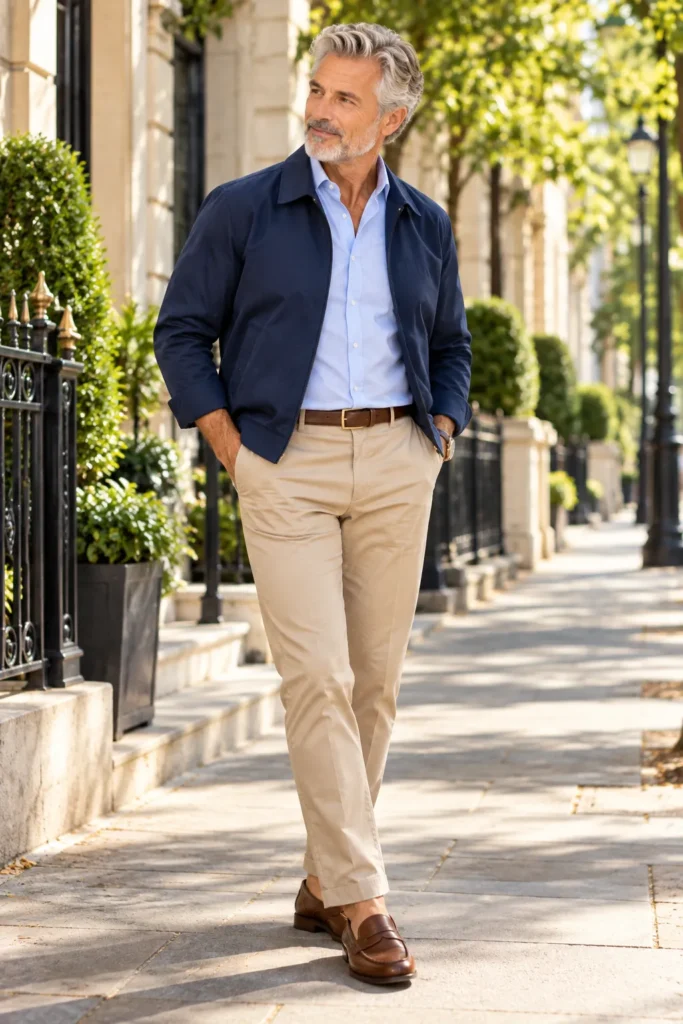
Your clothes should fit the body you have today, rather than the shape you had years ago. Pick one well-fitting item as the starting point for an outfit.
For example, pair straight-leg navy chinos with a light blue shirt and a casual jacket that closes without pulling.
Keep the fit balanced. If your shirt is loose around the stomach, avoid adding trousers that are also very baggy. If you prefer a relaxed fit, choose clothes with clean lines and enough room to move.
Try the full outfit in front of a mirror, then sit and walk in it. Comfort and a neat shape should go together.
Pro Tip: Start with three reliable colors
Navy, beige, and white are useful starting points for men’s outfits over 50. They work well together and make it easier to pair your best-fitting basics without buying a whole new wardrobe.
Step 12: Replace Uncomfortable Clothes With Better-Fitting Basics
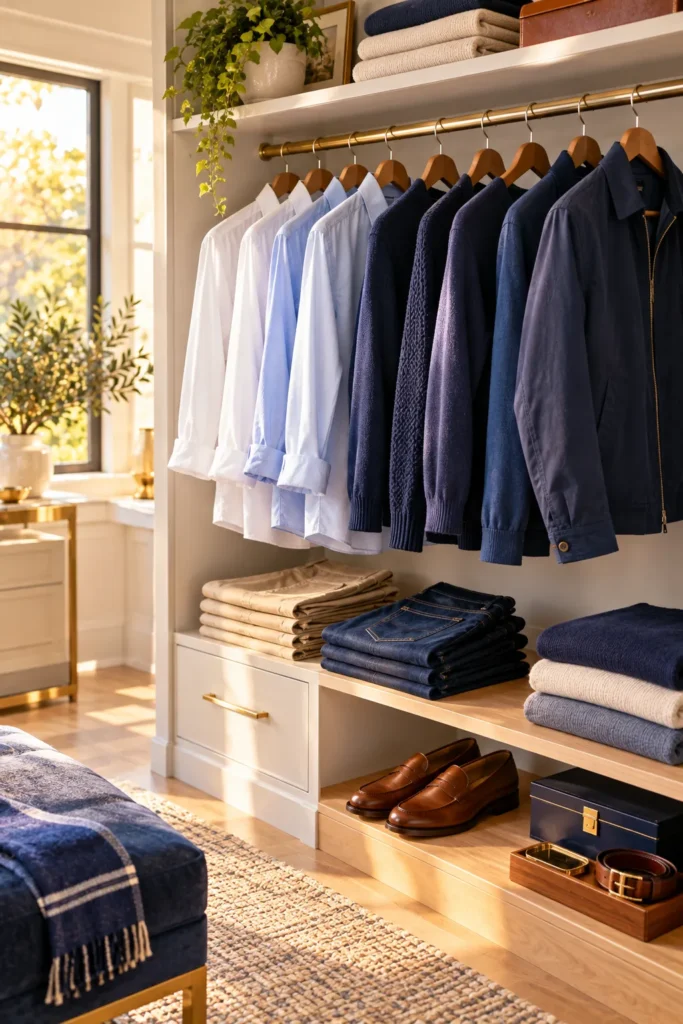
Once you have checked your wardrobe, make a short list of the items that truly need replacing. Start with the clothes you wear most often, such as everyday shirts, chinos, jeans, and a light jacket.
Look for pieces that fit your shoulders, chest, waist, and legs without pulling or sagging.
You do not need to replace everything at once. Buy one item, try it with clothes you already own, and check how it feels during a normal day. Keep the receipt and leave the tags attached until you have tested the fit indoors.
This approach helps you avoid spending money on another garment that stays unused in your closet.
Troubleshooting Table
A few small fit problems can make an otherwise good outfit feel wrong. Use this table to find the likely cause and decide what to try next.
Common Mistakes to Avoid
4 Fit Mistakes That Waste Money
1. Keeping clothes that almost fit
If you cannot sit, bend, or reach comfortably, the garment may need an adjustment or a different size.
2. Buying the same size in every brand
Sizes vary between makers. Check the fit and size chart for each brand.
3. Choosing oversized clothes to hide your stomach
Very loose shirts can bunch at the waist and shoulders. Look for a cut with enough room in the middle instead.
4. Replacing clothes before checking them
A loose waistband or long hem may be fixable by a tailor. Check the cost of alterations before buying new clothes.
Frequently Asked Questions
Frequently Asked Questions
1. Why do my clothes fit differently after 50?
Changes in body shape, weight, posture, and muscle mass can affect how clothes sit. Washing, fabric wear, and differences between brands can also change the fit.
2. Should men over 50 wear loose or slim-fit clothes?
Choose a fit that allows you to move freely without excess fabric. Regular or straight cuts are useful starting points, but your body shape and comfort should guide the choice.
3. Is it worth getting clothes altered?
Yes, if the garment fits well in the main areas and needs a small change to the hem, sleeve, or waist. Major changes to shoulders or chest areas may cost more and be harder to make.
4. How often should I measure myself for clothes?
Check your measurements before buying new clothes, especially if your current garments feel different. Repeat the check after a noticeable change in weight or body shape.
5. What clothes are most useful for men over 50?
Start with well-fitting shirts, straight-leg chinos, comfortable jeans, a casual jacket, and a few plain knit tops. Choose colors that work together so you can make several outfits from a small number of items.
6. What if my clothes suddenly feel much tighter?
Check for shrinkage and compare your current measurements with older ones. If the change in your body size is sudden or unexplained, speak with a healthcare professional rather than assuming it is a normal part of aging.
Quick Reference Card for Men’s Clothing Fit After 50
Save this checklist to use the next time you clean out your closet or shop for new clothes.
MEN’S STYLE GUIDE
The Clothing Fit Checklist After 50
12 checks for clothes that feel comfortable and look neat.
What You Need
- Flexible measuring tape
- Full-length mirror
- Notebook or phone
- Shirt, trousers, and jacket to check
- Your usual everyday shoes
Your 12-Point Fit Check
- Check your current body measurements.
- Measure your waist correctly.
- Check your shoulder seams.
- Test trouser fit at the waist and hips.
- Check shirt fit across the chest and stomach.
- Check sleeve and trouser lengths.
- Choose comfortable fabrics.
- Compare fit instead of trusting size labels.
- Check for shrinkage after washing.
- Ask a tailor about small changes.
- Build outfits around your current body shape.
- Replace uncomfortable basics as needed.
Final fit test: Stand, sit, walk, and reach forward. Your clothes should feel comfortable in every position.
Conclusion
If nothing fits right anymore after 50, you do not need to replace your entire wardrobe. Start by checking your measurements, testing your current clothes, and fixing the fit problems you find.
A few well-chosen basics and small changes from a tailor can make getting dressed much easier. Focus on comfort, clean lines, and clothes that fit your body today.
Save this guide on Pinterest so you can use the checklist the next time you update your wardrobe.