

A good pair of shoes can make an outfit look neat and well put together. The wrong pair can spoil the look, even if your shirt, trousers, and jacket fit well. Many men over 50 make small shoe mistakes without noticing them.
Worn heels, poor fit, clashing colors, and shoes that do not suit the occasion are common examples.
The good news is that you do not need to buy a whole new shoe collection. You can start by checking the pairs you already own.
A few small changes can help you dress better, feel more comfortable, and get more use from your clothes.
This guide will show you how to spot nine common shoe mistakes and fix them step by step. You will learn how to check shoe fit, match colors, choose the right socks, and care for different shoe materials.
The aim is to help you build outfits that look neat without making your style feel forced.
Set aside about 15–20 minutes to review your shoes. You can complete the first checks at home with a mirror and a few pairs of trousers.
By the end, you will have a clear idea of which shoes work well, which need care, and which may be worth replacing.
Time and Difficulty
What You Need
Gather These Items
Use what you already have at home. You do not need to buy anything before starting.
At a Glance
Your 9-Point Shoe Checklist
- Check that your shoes fit your feet properly.
- Stop wearing worn-out shoes with good outfits.
- Match your shoe color with your outfit.
- Choose socks that work with your shoes and trousers.
- Avoid shoes that look too bulky for your clothes.
- Wear the right shoes for the occasion.
- Stop wearing the same shoes with every outfit.
- Keep your shoes clean and well maintained.
- Check your shoe style against your current wardrobe.
Work through the list in order. You can fix many shoe problems without buying anything new.
1. Check That Your Shoes Fit Your Feet Properly
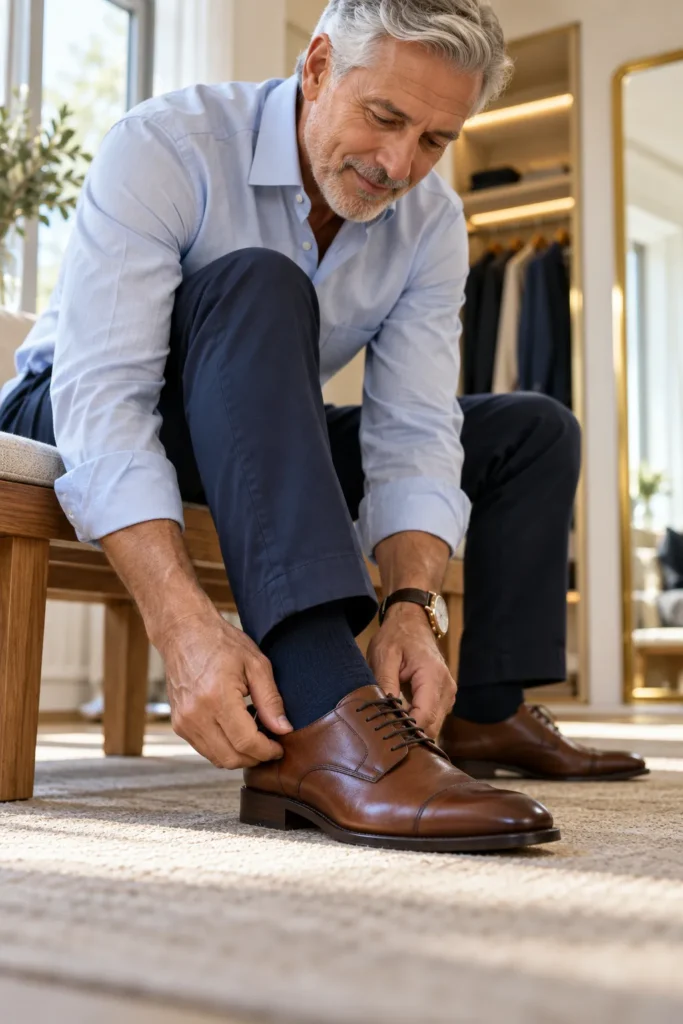
A shoe may look great on the shelf but feel wrong after an hour of walking. Tight toes, a slipping heel, or pressure across the sides can make even a good outfit uncomfortable.
Feet can also change in size and width with age, so do not rely on the shoe size you wore years ago.
Check each pair while wearing your usual socks. Leave about half an inch (1.3 cm) of space in front of your longest toe as a starting guide, then walk around for 2–3 minutes.
Your toes should move freely, and your heel should stay in place without painful rubbing.
Look for pinched toes, red marks, numbness, or pain. Do not count on tight shoes stretching enough to fix these problems. If a shoe hurts, try a different size or width.
2. Stop Wearing Worn-Out Shoes With Good Outfits
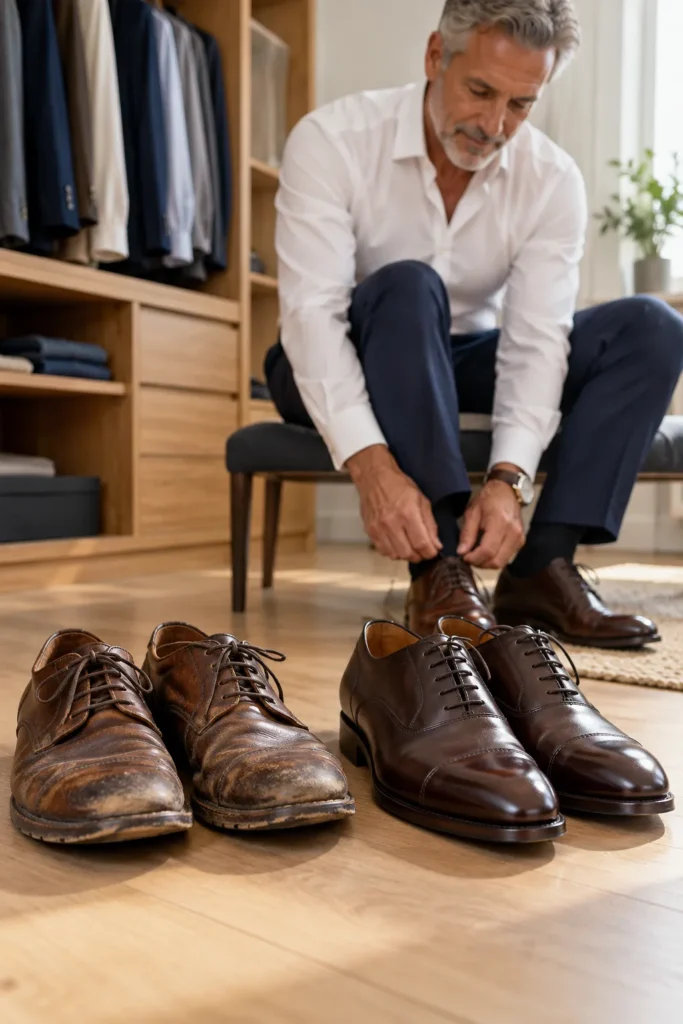
A clean shirt and well-fitted trousers cannot hide shoes with damaged heels, dirty edges, or badly worn soles. These small details can make your whole outfit look less neat.
Put your shoes under good light and check the heel, sole, stitching, and upper material.
Look for loose soles, deep cracks, uneven wear, and areas where the material is peeling. Wipe away surface dirt with a soft cloth suited to the shoe material.
Leather may need shoe cream or polish, while suede needs a suitable brush. Replace shoes when the sole is badly worn or the shoe no longer supports your foot well.
Do not ignore smooth, worn soles or loose heels. They can make you slip or walk unevenly. A shoe repair shop may be able to fix the damage, but badly worn shoes may need replacing.
3. Match Your Shoe Color With Your Outfit

You do not need a different shoe color for every outfit. A few useful colors can work with most of the clothes in your wardrobe. The trick is to check the full outfit in a mirror rather than choosing shoes on their own.
Use these pairings as a starting point:
- Navy trousers: Brown leather shoes, white sneakers, or black dress shoes for formal settings.
- Beige chinos: Brown loafers, tan suede shoes, or clean white sneakers.
- Black trousers: Black dress shoes for formal outfits or simple dark sneakers for casual looks.
- Blue jeans: Brown boots, white sneakers, or dark loafers.
Brown shoes come in many shades, so match the shade to the formality of your clothes. For a smart outfit, keep your belt close to the color of your leather shoes. It does not need to match perfectly.
Quick Shoe Color Guide
Jeans, navy, beige
Formal and dark outfits
Jeans and casual chinos
Light chinos and jeans
These are useful starting points, not strict rules. The shoe style and the event matter as much as the color.
4. Choose Socks That Work With Your Shoes and Trousers
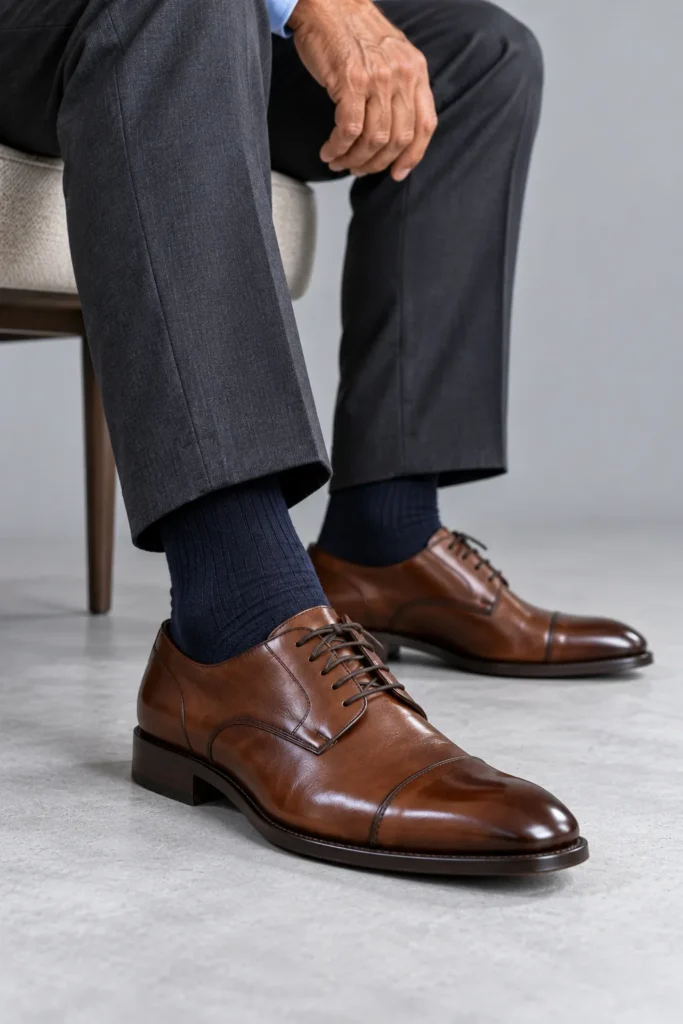
The wrong socks can break up an outfit and make it look less neat. White athletic socks with formal leather shoes, for example, may look out of place at a dinner or family event.
Your socks should suit both your shoes and the trousers you are wearing.
Try these pairings when getting dressed:
- Dress trousers: Choose black, navy, or dark gray socks.
- Blue jeans: Try navy, gray, or socks with a small pattern.
- Beige chinos: Wear brown, navy, or olive socks.
- White sneakers: Use white, gray, or no-show socks for a casual look.
Check the sock length before leaving home. Sit down and cross your legs in front of a mirror. If your trousers rise and show bare skin, longer socks may work better with dress shoes.
A Simple Sock Rule
Match the socks to your trousers for a neat, longer line.
Pair them with sneakers, loafers, or casual summer shoes.
5. Avoid Shoes That Look Too Bulky for Your Clothes
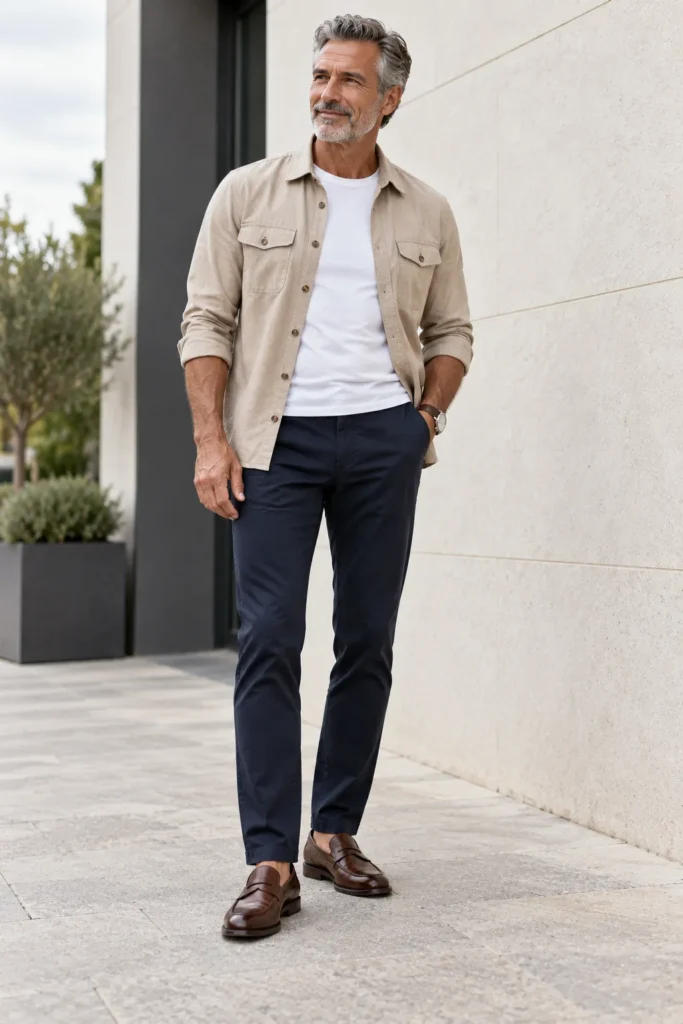
Large, heavy shoes can make slim trousers look even narrower. On the other hand, very thin shoes may look out of place with thick jeans or wide-leg trousers.
The aim is to balance the shape of your shoes with the cut of your clothes.
Stand in front of a full-length mirror wearing your usual trousers and shoes. Check whether the shoes look balanced with the width of the trouser legs.
Straight-leg jeans often work well with classic sneakers or leather boots, while tailored chinos pair nicely with loafers or low-profile leather shoes.
You do not need narrow shoes to look well dressed. Choose a shape that suits your foot width and feels comfortable when walking. A clean design with fewer bulky details often works well for everyday outfits.
Try the same trousers with two different pairs of shoes. Take a full-length photo of each outfit from the front. The comparison can make it easier to spot which shoe shape looks more balanced.
6. Wear the Right Shoes for the Occasion

Wearing the same sneakers everywhere can limit your outfit choices. Running shoes may work well for a walk, but they can look out of place with formal trousers at a wedding or dinner.
A few suitable pairs will cover most events without filling your wardrobe with shoes you rarely wear.
Use this guide to make your choice:
- Work or formal events: Black or brown leather dress shoes.
- Smart-casual dinners: Leather loafers or clean, low-profile sneakers where appropriate.
- Weekend outings: Clean sneakers, casual loafers, or comfortable leather shoes.
- Outdoor walks: Supportive walking shoes with good grip.
- Cold or wet weather: Suitable boots with a firm sole and weather protection.
Check the dress code before leaving home. If you expect to stand or walk for hours, comfort should be part of your choice. A shoe that looks good but causes pain is not a good choice for the day.
Pick Shoes for the Occasion
7. Stop Wearing the Same Shoes With Every Outfit
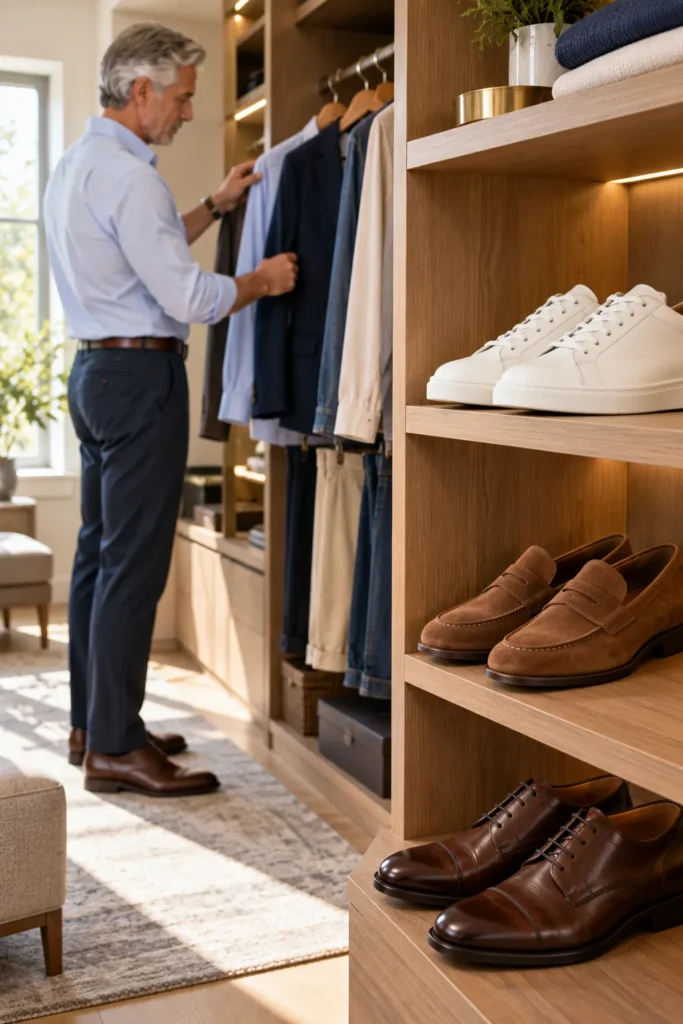
You may have one pair of shoes that feels comfortable with almost everything. But wearing that same pair to every event can make your wardrobe feel limited.
You do not need ten pairs of shoes to dress well after 50. A few useful styles can cover most of your daily needs.
Start by checking which outfits you wear most often. A small collection could include:
- White or neutral sneakers for jeans and casual chinos.
- Brown leather loafers for smart-casual outfits.
- Black or brown dress shoes for formal events.
- Comfortable walking shoes for long walks and busy days.
- Weather-ready boots for cold or wet conditions.
Choose each pair based on your real needs. If you rarely attend formal events, you may not need several pairs of dress shoes. Spend your money on footwear you will wear often.
Build a Useful Shoe Collection
For jeans, chinos, and weekend outings.
For dinners and smart-casual looks.
For weddings, meetings, and formal events.
For outdoor use and changing weather.
You may need fewer or more pairs based on your work, climate, and daily routine.
8. Keep Your Shoes Clean and Well Maintained
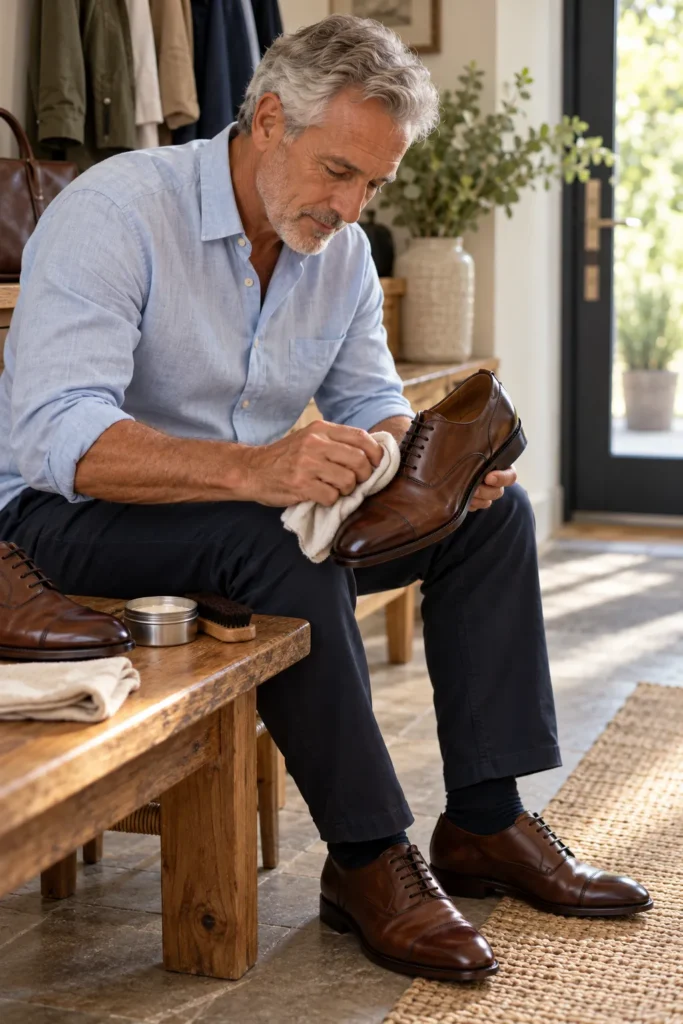
Dirty shoes can make even an expensive outfit look untidy. Dust, dried mud, and scuffed leather often build up without you noticing. A short cleaning routine can help your shoes last longer and keep them looking neat.
Start by removing loose dirt with a soft brush. Use a clean cloth and a suitable cleaner for the shoe material. Leather may need a small amount of leather conditioner, while suede needs a dry suede brush.
Canvas shoes can often be cleaned with mild soap and water, but check the care label first.
Allow wet shoes to dry at room temperature. Keep them away from direct heat, which can damage leather and weaken glue. Store each pair in a dry place where the shoes can keep their shape.
- Leather: Wipe with a soft cloth and use suitable leather care products.
- Suede: Brush gently when dry. Avoid soaking the material.
- Canvas: Clean with a suitable mild cleaner and let the shoes air-dry.
Test any cleaner on a small hidden area first. Follow the maker’s care instructions.
9. Check Your Shoe Style Against Your Current Wardrobe
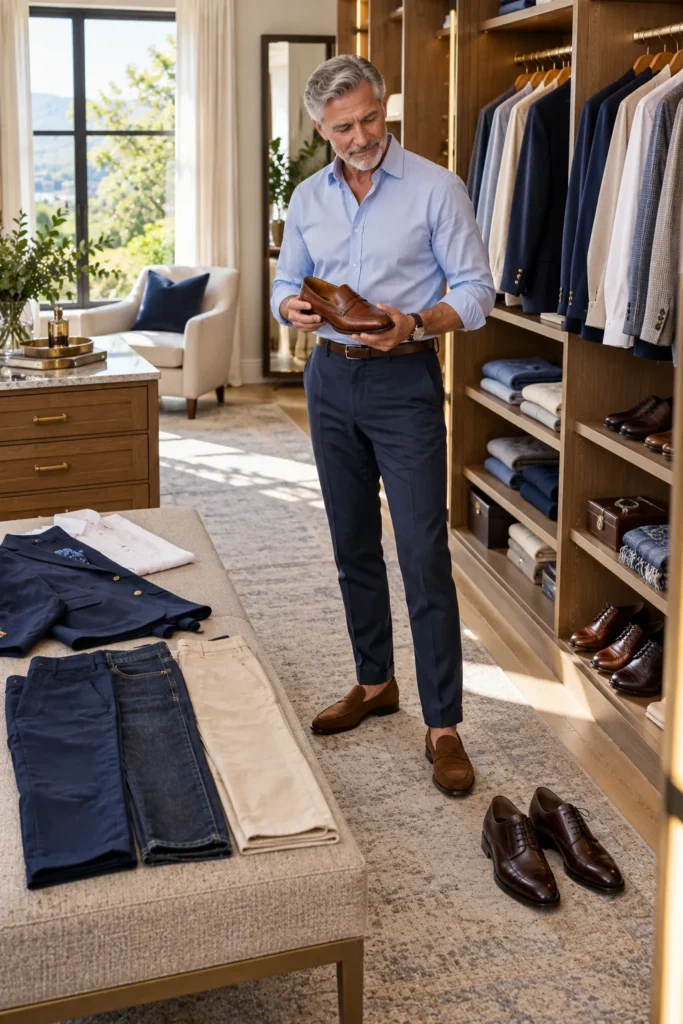
A shoe style that suited your clothes ten years ago may no longer work with the trousers and jackets you wear today. That does not mean every older pair needs replacing.
The key is to check whether each pair still fits your clothes, feels comfortable, and looks well cared for.
Lay out two or three outfits you wear often. Try each one with your current shoes and check the full look in a mirror. Notice whether the shoes look too sporty, too formal, or too heavy for the clothes.
Classic leather sneakers, loafers, plain leather dress shoes, and well-fitted boots can work with many modern outfits.
Keep the pairs that fit your current style. Set aside shoes that are damaged, uncomfortable, or difficult to match. If a pair needs repair, check the cost before deciding whether to keep it.
Before and After Expectations
- Worn or dirty shoes
- Socks that clash with the outfit
- Shoes that do not suit the event
- Uncomfortable fits
- Clean, cared-for footwear
- Socks that suit the clothes
- Shoes suited to the occasion
- A more comfortable fit
Common Shoe Mistakes Men Over 50 Should Avoid
Most shoe problems are easy to spot once you know what to look for. Use this guide to check your footwear before buying a new pair or putting together an outfit.
Frequently Asked Questions
1. What shoes should men over 50 wear every day?
Choose comfortable sneakers, loafers, or casual leather shoes that fit your feet and match your daily clothes. Look for good grip, enough toe room, and a style that suits your routine.
2. Can men over 50 wear white sneakers?
Yes. Clean white sneakers work well with jeans, chinos, and many casual outfits. Choose a simple design and keep the shoes clean.
3. Should shoes and belts match?
For formal outfits, matching black shoes with a black belt or brown shoes with a similar brown belt gives a neat look. Casual outfits allow more freedom.
4. How many pairs of shoes does a man need?
There is no fixed number. Three or four useful pairs may cover casual wear, smart-casual outfits, formal events, and walking. Your needs depend on your lifestyle and local weather.
5. When should you replace old shoes?
Replace shoes when the soles are badly worn, the support has broken down, the upper is badly damaged, or the fit causes ongoing pain. A shoe repair shop may be able to fix some problems.
Quick Reference Card for Men Over 50
Save this checklist to use whenever you review your shoes or plan an outfit. You can work through it in a few minutes before leaving home.
Better Shoes After 50
Nine checks for cleaner outfits, better fit, and more comfortable footwear.
Are your shoes clean? Do they fit well? Do they suit your trousers and the event? Three quick checks can help you finish your outfit with confidence.
MEN’S STYLE GUIDE | KEEP IT CLEAN, COMFORTABLE, AND CLASSIC
Conclusion
Good shoes can make your everyday outfits look neater without adding more clothes to your wardrobe. Start by checking the pairs you already own, fixing what you can, and setting aside shoes that no longer fit well.
You do not need to follow every trend to dress well after 50. Focus on comfort, clean footwear, and colors that work with your clothes.
Save this guide on Pinterest so you can check these nine shoe mistakes the next time you get dressed or shop for a new pair.