
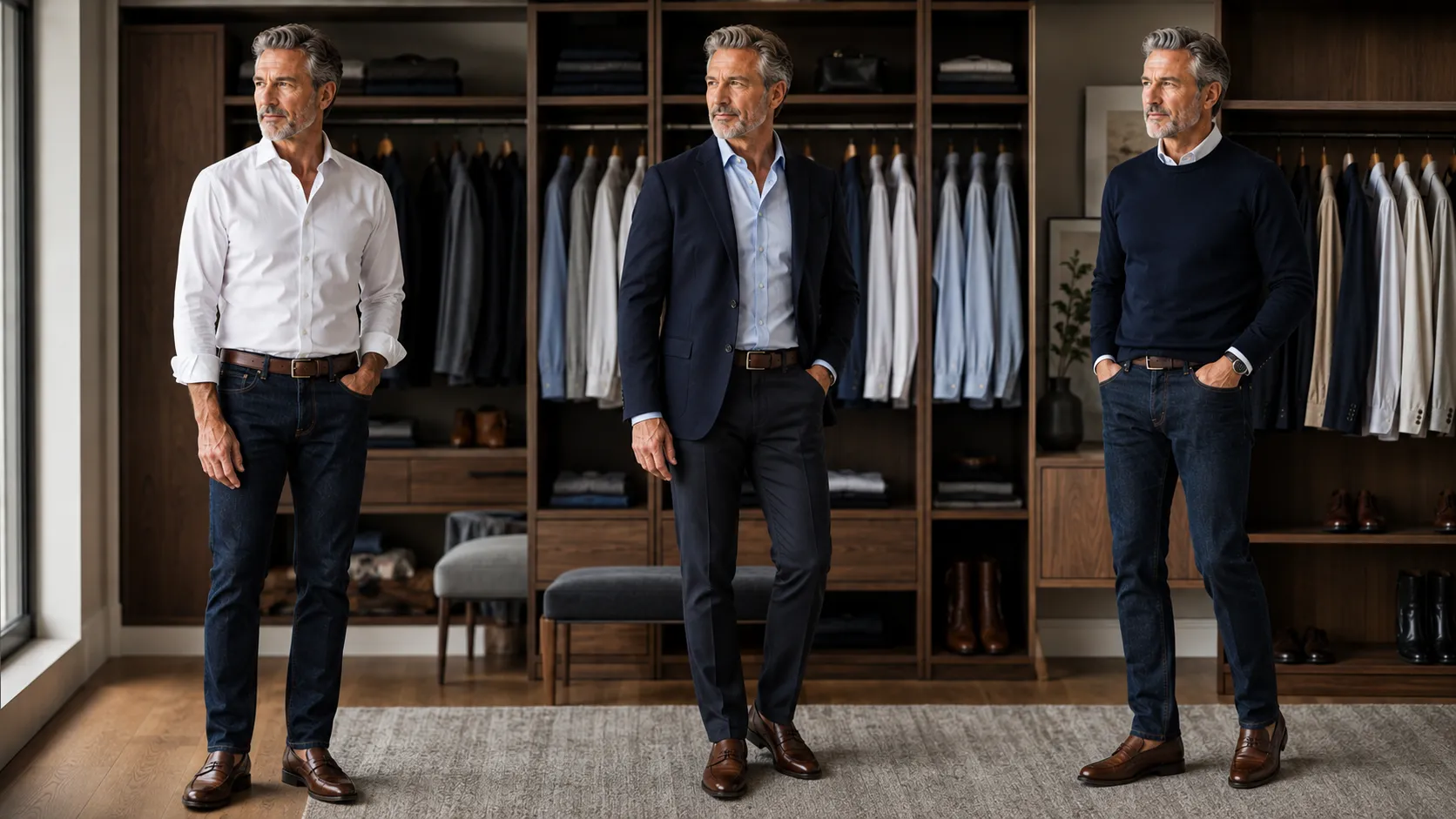
Starting a wardrobe from scratch after 50 can feel harder than it should. You may know what looks good on other men, but still have no clear idea what to buy first, what to skip, or how many clothes you actually need.
The good news is that you do not need a closet full of clothes. A small group of well-fitting pieces can cover work, dinners, weekends, family events, and casual days without making you look overdressed.
The key is to start with clothes that work together. Think navy trousers with a white shirt, dark jeans with a blazer, or a simple polo with clean leather shoes. Once these basic combinations are in place, adding more pieces becomes much easier.
If you are looking for how to build a men’s wardrobe over 50, start with the basics below. These ideas focus on fit, comfort, simple colors, and clothes that look natural on a mature man.
1. Start With 5 Core Pieces That Work With Everything
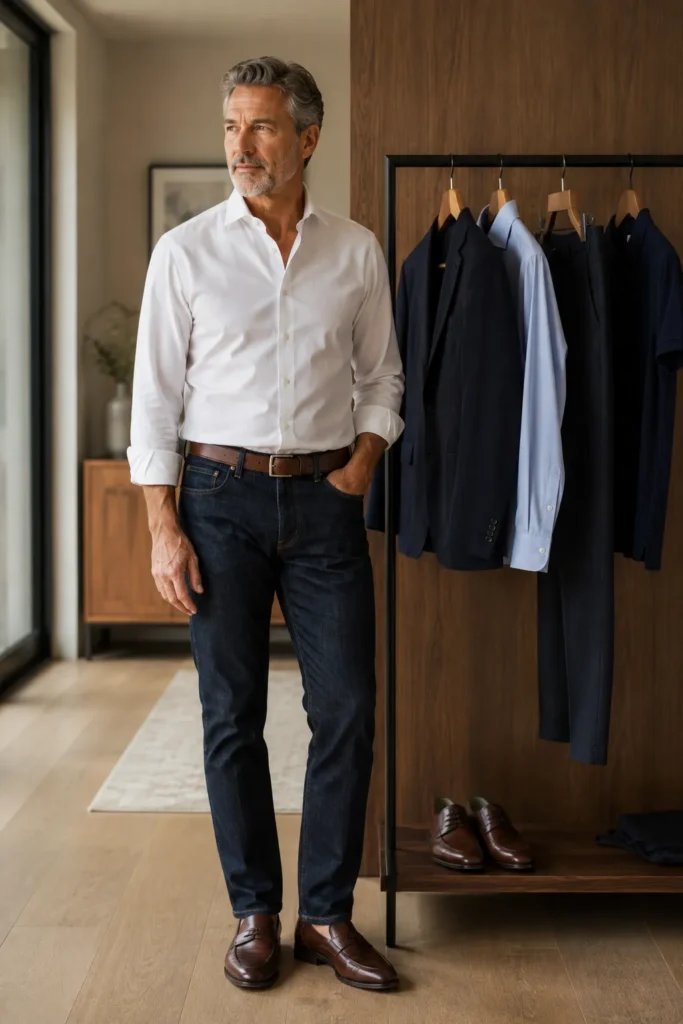
The first mistake is buying too many clothes at once. Start small and make sure your first pieces can work in several outfits.
A good starting point is one pair of dark jeans, navy trousers, a white shirt, a light blue shirt, and a simple polo shirt. These pieces can be mixed with jackets, sweaters, and different shoes later.
Start with pieces that can handle more than one setting.
- Dark straight-fit jeans for casual days
- Navy trousers for smarter outfits
- White button-down shirt for dinners and events
- Light blue shirt for everyday wear
- Navy or gray polo for relaxed outfits
The goal is simple: every new item should work with at least two or three things you already own.
2. Build Your Wardrobe Around Navy, Charcoal, White, and Blue
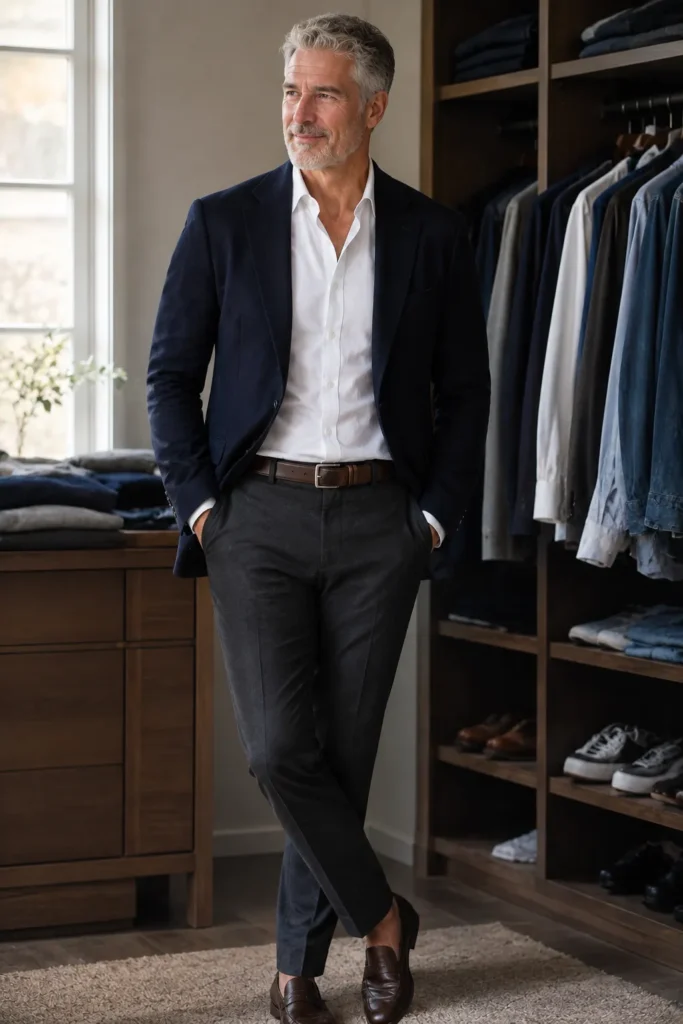
Color can make a new wardrobe much easier to manage.
Navy, charcoal, white, light blue, and denim give you plenty of combinations without making the closet feel busy. They also work well across casual and smart casual outfits.
You do not need to avoid color completely. Add richer shades later, such as olive, burgundy, brown, or muted green.
| Navy | Charcoal |
|---|---|
| Works with white and light blue | Works with white and denim |
| Great for trousers and jackets | Good for trousers and outerwear |
| Easy with brown leather shoes | Easy with black or brown shoes |
Simple rule: keep most of your first wardrobe in easy-to-match colors. Add stronger colors after you have the basics covered.
3. Choose One Great Pair of Jeans Before Buying More Pants
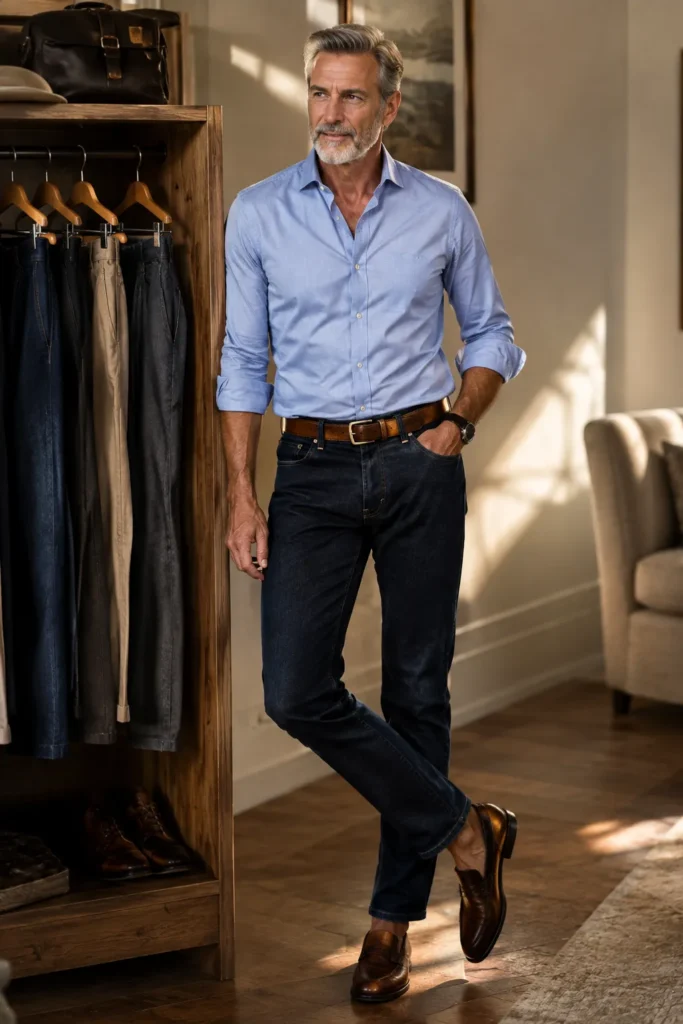
A pair of jeans that fits well can carry a large part of a casual wardrobe.
Look for dark indigo denim with a straight or gently tapered leg. Avoid jeans that are extremely skinny, heavily ripped, or covered in strong fading. A clean pair is easier to dress up with a blazer or leather shoes.
The difference is easy to see:
Very light denim, heavy fading, oversized pockets, and a loose shape can make an outfit feel less refined.
Dark straight-fit denim with a clean hem gives you an easy base for shirts, polos, sweaters, and jackets.
Wear your jeans with a light blue shirt and brown loafers for dinner, or with a polo and clean sneakers for the weekend.
4. Add Two Shirts That Make Casual Outfits Look Polished
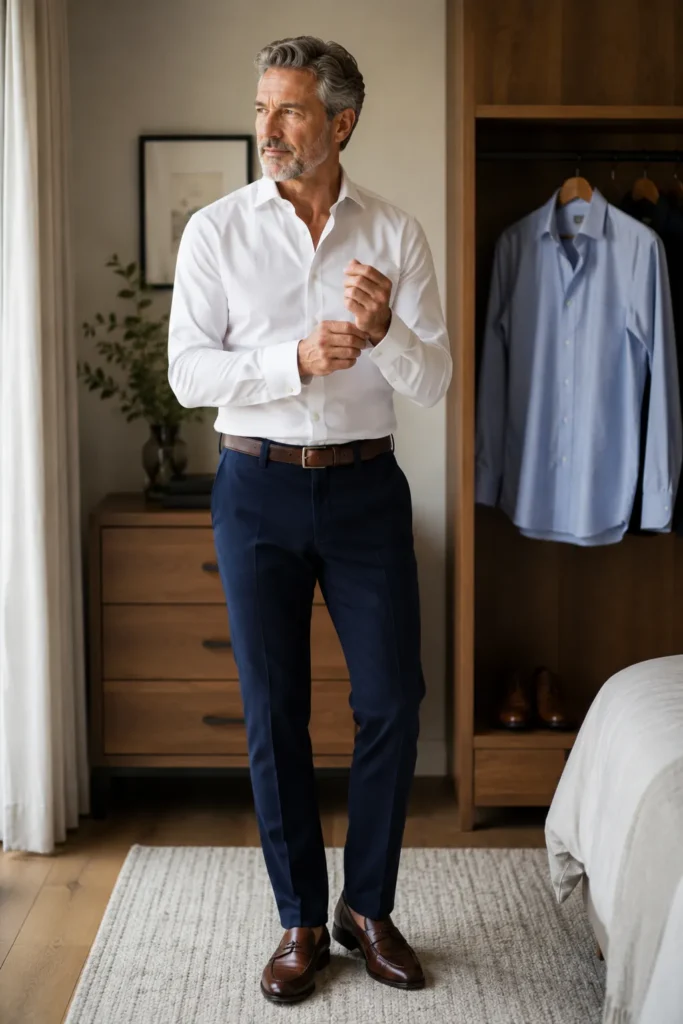
A mature wardrobe needs shirts that look good without feeling formal.
Start with a crisp white button-down and a light blue shirt. Choose a regular or modern fit that gives you room across the chest and shoulders without hanging loosely around the waist.
Check these details before buying:
What to check in the fitting room
These two shirts can be worn tucked into trousers, left untucked with jeans, or placed under a sweater or blazer.
5. Pick a Blazer That Works With Jeans and Trousers

A blazer can make a small wardrobe feel much larger.
The best first choice is usually a navy blazer with a soft structure and a natural fit. It should feel comfortable when you move, rather than looking like a stiff suit jacket.
Here is what to look for:
Choose a navy or charcoal blazer with simple buttons and a comfortable fit.
Wear it with dark jeans, chinos, or tailored trousers.
Avoid very shiny fabric that looks like a suit jacket taken from a formal set.
Skip an overly tight fit that restricts your arms and shoulders.
One blazer can cover dinner dates, family gatherings, casual business settings, and many evening events. That makes it a smart early purchase for a new wardrobe.
6. Invest in Comfortable Shoes You Can Wear for Hours
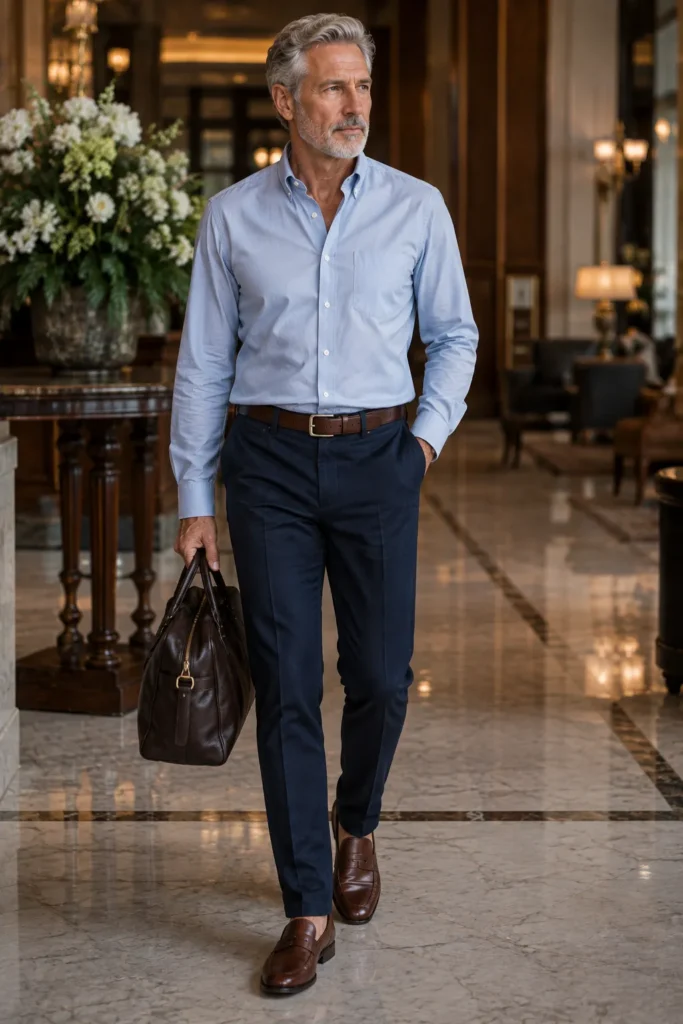
Shoes can change the whole feel of an outfit, but comfort should come first.
Start with one pair of brown leather loafers or simple leather lace-ups. They work with navy trousers, chinos, and dark jeans. Later, add clean white or neutral sneakers for relaxed outfits.
A useful test is to walk around the store for several minutes. Check that your toes have room and that your heel does not slip with every step.
💡 Quick Tip
Your first dressier shoe should work with both trousers and dark denim. That gives you more outfits from one pair.
A comfortable shoe that looks clean will get much more use than a stylish pair you avoid because your feet hurt.
7. Use Simple Layers to Make Basic Outfits Look Better
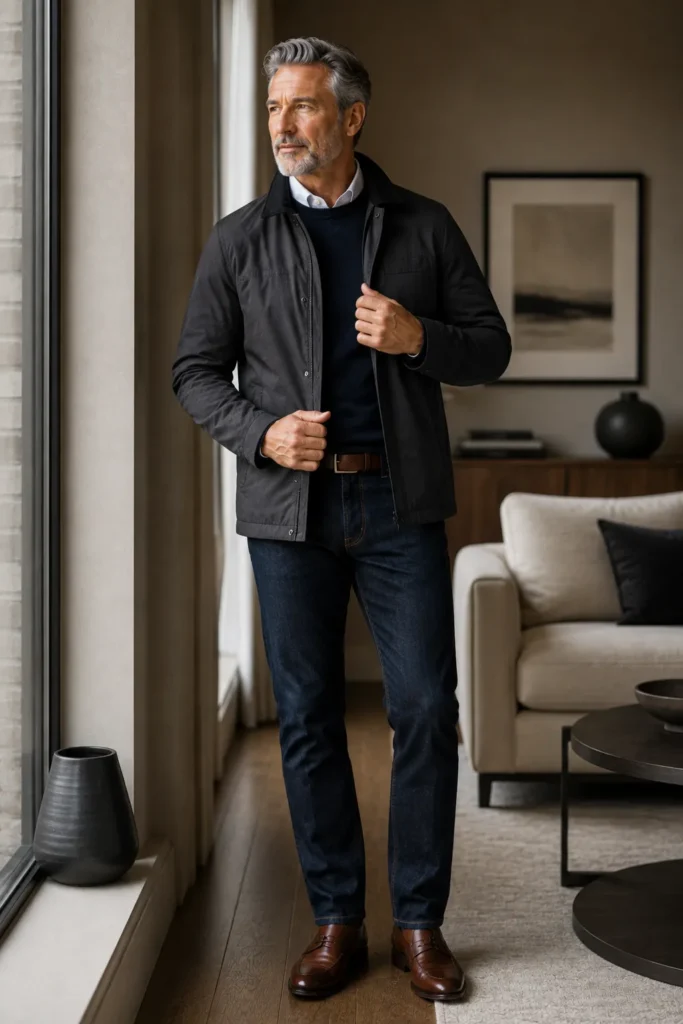
Layering gives simple clothes more shape without making the outfit complicated.
A plain shirt can look completely different under a lightweight sweater, overshirt, or casual jacket. This is especially useful if you want variety without buying a large number of clothes.
Think about layers by their job:
Keep the layers relatively light. A bulky shirt under a thick sweater under a heavy jacket can quickly feel uncomfortable.
For a simple evening outfit, try a white shirt, navy sweater, dark jeans, and brown leather shoes.
8. Get the Fit Right Before You Worry About Brands
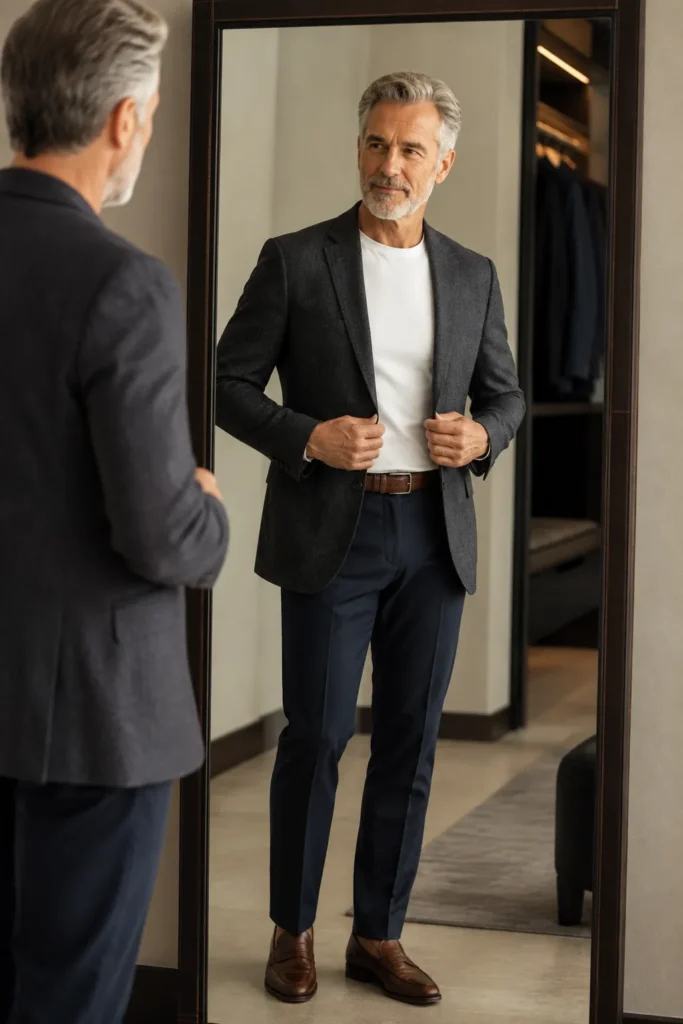
A well-fitting affordable shirt can look better than an expensive shirt that sits badly on the body.
Before buying anything, check the shoulders, chest, sleeves, waist, and trouser length. You want enough room to move without extra fabric hanging around your body.
A simple fitting process
Check the shoulders first. The seam should sit close to your natural shoulder.
Move your arms and sit down. Clothes should stay comfortable through normal movement.
Look at the overall shape. The fabric should follow your body without pulling or hanging excessively.
If the shoulders fit but the body is slightly loose, a tailor may be able to make a small adjustment. Fit should come before a famous label.
9. Add One Watch and a Few Small Accessories

Accessories should finish an outfit, not become the main attraction.
A simple watch is enough to start. Add a leather belt that matches your main shoes, then consider a pocket square or understated sunglasses if they fit your daily style.
The best accessories are the ones you actually use.
Keep accessories simple. One good watch, a matching belt, and clean sunglasses can be enough for most everyday outfits.
Avoid buying several watches, belts, and bags before you know what you actually wear. Build slowly and let your daily routine guide the choices.
10. Finish Your Wardrobe With a Simple Shopping Checklist
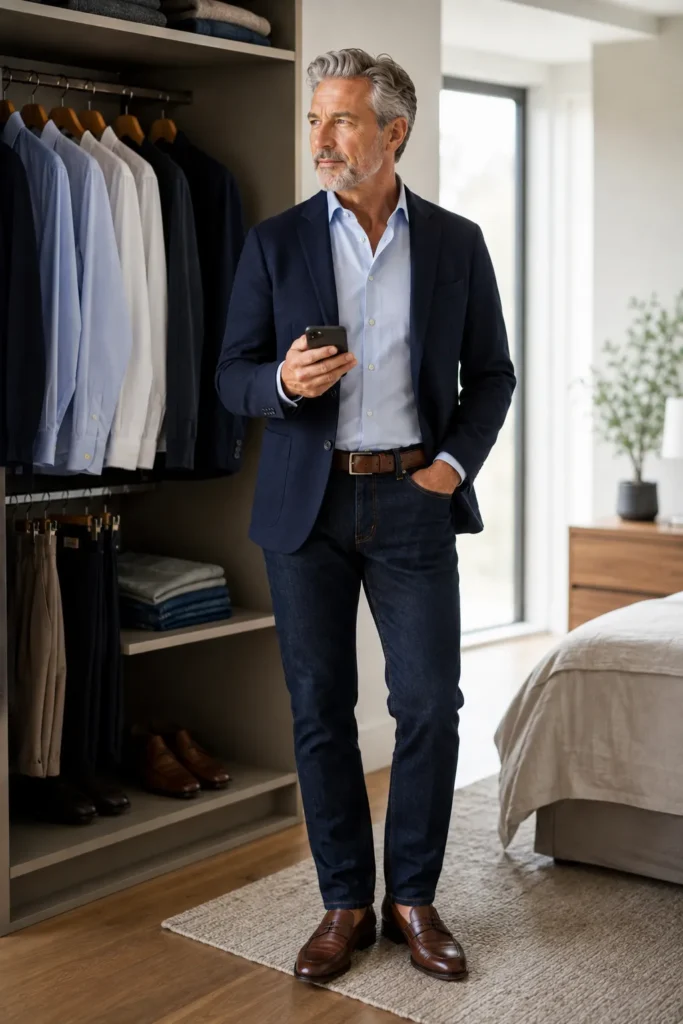
Once the core wardrobe is in place, stop buying random pieces.
Look at what you already wear most often. If you keep reaching for dark jeans, a blue shirt, and brown shoes, build around those combinations instead of starting a completely different style.
Use this checklist before your next shopping trip:
Before buying something new, ask three questions:
- Does it fit properly?
- Does it work with at least two outfits?
- Will I actually wear it in my normal week?
If the answer is no, leave it in the store.
Conclusion
Building a wardrobe after 50 does not require dozens of clothes or a complete style change. Start with a few dependable pieces, keep the colors easy to mix, and pay close attention to fit and comfort.
Dark jeans, navy trousers, simple shirts, a blazer, comfortable shoes, and a few useful accessories can take you surprisingly far. Once those pieces work together, you can add more personal touches at your own pace.
The best approach to how to build a mens wardrobe over 50 is to buy with a purpose. Choose clothes that suit your real life, fit your body well, and make getting dressed easier.
Save this list on Pinterest so you have it ready the next time you shop for clothes.