
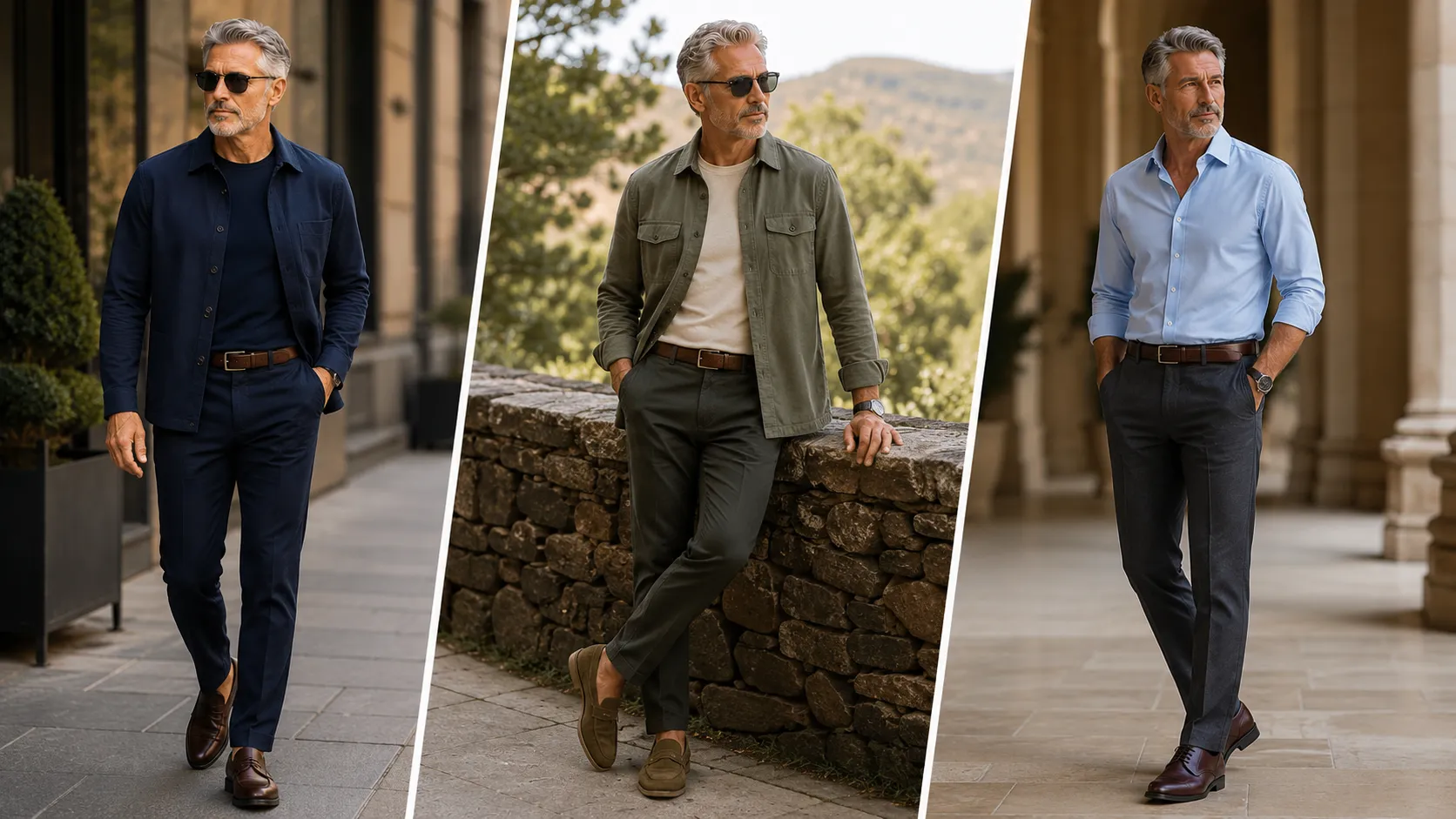
Looking slimmer after 50 does not mean wearing very tight clothes or dressing in black from head to toe. The real difference often comes from small choices: where your trousers sit, how your jacket falls, how much contrast you create, and how your layers fit your body.
The best outfits also feel comfortable. You should be able to sit, walk, and move without pulling at your shirt or constantly fixing your jacket. That is why how to dress slimmer men over 50 is more about good proportions than hiding your body.
These ideas focus on simple clothes that many men already own. You do not need a whole new wardrobe. A few changes to fit, color, and layering can make your everyday outfits look cleaner and more balanced.
1. Choose Monochrome Outfits to Create a Longer, Cleaner Line
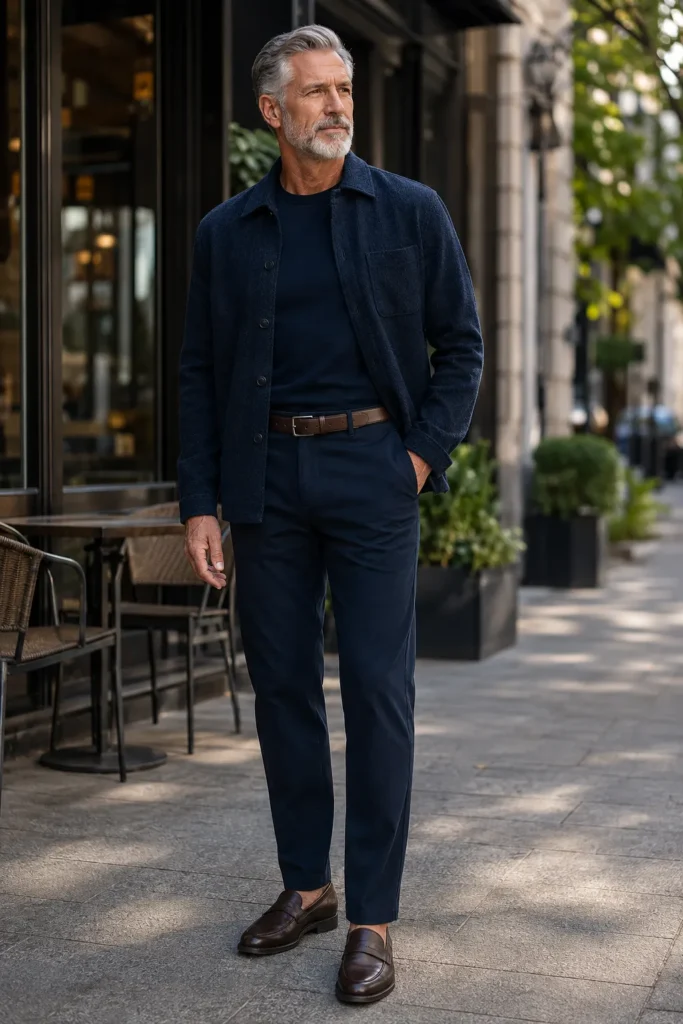
A strong color break at the waist can make the body look shorter. Wearing similar shades on top and bottom creates a smoother line instead.
Try combinations such as navy with deep blue, charcoal with medium gray, or olive with a darker green shirt. The shades do not need to match exactly.
Easy combinations:
- Navy shirt + dark navy trousers
- Charcoal polo + gray trousers
- Olive overshirt + dark olive chinos
The small difference between the shades keeps the outfit interesting while avoiding a sharp line across the middle.
2. Swap Bulky Layers for a Lightweight Overshirt
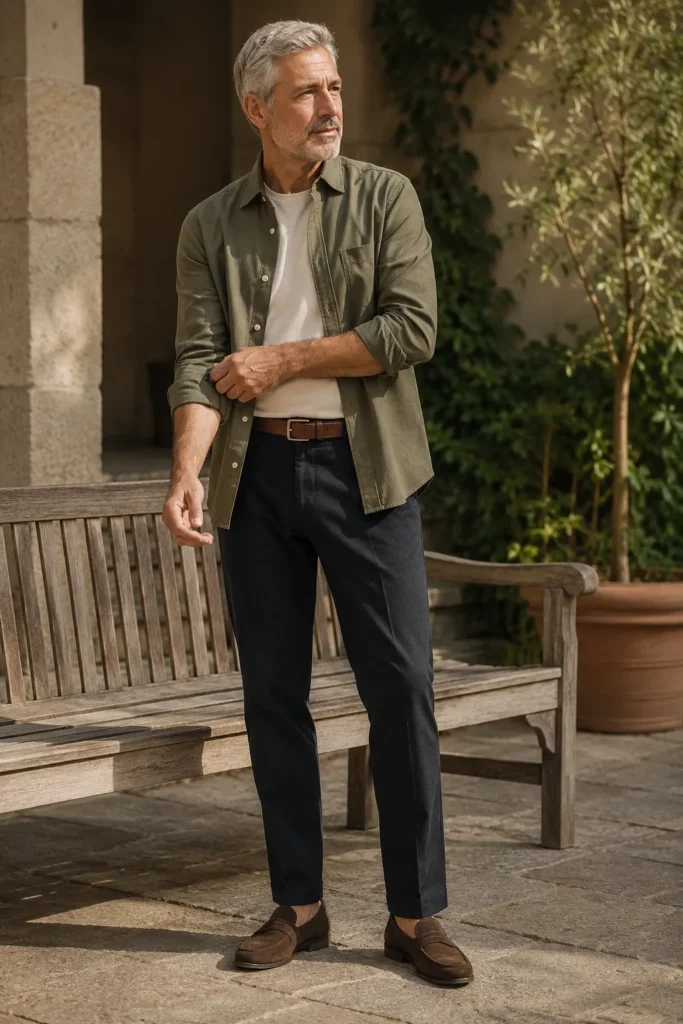
Heavy jackets can make the upper body look wider than it really is. A lightweight overshirt gives you a similar layer without all that extra fabric.
Look for one that ends around the hip and sits comfortably across the shoulders.
A good setup:
- Start with a plain crew-neck or polo shirt.
- Add a lightweight cotton or linen overshirt.
- Leave it open so the shirt underneath creates a clear center line.
This works especially well for casual days when a blazer feels too formal.
💡 Quick Tip
Choose a light overshirt with a clean front and moderate room through the body. Avoid very thick fabric or oversized pockets if your goal is a cleaner shape.
3. Wear Straight-Leg Trousers That Sit Cleanly at the Waist
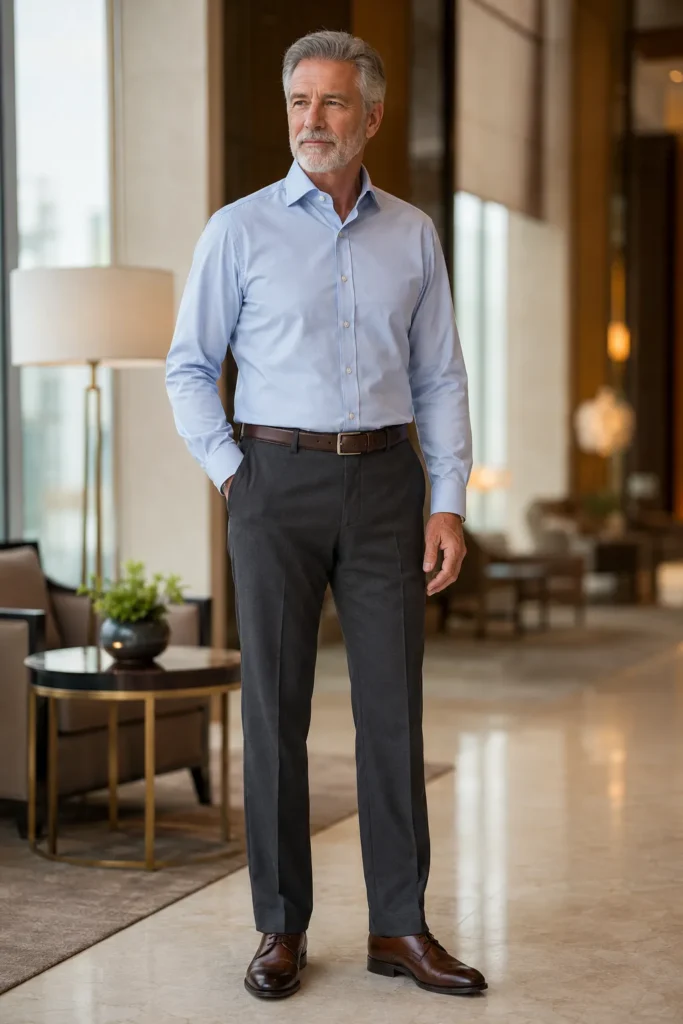
Very tight trousers can draw attention to areas you may prefer to keep less noticeable. Very loose trousers can create the opposite problem and make the whole outfit look larger.
A straight or gently tapered leg usually gives a better balance.
Pay attention to the waist too. Trousers should sit comfortably without digging into your stomach or needing a tight belt to stay up.
Do this
- Pick a mid-rise waist.
- Keep the leg straight or gently tapered.
- Let the trouser fabric fall cleanly over the shoe.
Skip this
- Extremely skinny legs
- Very low-rise trousers
- Excess fabric pooling around the ankles
Choose a mid-rise waist and a clean straight leg.
Keep the hem close to the top of the shoe.
Avoid very tight trouser legs.
Avoid extra fabric bunching around the shoes.
4. Use a V-Neck Layer to Give the Upper Body More Shape
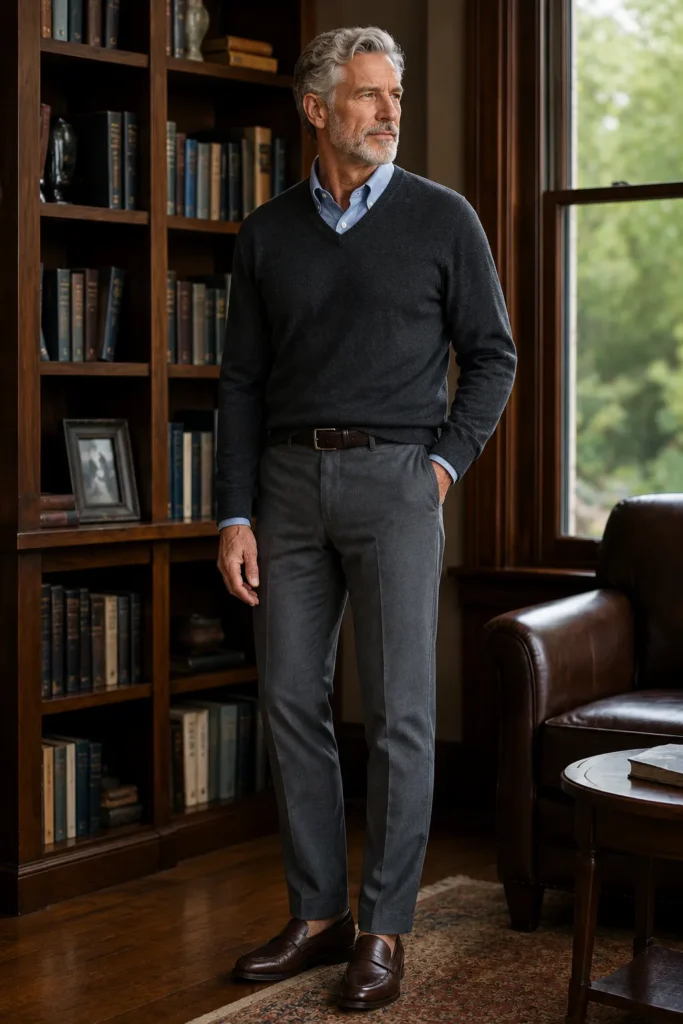
A small change around the neckline can alter the whole look.
A fine V-neck sweater or cardigan worn over a shirt creates an open area around the neck and chest. This can make the upper body look longer instead of creating one large block of fabric.
Keep the layer fairly thin. Thick knits can add width.
Simple order:
- Wear a light shirt underneath.
- Add a fine V-neck knit.
- Keep the collar neat.
- Let the shirt show slightly at the neckline.
For a casual outfit, dark blue, gray, or muted green works well with neutral trousers.
Start with a light, well-fitted shirt.
Add a thin V-neck layer without extra bulk.
Keep the neckline open and the collar neat.
5. Keep Jacket Details Simple Around the Chest and Waist
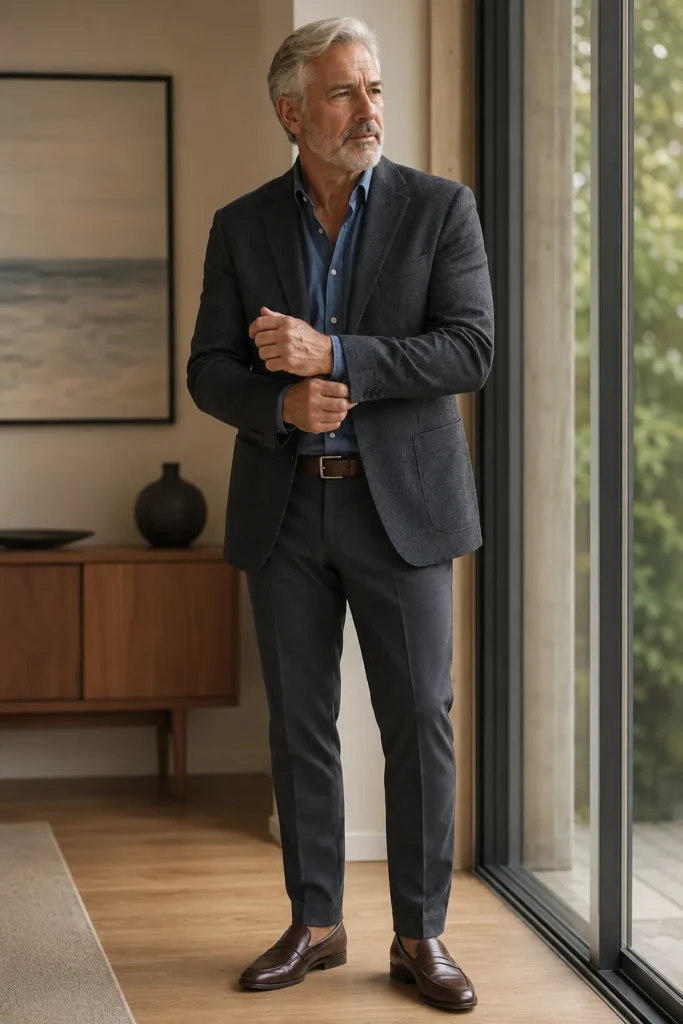
A jacket can improve your shape, but too many details can work against it.
Large patch pockets, thick fabric, wide lapels, and extra buttons can add visual weight around the middle. A cleaner jacket gives the eye fewer places to stop.
The difference is easy to see: a simple jacket creates a clear outline, while a busy jacket can make the torso look wider.
Before: bulky pockets, thick fabric, oversized fit.
After: clean front, moderate lapels, comfortable fit, and enough room to move.
Heavy fabric, large pockets, and an oversized jacket can make the torso appear wider.
A cleaner front, lighter fabric, and a comfortable fit give the outfit a more balanced outline.
6. Try Darker Trousers With a Slightly Lighter Top
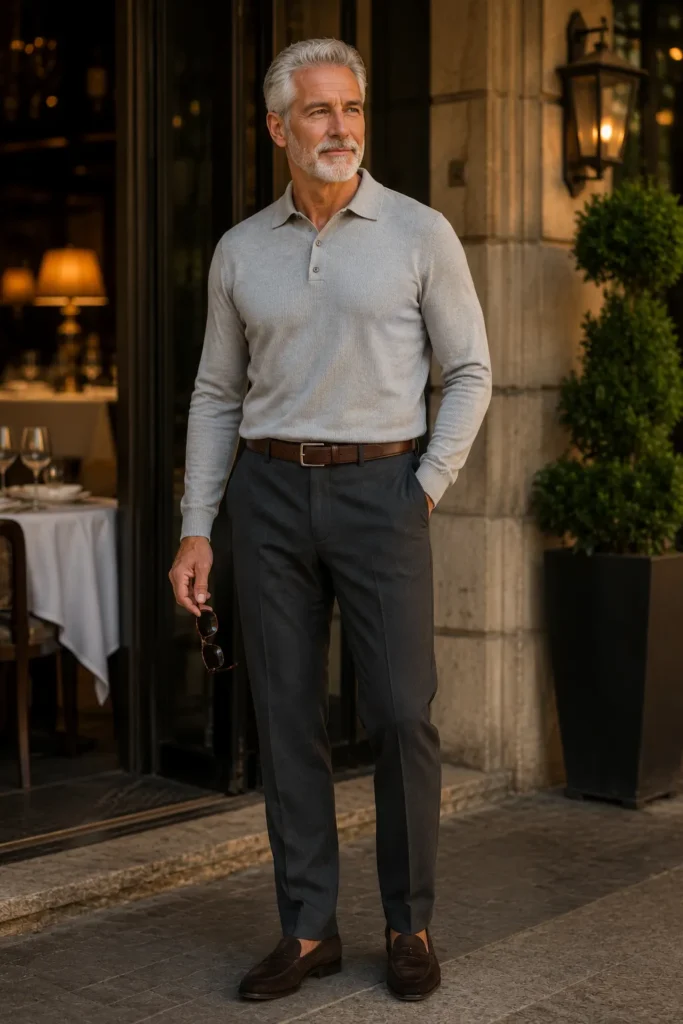
A simple color change can make an outfit look more balanced. Dark trousers create a clean base, while a lighter shirt brings attention upward without creating a harsh break.
Try charcoal trousers with a soft blue shirt, dark olive chinos with a cream polo, or deep navy trousers with a light gray knit.
The key is keeping the contrast controlled. Very bright tops with very dark trousers can create a strong horizontal line at the waist.
| Darker Trousers | Lighter Top |
|---|---|
| Charcoal | Soft blue |
| Deep navy | Light gray |
| Dark olive | Cream |
| Dark brown | Stone |
This approach works well for both casual and smart-casual outfits.
| Darker Trousers | Lighter Top |
|---|---|
| Charcoal | Soft blue |
| Deep navy | Light gray |
| Dark olive | Cream |
| Dark brown | Stone |
7. Pick Shirts With a Clean Collar Instead of an Oversized Collar
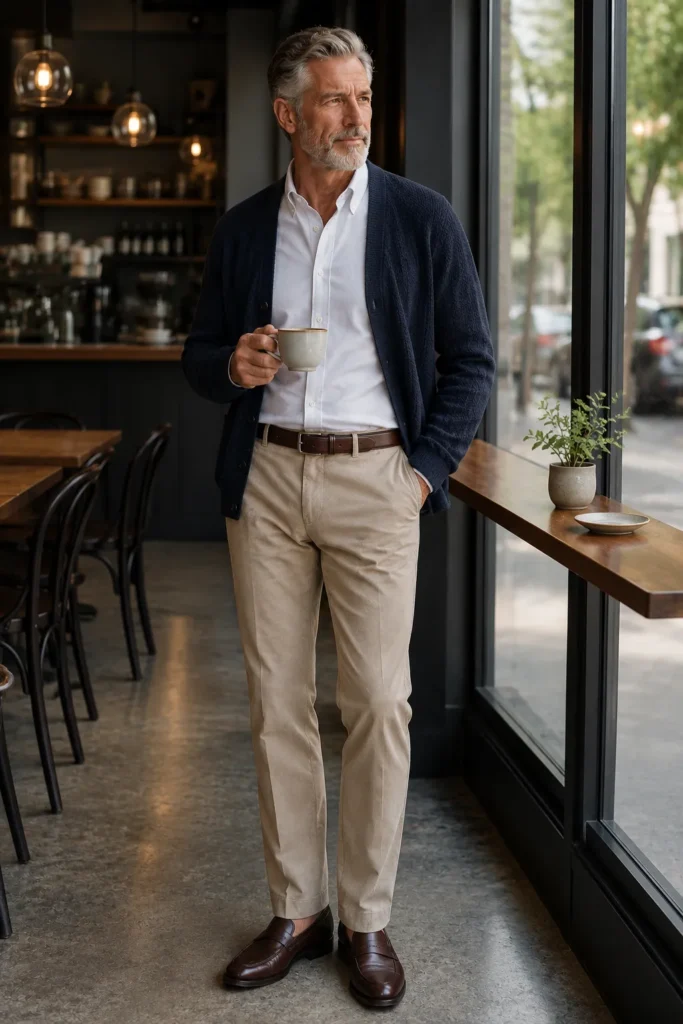
A shirt collar sits close to your face, so its size can affect the whole look.
An oversized collar can make the upper body feel wider, especially when paired with a large jacket or thick sweater. A medium-sized collar usually gives a cleaner frame around the neck.
Look for shirts with enough room to sit comfortably but without excess fabric around the collar and chest.
A simple rule: the collar should sit neatly without spreading far beyond the edges of your jacket lapels.
8. Leave a Little Room in Your Clothes Instead of Going Too Tight
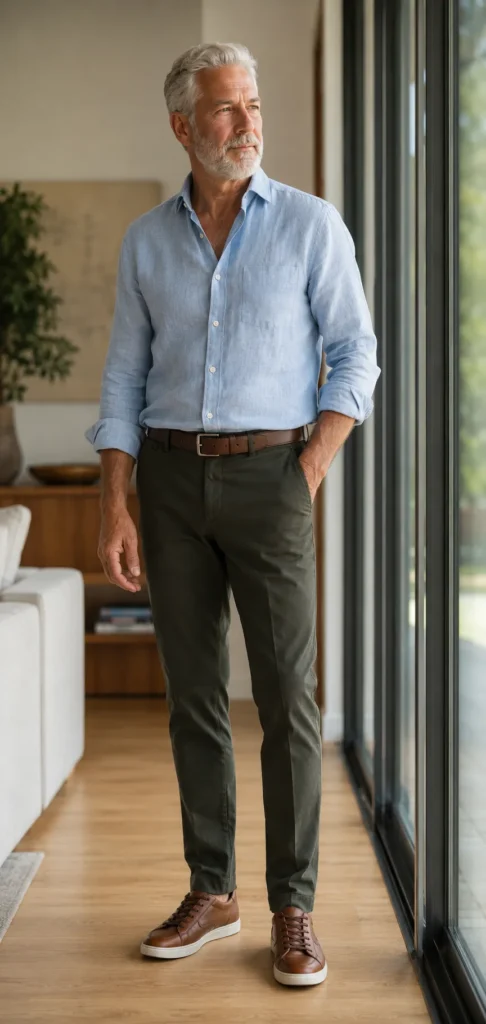
Slimmer does not mean tighter.
A shirt that pulls across the stomach or a jacket that strains at the buttons can make the body look less balanced. Clothes should follow your shape without pressing against it.
Check these areas before buying:
- The shirt buttons should lie flat.
- Jacket buttons should close without pulling.
- Trousers should sit comfortably when you sit down.
- Sleeves should allow normal arm movement.
A comfortable fit also makes you stand more naturally. That alone can improve how the outfit sits on your body.
Fit check before you leave the house
9. Use One Vertical Detail to Break Up the Outfit
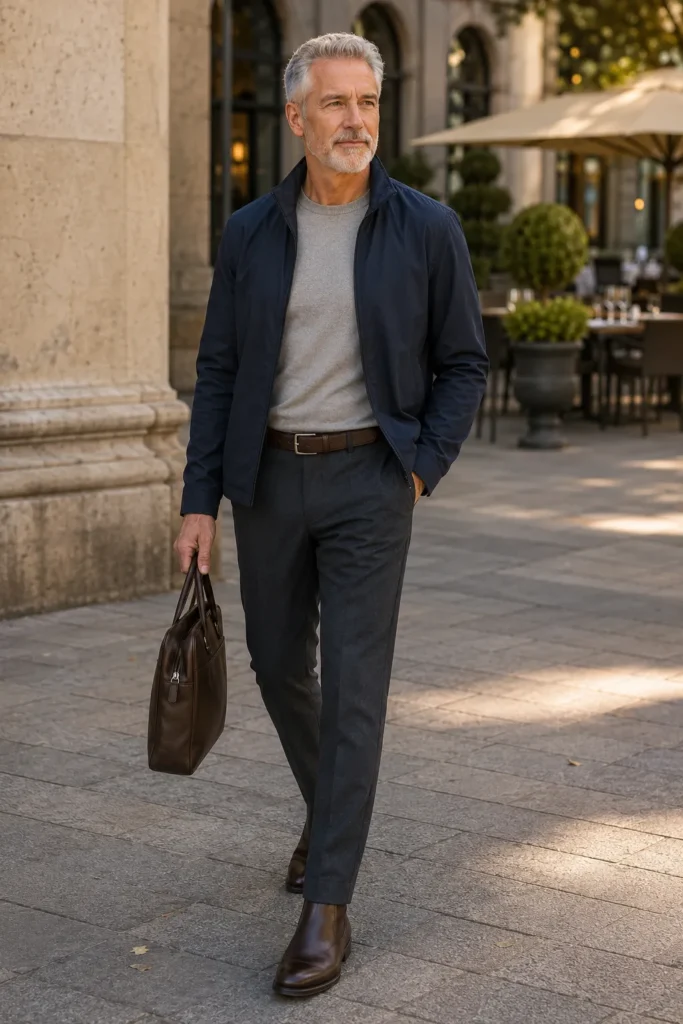
Small vertical lines can help an outfit feel longer. You do not need a special piece of clothing to get this effect.
An open overshirt, cardigan, jacket, or unbuttoned shirt creates two vertical edges down the front of the body. A long pendant or narrow scarf can do something similar in the right setting.
The trick is keeping the center of the outfit clean.
Avoid stacking several bold details in the same area. One clear line is enough.
Keep one clear vertical opening through the front of the outfit. An open jacket or overshirt can create this line without adding extra decoration.
10. Choose Shoes That Match the Weight of Your Trousers
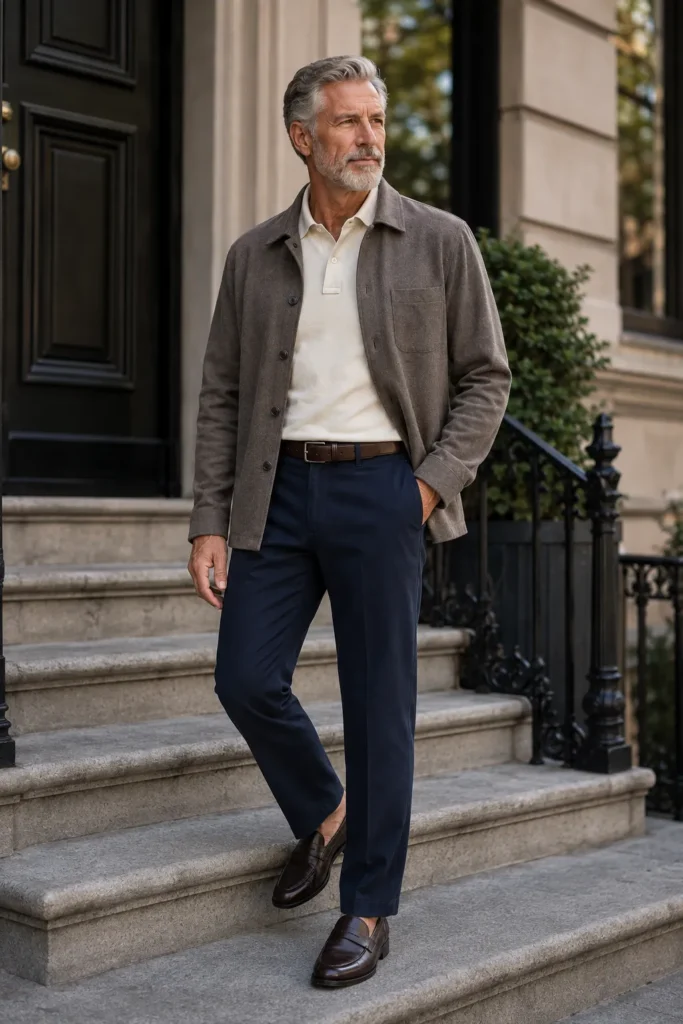
Shoes can change how balanced your outfit looks from head to toe.
Very thin shoes under relaxed trousers can make the legs look wider by comparison. On the other hand, very large shoes can make slim trousers look even narrower.
The goal is simple: match the shoe shape to the trouser shape.
For straight-leg trousers, try a clean leather sneaker, simple loafer, derby, or moderately shaped boot. Keep the shoe neat and avoid excessive details if the rest of the outfit is already busy.
- ▸Straight trousers work well with clean sneakers or simple leather shoes.
- ▸Relaxed trousers can handle a slightly heavier shoe.
- ▸Avoid a very narrow shoe under wide trousers.
11. Build the Outfit Around One Strong Layer, Not Several
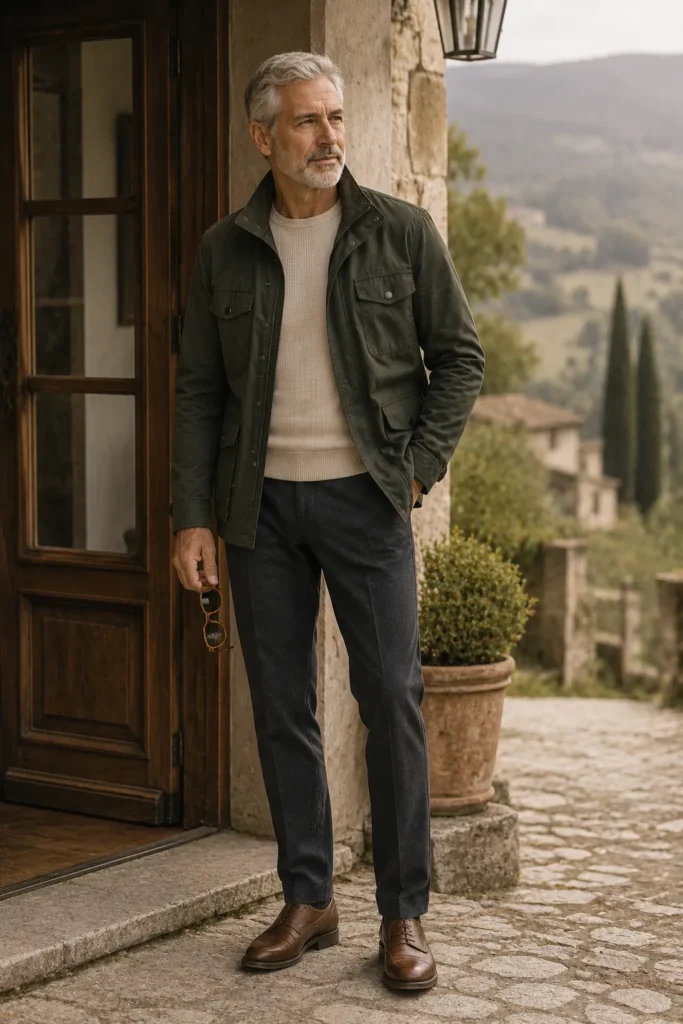
Too many layers can make the middle of an outfit look crowded. A better approach is to choose one main outer piece and let the rest stay simple.
For example, wear a lightweight field jacket over a plain knit and straight trousers. Or choose a clean cardigan over a shirt instead of adding another jacket on top.
A simple formula:
- One main outer layer
- One simple top underneath
- Clean trousers
- Shoes that match the outfit
This keeps the eye moving through the outfit instead of stopping at several thick layers.
12. Use Simple Accessories to Finish the Look Without Adding Bulk
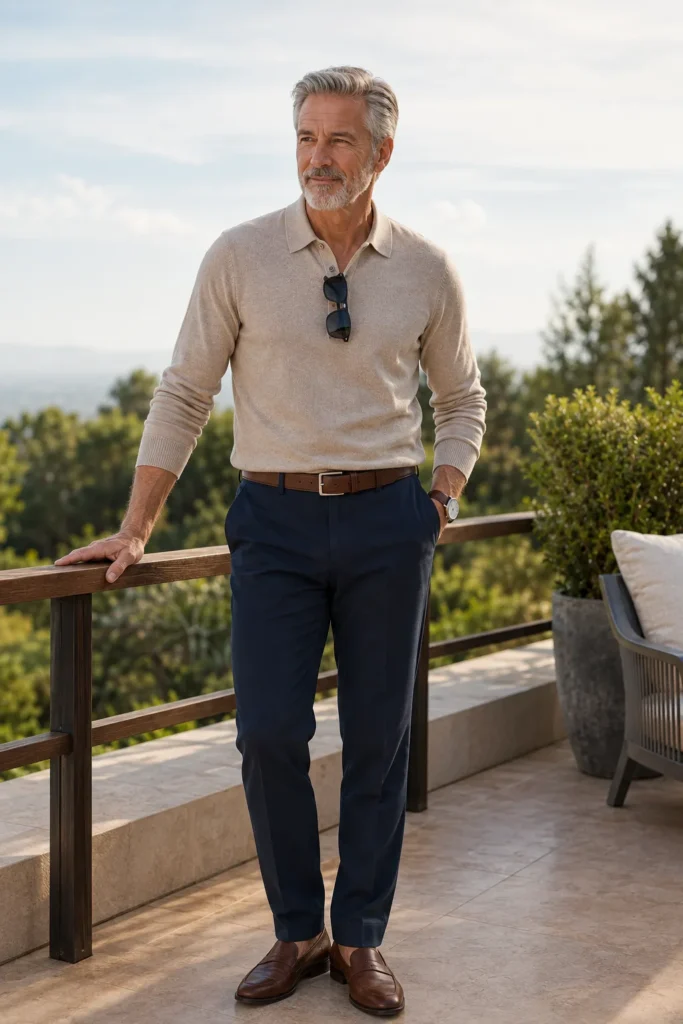
Accessories should support the outfit rather than compete with it.
A simple leather watch, a clean belt, classic sunglasses, or a small pocket square can give a basic outfit more polish. You do not need several accessories at once.
Try keeping the colors connected. A brown leather belt can work with brown shoes, while a dark watch strap can sit naturally with navy or charcoal clothing.
Keep it simple:
- One watch
- One belt
- Optional sunglasses
- One small extra detail
The goal is a finished outfit that still feels easy to wear.
💡 Quick Tip
Pick accessories that connect with something already in the outfit. Matching the belt and shoes, or keeping the watch strap close to the belt color, gives the look a more put-together finish without adding visual clutter.
Conclusion
Dressing slimmer after 50 is less about hiding your body and more about creating better balance. A clean trouser fit, controlled colors, lighter layers, simple jackets, and well-matched shoes can change how an outfit sits from head to toe.
You also do not need to replace your whole wardrobe. Start with two or three changes that fit your daily style, then build from there. The best outfits are the ones that look good and still feel comfortable after several hours.
Save these how to dress slimmer men over 50 ideas on Pinterest so you can come back to them the next time you are putting together an outfit.