
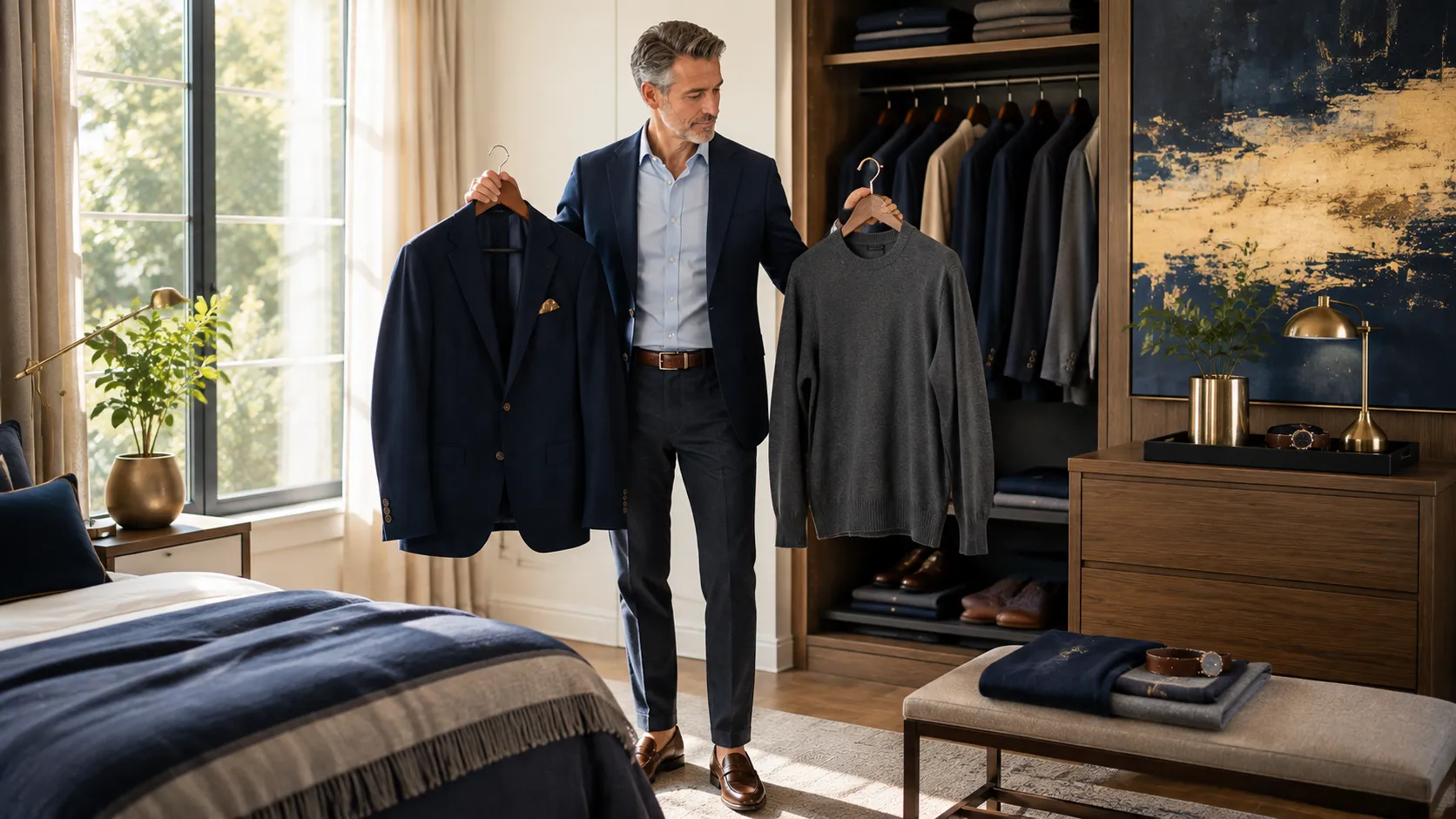
If you are standing in front of your closet wondering whether a blazer or sweater looks better, start with the occasion. The right layer can make the same shirt and trousers feel polished or relaxed. For men over 50, the goal is a clean outfit that feels comfortable and fits well.
This guide will help you choose between a blazer and a sweater without making the choice harder than it needs to be. You will see which layer works for dinners, casual days, office settings, and cooler weather. You will also learn how to match the layer with your shirt, trousers, shoes, and colors.
The blazer vs sweater men’s outfits over 50 choice often comes down to one question: how dressed up do you need to look? A blazer gives more structure and polish. A sweater gives a softer, more relaxed feel.
You do not need a large wardrobe for this. A few good layers, well-fitting trousers, simple shirts, and suitable shoes can cover many occasions.
Check the Occasion Before Choosing Your Layer
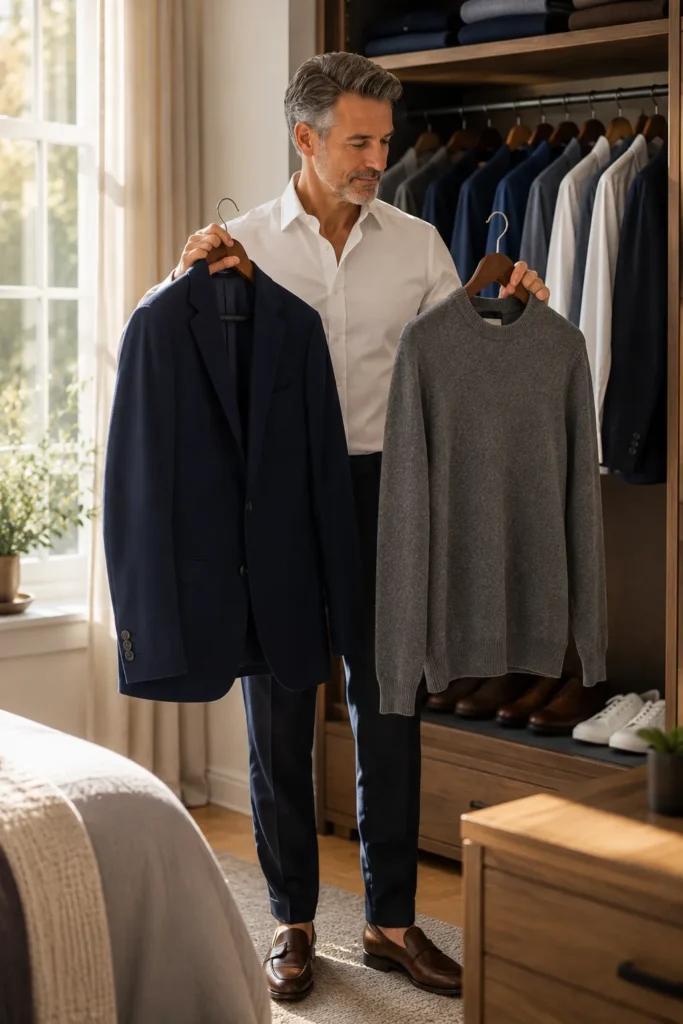
Think about where you are going before you reach for either piece. A dinner at a nice restaurant, a business meeting, or an evening event usually calls for a blazer. A weekend lunch, coffee with friends, or a relaxed family gathering can work well with a sweater.
Look at the dress code if there is one. If you are unsure, a navy or charcoal blazer with a simple shirt is usually a safer choice than dressing too casually.
Choose a Blazer for a Sharper Look
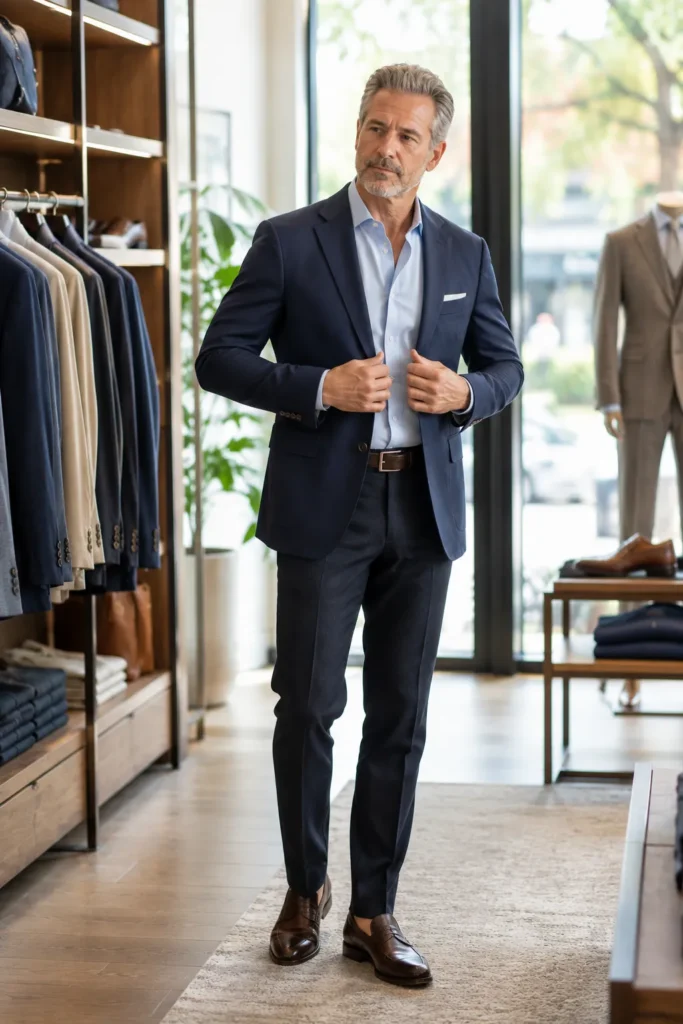
A blazer adds shape to your outfit and gives a shirt and trousers a more polished finish. Pick one for occasions where you want to look neat without wearing a full suit. Navy, charcoal, and medium brown are useful starting colors.
Keep the rest of the outfit quiet. Try a light blue shirt, dark chinos, and loafers with a navy blazer. The blazer should sit flat across your shoulders without pulling when you move.
Choose a Sweater for Relaxed Comfort

A sweater works well when you want warmth and a softer look. A fine-knit crew neck or V-neck can sit over a shirt without making the outfit feel heavy. Choose a smooth, thin knit for a cleaner shape.
For a relaxed weekend outfit, pair a neutral sweater with dark jeans and leather sneakers. For a slightly smarter look, swap the jeans for chinos and wear loafers. Avoid very thick sweaters if you want a neat, close-fitting outline.
Match the Layer to Your Shirt and Trousers
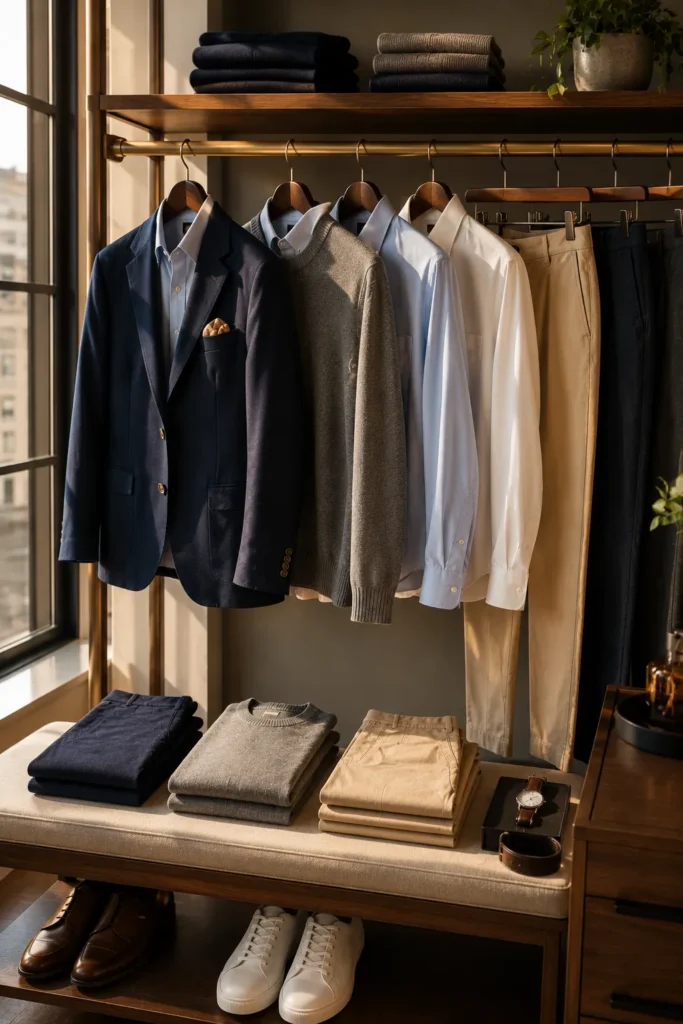
The shirt and trousers should support the layer rather than compete with it. A blazer looks clean with an Oxford shirt, chinos, or dark trousers. A sweater can work with a button-down shirt, chinos, or dark jeans.
Try these combinations:
- Navy blazer + light blue shirt + beige chinos
- Charcoal blazer + white shirt + dark trousers
- Grey sweater + white shirt + dark jeans
- Navy sweater + light blue shirt + khaki chinos
Keep patterns limited. If the shirt has a bold check, use a plain blazer or sweater.
Check the Fit Around Your Shoulders and Waist
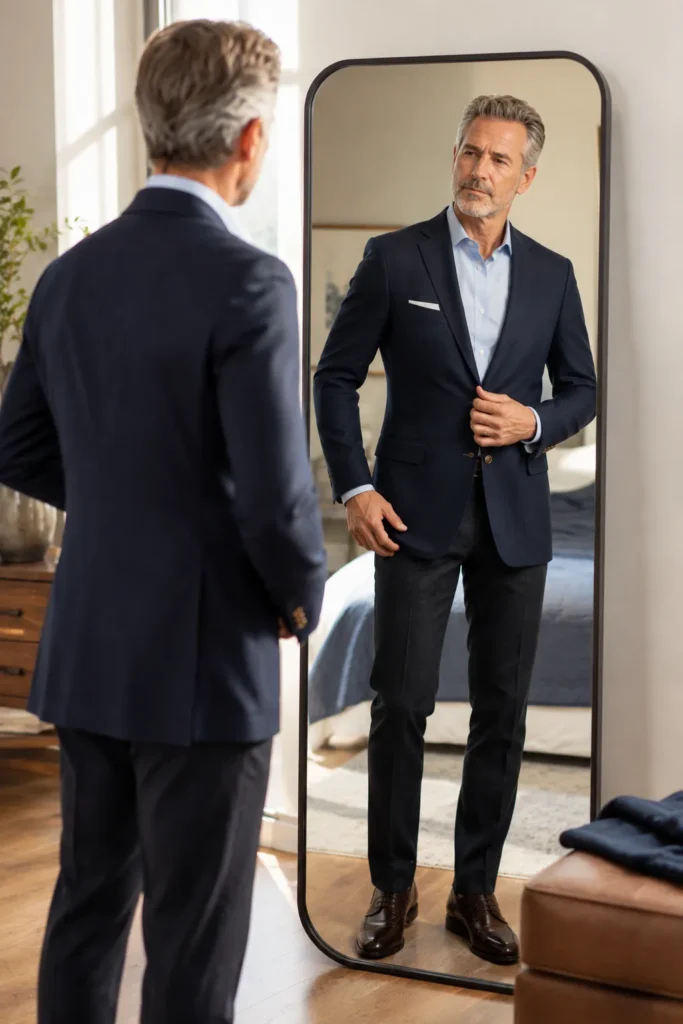
Stand in front of a mirror and move your arms normally. Your blazer should sit smoothly across the shoulders, with no strong pulling at the chest. A sweater should follow your body without clinging or hanging like a loose box.
Check the sleeves too. Shirt cuffs can show slightly under a blazer, while sweater sleeves should reach your wrist. If you can pinch a large amount of extra fabric at the sides, try a smaller size or a better cut.
Use Color to Keep the Outfit Clean and Age-Appropriate
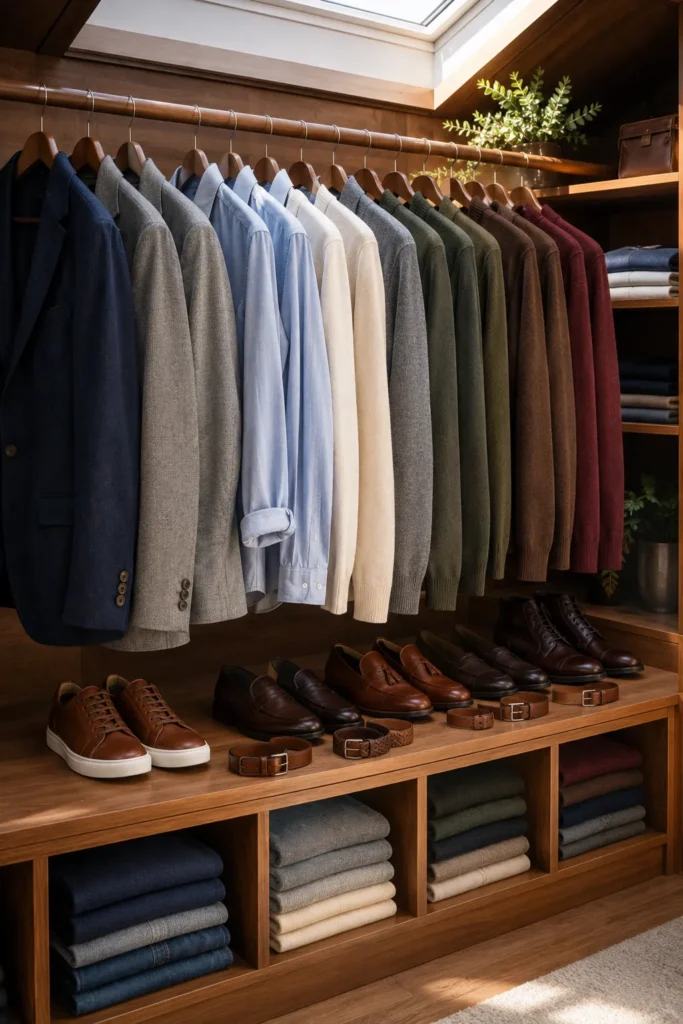
Start with colors that are easy to mix. Navy, grey, cream, olive, brown, white, and light blue give you plenty of outfit options. You can add stronger colors later once you know which shades you enjoy wearing.
For the blazer vs sweater men’s outfits over 50 choice, color can also guide you. A dark blazer creates a sharper look, while a lighter sweater often feels more relaxed. Keep your shoes and belt close in color when wearing leather.
A good rule is to use two or three main colors in one outfit. This keeps the look calm without making it boring.
Choose the Right Layer for the Weather
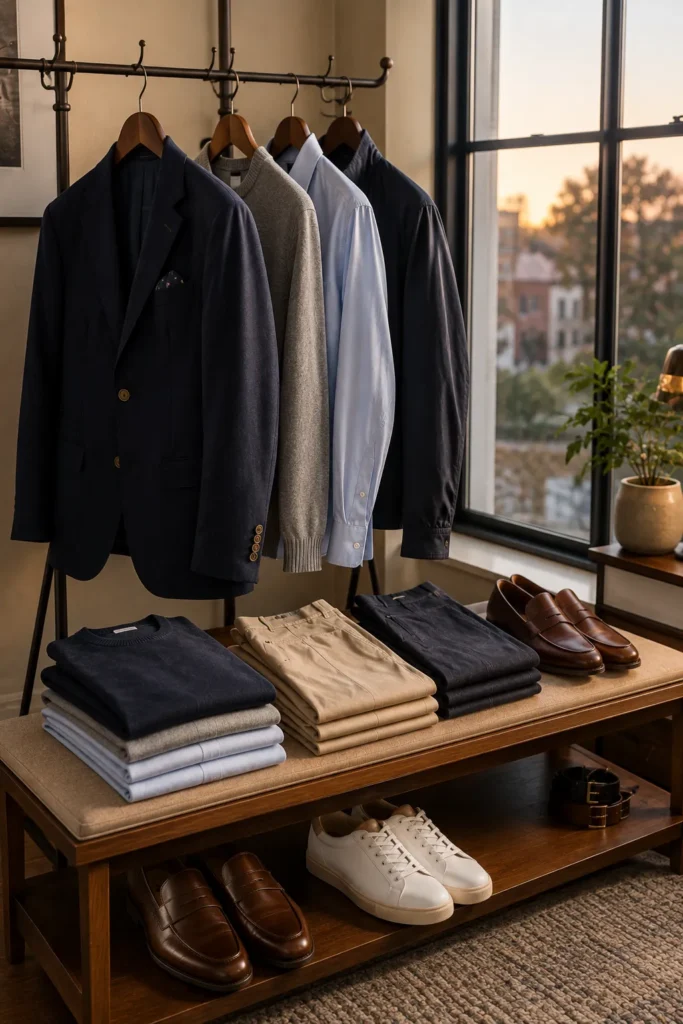
Temperature can change the best choice. A lightweight sweater works well on cool mornings and mild days. A breathable blazer can work in warmer weather if the fabric is light and unlined.
For colder days, wear a fine sweater under a blazer only if both pieces fit comfortably. Avoid thick knits under a fitted blazer because the extra bulk can pull across your chest and arms.
If the day is warm, choose cotton, linen blends, or lightweight wool. For cooler weather, merino wool or a medium-weight knit can give you warmth without making the outfit look bulky.