
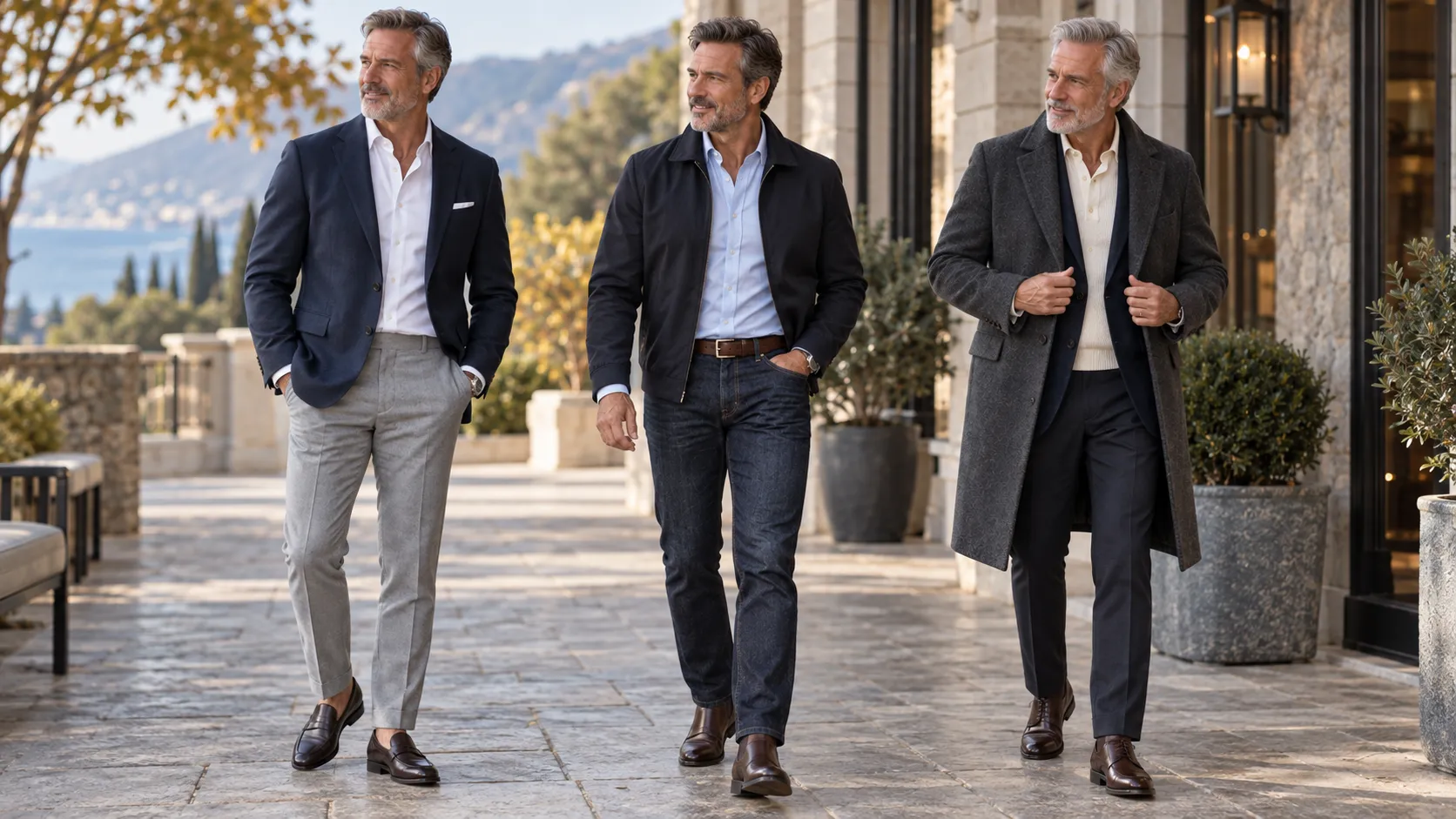
Getting dressed should not mean standing in front of your closet wondering what works together. For many men over 50, the problem is not having too few clothes. It is having clothes that do not fit well, do not match easily, or no longer suit daily life.
A few well-chosen basics can make a big difference. You need pieces that work with each other, feel comfortable, and look neat without making you feel overdressed. A good wardrobe also makes mornings easier because you already know which pieces can be combined.
This mens over 50 wardrobe essentials checklist focuses on the clothes that give you the most outfit options. There is no need to replace everything at once. Start with the pieces you are missing, check the fit of what you already own, and build from there.
The goal is simple: fewer clothing mistakes, easier outfit choices, and a wardrobe that feels more like your own style.
Navy Blazer: The Best Starting Point for a Mature Wardrobe

A navy blazer gives you one easy piece that can work across many outfits. The key is getting the fit right, especially around the shoulders and sleeves.
Start with these details:
- Shoulders: The seam should sit close to your natural shoulder edge.
- Sleeves: They should end around the wrist bone.
- Length: The blazer should cover most of your seat.
- Color: Choose a deep navy that works with grey, beige, white, denim, and brown.
A blazer should feel comfortable when you button it. If the front pulls into strong wrinkles, the jacket is likely too tight.
Keep Two Oxford Shirts Ready for Easy Outfits
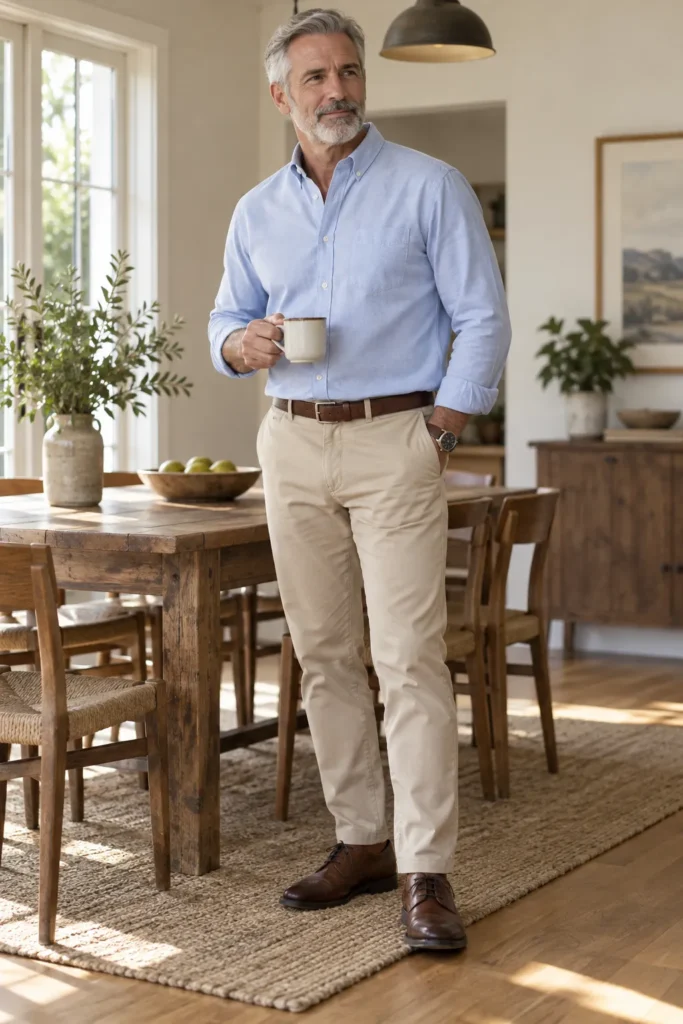
A good Oxford shirt solves the morning question of what to wear.
White gives you the cleanest option, while light blue adds a little contrast without becoming difficult to match.
Keep the fit relaxed enough for movement but avoid extra fabric around the waist.
💡 Quick Tip
Start with white and light blue. Both pair easily with navy trousers, grey trousers, chinos, jeans, and a navy blazer.
Choose Straight or Slim-Straight Chinos That Sit Cleanly
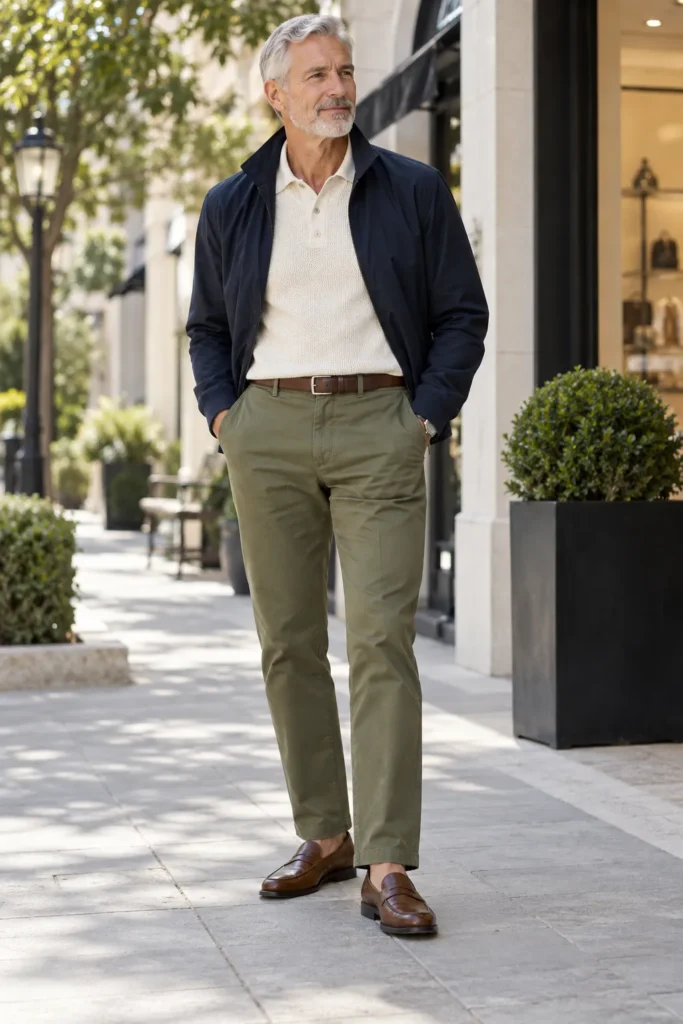
The right chinos should follow your leg without gripping it.
Look at the area around the knees and ankles. Too much fabric can make the outfit look untidy, while a very narrow leg can feel uncomfortable and dated quickly.
Check three areas before buying:
- The waistband should sit comfortably without digging in.
- The seat should lie flat without pulling.
- The hem should meet the shoe cleanly without a large pile of fabric.
Extra fabric gathers around the ankles and the trouser shape loses its clean line.
A straight or slim-straight leg follows the body and meets the shoe with less bunching.
Add Dark Straight-Leg Jeans for Casual Days
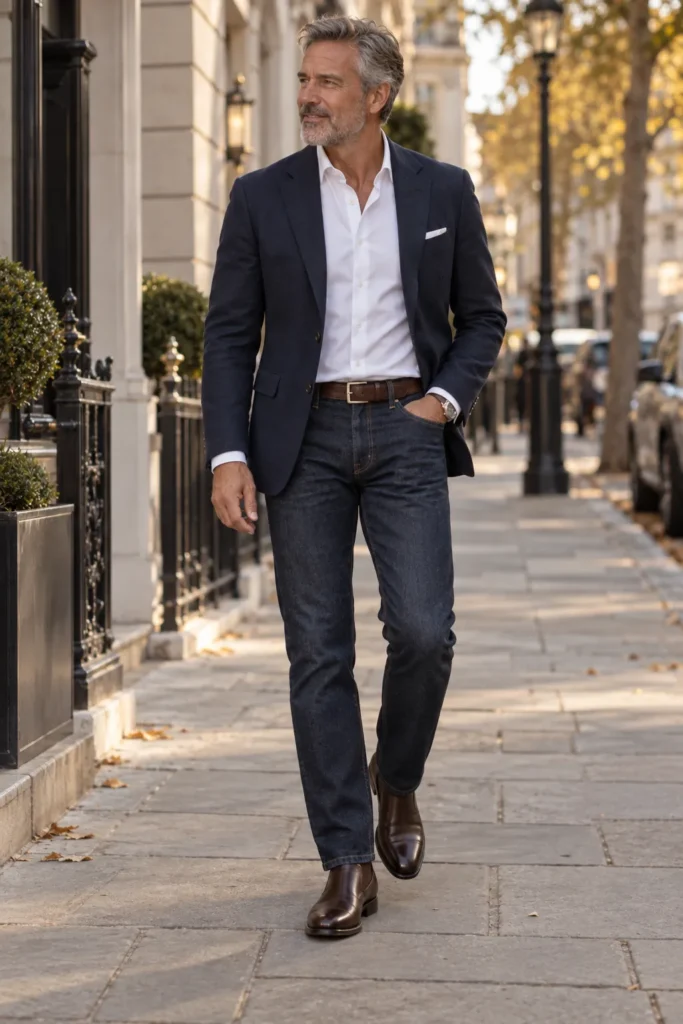
Dark jeans give you a casual option without making the outfit look too relaxed.
Choose a clean, dark wash with little or no fading. A straight or slim-straight leg usually gives you more room than very narrow jeans while keeping the outfit neat.
A simple fitting check
- Sit down: Make sure the waistband stays comfortable.
- Walk around: Check that the thighs do not pull.
- Check the hem: Look for a clean break above your shoes.
A dark pair can work with an Oxford shirt, knit polo, blazer, sweater, or simple jacket.
Choose a dark, clean wash with minimal fading.
Pick a straight or slim-straight leg that lets you move freely.
Pair the jeans with leather shoes or clean sneakers for a finished casual outfit.
Own Brown Leather Shoes That Work Beyond Formal Outfits

A brown leather shoe can cover more situations than a very formal black dress shoe.
Look for a simple shape with a clean leather upper. Brown works especially well with navy, grey, beige, olive, and denim.
The small details matter here. A shoe that is too bulky can make tailored trousers look heavy.
Choose clean brown leather with a simple shape.
Keep the leather polished and free from deep scuffs.
Avoid very chunky soles with dress trousers.
Skip heavily worn shoes for smarter outfits.
Add a Lightweight Knit Polo for Smart Casual Outfits
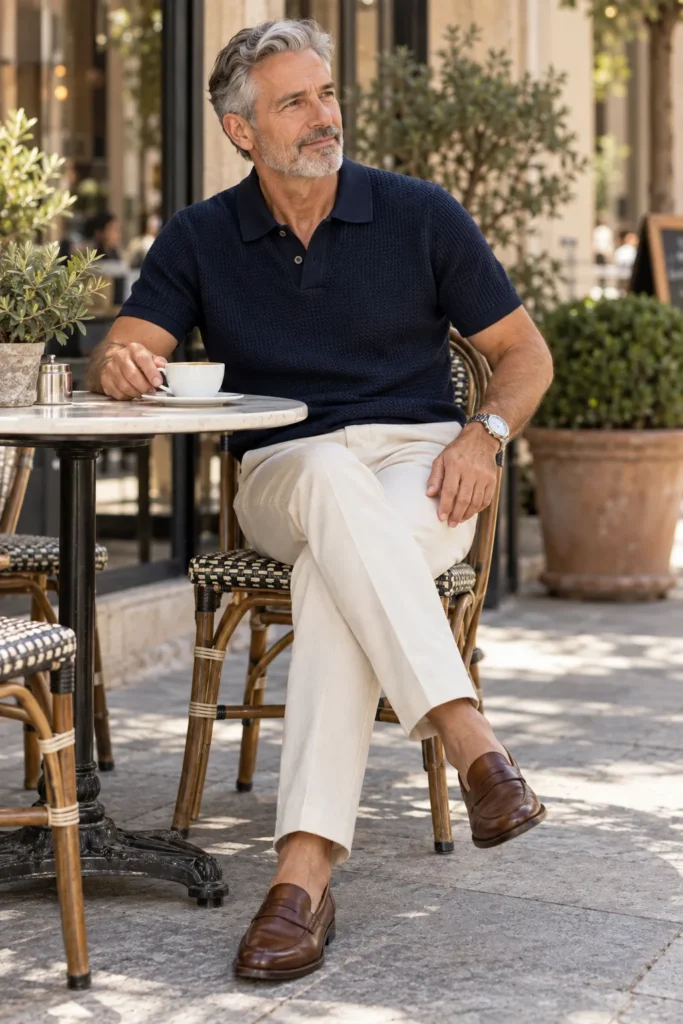
A knit polo sits between a T-shirt and a dress shirt. That makes it useful on days when a button-down feels too formal.
Look for a collar that holds its shape and a fabric that sits smoothly against the body. Neutral shades such as navy, cream, grey, and olive are easy starting points.
What to check before buying
Finish Cold-Weather Outfits With a Simple Wool Overcoat
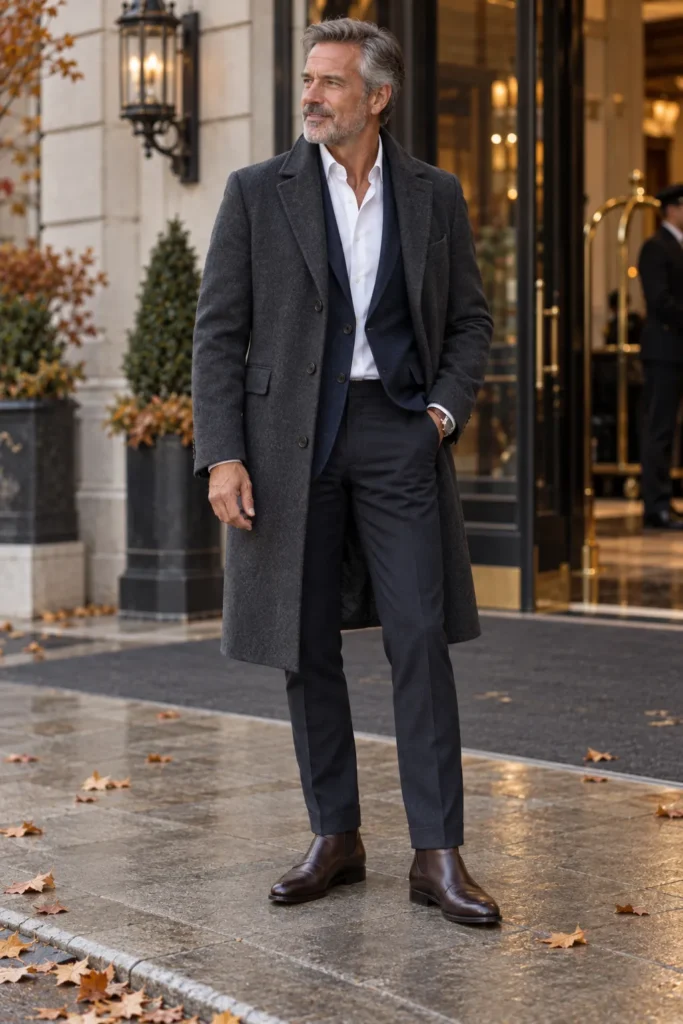
A wool overcoat earns its place because it can sit over a blazer, shirt, sweater, or knit polo.
Keep the shape clean. A neutral navy, charcoal, camel, or dark brown coat can work with much of the wardrobe already listed.
The sleeves should cover the shirt cuff, while the body should leave enough room for a layer underneath.
Buy an overcoat that fits over your normal clothes. A coat that looks good on a shirt but becomes tight over a blazer will get less use.
Complete the Checklist With a Simple Leather Belt and Watch
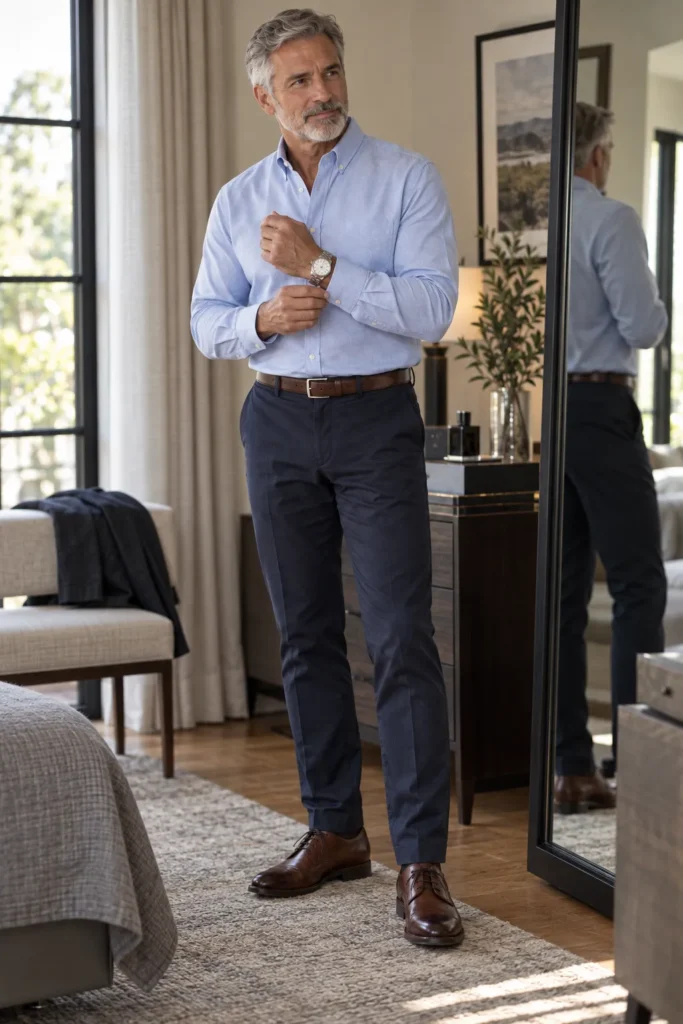
Accessories should finish the outfit, not become the main event.
A simple leather belt in brown or black gives your trousers a cleaner finish. A classic watch with a readable face can do the same without looking flashy.
| Simple choice | Too much detail |
|---|---|
| Belt close to your shoe color | Belt with large decorative hardware |
| Medium-width leather belt | Very wide or very thin belt |
| Clean, readable watch | Oversized watch with many details |
| Neutral metal or leather strap | Several competing accessories |
For everyday dressing, fewer accessories usually make the outfit easier to put together.
Conclusion
A good wardrobe after 50 does not need to be large. It needs to have pieces that fit well, work together, and suit the way you actually dress.
A navy blazer, Oxford shirts, chinos, dark jeans, leather shoes, a knit polo, an overcoat, and simple accessories can cover many everyday situations.
Use this mens over 50 wardrobe essentials checklist as a starting point. Check what you already own before buying anything new, and focus on fit before trends. Small changes can make your outfits feel cleaner and more comfortable.
Save this list on Pinterest so you can come back to it the next time you update your wardrobe.