
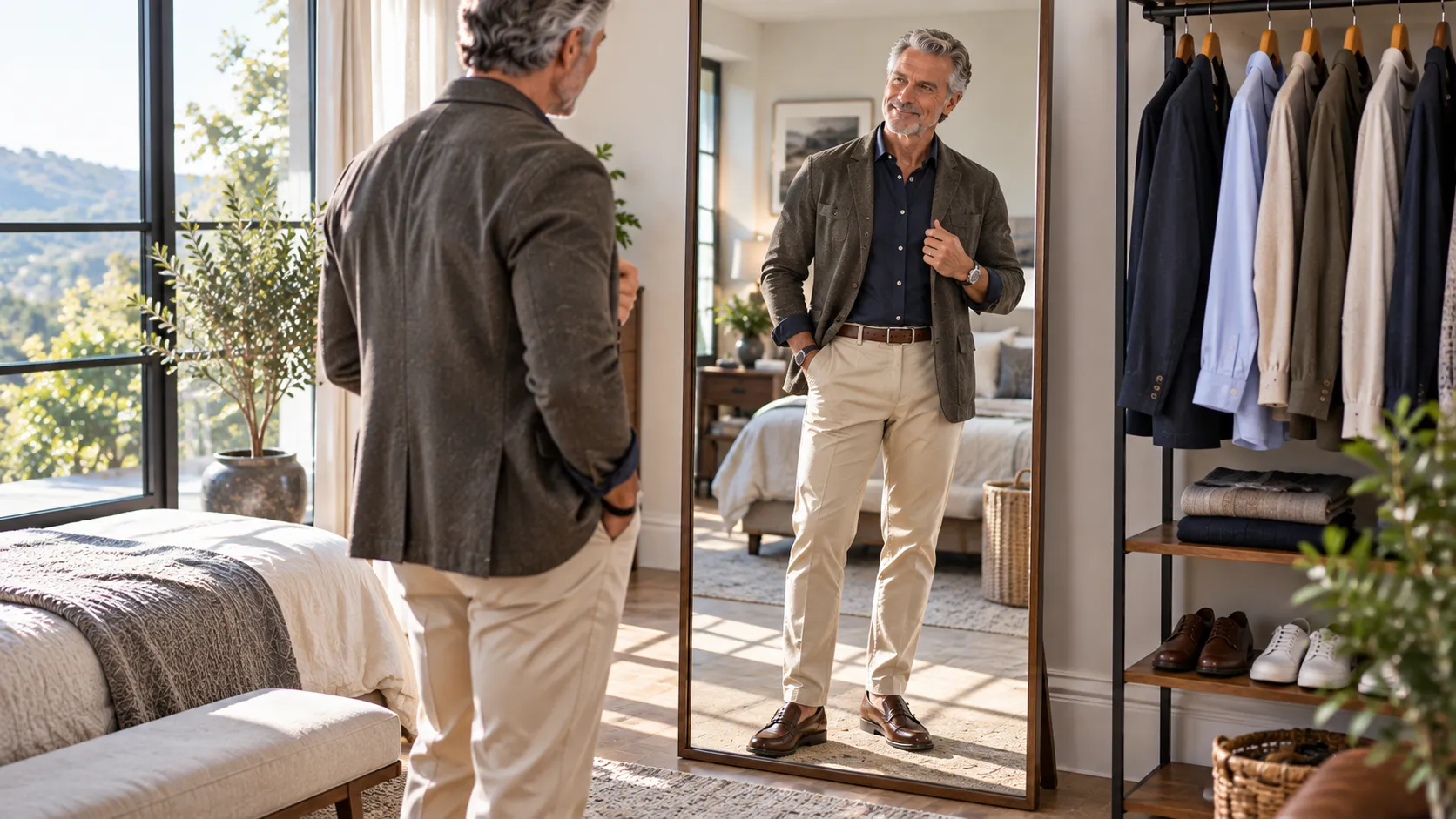
You may have plenty of clothes and still feel like you have nothing good to wear. Maybe some shirts feel too loose, some trousers look dated, or your old favorites no longer feel right. That can make getting dressed feel harder than it should.
Learning how to feel confident in your style after 50 does not mean chasing every new trend or replacing your whole wardrobe. Small changes can make a big difference. A better fit, cleaner shoes, a few good colors, and the right layers can make your everyday outfits feel much more put together.
This guide focuses on nine practical changes you can make without starting from zero. You will check what already works, remove what does not, build a few reliable outfits, and learn how to wear them with more confidence. The goal is not to dress younger. It is to look like a well-dressed version of yourself.
Check the fit of your current clothes
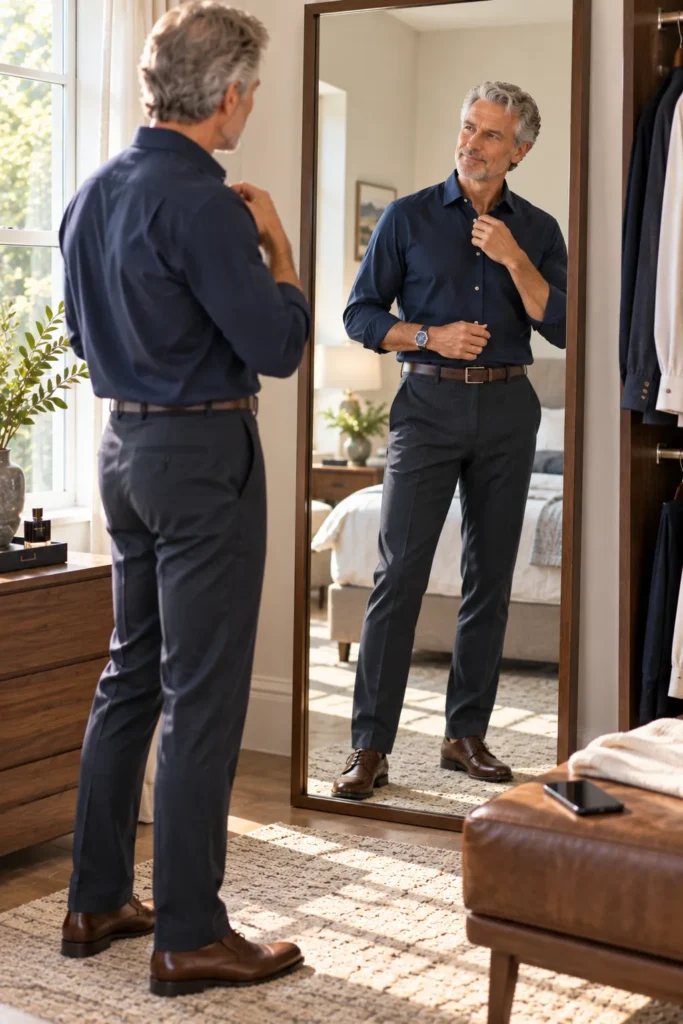
Stand in front of a full-length mirror wearing one outfit you use often. Check the shoulder seams, shirt length, sleeve length, trouser waist, and trouser break. Your clothes should follow your shape without pulling across the chest or hanging far from your body.
Take a quick phone photo from the front and side. Photos can show fit problems that are easy to miss in the mirror. Start with fit because even a basic shirt and trousers can look sharp when the proportions are right.
Clear out clothes that no longer work
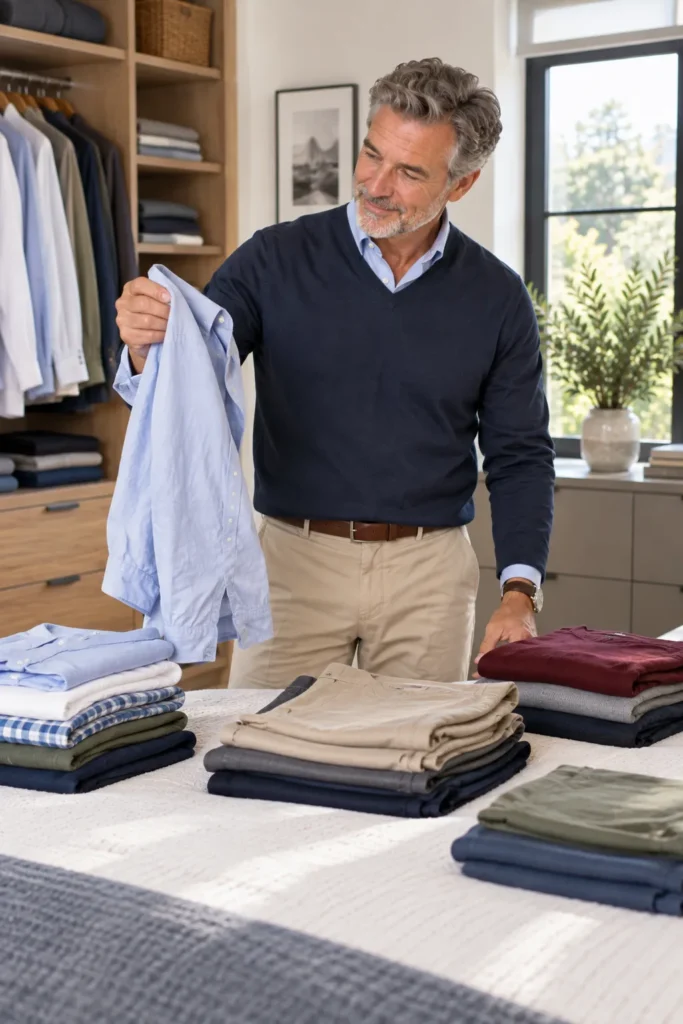
Take every item you have not worn in the last year and place it on the bed or a clean surface. Make three groups: keep, repair, and remove. Put clothes that are damaged, badly faded, uncomfortable, or hard to match in the remove group.
Do not keep something because you paid a lot for it years ago. Your wardrobe should support the way you dress now. If a good shirt needs a small repair or a trouser needs a minor alteration, place it in the repair group instead of throwing it away.
Build a small set of better basics
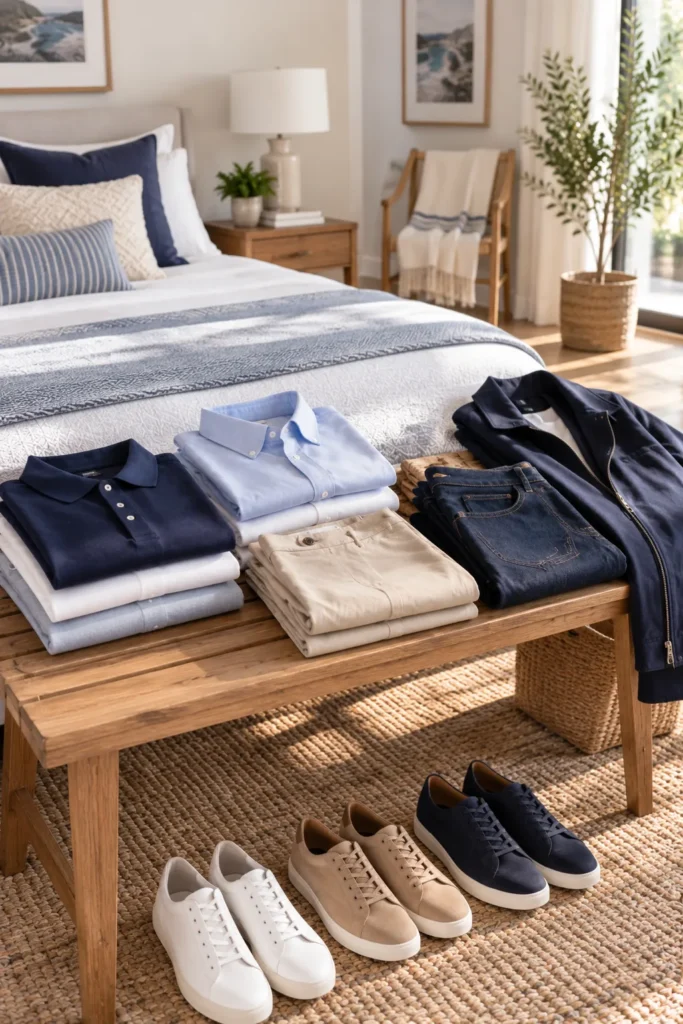
Choose a few pieces that can work with several outfits. A good starting point is 2–3 well-fitting shirts, 2 pairs of trousers or jeans, 1–2 polos, and 1 casual jacket or overshirt. Pick pieces you can wear in at least three different combinations.
Keep the shapes clean and the patterns easy to match. You do not need a large wardrobe to dress well. A small group of clothes that work together gives you more outfit choices with less effort.
Choose colors that make you feel good
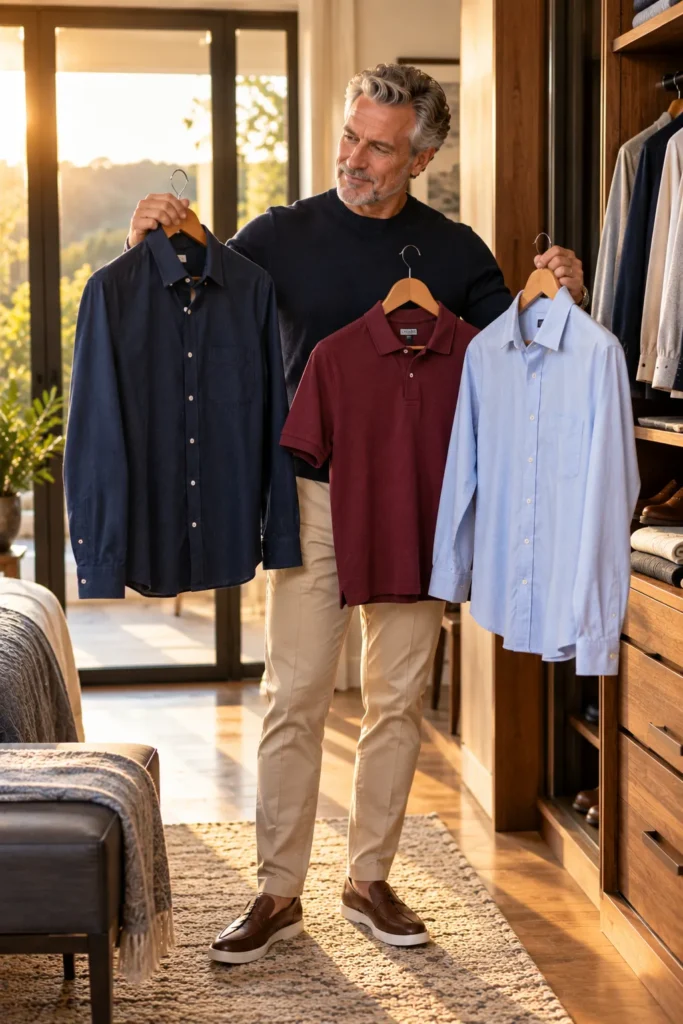
Start with two or three colors you already enjoy wearing. Navy, white, light blue, gray, olive, beige, and burgundy are useful starting points because they can work across casual and smart-casual outfits.
Keep the main outfit quiet, then add one stronger color. For example, pair a navy shirt with beige chinos, then add brown shoes. You can also use a burgundy polo with dark jeans. The goal is to make color feel natural, not like you are trying to follow a trend.
Upgrade your shoes before buying more clothes
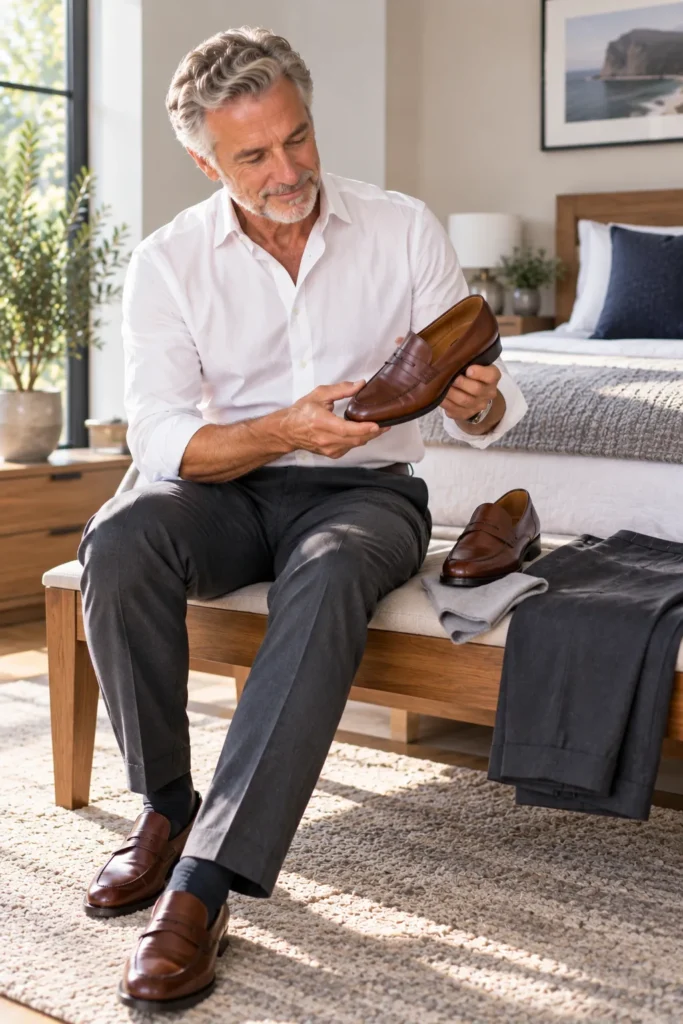
Look down at your shoes before buying another shirt. Worn-out soles, badly creased leather, dirty white uppers, or overly dated shapes can make an otherwise good outfit look tired.
Aim for 2–3 pairs that cover most of your week. A clean leather sneaker works for casual outfits, while brown loafers or simple leather shoes work well with chinos and smart trousers. Clean your shoes before deciding they need replacing. A good pair may need care rather than a trip to the store.
Take a full-body photo wearing your usual outfit and look at the shoes last. They can change the feel of the whole outfit more than you expect.
Add one strong layer to each outfit
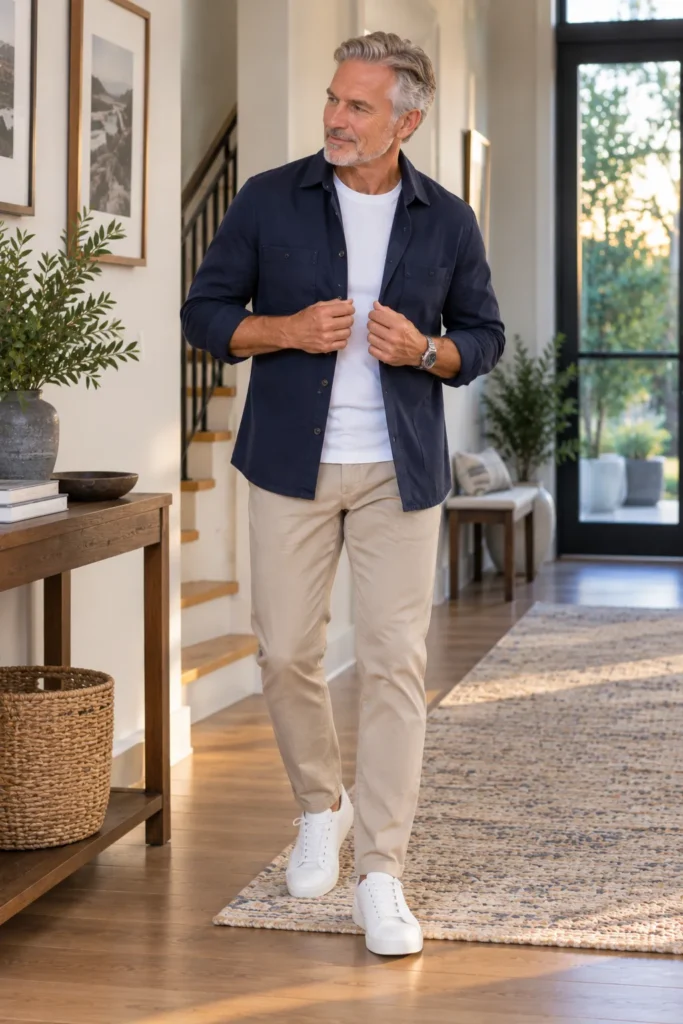
Choose one layer that gives your outfit shape. A lightweight overshirt, navy blazer, casual jacket, or fine-knit cardigan can make a plain shirt and trousers look more complete.
Keep the layer close to your natural shoulder line without pulling across your chest. Wear it open over a T-shirt or button-down for a relaxed look, or button it when you want a cleaner finish. One good layer is often enough. Adding several pieces can make a simple outfit feel busy.
Do not size up to hide your body. Extra fabric can make your shoulders, waist, and legs look less defined. If an item feels too loose, try a smaller size or have a tailor adjust it.
Use simple accessories to finish the look
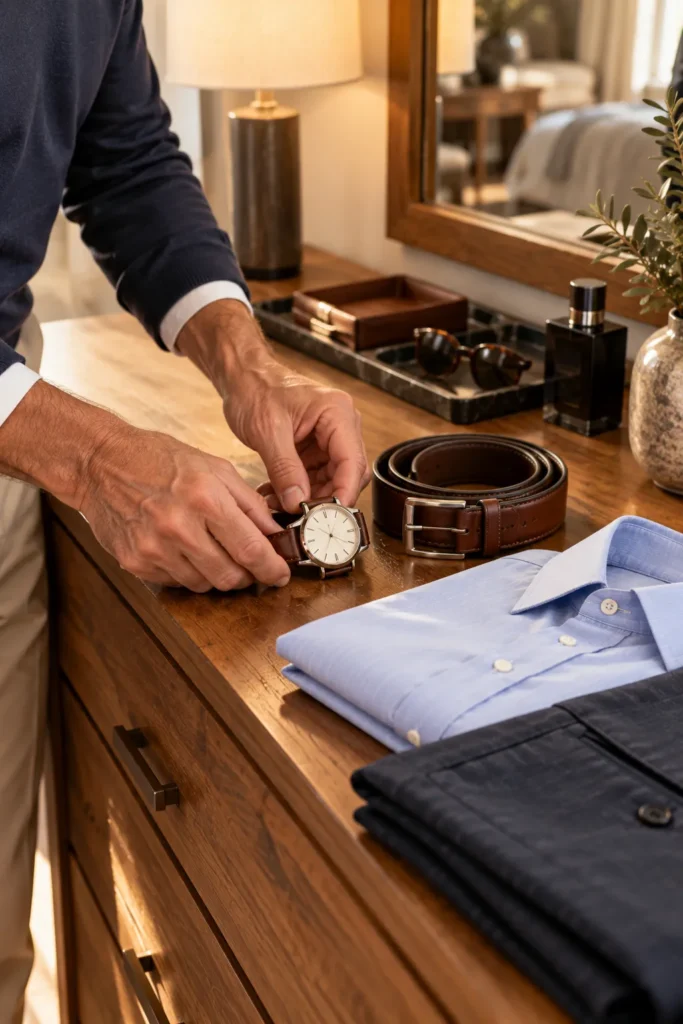
Pick one or two accessories that add a small amount of detail. A simple watch, leather belt, pocket square, or pair of sunglasses can make an outfit feel finished without making it look busy.
Match the belt and shoes when the outfit is dressier. For casual clothes, you have more room to mix things. Keep the shapes clean and avoid wearing several attention-grabbing accessories at once. Your clothes should still be the main focus.
Dress for the man you are now
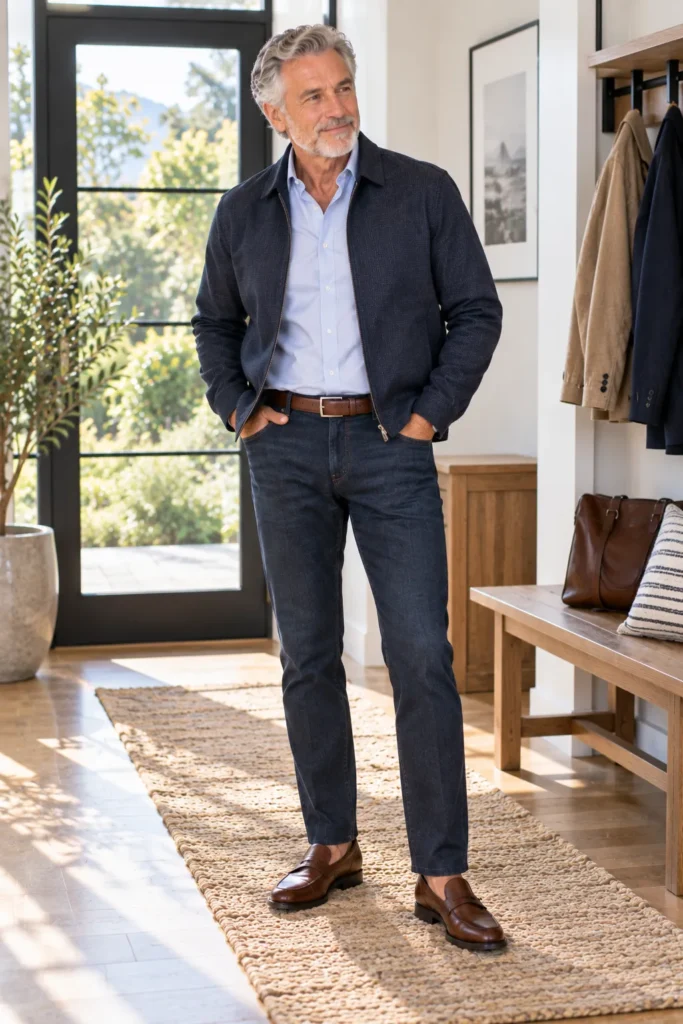
Look at how you spend most of your time before choosing new clothes. If your week is mostly casual, build around polos, neat shirts, jeans, chinos, sneakers, loafers, and relaxed jackets instead of filling your closet with formal pieces.
Your clothes should fit your real life. Choose comfort where it helps, but do not confuse comfort with oversized clothing. A shirt can feel good and still have a clean shape. The goal is to look current and comfortable without trying to dress like someone much younger.
Practice wearing your new style with confidence

Pick one complete outfit and wear it for a normal day instead of saving it for a special event. Walk, sit, drive, and spend time in it. Notice what feels good and what needs changing.
Give yourself one week to get used to the new look. Confidence often comes after you wear something a few times, not before. If an outfit feels too bold, change one piece rather than abandoning the whole look. Keep the parts that feel natural and build from there.
Before and After
Before
Clothes that do not fit well, worn shoes, too many pieces that do not work together, and outfits that feel unlike you.
After
Better-fitting clothes, cleaner shoes, simple color combinations, useful layers, and outfits that feel comfortable and natural.
Troubleshooting
| If This Happens | Try This |
|---|---|
| Your clothes feel loose and shapeless | Try a smaller size or have key pieces altered. |
| Your outfit has too many colors | Keep two main colors and use one extra color as a small accent. |
| Your outfit feels too formal | Swap dress shoes for clean sneakers or replace the formal jacket with an overshirt. |
| Your new clothes feel strange at first | Wear the outfit at home for a short time, then use it for a normal day. |
Common Questions
Should men over 50 follow fashion trends?
You can use trends as ideas, but you do not need to follow every new look. Focus on fit, comfort, good shoes, and clothes that suit your daily life.
What should I buy first?
Start with pieces you will wear often. A few good shirts, well-fitting trousers, clean shoes, and one useful layer can give you many outfit options.
Can I still wear jeans after 50?
Yes. Choose a clean pair with a straight or gently tapered fit. Avoid jeans that are extremely tight, very baggy, or heavily distressed if you want a cleaner look.
How can I feel more confident in new clothes?
Start with one small change and wear it often. Confidence grows as the outfit becomes familiar and you see that it works in real life.
Style Confidence Quick Reference
What You Need
Well-fitting shirts • Jeans or trousers • Polos • Clean shoes • One casual layer • Belt • Watch • Full-length mirror • Phone camera
9 Steps
- Check the fit of your current clothes.
- Clear out clothes that no longer work.
- Build a small set of better basics.
- Choose colors that make you feel good.
- Upgrade your shoes before buying more clothes.
- Add one strong layer to each outfit.
- Use simple accessories to finish the look.
- Dress for the man you are now.
- Practice wearing your new style with confidence.
You do not need a new wardrobe to look better after 50.
Start with fit, remove what no longer works, and build from a few clothes you enjoy wearing. Small changes can make getting dressed feel much easier.
You now have a practical way to learn how to feel confident in your style after 50 without chasing every trend.
Save this guide to Pinterest and come back to it the next time you want to refresh your wardrobe.