

If your clothes still look good but your outfits feel a little off after 50, you may not need a whole new wardrobe. The biggest changes are often small ones. A better fit, calmer colors, nicer fabrics, and cleaner shoes can make the same basic clothes look much better.
This guide breaks down mens outfits over 50 vs over 40 in a practical way. You will see what can stay in your closet, what may need an update, and how to put pieces together without looking too young or too old. You do not need expensive designer clothes. A few well-chosen pieces can give you more outfit choices.
The goal is comfort with a neat, grown-up look. You can still wear jeans, sneakers, T-shirts, polos, and casual jackets. The difference is how you choose and combine them.
Plan on about 20–30 minutes to check your current wardrobe using these steps. Then you can make a short shopping list for the pieces that are missing.
What You Need
At a Glance
- Compare the fit before changing your clothes
- Choose cleaner colors for mens outfits over 50 vs over 40
- Upgrade the fabrics you wear
- Build smarter casual outfits
- Add structure with jackets and layers
- Pick shoes that finish the outfit
- Reduce extra details and loud trends
- Dress for the occasion with more care
- Balance comfort with a polished look
- Build a simple wardrobe that works together
Compare the fit before changing your clothes
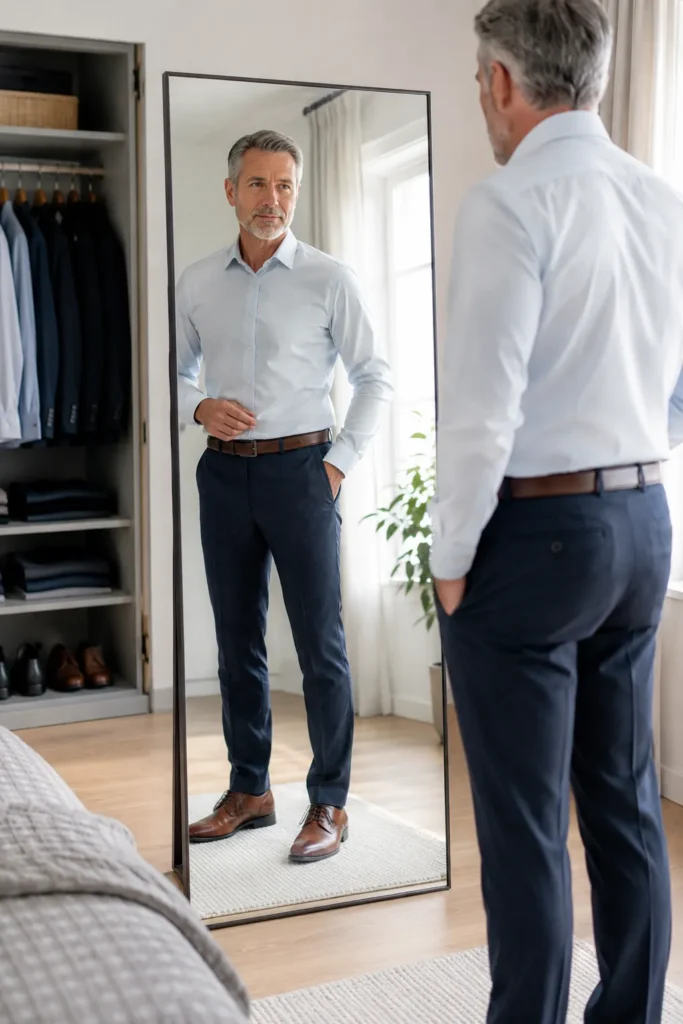
Stand in front of a mirror wearing one outfit you use often. Look at the shoulder seams, shirt length, trouser waist, and trouser break. Your clothes should follow your body without pulling or hanging far away from it. After 50, a clean fit can make basic pieces look more polished. You do not need tight clothes. A straight or gently fitted shape usually works better than very loose clothing.
Check the sleeves too. Shirt cuffs should reach the wrist, while jacket sleeves should show a small amount of shirt cuff. If your clothes have stretched or changed shape, mark those pieces for replacement rather than trying to build new outfits around them.
Choose cleaner colors for men’s outfits over 50 vs over 40
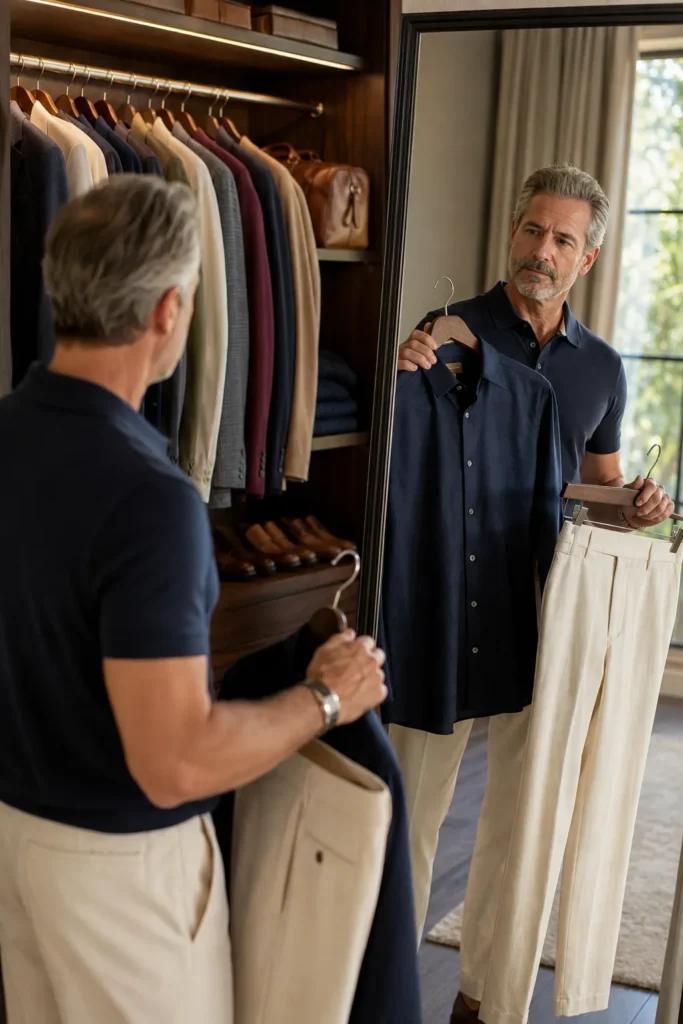
Start with colors that are easy to mix: navy, charcoal, gray, cream, white, olive, tan, and brown. These shades give you more outfit combinations without making you think about every piece separately.
You can still wear brighter colors. Use one stronger shade at a time, such as a burgundy sweater with navy trousers. If your shirt has a bold pattern, keep the trousers and shoes quiet. This keeps the outfit balanced and lets one piece stand out.
Upgrade the fabrics you wear
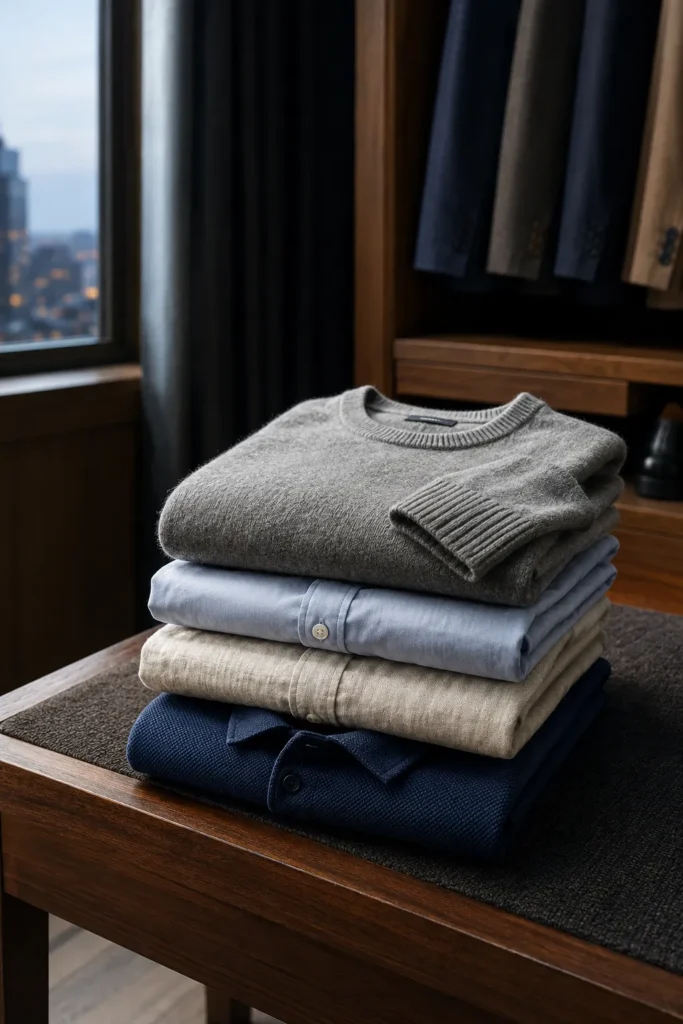
Fabric can change how an outfit looks before anyone notices the brand. Look for cotton shirts with a good weight, wool or wool-blend trousers, textured knitwear, linen for warm weather, and soft cotton polos.
Feel the fabric before buying it. It should feel comfortable against your skin and hold its shape after you move. A very thin shirt can look less polished, while a heavy fabric may feel uncomfortable in warm weather. Pick the fabric based on the season and where you plan to wear the outfit.
Build smarter casual outfits
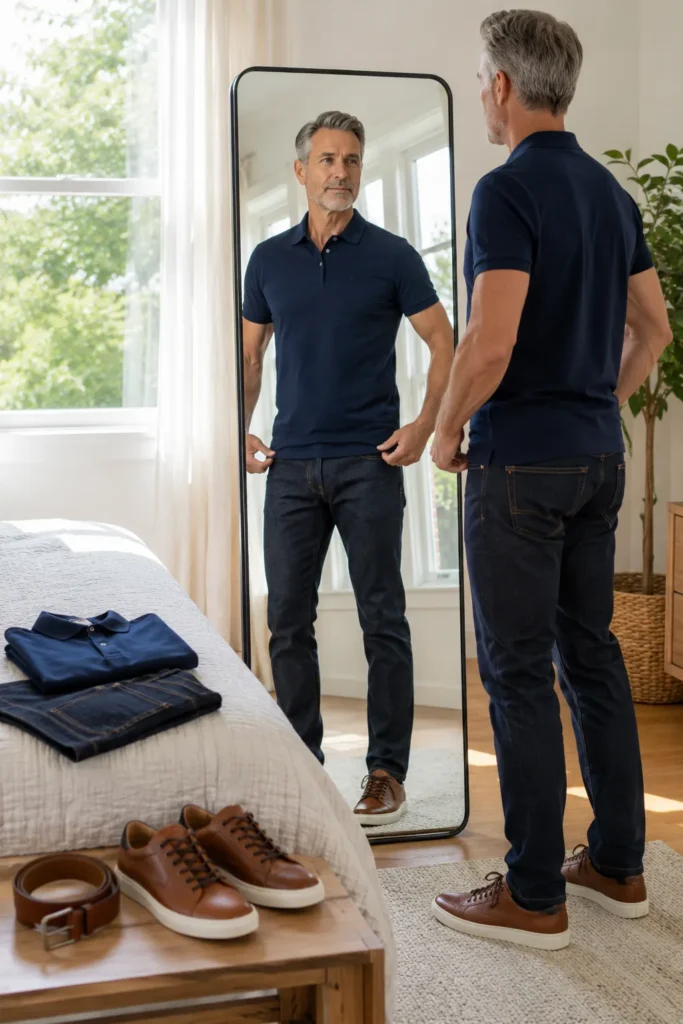
Save the worn-out T-shirt and gym-shoe combination for home or exercise. For daily casual wear, pair dark jeans or chinos with a polo, Oxford shirt, or plain knit shirt. Add clean leather sneakers, loafers, or simple suede shoes.
A good starting formula is: one fitted top + one clean trouser + one neat shoe. Keep the colors easy to match. This gives you a relaxed outfit that still looks put together without feeling formal.
Add structure with jackets and layers
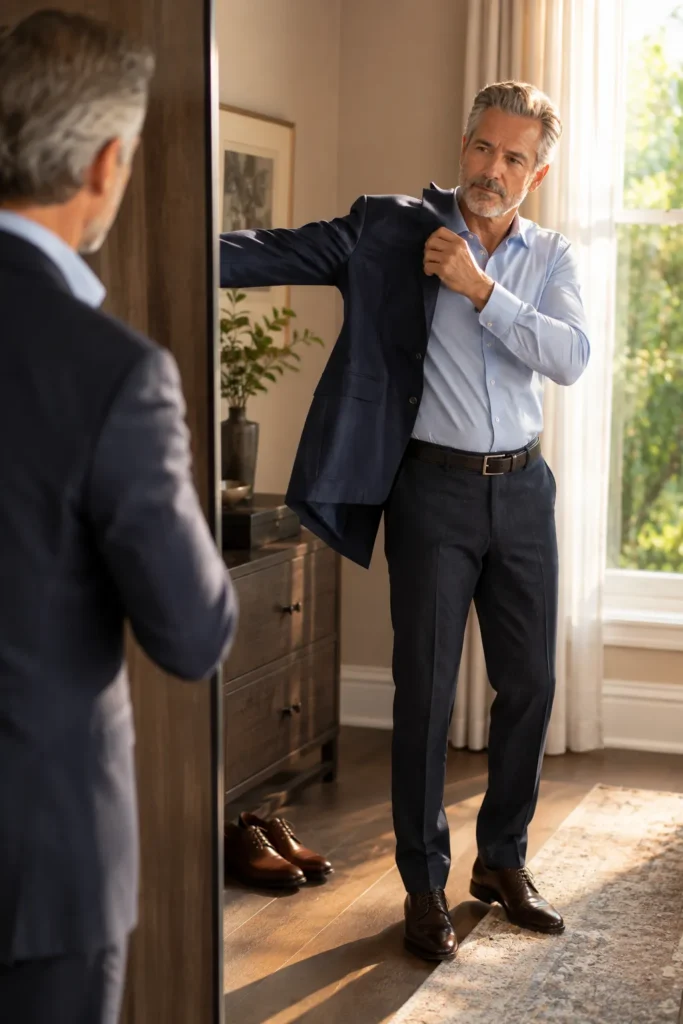
A jacket can give a simple outfit more shape. Try a lightweight field jacket, suede jacket, overshirt, cardigan, or unstructured blazer over a plain shirt or polo.
Choose a jacket that ends around the hip and lets you move your arms freely. For cooler weather, layer a knit sweater under a coat. Keep each layer fairly close to the body so the outfit does not look bulky. If the jacket has a strong texture or pattern, use plain pieces underneath it.
A navy blazer, dark jeans, and a light blue shirt can cover many settings. Change the shoes to make the same outfit more casual or more formal.
Pick shoes that finish the outfit
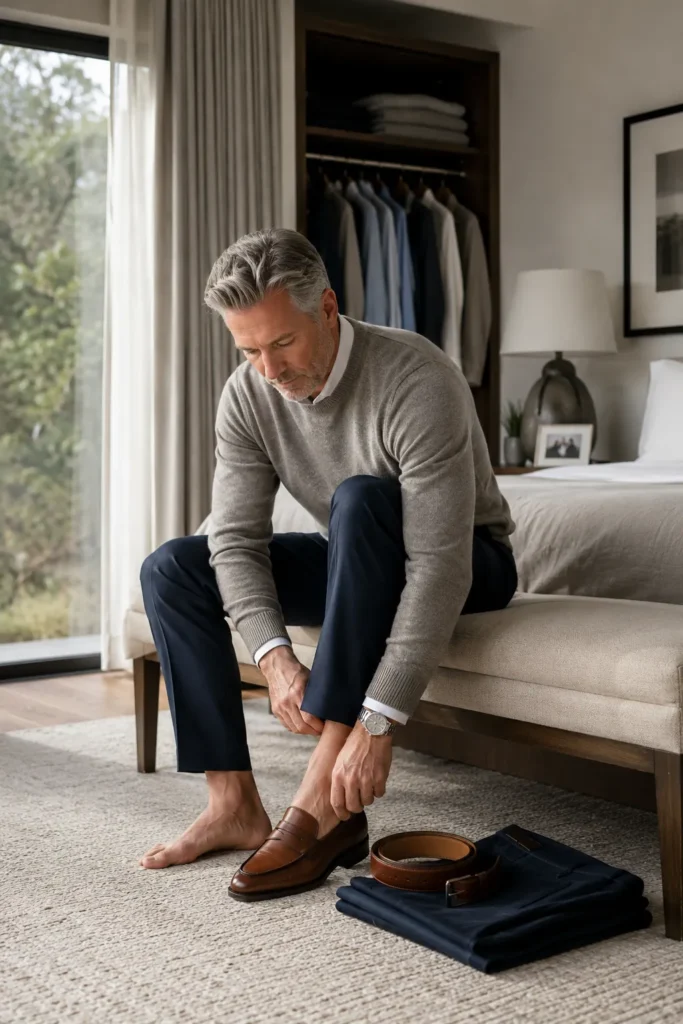
Shoes can make an otherwise good outfit look careless. Keep your main pairs clean and in good shape. For casual days, choose plain leather sneakers or suede shoes. For smarter outfits, use loafers, derby shoes, or polished Oxford shoes.
Match the shoe style to the trousers. Dark jeans work well with brown or black leather shoes, while chinos can handle loafers, suede shoes, or clean sneakers. Your belt should be close in color to your leather shoes when you are dressing up.
Do not let worn soles, dirty white sneakers, or cracked leather weaken a good outfit. Check your shoes before leaving home. Clean them or choose another pair.
Reduce extra details and loud trends
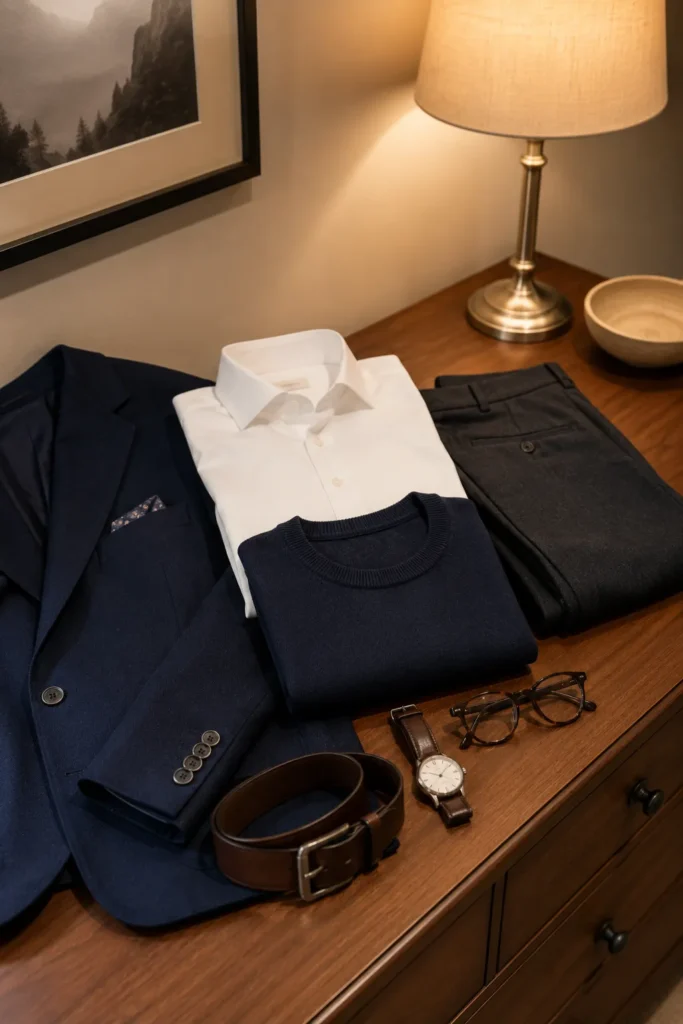
A polished outfit does not need many pieces competing for attention. Keep logos small, patterns controlled, and accessories useful. A plain watch, leather belt, pocket square, or simple pair of glasses can add enough detail.
You can still wear current styles after 50. Pick one trend at a time and keep the rest of the outfit classic. For example, try a modern jacket with straight-leg trousers and a plain shirt instead of building the whole outfit around several new trends.
Dress for the occasion with more care
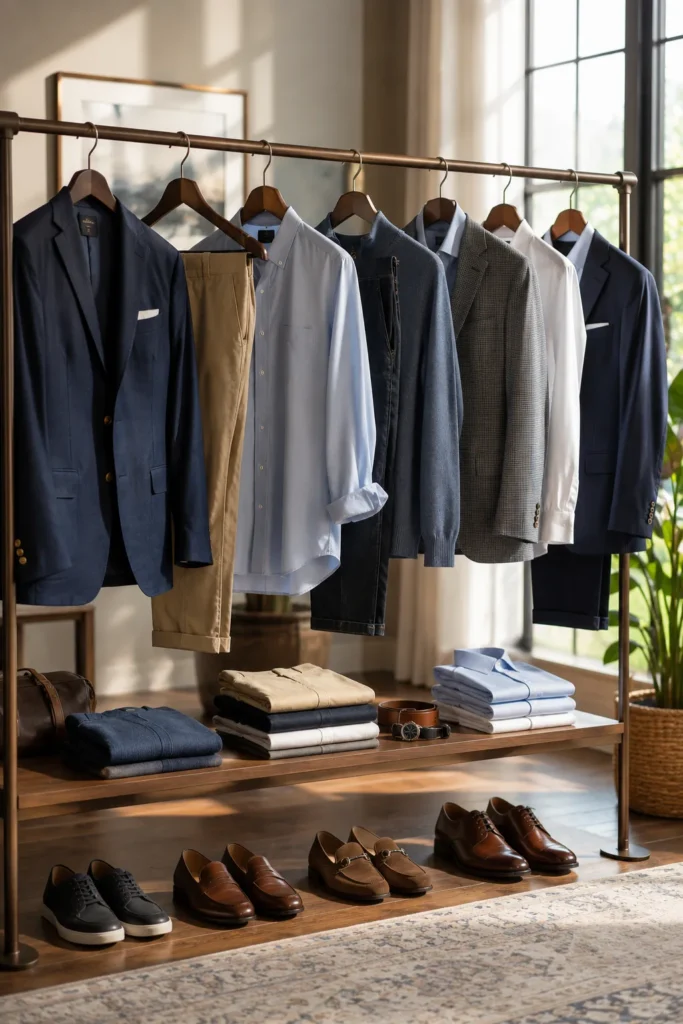
Match the level of your clothes to the place you are going. Jeans and a polo can work for a casual lunch, while chinos and an Oxford shirt suit a smarter setting. A blazer, dress trousers, and leather shoes make more sense for a formal dinner or work event.
Before leaving, check three things: fit, shoes, and overall neatness. If one piece feels too casual for the event, replace that piece rather than changing the whole outfit. This keeps getting dressed quick and gives you more use from the clothes you already own.
Match the Outfit to the Setting
Jeans + polo + sneakers
Chinos + shirt + loafers
Trousers + shirt + blazer
Suit + dress shirt + leather shoes
Balance comfort with a polished look
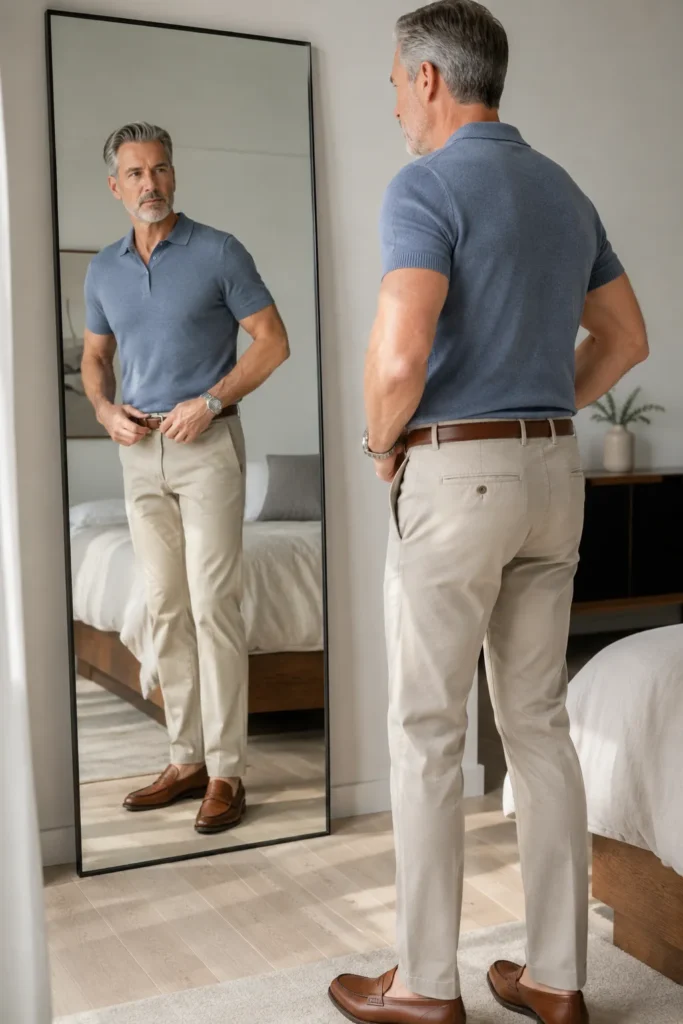
Comfort does not mean wearing oversized clothes from morning to night. Choose fabrics that feel good, then check the fit before buying. Stretch chinos, soft cotton polos, knit shirts, and unstructured jackets can give you room to move while keeping a clean shape.
Pay attention to the waist and shoulders first. Trousers should sit securely without digging in, and shirts should allow you to move without pulling across the chest.
If a piece feels great but looks too loose, try a smaller size or have it altered. A small change in fit can make a big difference.
Build a simple wardrobe that works together
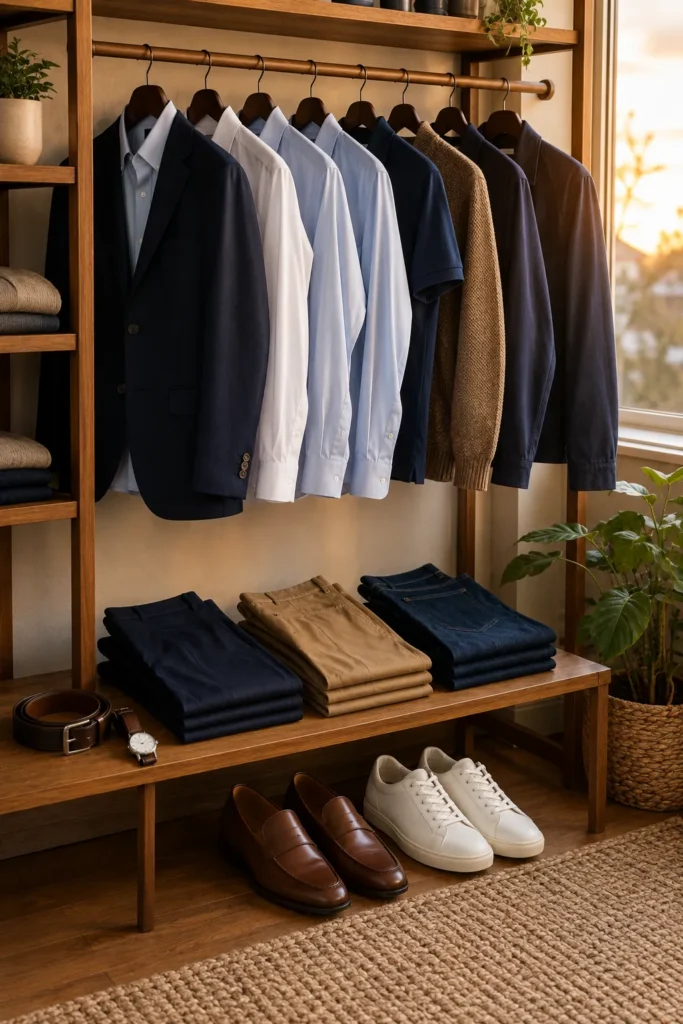
Choose a small group of pieces that can work with each other instead of buying clothes for one outfit at a time. Start with 2–3 pairs of trousers, 3–5 shirts or polos, 1–2 knit layers, 1 blazer or casual jacket, and 2–3 pairs of shoes.
Keep your main colors easy to mix. Navy trousers can work with white, blue, cream, or burgundy tops. Tan chinos can work with navy, white, olive, or brown. This makes getting dressed faster and helps you avoid clothes that look good alone but do not work with anything else.
Before and After
Before
Loose shirt, faded jeans, worn sneakers, several loud details, and little attention to how the pieces work together.
After
Clean-fitting shirt, dark jeans or chinos, neat shoes, simple colors, and one well-chosen layer.
Frequently Asked Questions
Can men over 50 still wear jeans?
Yes. Choose jeans with a clean fit and a simple finish. Dark or medium washes are easy to pair with polos, shirts, knitwear, and jackets.
Should men over 50 stop wearing sneakers?
No. Clean, simple sneakers can work very well. Choose low-profile styles in leather, suede, or another neat material instead of heavily worn athletic shoes for everyday outfits.
Are bright colors still suitable after 50?
Yes. Age does not mean you have to avoid bright colors. Use one strong color at a time and pair it with calm shades such as navy, gray, cream, or brown.
Should clothes be looser after 50?
They can have a little more room, but loose does not mean oversized. Check the shoulders, waist, sleeves, and trouser length so the clothes follow your shape without pulling.
How can I look younger without dressing like a teenager?
Keep your clothes current through fit, clean shoes, fresh colors, and modern but classic pieces. Avoid copying every young trend. A well-fitted jacket or updated pair of trousers can make an outfit feel fresh without looking forced.
What is the biggest change in men’s outfits over 50 vs over 40?
There is no rule that says your style has to change at a certain birthday. The useful shift is often toward better fit, better fabrics, cleaner combinations, and clothes that suit the occasion. Your personal style can stay the same while these details improve.
Mens Outfits Over 50 Quick Reference
Keep ready: dark jeans, chinos, shirts, polos, plain T-shirts, knitwear, one jacket or blazer, clean sneakers, loafers or leather shoes, a simple belt, and a classic watch.
10 Steps
- Check the fit of your clothes.
- Choose clean, easy-to-match colors.
- Pick comfortable, better-quality fabrics.
- Build smarter casual outfits.
- Add shape with jackets and layers.
- Keep your shoes clean and suitable.
- Limit loud trends and extra details.
- Dress for the setting.
- Choose comfort without losing a neat shape.
- Build a wardrobe where the pieces work together.
Final Thoughts
Men’s outfits over 50 vs over 40 do not need a complete style change.
Focus on fit, color, fabric, shoes, and the setting.
Keep the clothes that still work and replace the pieces that look worn or no longer fit well.
Your next step is to check your closet and make a short list of the pieces you actually need.
Save this guide on Pinterest so you can come back to it when you plan your next outfit.