
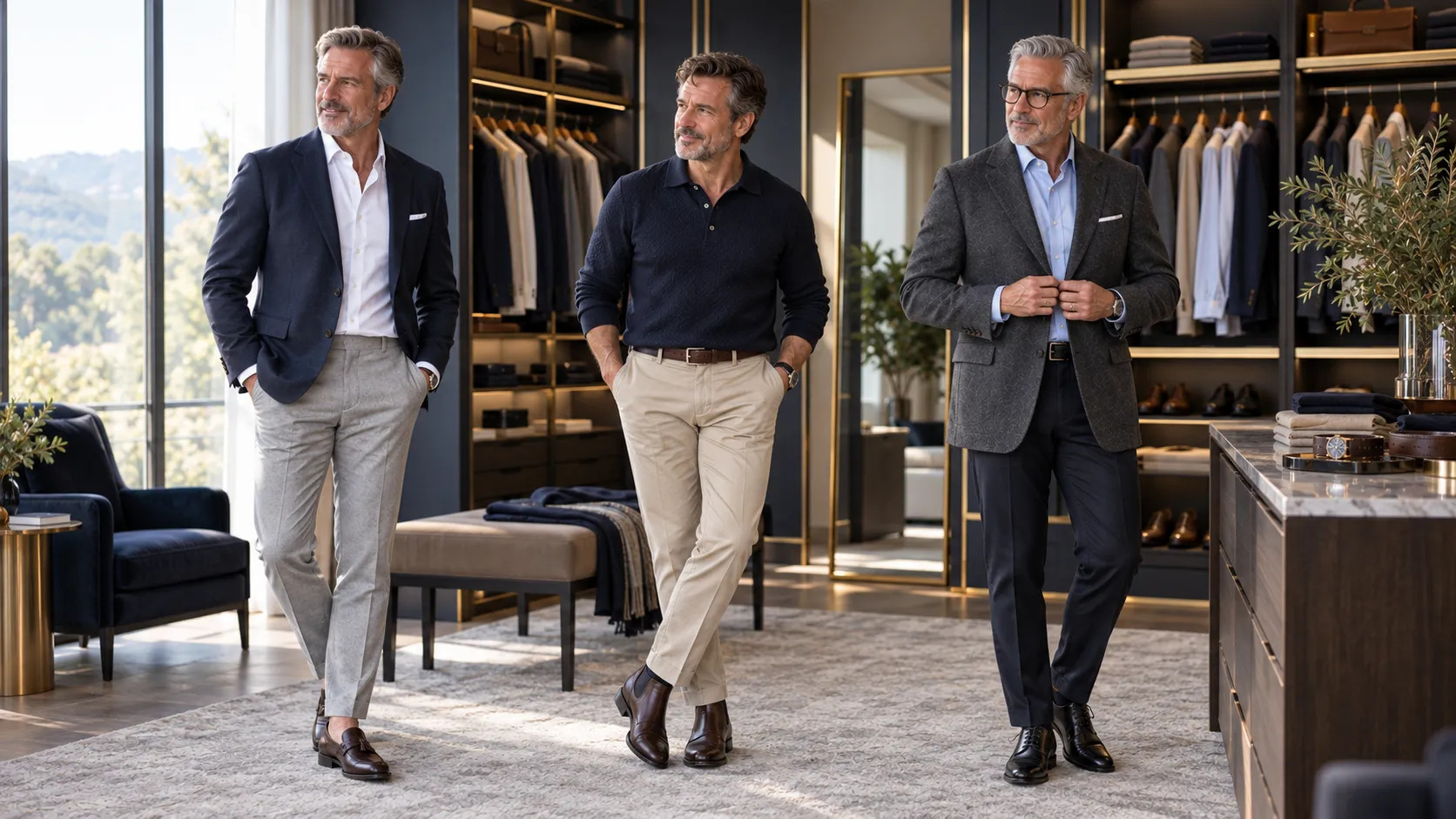
Style does not get harder after 50. It gets more useful. The goal is no longer to own a closet full of clothes that look good only in one setting. You need pieces that fit well, work together, and make getting dressed easier.
An ultimate mens style guide over 50 should start with the basics. A good shirt cannot rescue trousers that fit badly. Expensive shoes will not fix an outfit with too many competing colors. Small details matter, but they work best after the foundation is right.
This guide breaks your wardrobe into nine practical areas. You will see what to buy, what to pair together, and where simple changes can make an outfit feel more polished. You do not need to replace everything at once. Start with the clothes you wear most, fix the fit, then build from there.
1. Start With the Right Fit: Shirts, Trousers, and Jackets That Sit Well
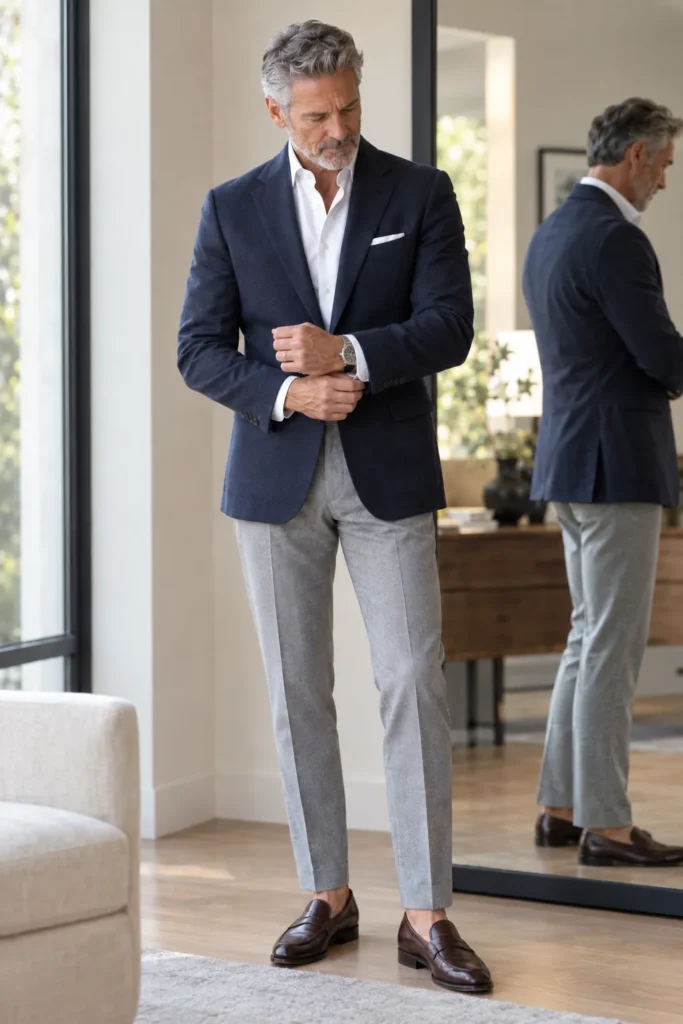
Fit is the first thing people notice, even when they cannot explain why an outfit looks right.
A shirt should follow your body without pulling across the chest or hanging too far past the hips. Trouser legs should fall cleanly without a large pile of fabric around the shoes. For jackets, the shoulder line deserves special attention because a poor shoulder fit is hard to hide.
A useful rule is simple: fit first, brand second.
- Check the shoulder seam on jackets and shirts.
- Make sure trousers sit comfortably at the waist.
- Keep shirt sleeves long enough to reach the wrist.
- Avoid very loose or very tight clothing.
2. Build a Simple Color Palette You Can Wear Every Week
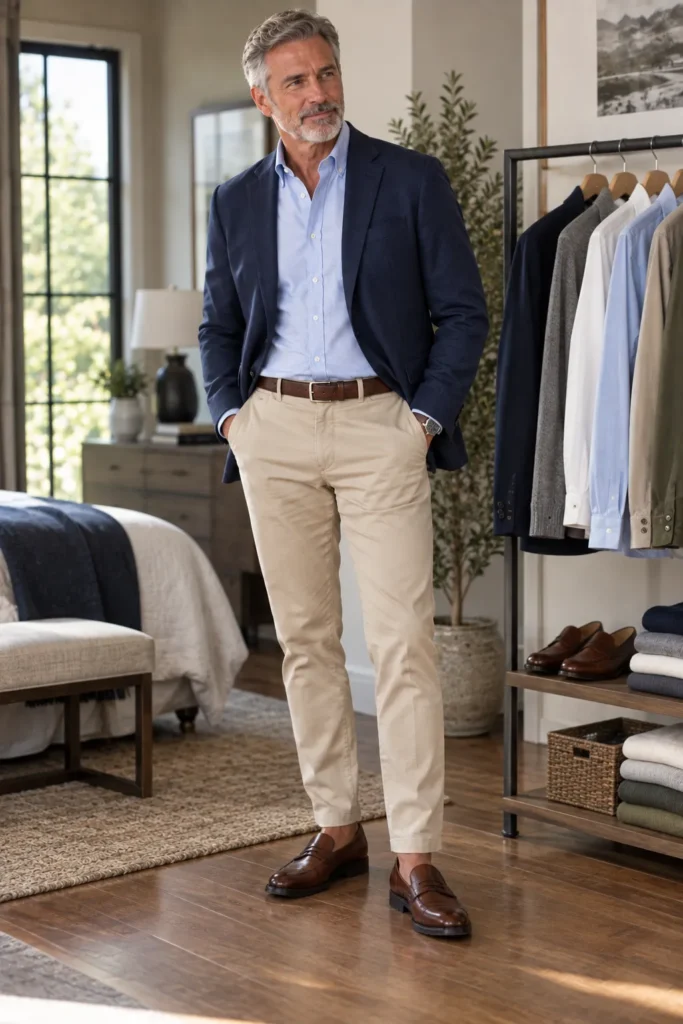
A closet becomes much easier to use when most pieces work together.
Start with dependable colors such as navy, grey, white, light blue, beige, brown, and dark denim. These shades give you many combinations without making every outfit feel planned for hours.
Then add one or two stronger colors that suit your taste.
| Base Colors | Accent Colors |
|---|---|
| Navy | Burgundy |
| Grey | Olive |
| White | Rust |
| Beige | Forest green |
| Dark denim | Soft blue |
Keep the strongest color to one part of the outfit if you want an easy, clean look.
| Base Colors | Accent Colors |
|---|---|
| Navy | Burgundy |
| Grey | Olive |
| White | Rust |
| Beige | Forest green |
3. Choose 5 Core Shirts That Cover Most Dress Codes
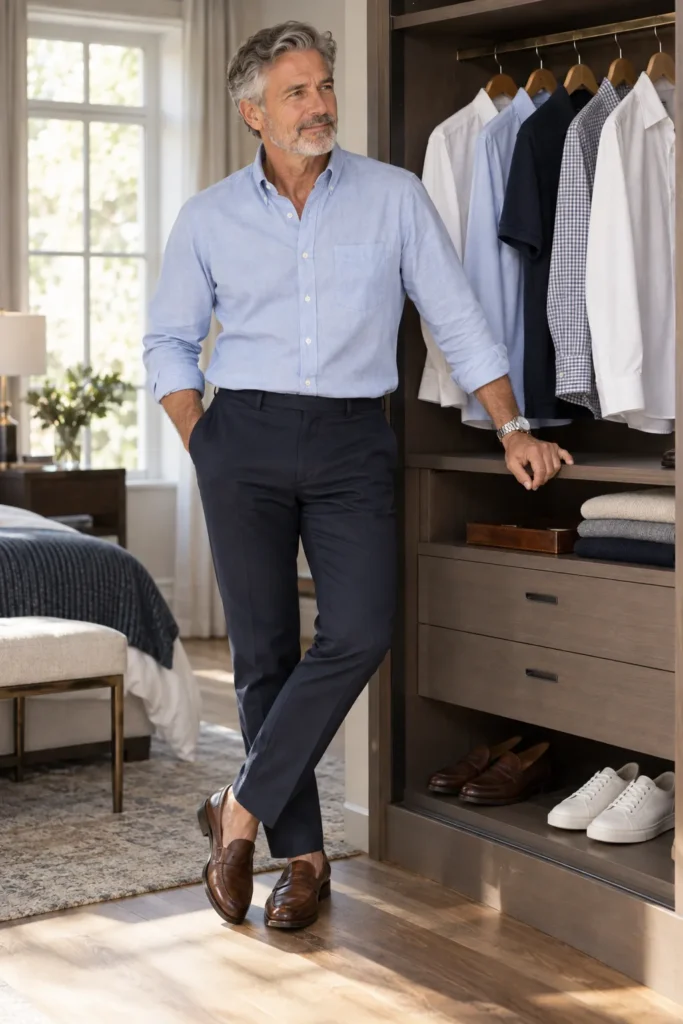
You do not need a different shirt for every day of the week.
A small group of reliable shirts can handle casual lunches, weekends, dinners, office settings, and family events. The Oxford shirt is especially useful because it can sit between casual and dressed-up outfits.
A simple five-shirt starting point gives you room to mix things without filling every drawer.
Keep these in rotation:
- White Oxford shirt
- Light blue Oxford shirt
- Navy or neutral polo
- Casual button-down shirt
- One dress shirt in white or a soft neutral
Look at fabric too. A shirt that feels good on your skin will usually get worn more than the shirt that spends months hanging untouched.
4. Get Your Trousers Right With Chinos, Jeans, and Dress Pants
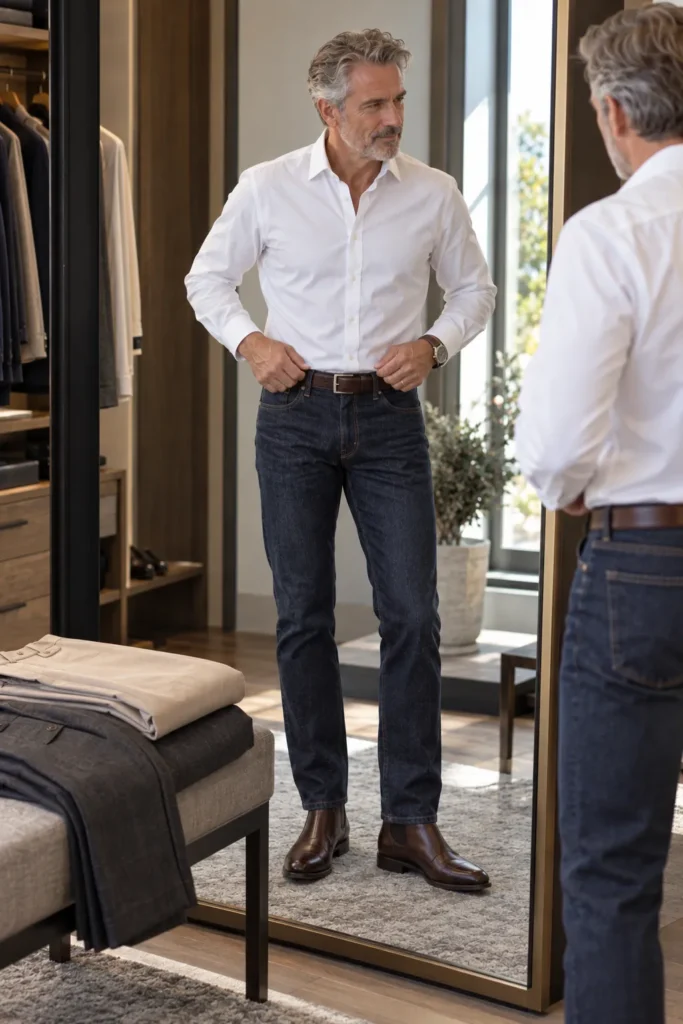
Trousers often get less attention than shirts, but they control the shape of the whole outfit.
The biggest mistake is buying trousers based only on waist size. The rise, leg shape, length, and fabric all affect how they sit on your body.
Before buying another pair, check these points:
Trousers checklist
Dark jeans are useful for casual outfits. Chinos give you a middle option. Wool or tailored dress trousers cover more formal occasions.
If the trousers bunch heavily around your shoes, a small alteration can often make a bigger difference than buying another pair.
5. Add Jackets That Make Simple Outfits Look More Put Together
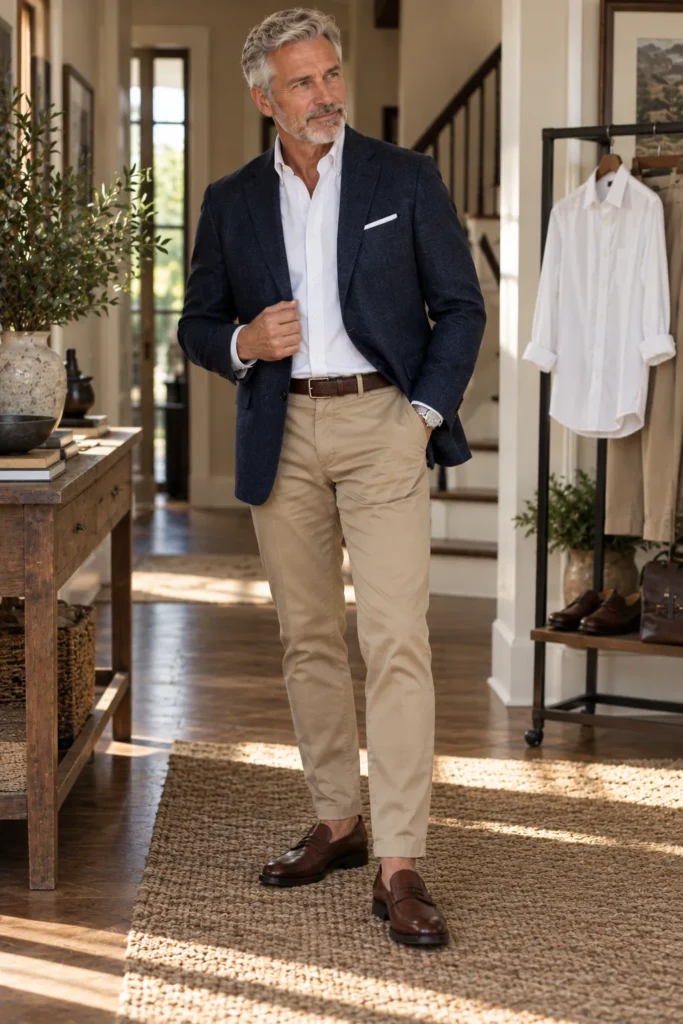
A plain shirt and trousers can look unfinished. The right jacket gives the outfit structure without making you look overdressed.
A navy blazer is a useful starting point. A textured sport coat works well for dinners and social events. A lightweight overshirt can add shape to a casual outfit without feeling formal.
Here is the difference a third layer can make:
Oxford shirt, dark trousers, and loafers create a clean base but may feel a little plain.
Add a navy blazer or textured sport coat to give the same base outfit more structure.
The trick is to keep the rest of the outfit simple. Let the jacket provide the structure instead of adding several bold pieces at once.
6. Match Your Shoes to the Outfit Instead of the Other Way Around
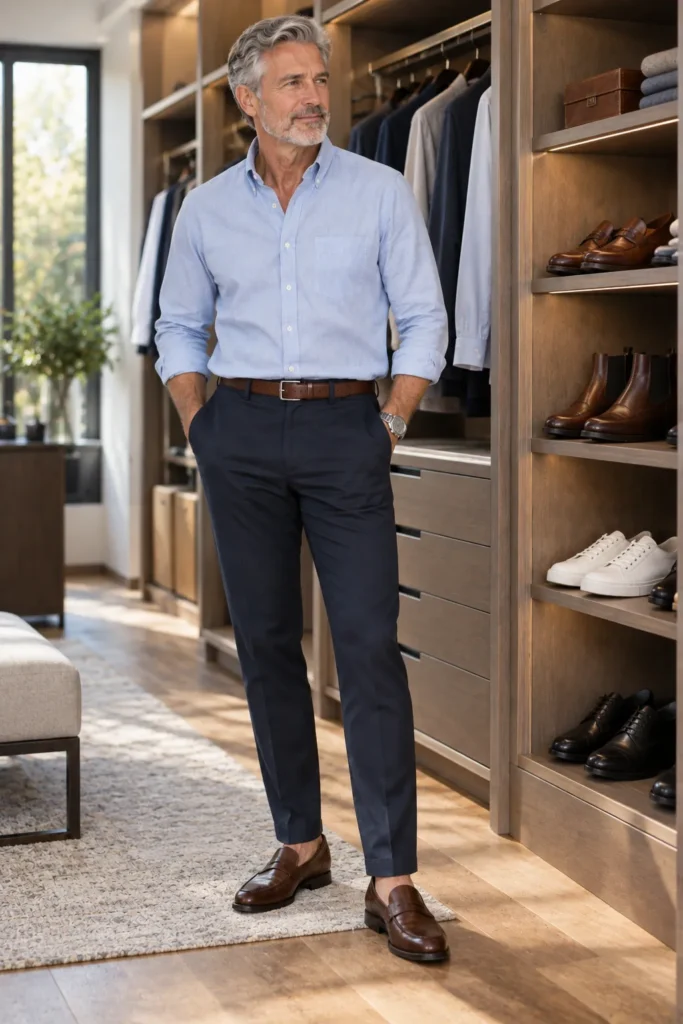
Shoes should support the outfit, not fight with it.
Start by deciding how dressed you need to look. Then choose the shoe. This keeps you from wearing a very formal shoe with an otherwise relaxed outfit.
Use this three-step check:
Check the setting. Casual, smart casual, or dressy?
Check the trousers. Jeans, chinos, or tailored pants call for different shoe choices.
Check the belt. Brown leather usually works best with brown shoes, while black shoes pair naturally with a black belt.
Brown loafers, Chelsea boots, clean leather sneakers, and simple dress shoes can cover a large part of a practical wardrobe.
The goal is fewer pairs that actually get worn.
7. Use Accessories Without Making the Outfit Look Busy
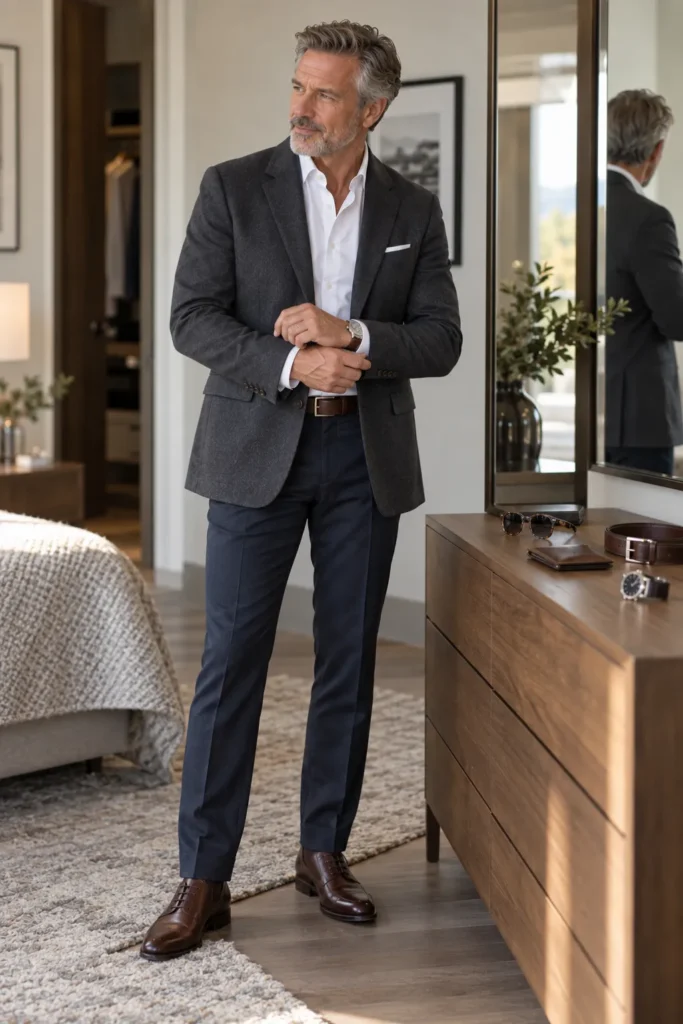
Accessories should finish an outfit, not become the main event.
A simple watch, a leather belt, and good sunglasses can be enough for many outfits. You do not need several rings, bracelets, a loud watch, and a pocket square all at once.
Here is an easy filter:
Match your belt and shoes when the outfit is formal.
Choose one watch that works with most of your wardrobe.
Mix several strong accessories in one outfit.
Wear a casual belt with a very formal outfit.
Think about the small details people see up close. A scratched belt, worn-out watch strap, or dirty sunglasses can make otherwise good clothes look neglected.
Keep accessories simple and in good condition. That is usually enough.
8. Create Easy Outfits for Casual, Smart Casual, and Dressy Days
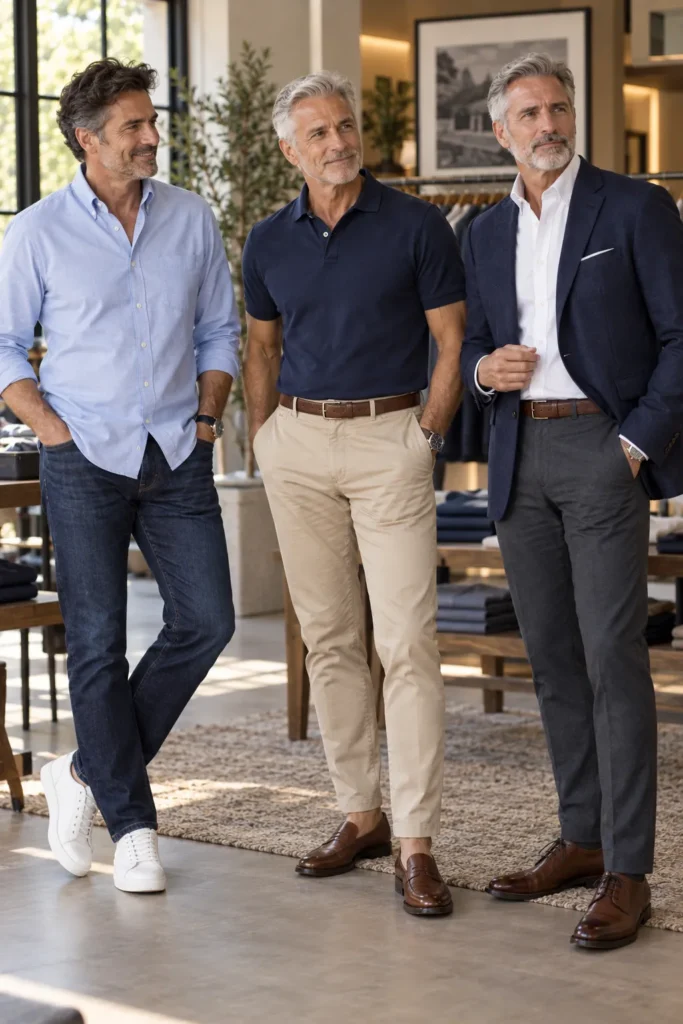
Getting dressed becomes much easier once you have a few outfit formulas you can repeat.
You do not need to create a completely new combination every morning. Build three reliable groups for the situations you face most often.
Casual: dark jeans + Oxford shirt + clean sneakers or casual loafers.
Smart casual: chinos + polo or button-down shirt + loafers or Chelsea boots.
Dressy: tailored trousers + dress shirt + blazer + leather dress shoes.
💡 Quick Tip
Build your outfit from one reliable base, then add one piece that changes the level of dress. A blazer can make chinos feel dressier, while clean sneakers can make tailored trousers feel more relaxed.
Keep these combinations somewhere easy to see in your closet. A small list on your phone can also help on mornings when you are short on time.
The best outfit formula is one you actually repeat.
9. Build Your Personal Style With a Small Wardrobe You Actually Wear
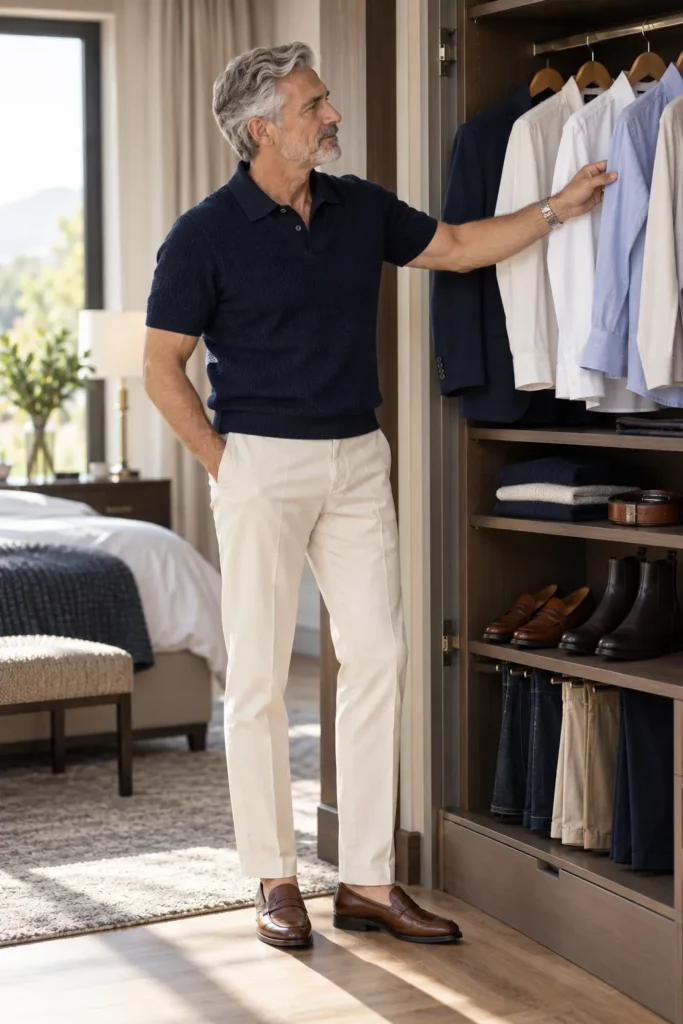
Personal style does not require a huge closet.
Start by looking at what you already reach for. If navy trousers, Oxford shirts, and brown shoes appear again and again, that tells you something about your natural style. Build around those choices instead of buying clothes that look good on someone else.
Before adding another item, ask yourself three questions:
- Does it fit properly?
- Can I wear it with at least three things I own?
- Does it suit the places I normally go?
A strong personal wardrobe is built around clothes that fit well, work together, and match the life you actually live.
If an item has spent two years hanging in the closet because you never know what to wear it with, it may not deserve another place in the rotation.
Your ultimate mens style guide over 50 does not need to end with a giant shopping list. It should leave you with a clear idea of what suits you, what fits your routine, and what you can wear again and again.
Conclusion
Good style after 50 is less about buying more clothes and more about making better choices with the clothes you already wear. A clean fit, a simple color palette, useful shirts, well-fitting trousers, and the right shoes can cover most daily situations.
You also do not need to follow every fashion trend. Build around pieces that feel comfortable, suit your routine, and work well together. The ultimate mens style guide over 50 is really about creating a wardrobe that makes getting dressed easier while still feeling like you.
Start with one change at a time. Fix the fit, remove pieces you never wear, then add a few reliable items that fill real gaps.
Save this guide on Pinterest so you can come back to these outfit ideas when you refresh your wardrobe.