
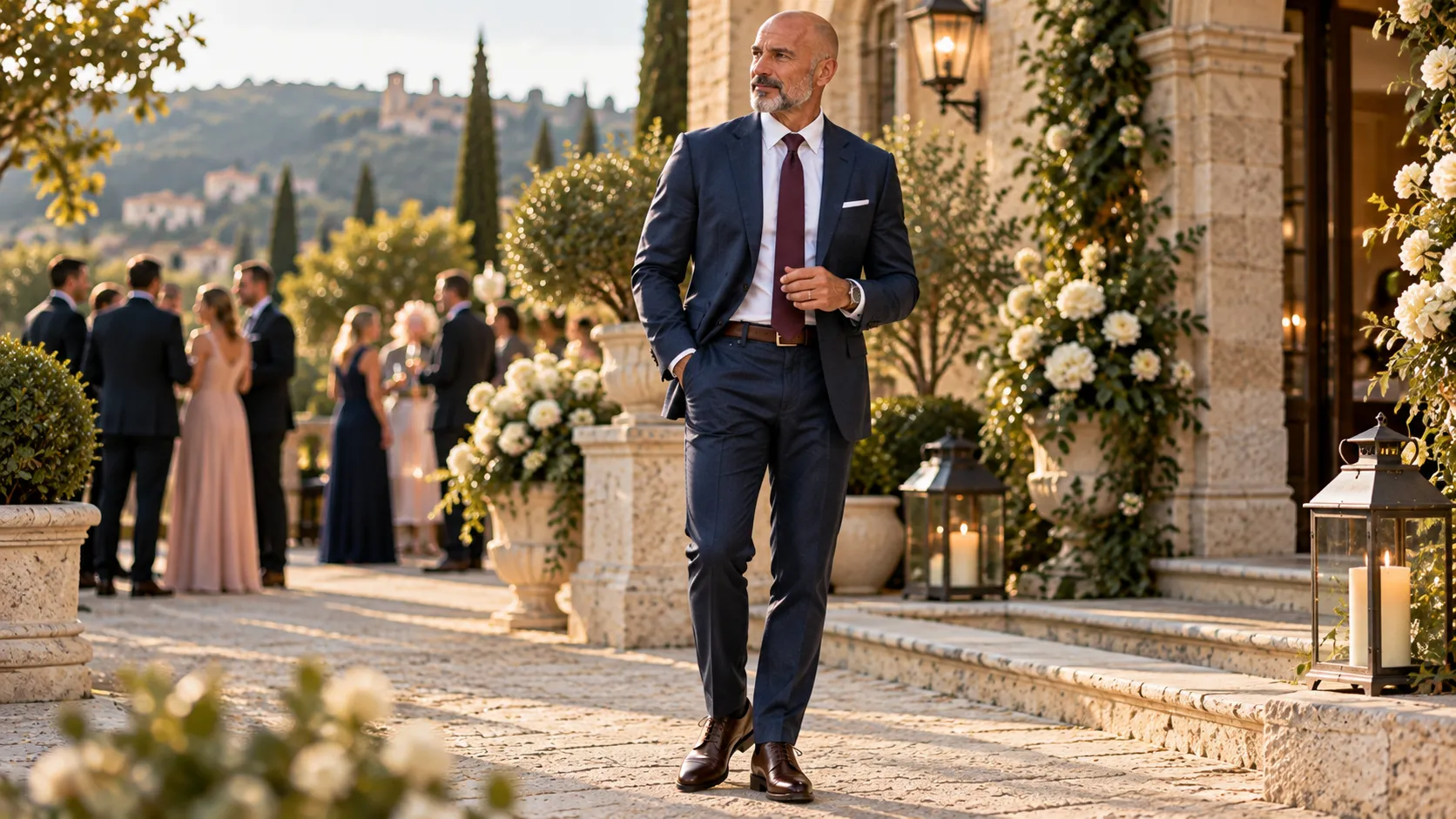
A wedding outfit should make you feel comfortable, well dressed, and like yourself. If you are bald and over 50, the goal is not to hide your head. The better approach is to build an outfit that gives your face and head a clean frame.
The right suit, shirt, shoes, and colors can make a big difference. A well-fitted jacket gives your shoulders shape.
A good shirt brings attention to your face without making the outfit look loud. Clean shoes and a few small details finish the look.
This guide shows you what a bald man over 50 should wear to a wedding, step by step. You will learn how to read the dress code, choose a suit that fits your body, and pick a shirt that works with your skin tone. These first choices make the rest of the outfit much easier.
You do not need a huge wardrobe. A few well-chosen pieces can give you a sharp wedding look without making you feel overdressed.
What You Need
- Suit or tailored jacket
- Dress trousers
- Dress shirt
- Leather dress shoes
- Matching belt
- Tie
- Watch
- Pocket square
- Basic grooming items
At a Glance
- Choose the wedding dress code first
- Pick a suit that fits your frame
- Match your shirt to your skin tone
- Choose shoes that look sharp and age-appropriate
- Add a tie that balances your look
- Use a jacket to frame your face
- Add one simple accessory
- Check the full outfit before you leave
Step 1: Choose the Wedding Dress Code First
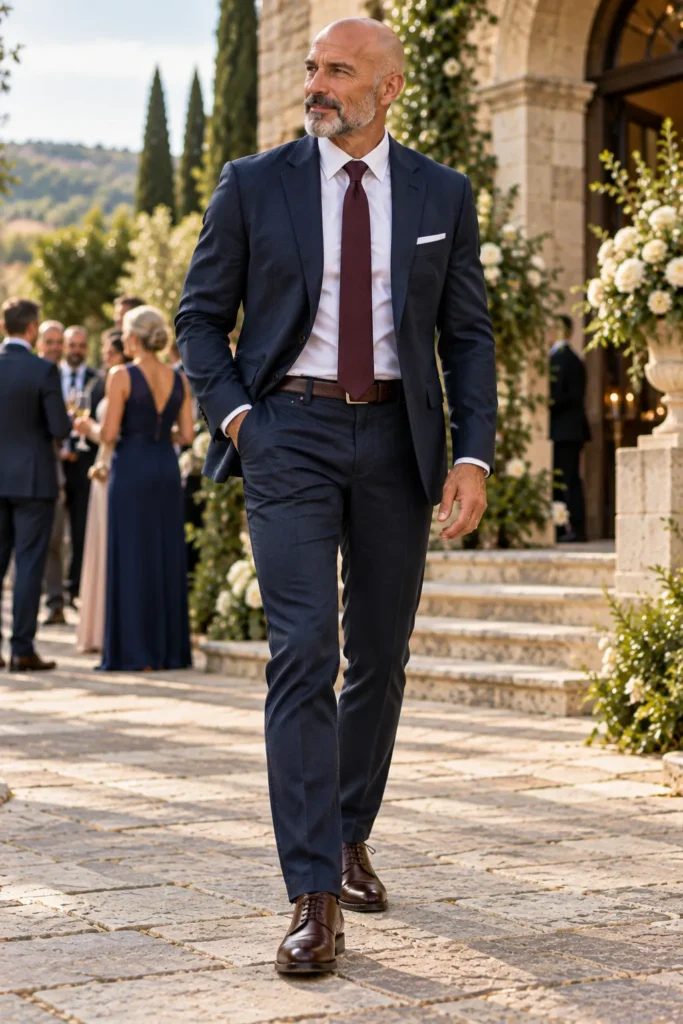
Check the invitation before pulling anything from your closet. Look for words such as black tie, formal, cocktail, semi-formal, or dressy casual. The dress code tells you how formal the outfit needs to be.
Use this quick guide:
- Black tie: Wear a tuxedo, formal shirt, and formal shoes.
- Formal: Choose a dark suit, dress shirt, tie, and leather shoes.
- Cocktail: Try a navy or charcoal suit with polished dress shoes.
- Outdoor wedding: Consider a lighter suit in gray, tan, or blue.
If the invitation gives no dress code, check the venue or ask the host. A hotel ballroom usually calls for a more formal outfit than a daytime garden wedding.
- Black Tie → Tuxedo + formal shirt + formal shoes
- Formal → Dark suit + dress shirt + tie
- Cocktail → Navy or charcoal suit + dress shoes
- Outdoor → Lighter suit + polished shoes
Step 2: Pick a Suit That Fits Your Frame

Fit matters more than the brand or price of the suit. Start with the shoulders because this area is hard to alter later.
Check these three areas:
- Shoulders: The jacket seam should sit close to your natural shoulder.
- Sleeves: Show about ¼ to ½ inch of shirt cuff.
- Jacket length: The jacket should cover the seat without looking oversized.
Navy, charcoal, and medium gray are strong choices for many weddings. A two-button jacket gives the body a clean shape without looking stiff.
Avoid a jacket that hangs far past your shoulders or has too much fabric around the waist. Small fit problems can often be fixed by a tailor, but a poor shoulder fit is much harder to correct.
- Check the shoulders → Keep the seam near your natural shoulder.
- Check the sleeves → Show **¼–½ inch** of shirt cuff.
- Check the jacket length → Cover the seat without excess fabric.
Step 3: Match Your Shirt to Your Skin Tone
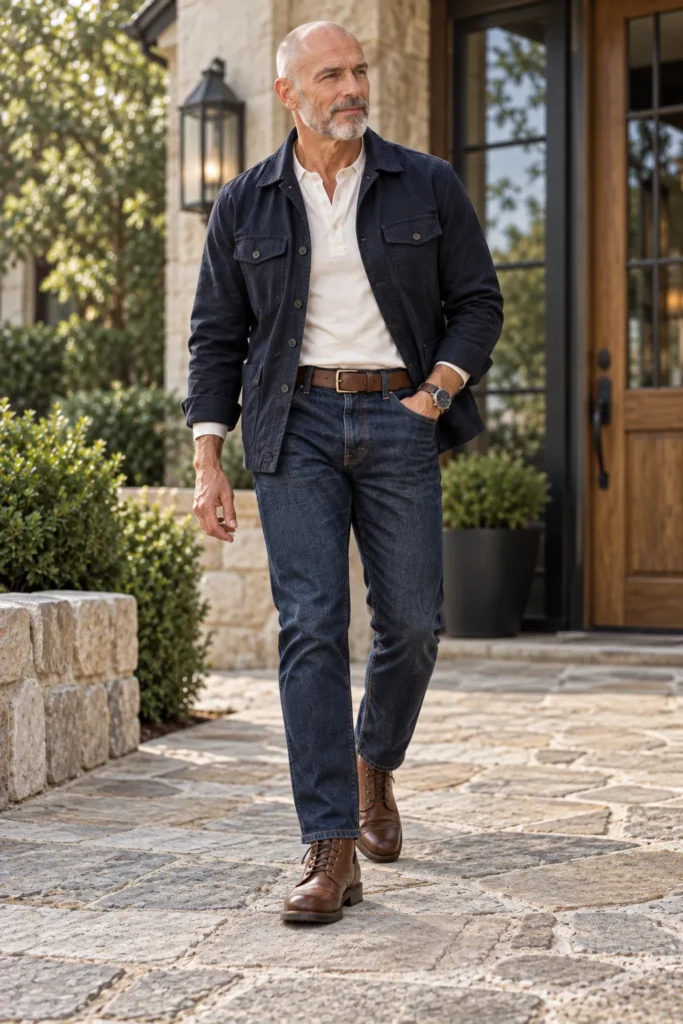
A white or light blue shirt works with almost any wedding suit. These shades also keep the area around your face clean and balanced.
Use these options as a starting point:
- Warm skin tones: Cream, soft blue, or pale pink
- Cool skin tones: Crisp white, blue-gray, or lavender
- Any skin tone: White and light blue are safe choices
Check the collar before leaving home. You should be able to slide one finger between your neck and the collar without pressure.
If the suit has a strong pattern or texture, choose a plain shirt. If the suit is plain, a subtle shirt texture can add some interest without making the outfit look busy.
- White
- Light blue
- Cream
- Soft blue
- Button the collar.
- Slide in one finger.
- Check for pressure.
Step 4: Choose Shoes That Look Sharp and Age-Appropriate
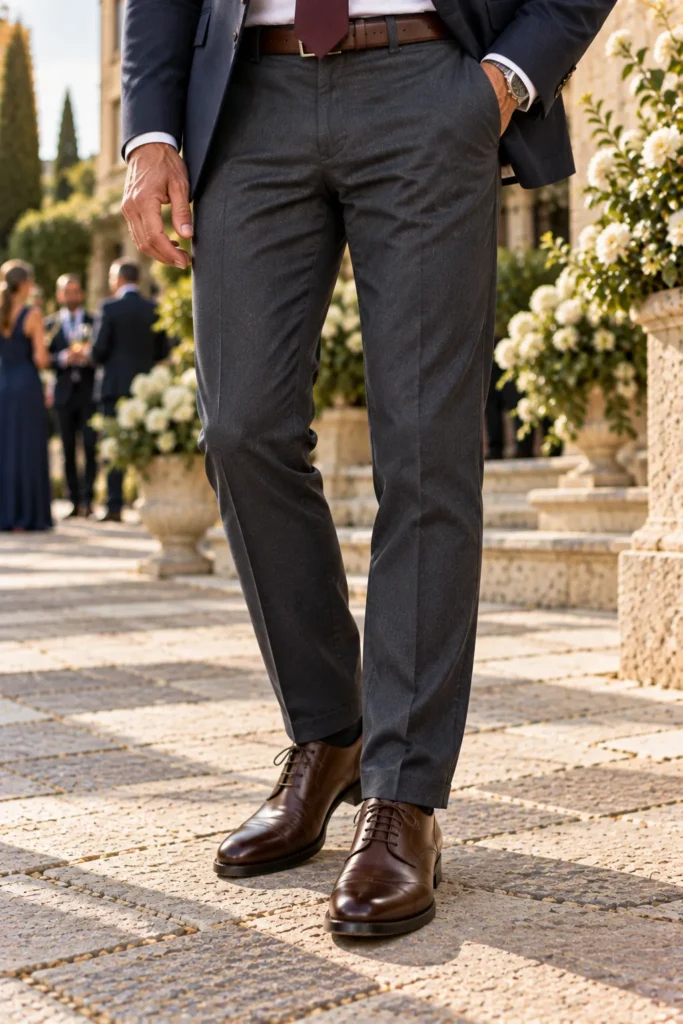
Your shoes should match the formality of the wedding and the color of your suit. For most weddings, leather dress shoes are the safest choice.
Use this quick guide:
- Navy suit: Brown, dark brown, or black leather shoes
- Charcoal suit: Black or dark brown shoes
- Gray suit: Black, brown, or burgundy shoes
- Tan suit: Medium or dark brown shoes
Keep the shoes clean and polished before you leave. Match your belt to the shoe color as closely as you can. Avoid worn sneakers, heavily scuffed boots, or very casual shoes unless the invitation clearly allows them.
- Brown
- Dark brown
- Black
- Black
- Dark brown
- Black
- Brown
- Burgundy
- Medium brown
- Dark brown
Step 5: Add a Tie That Balances Your Look
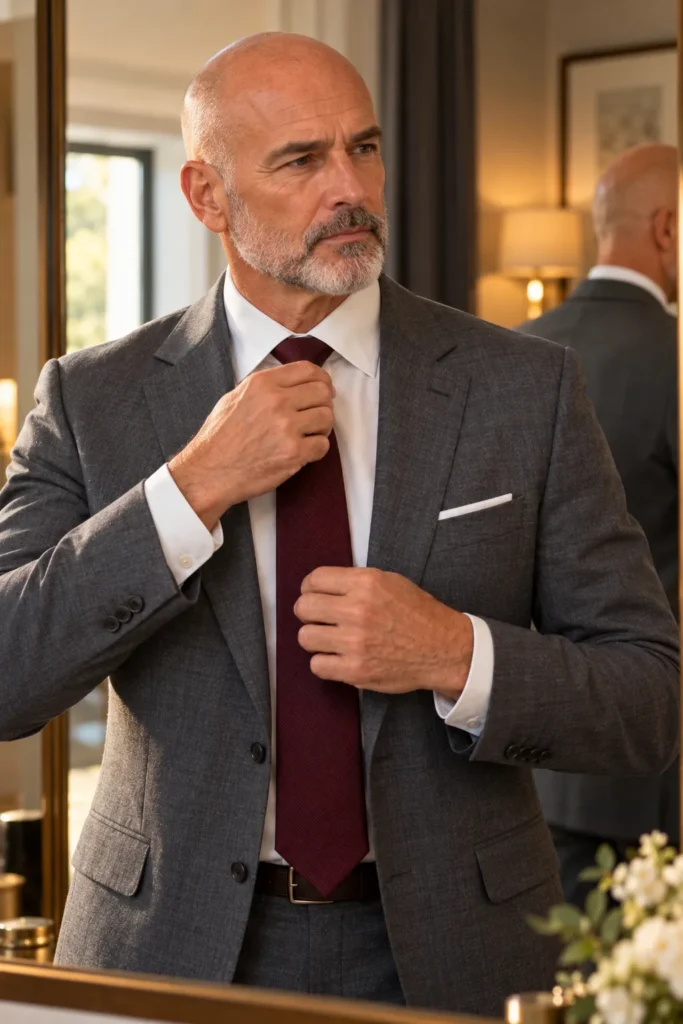
A tie gives the upper part of your outfit a clear vertical line and brings color close to your face. Choose the tie after selecting your suit and shirt so the three pieces work together.
For a classic wedding look, keep the tie darker than the shirt. Navy, burgundy, forest green, and deep plum can work well with neutral suits. A small pattern is fine, but avoid a large print if your jacket already has a pattern.
Aim for a tie that reaches the middle of your belt buckle. A tie that stops too high or hangs well below the buckle can make the outfit look poorly fitted.
- Start with the shirt → White or light blue gives you a clean base.
- Add a darker tie → Try navy, burgundy, forest green, or deep plum.
- Check the pattern → Use a small pattern if the jacket is plain.
- Check the length → The tip should reach the middle of the belt buckle.
Step 6: Use a Jacket to Frame Your Face
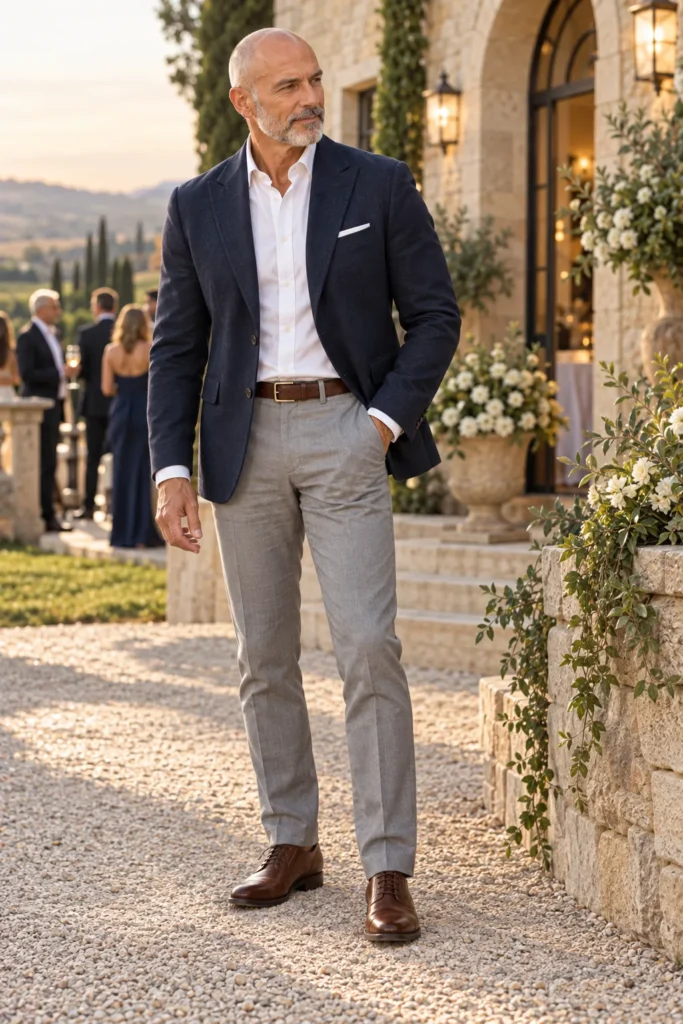
The jacket is one of the strongest parts of the outfit because it creates a clear shape around your upper body. For a bald man over 50, a clean jacket line can make the whole look feel balanced without adding extra accessories.
A navy blazer over gray trousers works well for a less formal wedding. For a formal event, use a matching suit jacket and trousers. Keep the lapels moderate rather than extremely wide or narrow.
Pay attention to the area around your neck and shoulders. A shirt collar that sits neatly inside the jacket lapels gives your face a clean frame.
- Matching suit jacket
- Matching trousers
- Clean shirt collar
- Moderate lapels
- Navy blazer
- Gray trousers
- Light dress shirt
- Polished leather shoes
Step 7: Add One Simple Accessory
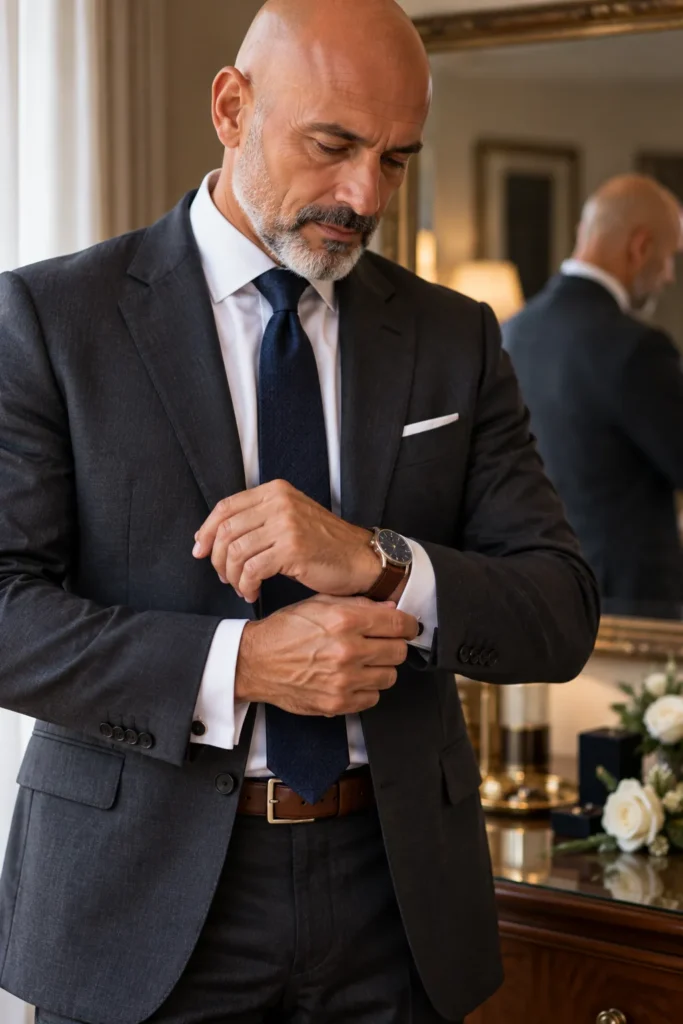
A few small details can make the outfit feel finished. You do not need several accessories. One or two well-chosen pieces are enough for most weddings.
Start with these options:
- Watch: Choose a clean leather or metal watch that suits the formality of the outfit.
- Pocket square: Use white for a classic look or a soft color that connects with your tie.
- Belt: Match the leather color to your shoes.
- Cufflinks: Save these for formal shirts with French cuffs.
Keep the colors controlled. If your tie already has a strong pattern, use a plain pocket square. This keeps the area around your face and chest from looking too busy.
- Pick one watch → Leather or metal works well.
- Add a pocket square → White is the safest choice.
- Match the belt → Keep it close to your shoe color.
- Add cufflinks only when needed → Use them with French cuffs.
Step 8: Check the Full Outfit Before You Leave
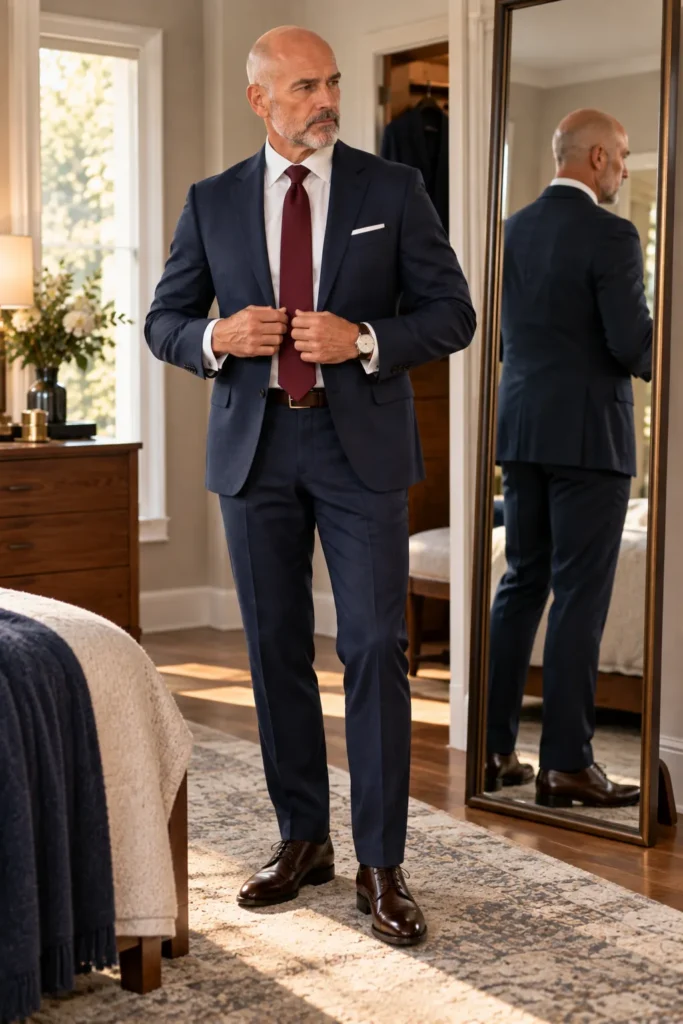
Give yourself a few minutes for a full-length check before leaving home. This catches small problems that are easy to miss when you are looking at one item at a time.
Stand in front of a mirror and check:
- Jacket: The shoulders sit correctly and the jacket is not pulling across the chest.
- Shirt: The collar sits flat and the cuffs show about ¼ to ½ inch.
- Tie: The tip reaches the middle of the belt buckle.
- Trousers: The waistband sits comfortably without bunching.
- Shoes: They are clean and match the belt.
- Accessories: Nothing looks crowded or out of place.
Walk around for a minute after the check. Sit down, stand up, and look at the outfit again. A wedding can last for several hours, so comfort matters as much as the first impression.
- Check the jacket shoulders and chest.
- Check the shirt collar and **¼–½ inch** cuff.
- Check the tie length.
- Check the trouser fit.
- Check the shoes and belt.
- Remove any accessory that feels excessive.
- Walk and sit to test comfort.
Common Mistakes to Avoid
A wedding outfit can look less polished when small choices do not work together. Check these common mistakes before leaving home.
Common Mistakes | Avoid These Before the Wedding
- Wearing an oversized suit: Loose shoulders and long sleeves can make the outfit look untidy.
- Using too many colors: Keep the suit, shirt, tie, shoes, and accessories in a small color range.
- Choosing casual shoes: Worn sneakers or very casual boots can clash with a dress suit.
- Matching every item too closely: Your tie and pocket square can coordinate without being an exact set.
- Ignoring the dress code: A blazer may work for a relaxed wedding but may not fit a formal or black-tie event.
FAQ
These questions cover the small choices that often come up before a wedding. Use them as a quick check if you are still unsure about your outfit.
1. Should a bald man wear a hat to a wedding?
Usually, no. For most indoor weddings, a clean formal outfit looks better without a hat. Follow the dress code or cultural setting if a hat is expected.
2. What suit color works best for a man over 50?
Navy, charcoal, and medium gray are strong choices. They work with many shirt and shoe combinations and suit both formal and semi-formal weddings.
3. Should the tie and pocket square match?
They can share a color, but they do not need to be identical. A plain white pocket square is a safe choice with a patterned or darker tie.
4. Can I wear a blazer instead of a full suit?
Yes, for a cocktail or less formal wedding. For formal or black-tie events, follow the required dress code and wear the proper suit or tuxedo.
5. What shoes go with a navy suit?
Brown, dark brown, and black dress shoes can work. Pick the shoe color based on the wedding formality and keep the belt close to the shoe color.