
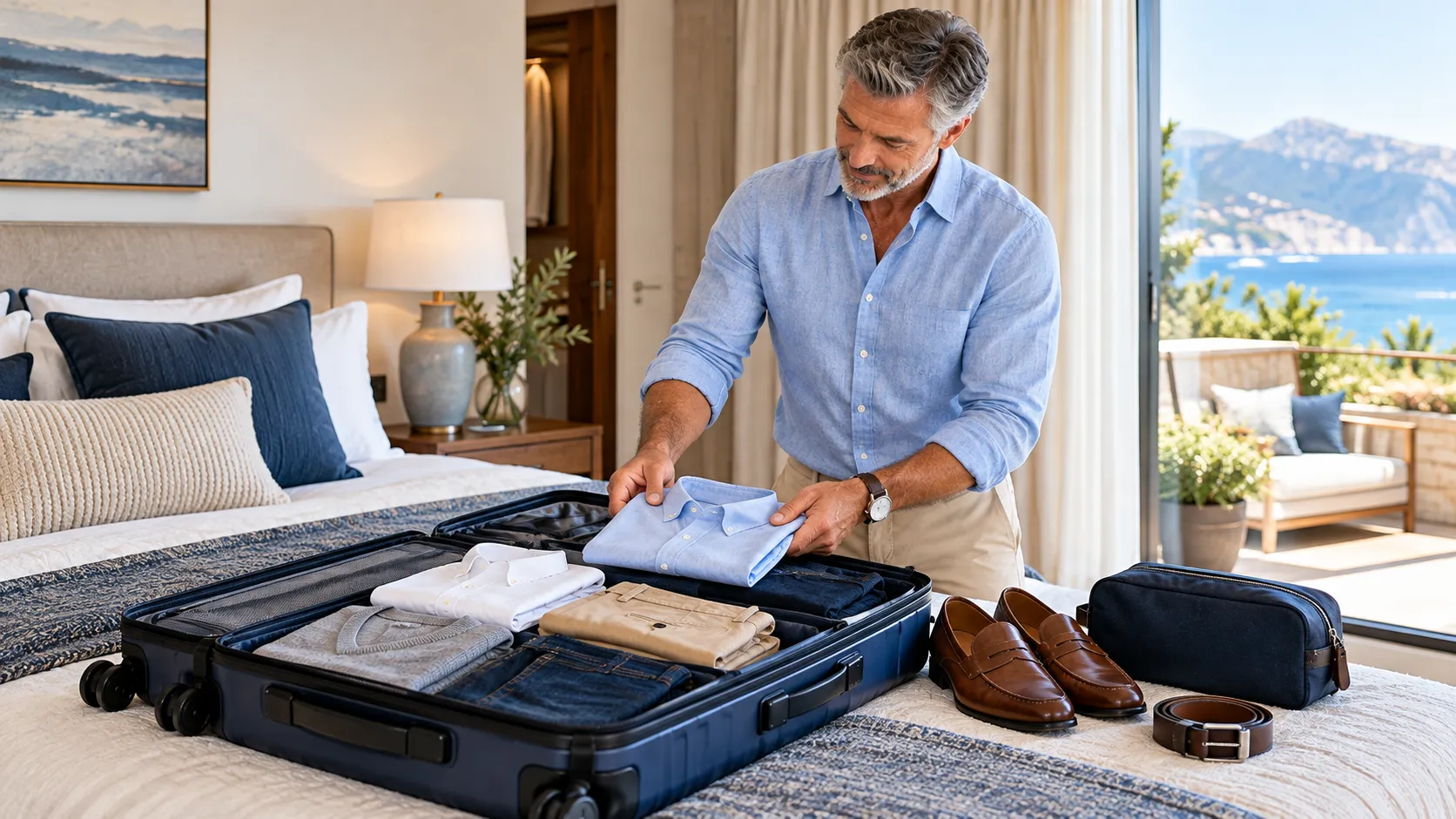
Packing for a trip gets frustrating when your suitcase is full, but you still cannot find the shirt or trousers you need. Dress shirts wrinkle, shoes take up too much room, and extra clothes leave little space for anything else.
For men over 50, a good packing plan can make getting dressed on holiday much easier.
This guide shows you how to pack a suitcase for a trip, from choosing the right bag to arranging clothes and grooming items.
You will learn how to pack dress shirts, casual outfits, trousers, shoes, and accessories without wasting space. The goal is to arrive with clothes that are ready to wear and outfits that suit your plans.
You do not need expensive luggage or special packing tools. A medium suitcase, a few packing cubes, and some planning will do the job. Allow around 45–60 minutes to pack for a week-long trip, depending on how much you need to bring.
Time and Difficulty Strip
What You Need
Gather your travel items before you start. This helps you avoid stopping halfway through packing to search for a belt, charger, or clean shirt.
What You Need to Pack
Tip: Use clean shopping bags instead of packing cubes if you do not have them.
At a Glance
Your 12-Step Packing Plan
- Choose the right suitcase for your trip
- Check the weather before picking your clothes
- Plan outfits for each day of your trip
- Pick clothes that match each other
- Fold dress shirts to reduce wrinkles
- Roll casual clothes to save space
- Pack trousers and jeans without creases
- Place shoes along the sides of your suitcase
- Protect belts, ties, and small accessories
- Pack toiletries and grooming items safely
- Arrange heavy items at the bottom of your suitcase
- Leave room for extra items and check your bag
Step 1: Choose the Right Suitcase for Your Trip
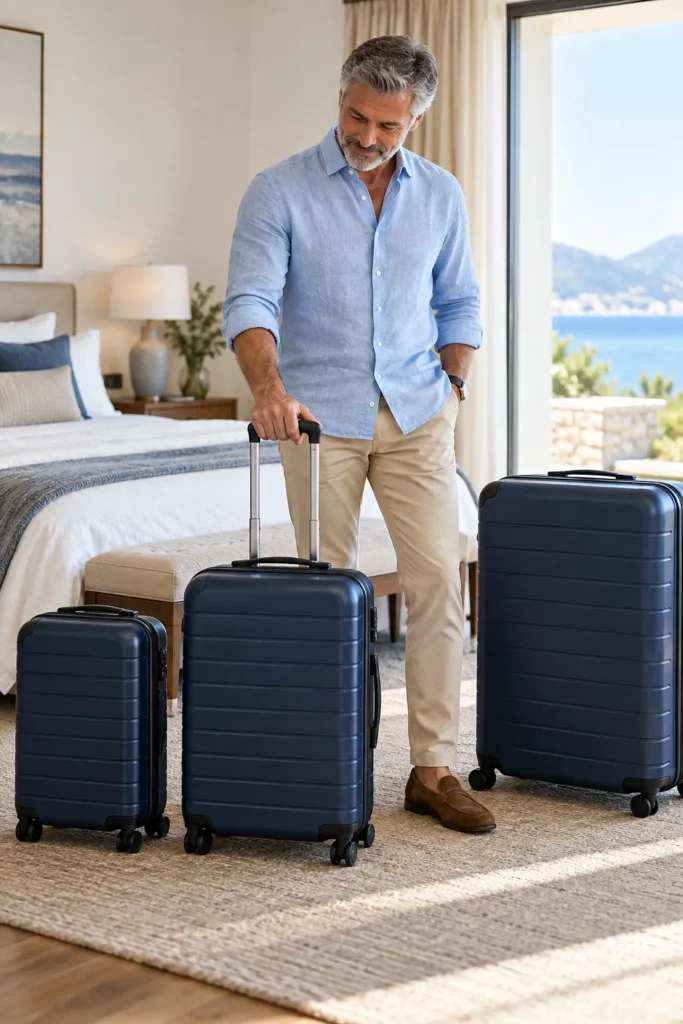
A week-long trip often calls for a medium suitcase, especially if you plan to pack shirts, trousers, casual clothes, and two pairs of shoes. A large bag may seem useful, but extra room can tempt you to pack clothes you never wear.
Check these points before choosing your bag:
- Weekend trip: A small carry-on may be enough.
- Five to seven days: A medium suitcase is often a good choice.
- Longer trip: Consider a larger suitcase if you need more clothes or warm layers.
Check the suitcase’s empty weight, too. A lighter bag leaves more room for your belongings within the airline’s weight limit. Check your airline’s size and weight rules before packing.
Match Your Bag to Your Trip
Use this guide before you start packing.
Packing check: Check bag size, empty weight, and airline limits before leaving home.
Step 2: Check the Weather Before Picking Your Clothes
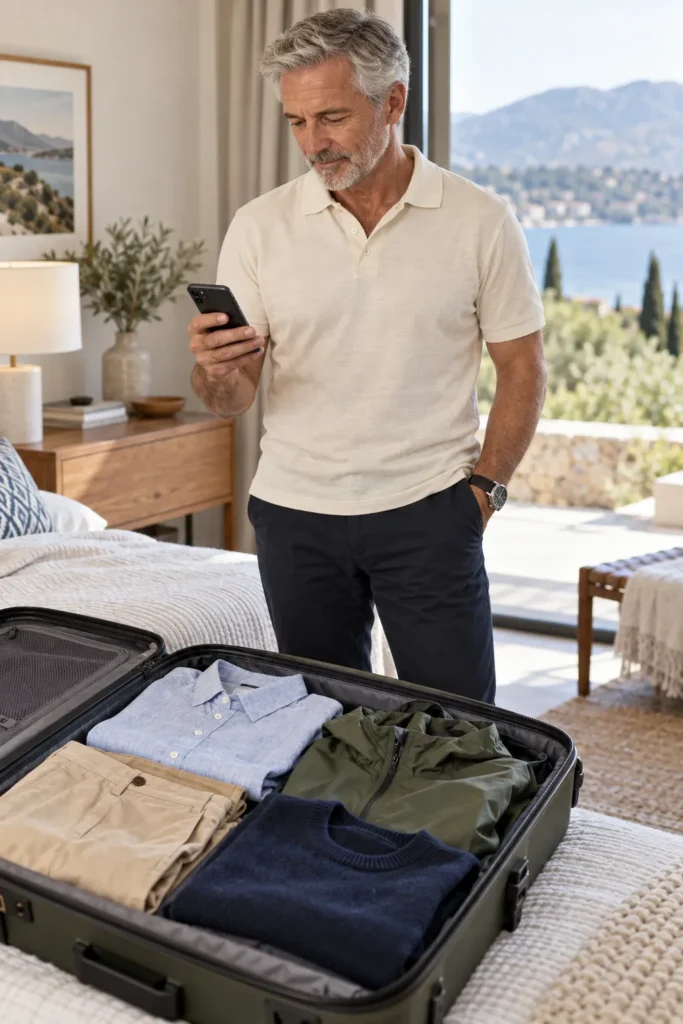
A weather check can save you from packing a thick coat for warm days or arriving without a jacket for chilly evenings. Check the forecast for your destination for each day of your trip, including rain and nighttime temperatures.
Use this guide to plan your clothes:
- Warm weather: Breathable cotton shirts and lightweight trousers.
- Cold weather: A sweater, a warm jacket, and long trousers.
- Rainy weather: A light waterproof jacket and suitable shoes.
- Changing weather: Layers that you can add or remove.
Pack clothes for the forecast rather than every possible weather condition. If your trip lasts more than a week, include a layer that works in different conditions.
Pack for the Forecast
Cotton shirts, light chinos, and breathable shoes.
A warm sweater, long trousers, and a suitable jacket.
A waterproof jacket and shoes with good grip.
A light jacket and layers you can wear together.
Step 3: Plan Outfits for Each Day of Your Trip
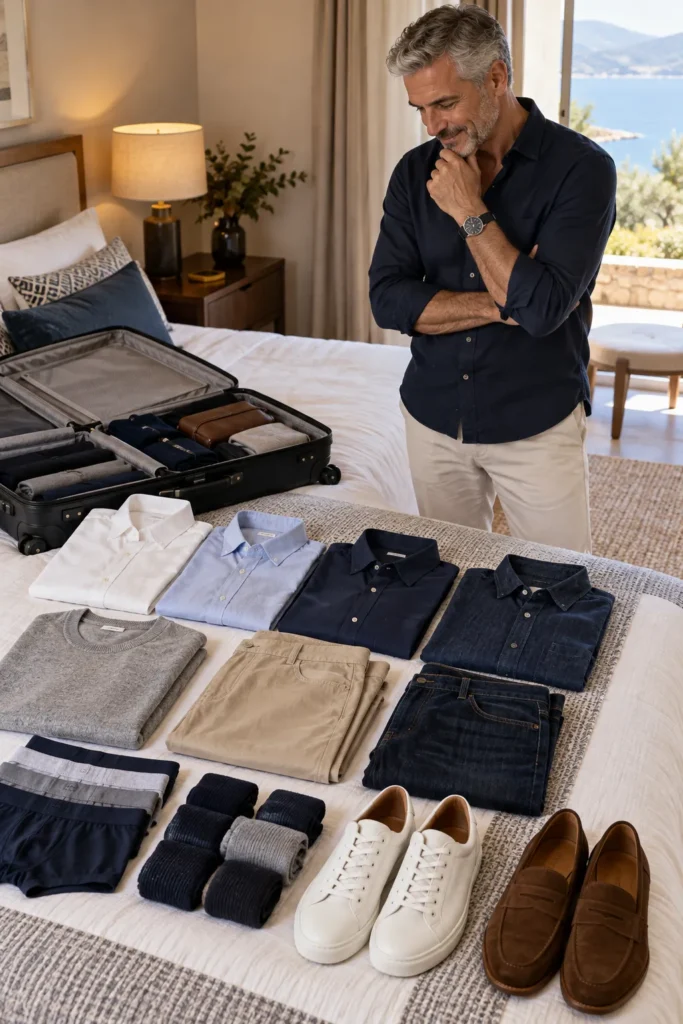
Planning outfits before packing helps you avoid bringing five shirts that work with only one pair of trousers. Set aside each outfit and check that you can wear the pieces together.
For a seven-day trip, start with:
- 4–5 shirts for daytime and dinner.
- 2 pairs of trousers or chinos in neutral colors.
- 1 pair of jeans for relaxed outings.
- 1 sweater or light jacket for cooler weather.
- 2 pairs of shoes for different activities.
Adjust these amounts for your plans and access to laundry. A formal event may call for a dress shirt and blazer, while a walking holiday needs comfortable shoes.
Lay each outfit on the bed before placing anything in your suitcase. This lets you spot missing items early and remove clothes that do not match the rest.
Plan Your Week of Outfits
A sample plan for a seven-day trip. Change it to suit your plans.
□ Shoes suit your planned activities
□ Formal clothes are ready if needed
□ Extra clothes fit your bag and travel plans
Step 4: Pick Clothes That Match Each Other
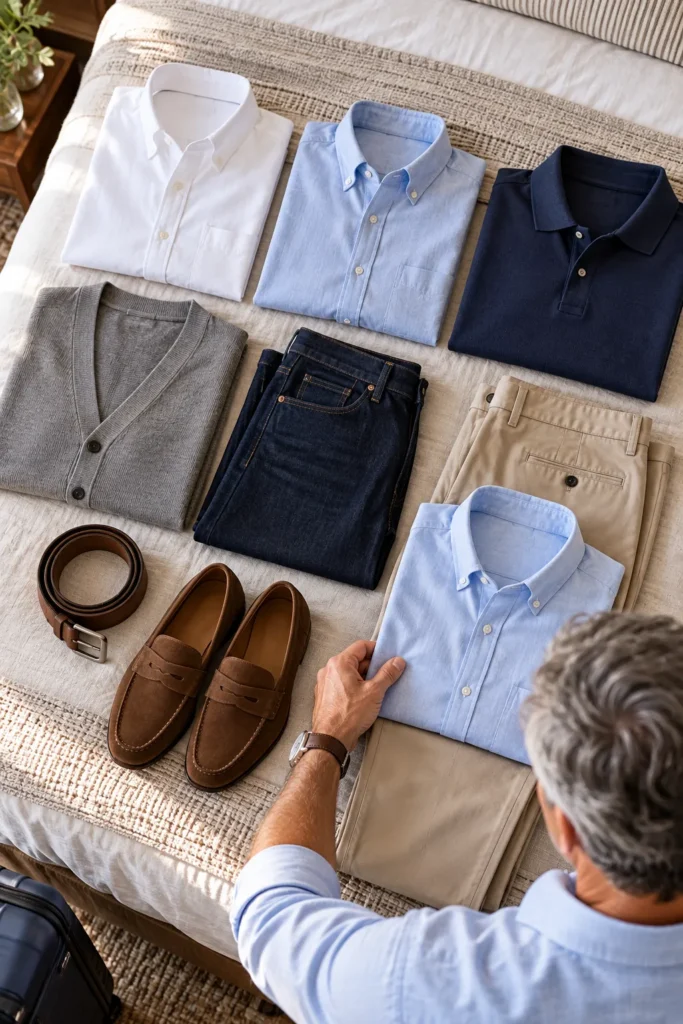
Packing clothes in matching colors helps you create more outfits with fewer items. For men over 50, navy, gray, beige, white, and light blue are useful colors because they work well together.
Choose two or three main colors for your trip. For example, navy chinos can work with a white shirt, a light blue polo, or a gray sweater. A beige pair of trousers can match a navy shirt or a white button-down.
Before packing, lay your clothes together and check each combination. Remove pieces that only match one item unless you need them for a special event. This saves space and makes getting dressed each morning easier.
Choose Colors That Work Together
Build several outfits from a small group of clothes.
Navy chinos + white shirt
Beige trousers + light blue polo
Gray trousers + navy sweater
Step 5: Fold Dress Shirts to Reduce Wrinkles
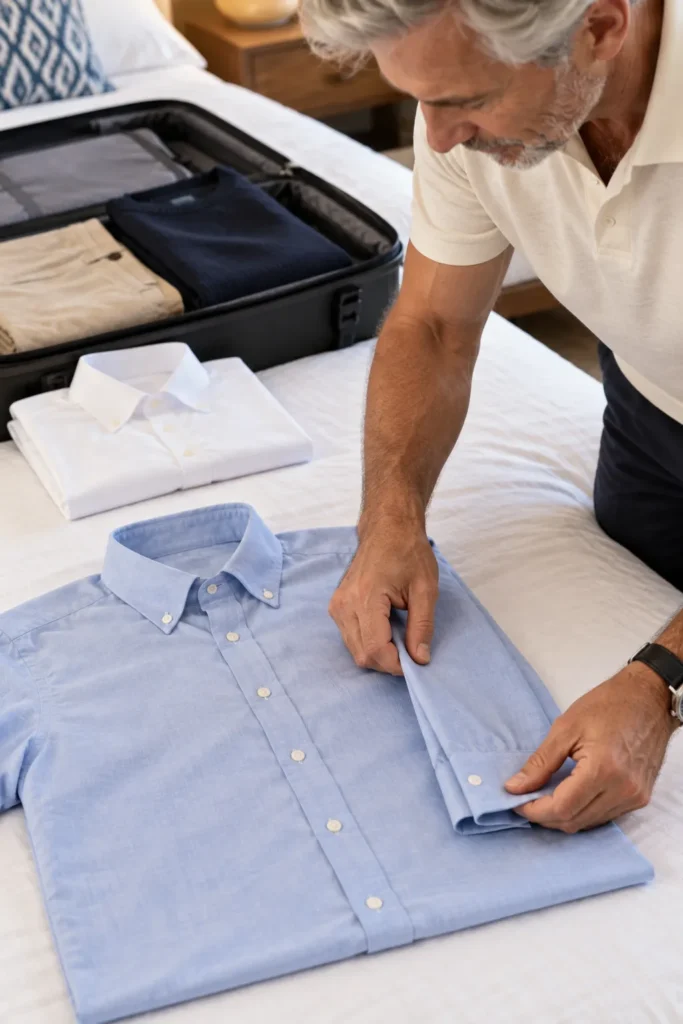
Dress shirts can look untidy after a long flight if they are folded carelessly. Start with a clean, dry shirt on a flat surface. Button the front and cuffs to help the shirt hold its shape.
Follow these folding steps:
- Lay the shirt face down.
- Fold one sleeve inward along the shoulder.
- Fold the other sleeve inward so both sides form a neat rectangle.
- Fold the bottom of the shirt upward once or twice, depending on its length.
Keep the folds loose enough to avoid deep creases. Place folded dress shirts near the top of your suitcase, away from heavy shoes and toiletries. A thin garment bag or clean tissue paper between shirts can help reduce friction.
Fold a Dress Shirt in Four Steps
Use a flat, clean surface to keep the fabric neat.
Step 6: Roll Casual Clothes to Save Space
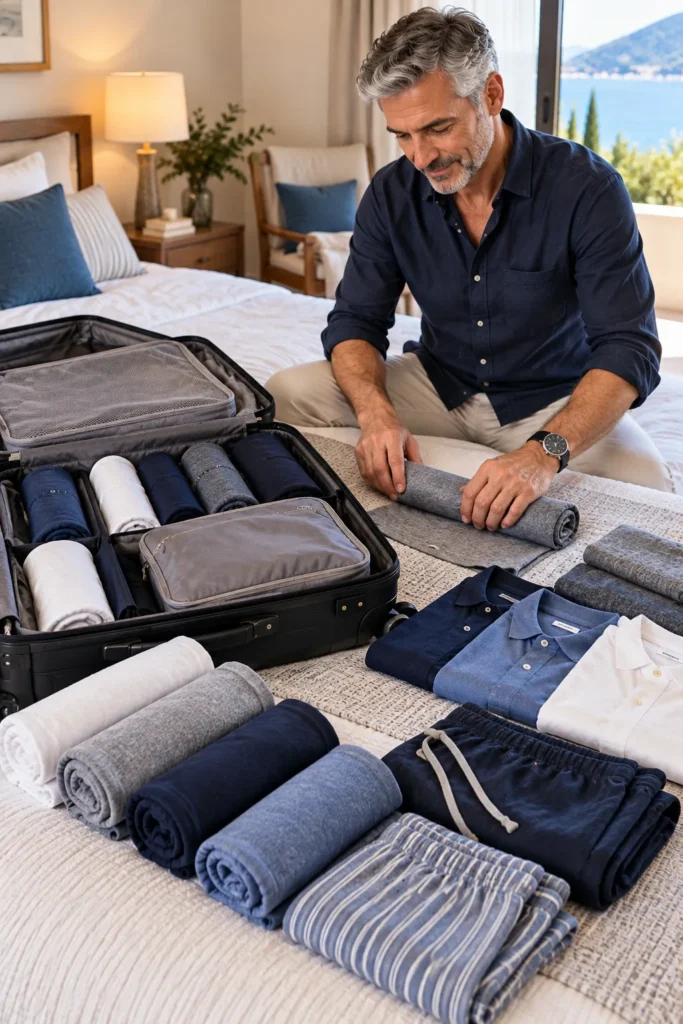
T-shirts, polos, sleepwear, and many casual tops can be rolled to fit into small spaces. Rolling can also make it easier to see what you packed without lifting every item.
Lay each item flat and smooth out large wrinkles with your hands. Fold the sides inward if the shirt is wide, then roll from the bottom toward the collar. Keep each roll firm enough to hold its shape without stretching the fabric.
Place the rolls together in a packing cube or along one side of your suitcase. Keep delicate dress shirts folded separately. Avoid rolling thick sweaters too tightly, as this can create bulky bundles that take up more room.
Roll or Fold?
Choose the method that suits each type of clothing.
✓ Polos
✓ Sleepwear
✓ Casual tops
Good for soft clothes and small spaces.
✓ Blazers
✓ Delicate fabrics
✓ Clothes that crease easily
Helps keep shaped garments neat.
Step 7: Pack Trousers and Jeans Without Creases
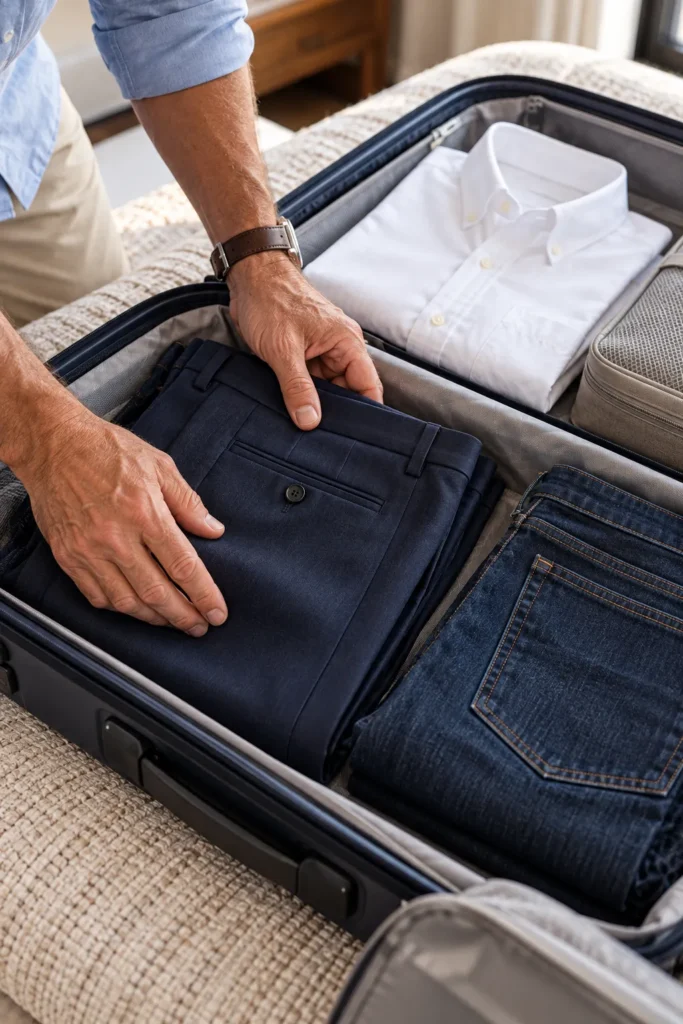
Trousers and jeans can take up a large part of your suitcase if you fold them without a plan. The best method depends on the fabric. Dress trousers need more care than denim, while chinos can usually handle a regular fold.
Lay each pair flat and smooth out the fabric with your hands. Fold dress trousers along their natural crease, then fold them in half or thirds to fit the suitcase.
For jeans, fold one leg over the other and bring the bottom up toward the waistband.
Place dress trousers near the top of your packed clothes. Avoid putting heavy shoes or toiletry bags on them, as this can leave unwanted marks.
Pack Your Trousers Neatly
Use the right fold for each fabric.
- Lay trousers flat.
- Match the legs along the crease.
- Fold in half or thirds.
- Place near the top.
- Smooth the fabric.
- Place one leg over the other.
- Fold the bottom upward.
- Stack with similar clothes.
Step 8: Place Shoes Along the Sides of Your Suitcase
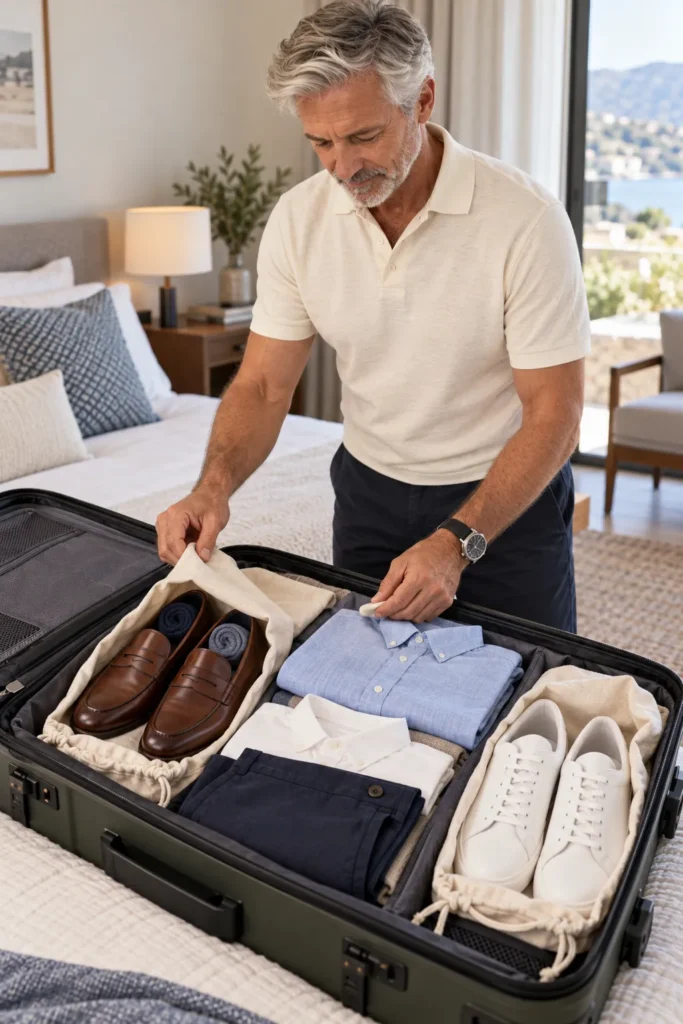
Shoes are bulky, and their soles can leave dirt on clean clothes. Packing them along the sides of your suitcase helps use space that might otherwise go to waste.
Clean the soles before packing. Place each pair in a shoe bag or a clean plastic bag to keep dirt away from your clothes. If you do not have shoe bags, clean shower caps can cover the soles.
Fill the inside of your shoes with rolled socks or small accessories. This uses empty space and helps some shoes hold their shape.
Keep your heaviest pair near the bottom of the suitcase when it is standing upright, so the weight stays low.
Pack Shoes Without Dirtying Clothes
Remove dirt from the soles.
Use shoe bags or clean covers.
Put rolled socks inside each shoe.
Place shoes along the suitcase edges.
Step 9: Protect Belts, Ties, and Small Accessories
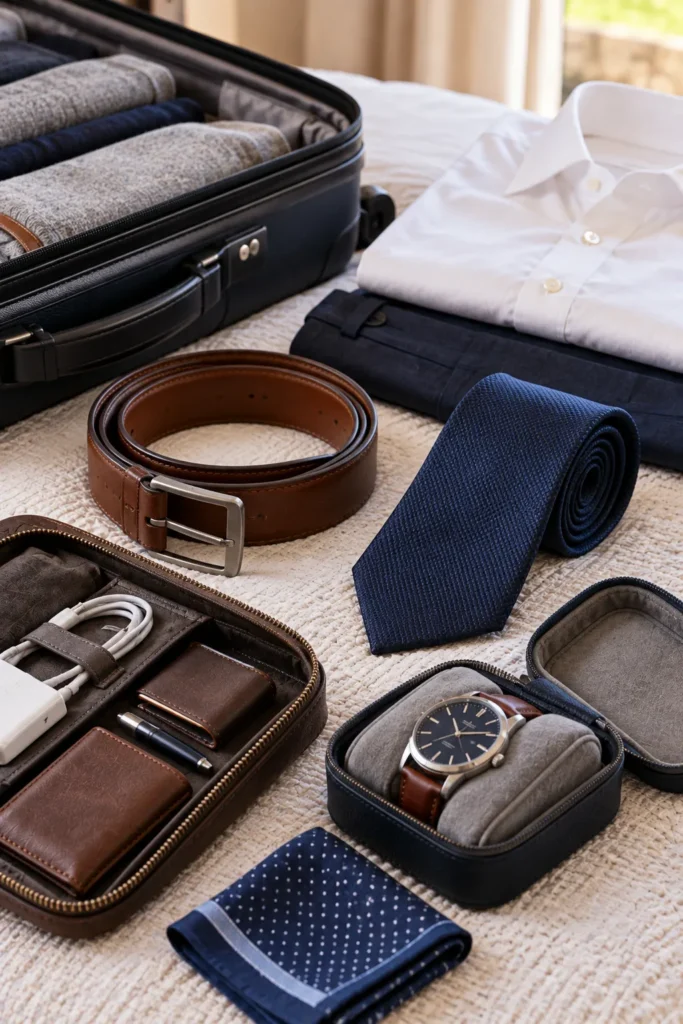
Small accessories are easy to forget, and loose items can become buried under clothes. Give belts, ties, watches, and other accessories their own place so you can find them when you need them.
Roll a fabric tie loosely or fold it along its natural lines. Place it inside a clean pouch. For leather belts, coil the belt gently rather than bending it sharply. You can also lay a belt around the inside edge of your suitcase.
Keep watches and other delicate items in protective cases. Put small accessories in a zipped pouch, and keep valuable items in your carry-on bag rather than checked luggage.
Keep Small Items in Their Place
Use a small pouch or case for each group.
Coil gently or lay around the suitcase edge.
Roll loosely or fold along natural lines.
Use a protective case to avoid scratches.
Keep cufflinks and other accessories in a zipped pouch.
10. Pack Toiletries and Grooming Items Safely
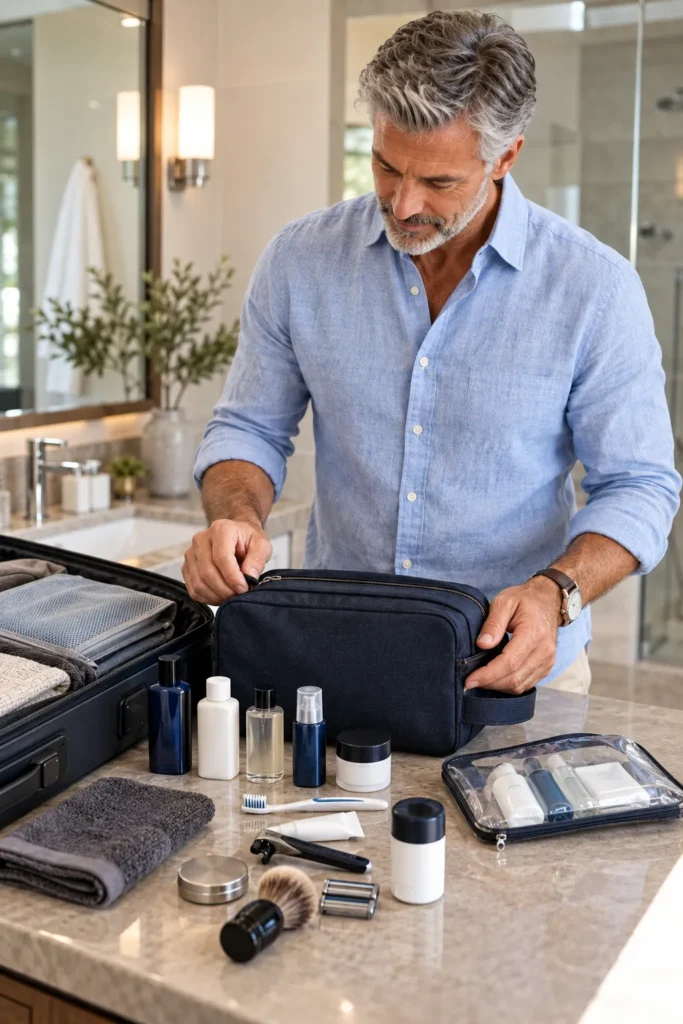
Keep toiletries in a separate waterproof bag to protect your clothes from spills. Pack your toothbrush, toothpaste, shampoo, deodorant, shaving items, and other daily essentials. Use travel-size bottles to save space.
Close every bottle tightly and place it in a sealed plastic pouch. Keep any medicines you need in an easy-to-reach place, and follow airline rules for liquids if you are flying.
11. Place Heavy Items at the Bottom of Your Suitcase
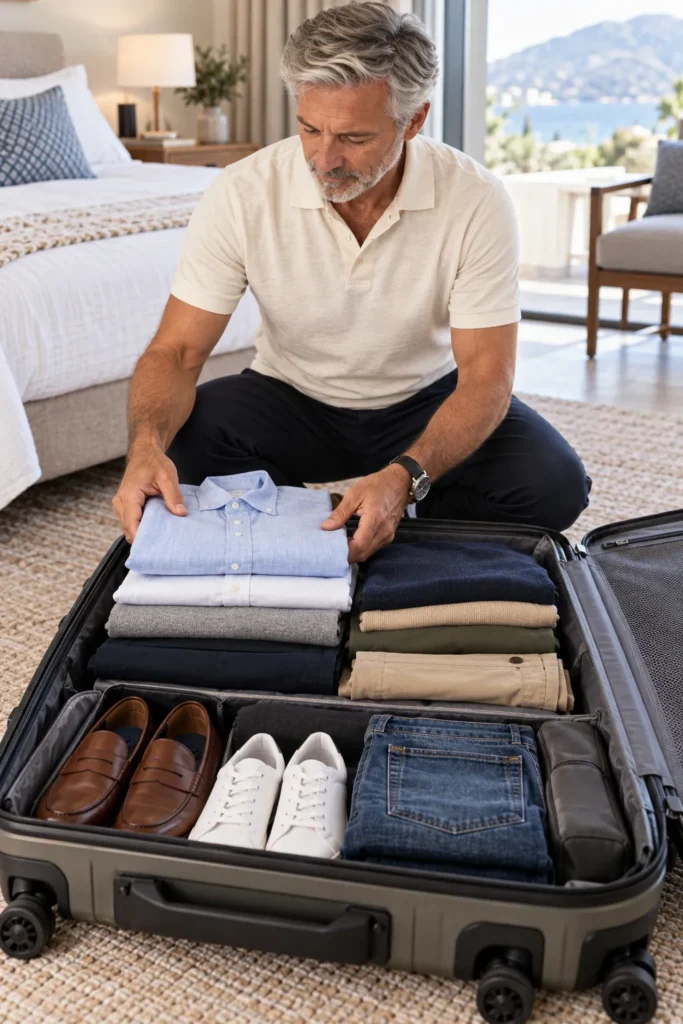
Place heavy items, such as shoes and jeans, near the bottom of your suitcase, close to the wheels. This helps keep the bag balanced when you pull it. Put lighter clothes, folded shirts, and delicate items above them.
Fill small gaps with socks or underwear to stop clothes from moving around. Avoid packing everything too tightly, because you may need space to close the suitcase without crushing your clothes.
12. Leave Room for Extra Items and Check Your Bag
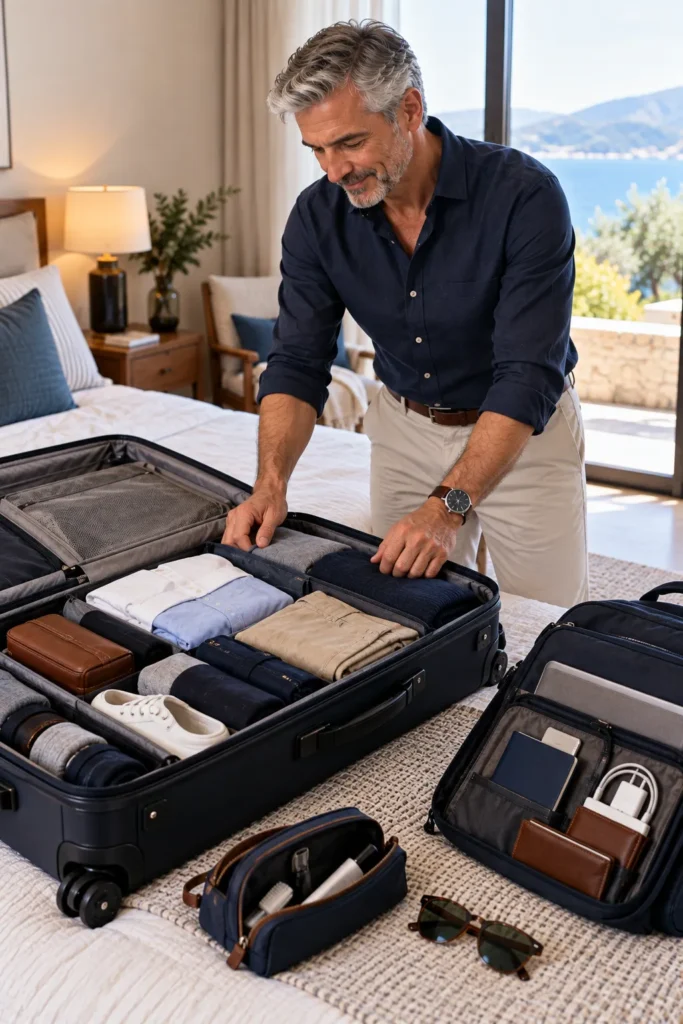
Leave a little space for souvenirs, gifts, or clothes you may buy during your trip. Before closing the suitcase, check your travel documents, chargers, medicines, toiletries, and planned outfits.
Make sure shoes and bottles are secure, and remove anything you do not need. Lift the bag to check its weight, especially if you are flying.
Keep valuables and important documents in your carry-on bag rather than your checked suitcase.
Common Packing Problems and How to Solve Them
Packing can become difficult when your suitcase is too small, your clothes wrinkle, or you cannot find important items. These simple solutions can help you stay organized and make your trip more comfortable.
What to Do If Your Suitcase Is Too Full
Do not force the suitcase closed. Take everything out and check which items you can remove. Choose clothes that work with more than one outfit, and avoid packing extra shoes or bulky items you may not use.
- Remove clothes you can easily wear more than once.
- Wear your heaviest jacket and shoes while travelling, if practical.
- Use packing cubes to organize clothes without adding unnecessary bulk.
- Leave out items available at your destination, such as basic toiletries.
How to Reduce Wrinkles in Your Clothes
Dress shirts and formal trousers can wrinkle during travel. Fold them carefully and place them near the top of your suitcase. Avoid placing heavy shoes or other items on top of delicate clothes.
- Button dress shirts before folding them.
- Fold trousers along their natural creases.
- Use a garment bag for valuable or very delicate formalwear when needed.
- Hang clothes as soon as you reach your hotel.
What to Do If You Forget Something
Before leaving home, check your travel documents, medicines, chargers, and essential grooming items. Keep important belongings in your carry-on bag so they remain easy to reach.
If you forget a basic item, check whether you can buy it at your destination. For prescription medicines, plan ahead and bring enough for your trip, following your healthcare provider’s advice and applicable travel rules.
Common Suitcase Packing Mistakes to Avoid
Avoid these mistakes to make packing easier and keep your belongings in good condition.
- Packing too many clothes: Plan outfits before putting clothes in your suitcase.
- Taking too many shoes: Choose comfortable shoes that work with several outfits.
- Ignoring the weather: Check the forecast and pack suitable layers.
- Putting toiletries directly beside clothes: Use a separate, leakproof toiletry bag.
- Packing valuables in checked luggage: Keep important documents, money, and valuable items with you.
- Ignoring baggage limits: Check your airline’s size and weight rules before leaving.
- Leaving packing until the last minute: Allow around 45–60 minutes for a week-long trip, depending on your needs.
Frequently Asked Questions
1. How many clothes should a man pack for a 7-day trip?
For a week-long trip, start with 4–5 shirts, 2 pairs of trousers or chinos, 1 pair of jeans, and 1 sweater or light jacket. Pack enough underwear and socks for each day, plus an extra pair if needed. Adjust these amounts for the weather, planned activities, and access to laundry.
2. Is it better to roll or fold clothes in a suitcase?
Both methods are useful. Rolling works well for casual shirts, T-shirts, and sleepwear. Folding is often better for dress shirts and formal trousers that need to keep their shape. Use the method that suits each item instead of rolling everything.
3. How can men over 50 pack comfortably for a trip?
Choose comfortable clothes that fit well and are easy to combine. Pack shoes you can walk in comfortably, bring suitable layers, and keep medicines and daily essentials easy to reach. A well-organized suitcase can also make unpacking less tiring.
4. Where should shoes go in a suitcase?
Place clean shoes along the sides or near the bottom of the suitcase, close to the wheels. Put each pair in a shoe bag or clean bag to protect your clothes. You can also fill the shoes with socks to use the space inside them.
5. How can I keep my suitcase organized during a trip?
Use packing cubes or separate cloth bags for shirts, trousers, underwear, and accessories. Keep dirty laundry in a separate bag. Return items to their usual place after use so you can find them easily and repack without making a mess.
Quick-Reference Suitcase Packing Card for Men Over 50
Use this checklist before closing your suitcase. It helps you confirm that you have packed the essentials without taking too much.
Conclusion
Learning how to pack a suitcase for a trip does not have to be difficult. The key is to plan your outfits, choose clothes that match, fold each item carefully, and keep your essentials organized.
You do not need to pack your entire wardrobe to look well-dressed while travelling.
For men over 50, comfortable shoes, practical layers, and easy-to-match clothing can make a big difference. Start packing 45–60 minutes before you finish preparing for a week-long trip, and use the checklist to avoid forgetting important items.
Before your next journey, try these 12 steps and adjust the packing list to suit your destination, activities, and personal needs. A little planning can help you travel with less stress and enjoy your trip with confidence.