

Getting dressed for a job interview after 50 can feel tricky. You want to look professional without wearing clothes that feel too formal, too young, or uncomfortable.
The good news is that a few well-chosen pieces can help you look neat and feel at ease.
This guide shows you how to dress for a job interview after 50, from choosing the right jacket to checking your shoes before you leave home.
You will learn how to match colors, find clothes that fit your body, and dress for different workplaces.
You do not need an expensive wardrobe. A clean shirt, well-fitting trousers, and polished shoes can make a strong first impression.
The method is practical: check the company’s dress code, choose your main outfit, and work through the smaller details.
This order helps you avoid last-minute problems, such as a jacket that pulls at the shoulders or shoes that do not match your trousers.
Set aside about 30–45 minutes to plan and check your outfit. If you need to iron clothes or polish shoes, allow extra time. By the end, you will have an interview outfit ready to wear.
Time and Difficulty
What You Need
Check your wardrobe before buying anything new.
- Navy or gray suit, if needed
- Sport coat or blazer
- White or light blue shirt
- Dress trousers or chinos
- Tie, if suitable for the role
- Clean dress shoes or smart loafers
- Belt that matches your shoes
- Simple watch
- Clean socks
- Iron or clothes steamer
- Lint roller or soft clothes brush
- Shoe brush and polish
- Comb and nail clippers
- Full-length mirror
At a Glance
- Research the company’s dress code
- Choose an outfit that fits the role
- Pick a well-fitting suit or sport coat
- Wear a clean, well-fitted dress shirt
- Match your trousers to your jacket
- Select a tie that suits the outfit
- Polish your shoes and match your belt
- Add simple accessories
- Dress smartly for a business-casual interview
- Choose colors that work well together
- Groom your hair, beard, and nails
- Check the fit and comfort of your outfit
- Prepare your outfit the night before
Step 1: Research the Company’s Dress Code
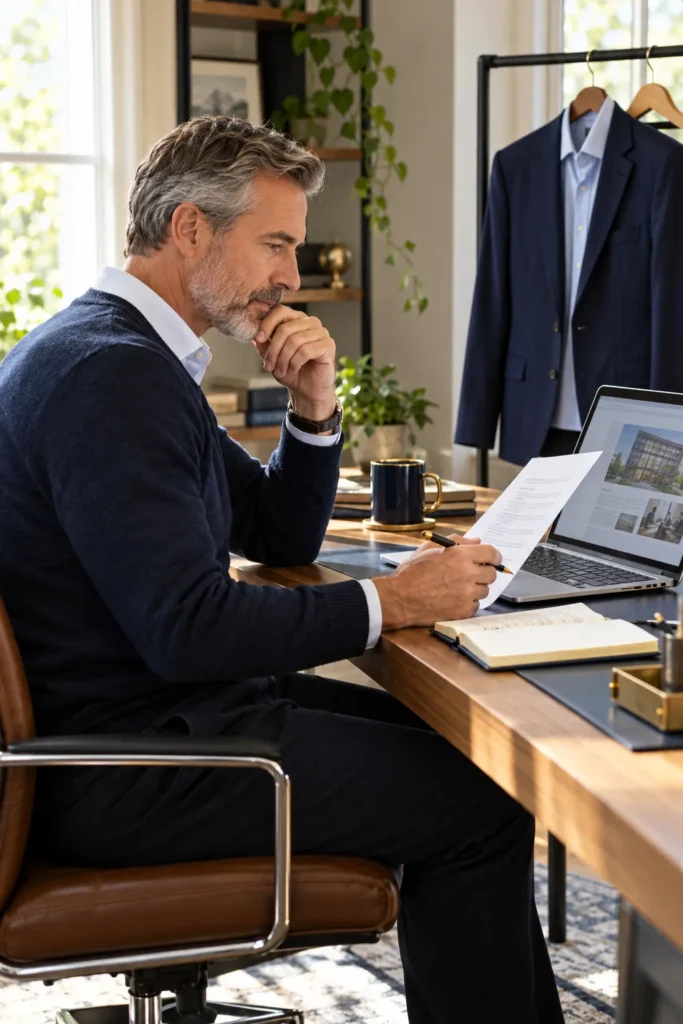
A good interview outfit starts with the workplace, not your wardrobe. A bank, law firm, or senior office role may call for a suit. A small creative company may welcome a smart shirt and sport coat.
Spend 5–10 minutes checking the company website, staff photos, and job listing. Look at what people wear in office photos.
If you cannot tell, choose clothes that look neat and slightly more formal than everyday office wear. This gives you a safe starting point without making you look out of place.
Pay attention to the job level, too. A manager’s interview may call for a jacket and dress trousers, while a hands-on role may suit clean chinos and a button-down shirt.
Step 2: Choose an Outfit That Fits the Role
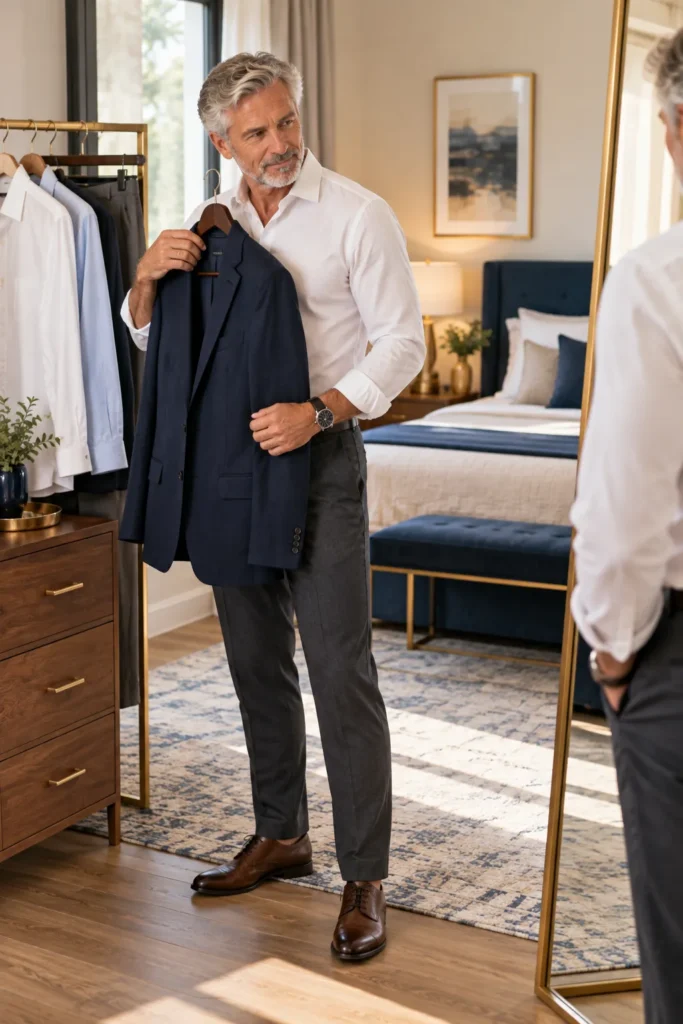
Once you know the workplace’s dress style, choose one complete outfit. Lay the jacket, shirt, trousers, shoes, and belt together so you can see how they look as a set.
For a formal office, start with a navy or charcoal suit, a light shirt, and leather dress shoes. For a business-casual office, try a navy sport coat, gray trousers, and brown loafers.
For a relaxed workplace, clean chinos and a pressed button-down shirt may be enough.
The aim is to look ready for the job, not dressed for a different event. If you are unsure, choose the more formal of two suitable options.
Step 3: Pick a Well-Fitting Suit or Sport Coat
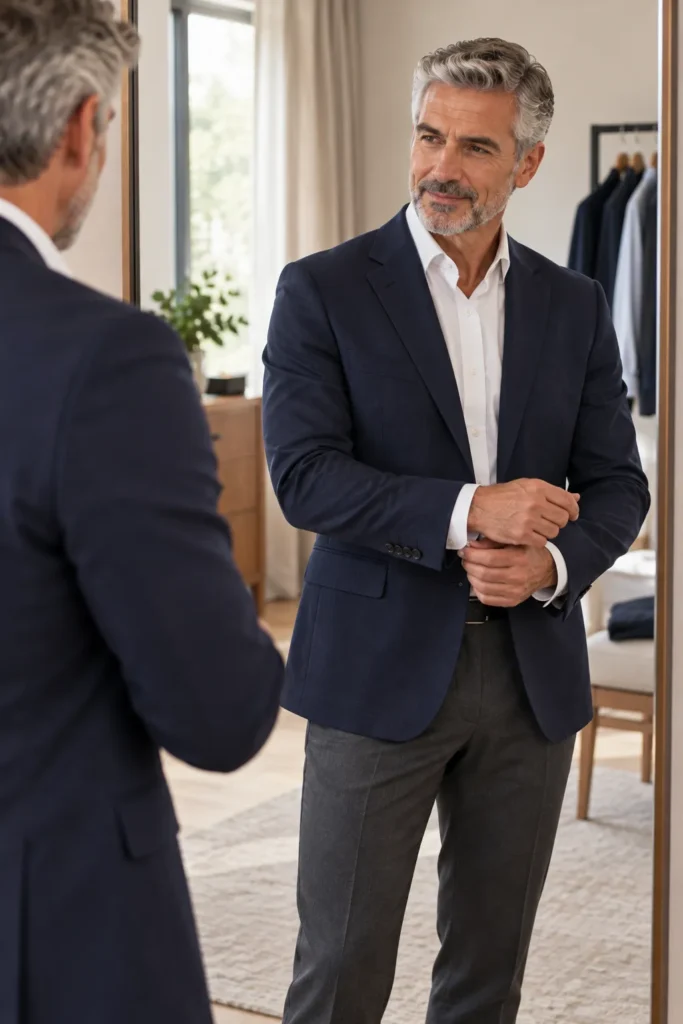
A jacket can bring an outfit together, but a poor fit can make even expensive clothes look wrong. Start with the shoulders. The seams should sit near the ends of your shoulders without hanging far past them or pulling inward.
Button the jacket and check that the front lies flat. You should be able to move your arms and sit without feeling squeezed. The sleeves should show a small amount of shirt cuff, roughly ¼–½ inch, when your arms rest naturally.
Look for smooth shoulders, a flat jacket front, and sleeves that do not cover your hands. If the shoulders fit but the waist feels loose, a tailor may be able to adjust it. Avoid buying a jacket that is too tight in the shoulders because this area is harder to fix.
Navy and charcoal are safe choices for most office interviews. If you do not own a full suit, a clean sport coat with matching dress trousers can work well in many business-casual settings.
Step 4: Wear a Clean, Well-Fitted Dress Shirt

A good shirt helps your whole outfit look neat. White and light blue are safe choices because they work with navy, gray, and charcoal jackets. Choose a plain shirt if you are unsure about patterns.
Check the collar before putting it on. It should sit flat around your neck without pressing against your skin. When the top button is closed, you should be able to fit about one finger between your neck and the collar. The shoulder seams should sit near your shoulders, and the cuffs should reach your wrists.
Iron out wrinkles, especially around the collar, chest, and sleeves. A shirt that fits well and looks clean will serve you better than an expensive shirt that pulls at the buttons.
Fits without choking or leaving a wide gap.
Seams sit close to the ends of your shoulders.
Buttons lie flat without pulling or gaping.
Cuffs reach your wrists when your arms rest naturally.
Step 5: Match Your Trousers to Your Jacket
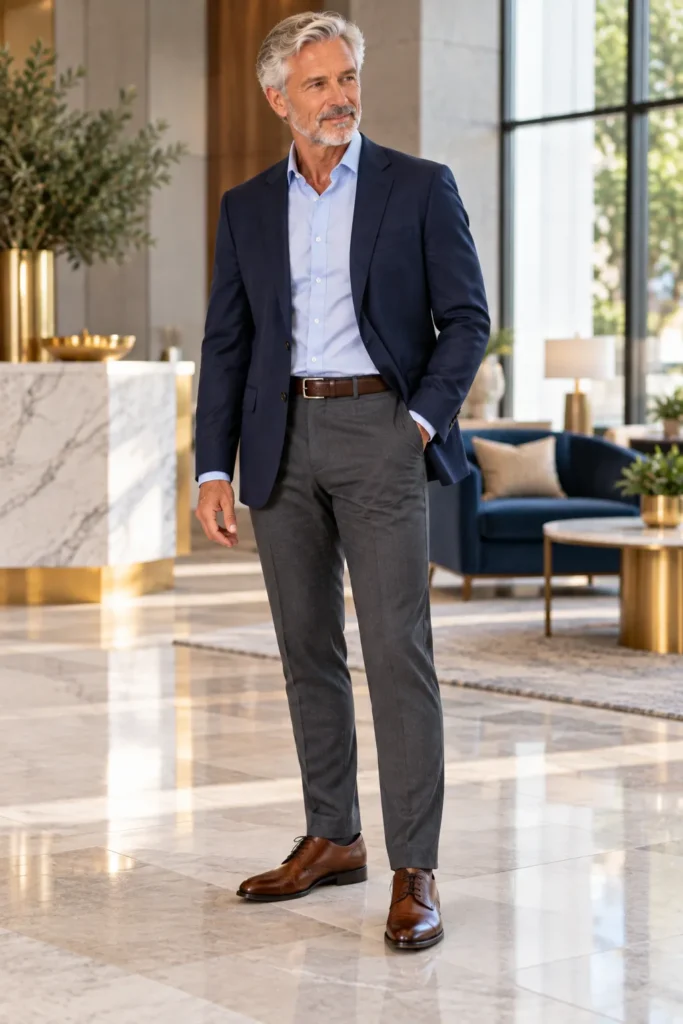
Your trousers should fit comfortably at the waist and create a clean line down your legs. They should not bunch heavily around your shoes or pull tightly across your thighs when you sit.
For a navy jacket, gray trousers are a reliable choice. Charcoal trousers work well with a light blue shirt, while beige chinos can suit a less formal interview. If you wear a full suit, keep the jacket and trousers in the same matching suit fabric.
Check the length while wearing your interview shoes. The trouser hem should rest neatly on the shoe, with little or no extra fabric piling up. If the trousers are too long, ask a tailor to shorten them before interview day.
Put on your interview shoes before checking the hem. Walk a few steps and sit down. If the fabric gathers in thick folds over your shoes or exposes too much sock while standing, the length may need adjusting.
Step 6: Select a Tie That Suits the Outfit
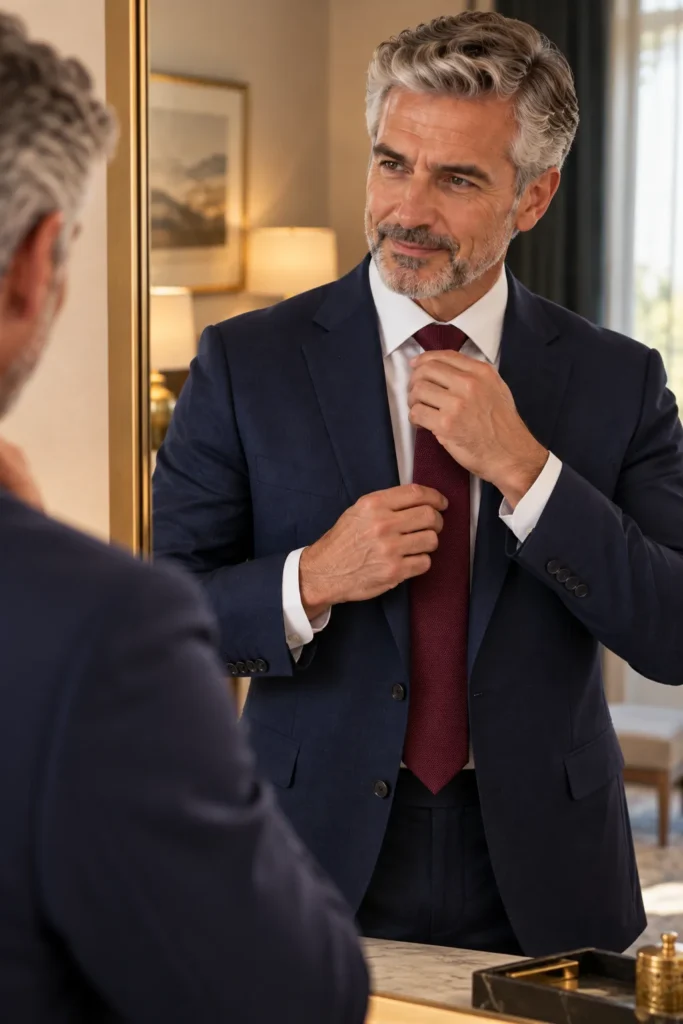
A tie can finish a formal interview outfit, but it should work with your shirt and jacket rather than take all the attention. For a navy or charcoal suit, try a burgundy, dark blue, or muted gray tie. Small patterns are fine if they do not clash with your shirt.
Tie width should be close to the width of your jacket’s lapel. This helps the outfit look balanced. The tip of the tie should reach around the top of your belt buckle, not hang far below it or stop halfway up your chest.
A tie may not be needed for a business-casual role. Check the company’s dress style before deciding. If you wear one, knot it neatly and make sure the collar sits flat.
Pairs well with white or light blue shirts.
Adds color without looking too loud.
Fits many classic suit combinations.
Step 7: Polish Your Shoes and Match Your Belt
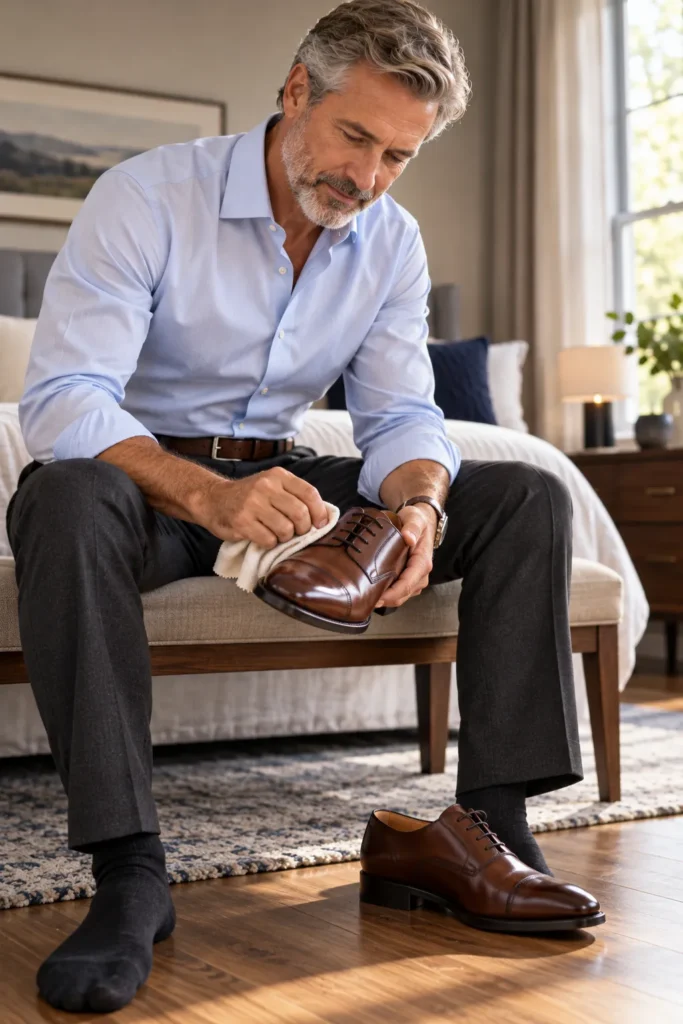
Your shoes are a small part of your outfit, but dirty or worn footwear can spoil an otherwise neat look. For a formal interview, choose black or dark brown leather dress shoes. Smart loafers can work well for business-casual offices.
Spend 5–10 minutes cleaning your shoes. Remove dust with a soft brush, wipe away marks, and apply a small amount of polish if the material allows it. Check the soles and heels for dirt before putting them on.
Match your belt to your shoes as closely as you can. Black shoes pair well with a black belt, while brown shoes work with a brown belt in a similar shade. Your belt should fit comfortably without pulling your trousers out of shape.
A classic match for charcoal or dark suits.
Pairs well with navy jackets and gray trousers.
Step 8: Add Simple Accessories

Accessories should finish your outfit without taking attention away from you. A simple watch, a neat belt, and a clean pocket square can be enough. You do not need to wear every accessory you own.
Choose a watch with a clean face and a strap that suits your clothes. If you wear a pocket square, pick one that works with your jacket and shirt.
It does not need to match your tie exactly. Avoid large chains, noisy bracelets, or several rings if they do not suit the workplace.
Keep your phone, keys, and wallet out of your trouser pockets during the interview. Bulky pockets can pull the fabric out of shape. Carry your documents in a clean folder or slim work bag instead.
Step 9: Dress Smartly for a Business-Casual Interview
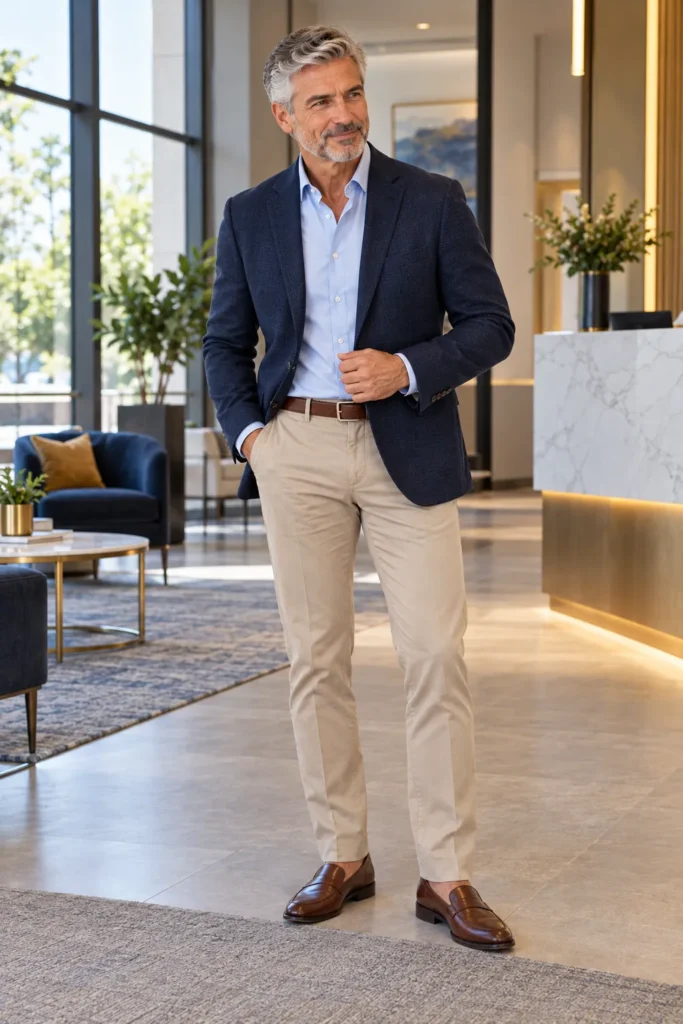
Not every interview calls for a full suit. In many offices, a sport coat, a button-down shirt, and well-fitted chinos or dress trousers are enough. The key is to look neat without appearing too formal for the workplace.
Try a navy sport coat with a light blue shirt, gray trousers, and dark brown loafers. For a more relaxed office, wear beige chinos with a white shirt and clean leather shoes.
Keep your shirt tucked in if the outfit calls for it, and choose trousers without fading, stains, or frayed hems.
Avoid ripped jeans, graphic T-shirts, sportswear, and worn trainers unless the employer has clearly stated that these are suitable. If you cannot confirm the dress code, choose a jacket and dress trousers as a safe starting point.
Step 10: Choose Colors That Work Well Together
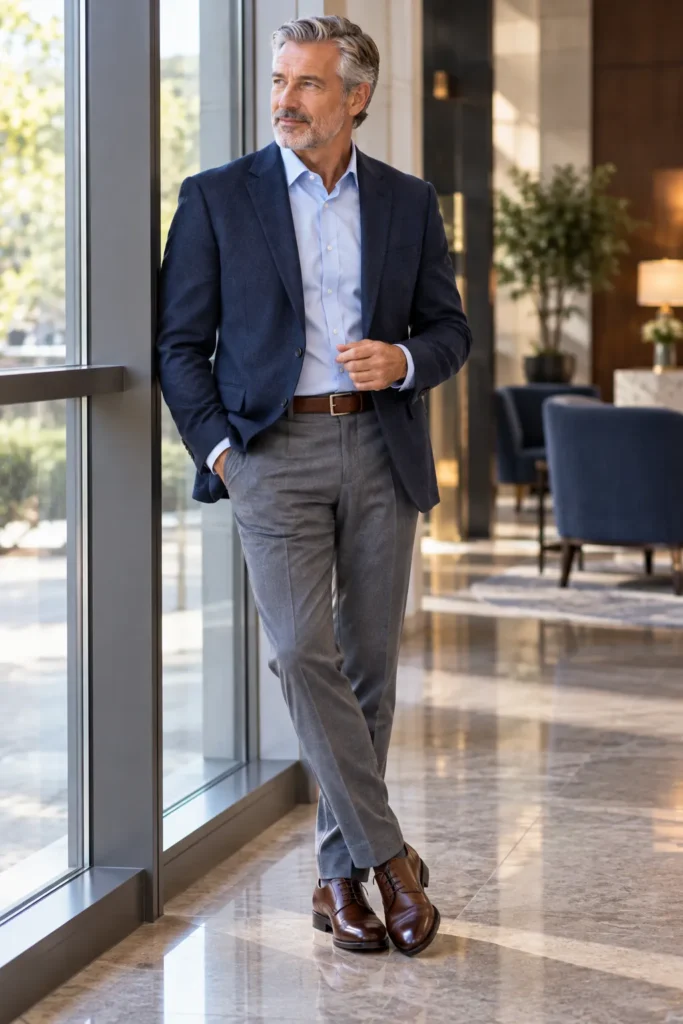
The right colors can make your interview outfit look neat and well planned. You do not need bright colors or bold patterns to stand out. Start with two or three colors that work well together.
Navy, gray, white, light blue, and beige are good choices for many interview settings. A navy jacket with gray trousers and a white shirt creates a classic look. For a softer style, try beige chinos with a light blue shirt and a navy sport coat.
Keep patterns simple. If your shirt has stripes or checks, choose a plain jacket and trousers. Avoid wearing too many strong colors at once, as they can make the outfit look less balanced.
Use these combinations as a starting point for your outfit.
Navy, gray, and white.
Charcoal, light blue, and brown.
Navy, beige, and cream.
Step 11: Groom Your Hair, Beard, and Nails
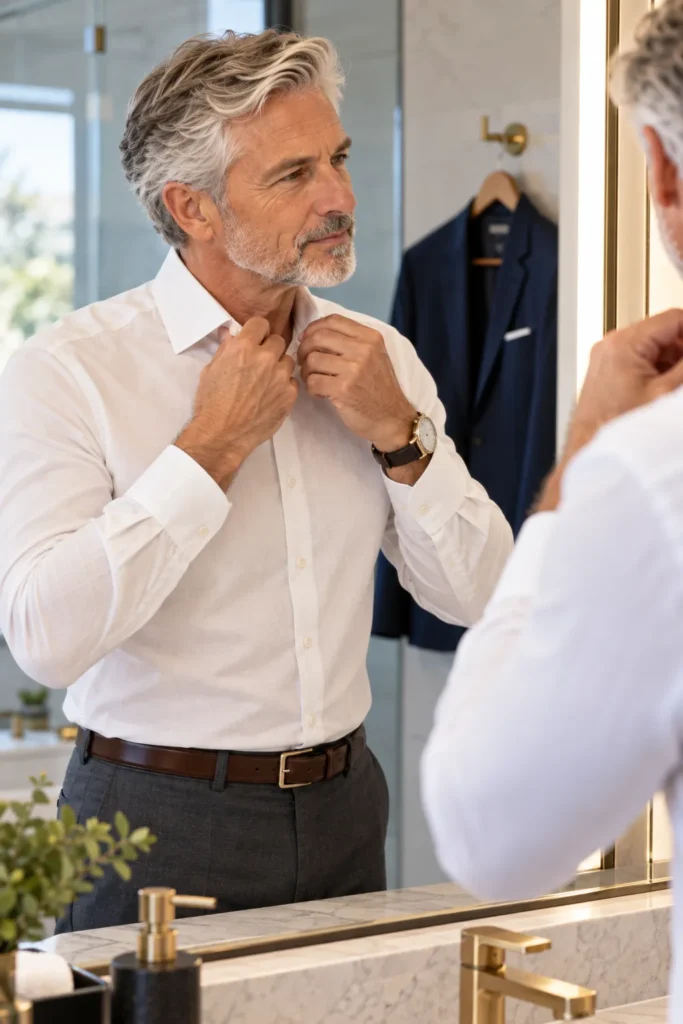
Your clothes are only one part of your appearance. Clean hair, tidy facial hair, and neat nails help complete your interview look. You do not need a new hairstyle or a clean-shaven face if that is not your usual style.
Trim your beard or moustache into a shape you can maintain. Comb your hair and check for loose strands. Wash your face, clean your nails, and use a small amount of your usual hair product if needed.
Avoid trying a new hairstyle or beard style on the morning of the interview. Make any changes a few days earlier so you have time to get used to the result. Keep fragrance light, as strong scents may bother people in a small office.
Wash or comb it neatly. Keep stray hairs in place.
Trim uneven edges and clean the neck area.
Wash your hands and trim your nails.
Wash your face, brush your teeth, and keep breath fresh.
Use little or none. Keep the scent mild.
Look for dandruff, lint, food marks, and loose threads.
Step 12: Check the Fit and Comfort of Your Outfit
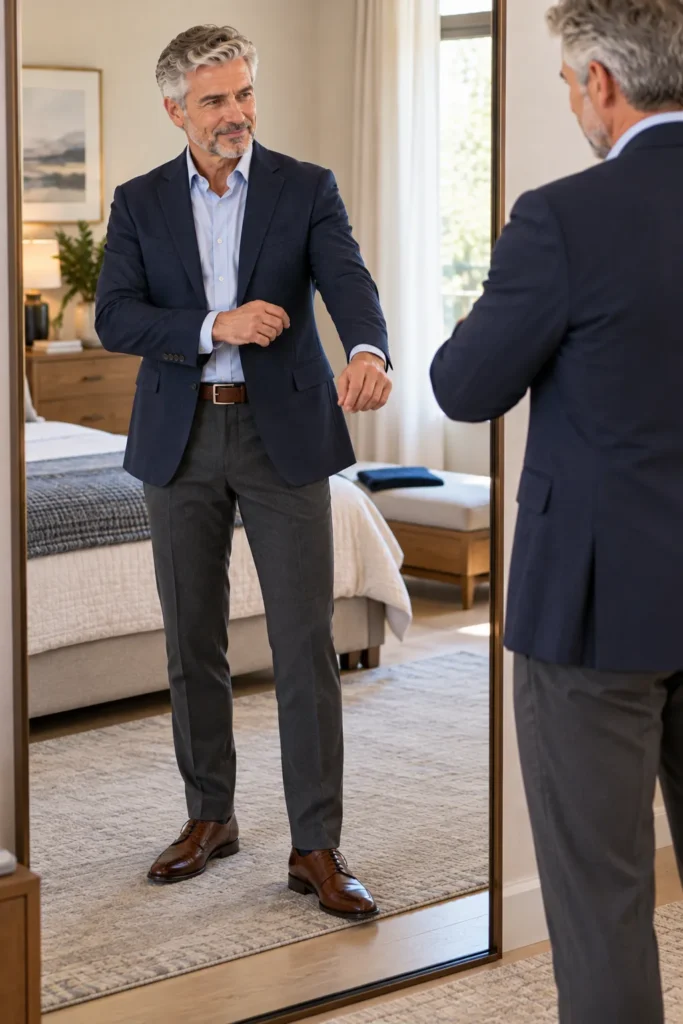
A good outfit should look neat while you stand, sit, and move. Put on the full set of interview clothes, including your belt, socks, and shoes. Check your appearance in a full-length mirror from the front and sides.
Try these checks before deciding the outfit is ready:
- Sit in a chair to see if your trousers or jacket pull tightly.
- Walk for 2–3 minutes to test your shoes.
- Raise your arms to check that your shirt and jacket allow movement.
- Bend your knees slightly to check trouser comfort.
- Look for loose threads, wrinkles, lint, and open buttons.
Ask a family member or friend to check the back of your jacket if you cannot see it clearly. Fix small problems now rather than noticing them in the interview room.
Step 13: Prepare Your Outfit the Night Before
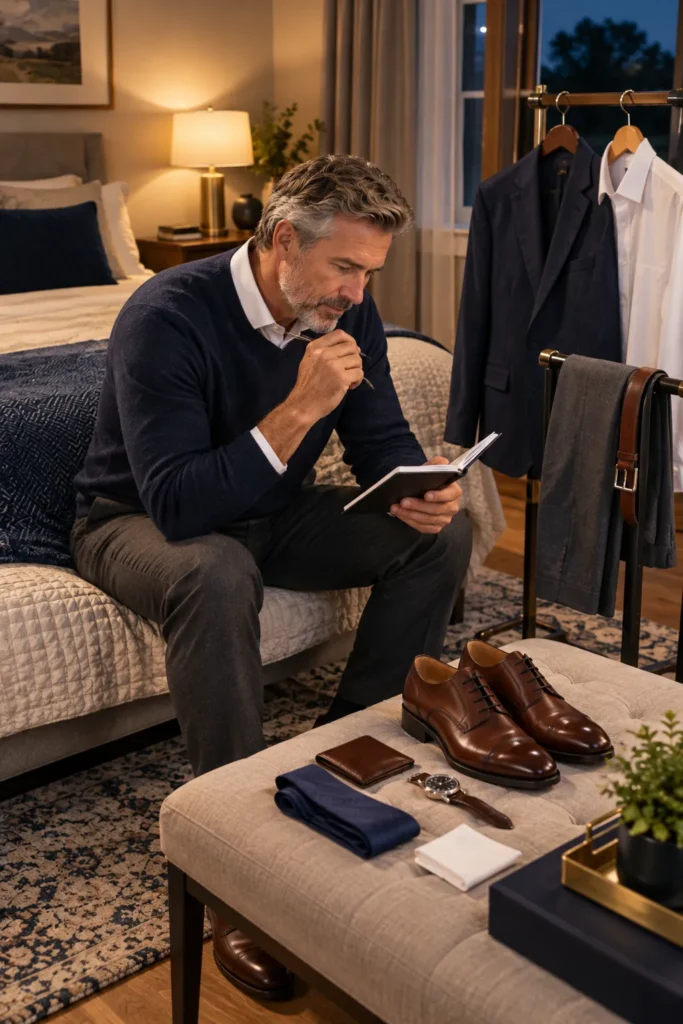
Leaving your outfit until the morning can lead to rushed choices and missed details. Set everything out the evening before your interview so you have time to fix any problems.
Hang your shirt, jacket, and trousers on suitable hangers. Check each piece for stains, loose buttons, and wrinkles. Use an iron or clothes steamer according to the care label. Clean your shoes and place your belt, socks, tie, and watch beside the outfit.
Keep your CV, copies of your documents, and a pen in your work bag or folder. Check the interview time, address, and travel plan before going to bed. Aim to finish your preparation at least 15 minutes before bedtime so you can relax.
Tick each item as you prepare for the next morning.
Troubleshooting Table: Fix Common Interview Outfit Problems
Even a well-planned outfit can have a small problem. Use this table to find a quick fix before leaving home.
| If This Happens | Try This |
|---|---|
| Jacket pulls at the shoulders | Try a different size or jacket. Shoulder fit is hard to alter. |
| Shirt buttons pull apart | Choose a shirt with more room across the chest. |
| Trousers bunch over shoes | Ask a tailor to adjust the hem before interview day. |
| Shoes look dusty or dull | Brush away dirt and use a suitable cleaner or polish. |
| Colors clash | Replace one item with navy, gray, white, or beige. |
| Shirt or jacket has wrinkles | Use an iron or steamer that suits the fabric care label. |
Quick Reference Card: Job Interview Clothes After 50
Save this checklist so you can check your outfit before the next interview.
Suit or sport coat · Dress shirt · Trousers or chinos · Clean shoes · Matching belt · Socks · Tie if needed · Grooming items · CV and documents
- Check the company’s dress code.
- Choose clothes that fit the role.
- Check your jacket’s fit.
- Wear a clean, pressed shirt.
- Match your trousers to your jacket.
- Choose a suitable tie.
- Clean your shoes and match your belt.
- Keep accessories simple.
- Dress for the workplace’s formality.
- Use colors that work well together.
- Tidy your hair, beard, and nails.
- Test your outfit while sitting and walking.
- Prepare everything the night before.
Clean clothes, a good fit, polished shoes, and a calm color scheme are a reliable starting point for most office interviews.
Conclusion
Dressing for a job interview after 50 starts with clothes that fit well, look clean, and suit the workplace. You do not need a new wardrobe to look professional.
Check your outfit, test your comfort, and prepare everything the night before. These small steps leave you with more time to focus on the interview itself.
Save this guide on Pinterest so you can use the checklist before your next interview.