
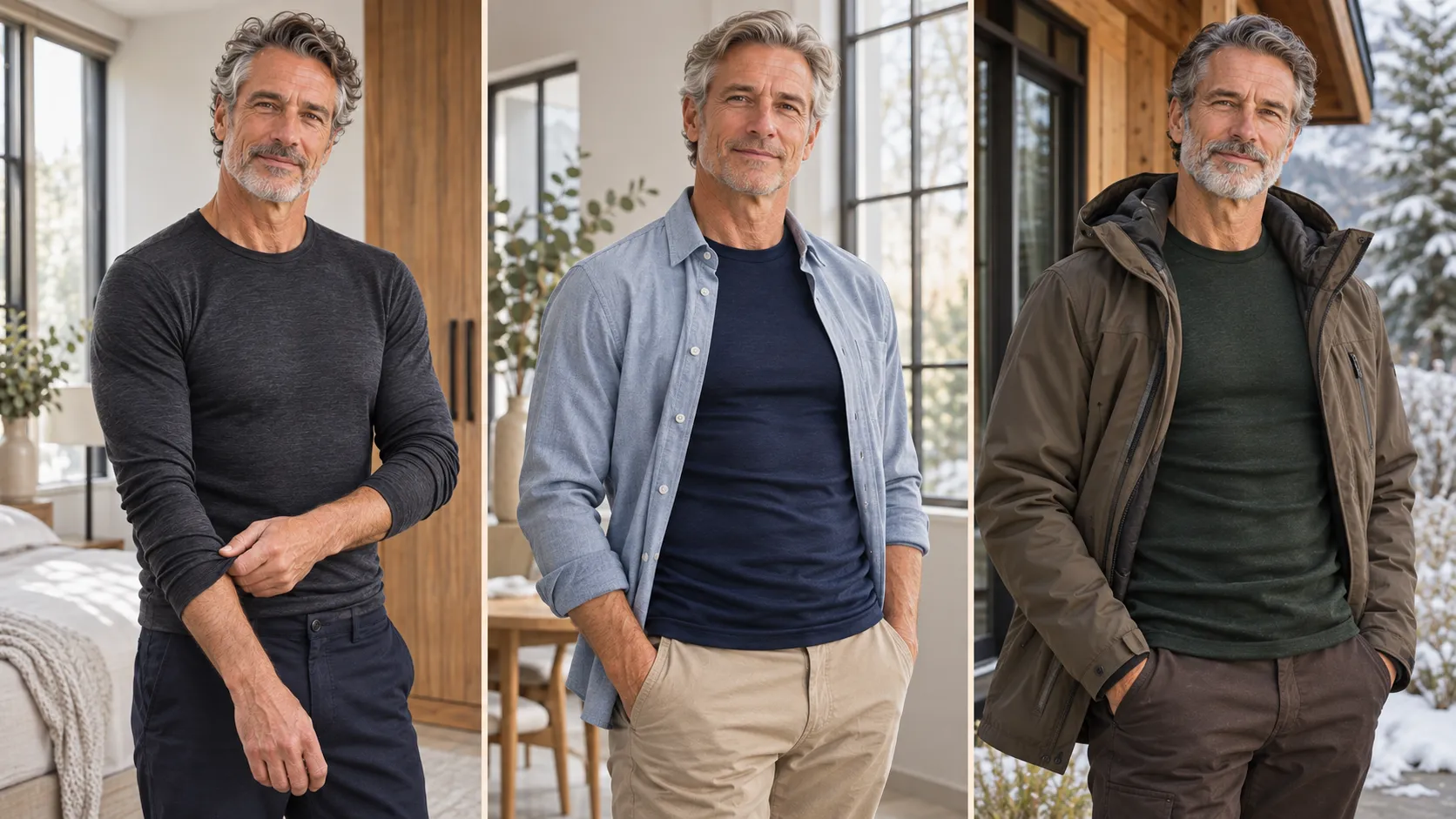
Cold weather can make getting dressed a little frustrating. A regular shirt feels too thin, a thick sweater adds too much bulk, and wearing several layers can make your clothes feel tight.
The answer is often a good base layer. It sits close to your skin, keeps you warm, and lets your outer clothes fit the way they should.
The Best Base Layers for Men Over 50 should offer more than warmth. Comfort matters just as much. Fabric should feel soft, seams should not rub, and the fit should allow easy movement.
Some men prefer natural wool, while others find lightweight thermal shirts or smooth bamboo fabric more comfortable.
You also do not need an expensive collection to stay warm. A few well-chosen pieces can work under jeans, chinos, sweaters, and winter jackets.
Here are 12 base layer options worth considering, along with tips to help you choose the right one for your daily routine.
1. Merino Wool Base Layers for Natural Warmth Without Bulk
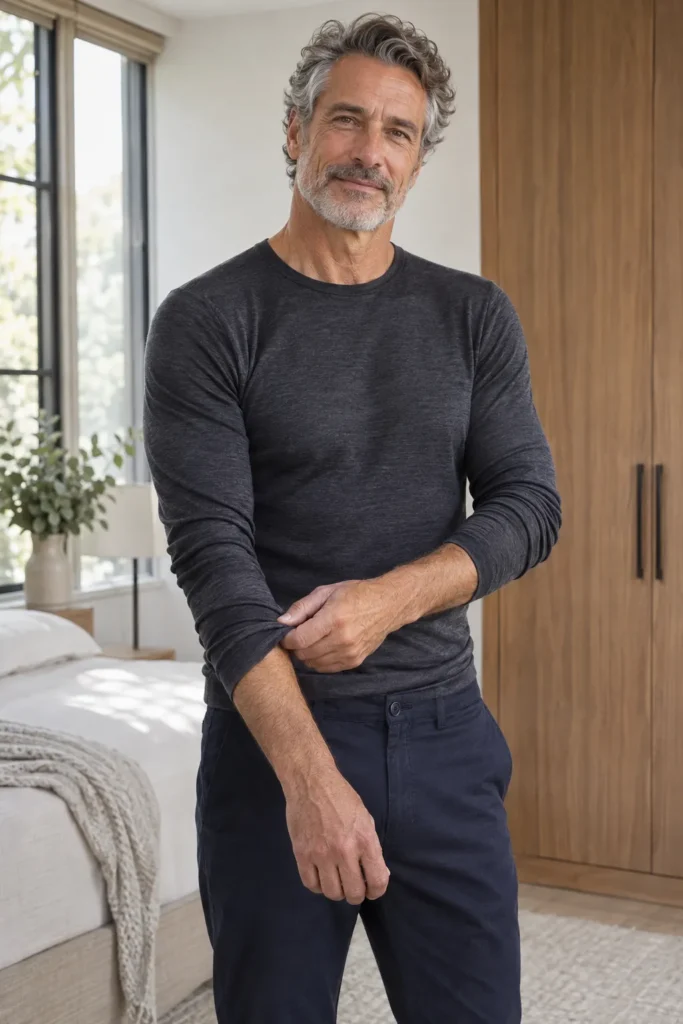
Merino wool is a smart choice for men who want warmth without wearing a thick undershirt. Its fine fibers feel softer than traditional coarse wool, making it a comfortable option under everyday clothes.
A lightweight merino crew-neck shirt works well beneath a button-down shirt, sweater, or winter jacket. It also helps manage moisture, which can be useful when moving between a cold outdoor space and a heated room.
Look for these details:
- Lightweight merino fabric for everyday wear.
- Flat seams that sit smoothly against the skin.
- A close fit without tight sleeves.
- A crew neck for use under most shirts.
2. Lightweight Thermal Shirts That Fit Under Everyday Clothes

A thick thermal shirt can make a regular button-down feel uncomfortable, especially around the chest and arms.
Lightweight thermal shirts solve this problem by adding a thin layer of warmth without changing the fit of your outfit.
Choose a slim but comfortable thermal crew neck in black, white, or heather grey. These shades stay hidden under most shirts and sweaters.
For daily use, check the fabric weight and sleeve length before buying.
💡 Quick Tip
Wear a lightweight thermal shirt under a fine-knit sweater or casual button-down. Choose a neckline that stays hidden when your top button is open.
3. Silk Base Layers for Men Who Prefer a Barely There Feel
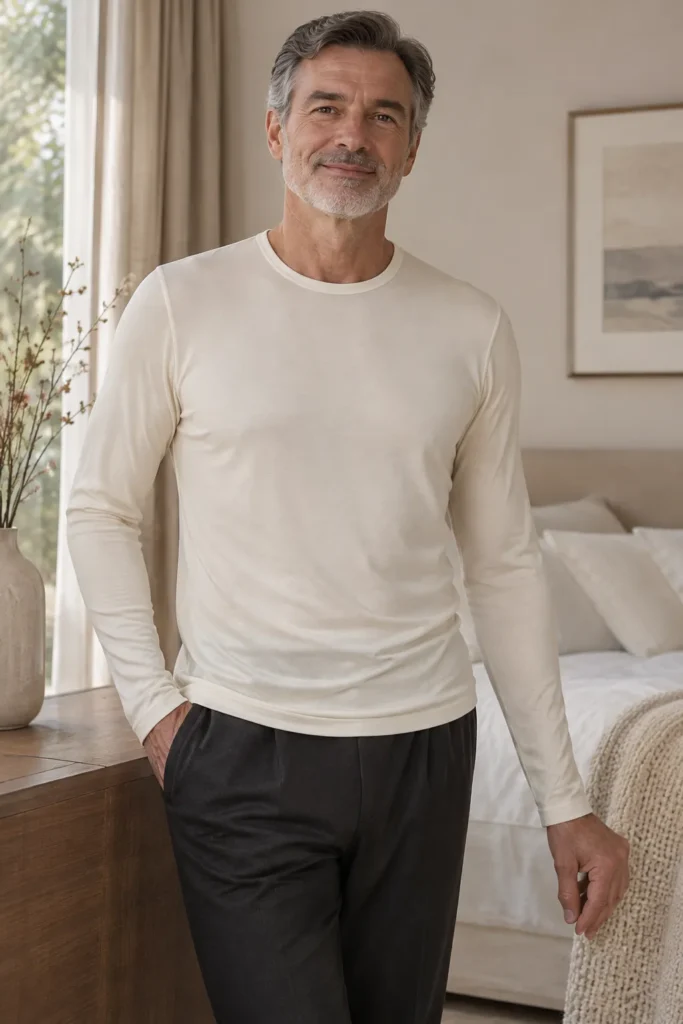
Some men dislike the feeling of thick fabric against their skin. Silk base layers offer a smooth, lightweight option that works well under dress shirts and fine sweaters.
The fabric feels soft and has very little bulk, so it will not make your clothes look crowded. A silk undershirt in a neutral shade can also be useful under formal winter outfits.
What makes silk worth considering?
- Smooth feel against the skin.
- Thin construction for fitted clothing.
- Suitable for layering under dress shirts.
- A good option for men who dislike heavy thermal fabric.
4. Moisture-Wicking Base Layers for Active Winter Days
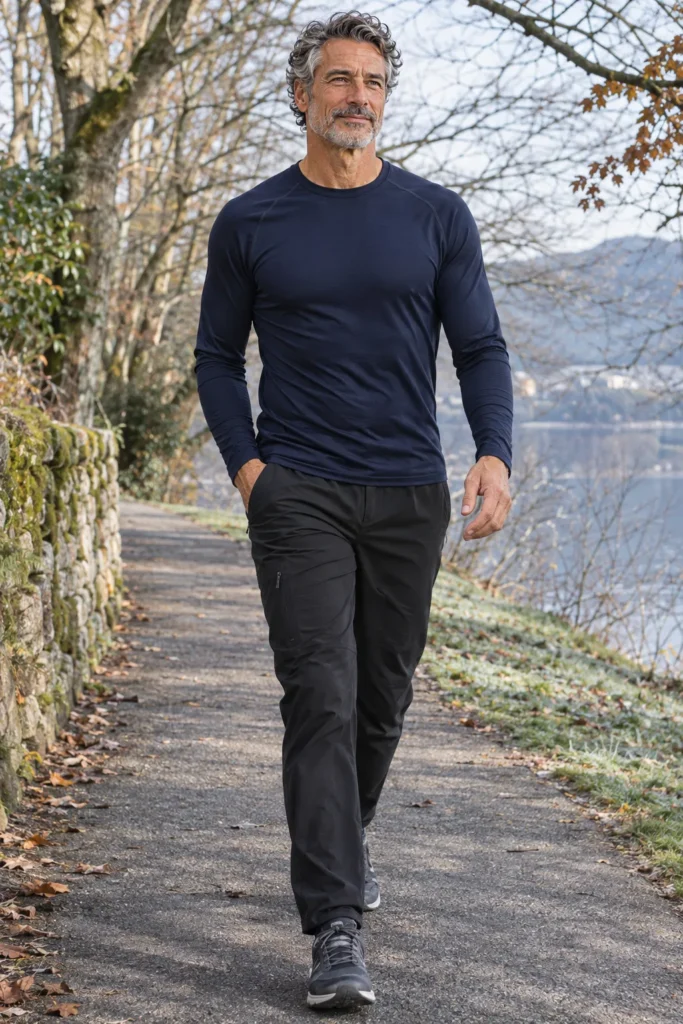
A cold morning walk can turn into a warm afternoon, especially when you are moving around. A base layer that holds too much sweat can feel uncomfortable once you stop.
Moisture-wicking synthetic fabrics help move sweat away from the skin. They are useful for walking, light exercise, gardening, and outdoor errands.
Before buying, check this list:
- Quick-drying polyester or nylon fabric.
- Stretch material for easy movement.
- Flat seams around the shoulders.
- A comfortable neckline.
- Fabric that does not feel rough against the skin.
Winter Activity Checklist
5. Long-Sleeve Compression Tops for a Close, Smooth Fit
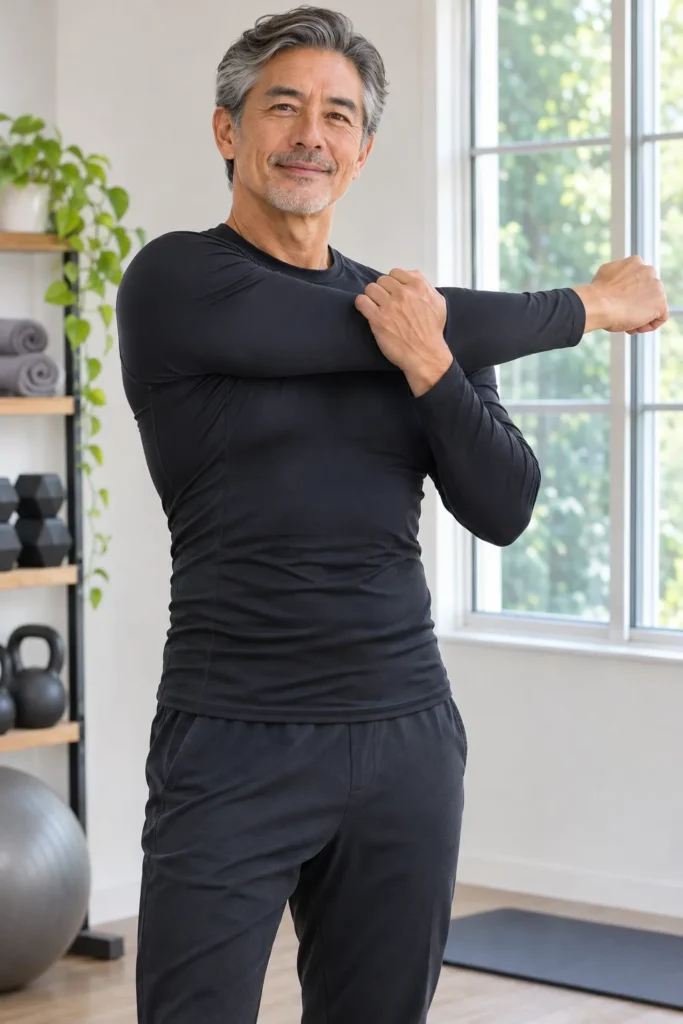
Compression tops sit close to the body and reduce loose fabric under sweaters and jackets. They can be useful for men who prefer a smooth fit beneath their winter clothes.
However, compression clothing is not the same as a regular thermal shirt. Some styles feel quite tight, which may not suit everyone.
Choose wisely:
Gentle stretch and a comfortable fit.
Soft seams and breathable fabric.
Tight sleeves that restrict movement.
Fabric that pulls across the chest or shoulders.
A compression top should feel supportive, not restrictive. If you prefer a relaxed fit, a standard thermal shirt may be a better choice.
6. Cotton Thermal Undershirts for Relaxed Indoor Comfort

Not every winter day calls for heavy thermal clothing. If you spend most of your time indoors, a soft cotton thermal undershirt may be enough.
Cotton feels familiar against the skin and works well under casual shirts, sweatshirts, and light sweaters. It is also easy to find in different cuts and colors.
However, cotton holds moisture and takes longer to dry than many synthetic fabrics. For outdoor activities or heavy sweating, another fabric may be a better choice.
| Cotton thermal | Best use |
|---|---|
| Crew neck | Everyday shirts |
| V-neck | Open-collar shirts |
| Waffle knit | Casual winter layering |
| Long sleeve | Cool indoor days |
| Cotton Style | Where It Works |
|---|---|
| Crew neck | Under casual shirts |
| V-neck | Under open-collar shirts |
| Waffle knit | Under casual sweaters |
7. Fleece-Lined Base Layers for Colder Outdoor Mornings
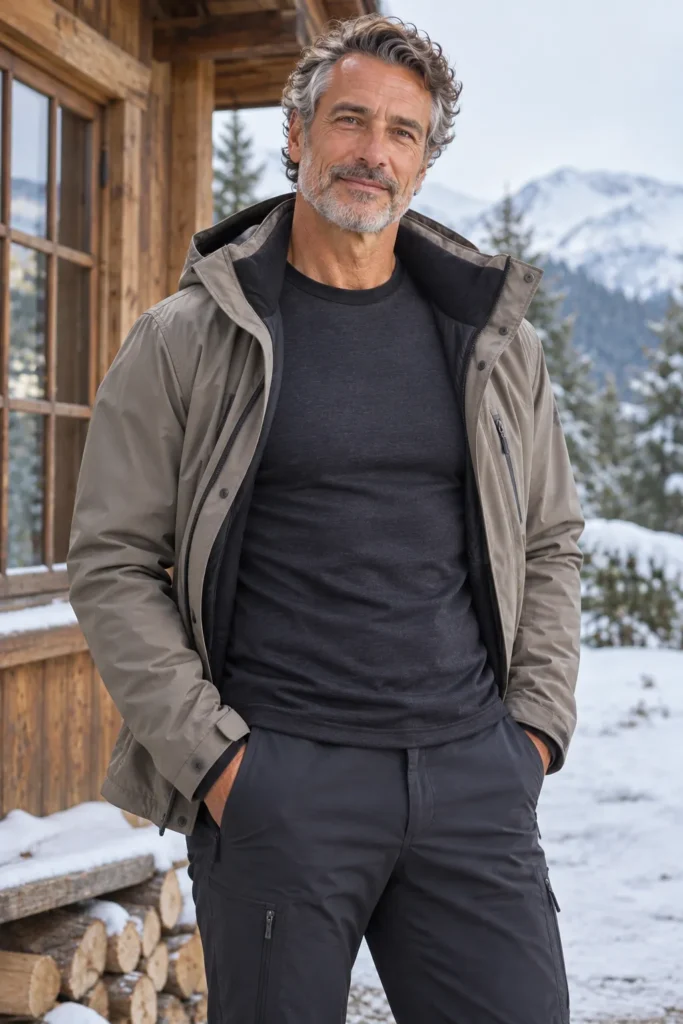
Early morning walks can feel especially cold, even when the afternoon becomes warmer. Fleece-lined base layers offer extra insulation through a soft inner surface.
Look for a thin fleece lining rather than a thick one. It should sit comfortably under jeans or winter trousers without making your legs feel crowded.
A charcoal or black pair is easy to wear under most trousers. Just check the waistband and ankle openings so they do not bunch up during the day.
8. Quarter-Zip Base Layers for Easy Temperature Control
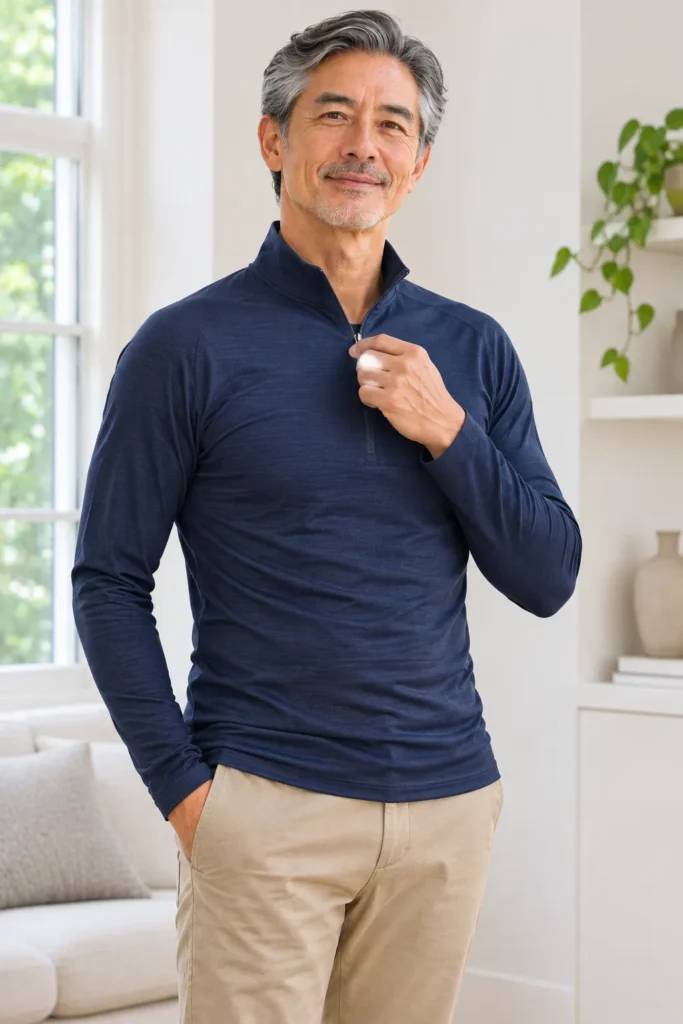
A quarter-zip base layer gives you more control over how warm you feel. You can open the collar during a walk and zip it back up when the temperature drops.
It also offers a slightly more relaxed look than a standard crew-neck thermal shirt.
Here is how to wear it:
Start with a thin quarter-zip top in navy, charcoal, or black.
Wear it under a casual jacket or a relaxed winter sweater.
Adjust the zip as your body temperature changes.
One small detail makes a difference: choose a flat zipper that does not press against your chin when fully closed.
9. Thermal Leggings That Fit Comfortably Under Trousers
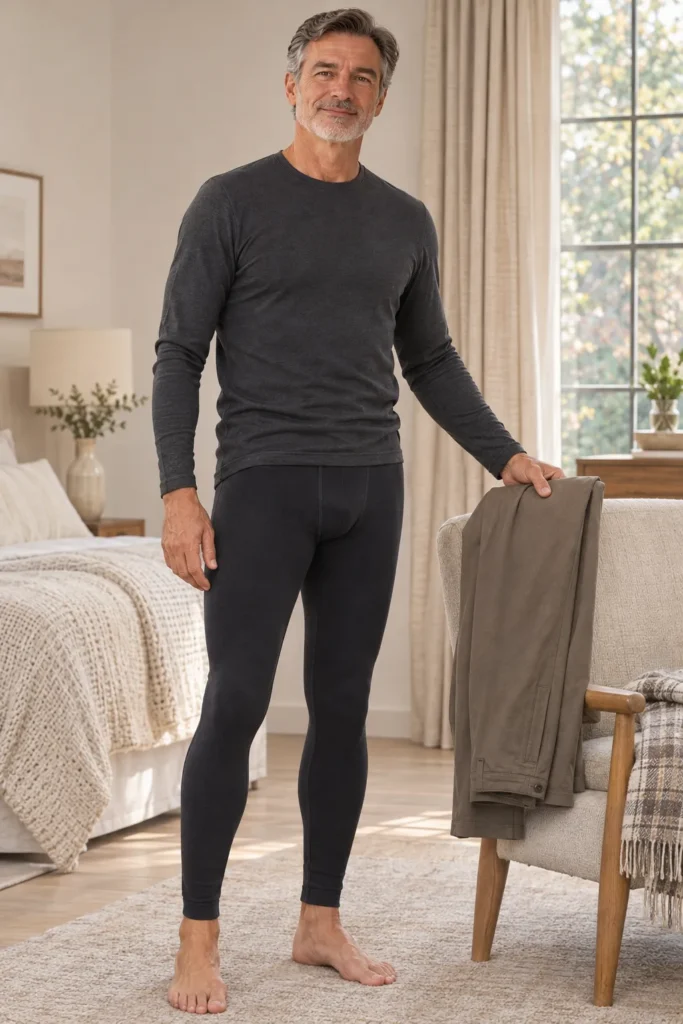
Warm upper-body clothing is useful, but cold legs can make an entire winter outfit uncomfortable. Thermal leggings add insulation beneath your regular trousers without requiring a change to your outer clothes.
They are especially useful under jeans, chinos, and heavier winter trousers.
Think about the difference:
Regular trousers may feel too thin during cold outdoor mornings.
A thin extra layer helps keep your legs warm without changing your outfit.
When shopping, pay attention to three things:
- A soft waistband that does not dig into your stomach.
- Stretch fabric around the knees.
- An ankle length that stays in place inside your trousers.
Avoid thick leggings if your everyday trousers already have a slim fit.
10. Bamboo Base Layers for Soft Everyday Comfort
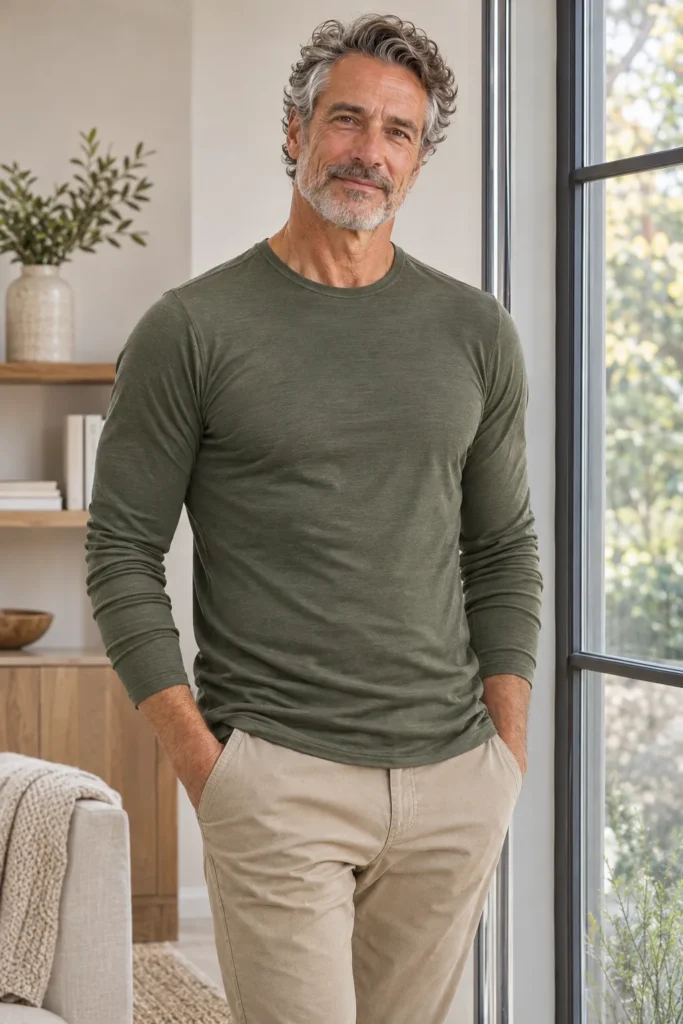
Some men find synthetic thermal fabric uncomfortable against their skin. Bamboo-based viscose or other bamboo-derived fabrics can offer a soft, smooth alternative.
These shirts are often lightweight and have a gentle feel. They work well under casual shirts, knitwear, and everyday jackets.
📌 Good To Know
Many bamboo clothing products are made from processed bamboo cellulose, such as bamboo viscose. Check the fabric label rather than assuming every bamboo garment has the same properties.
For everyday wear, consider:
- A plain crew-neck design.
- A neutral shade such as grey or black.
- A fabric blend with enough stretch.
- A cut that does not bunch around the waist.
Bamboo-derived fabric can be a good option if softness is your main concern. Check the care label before washing because some fabrics need gentle care.
11. Seamless Base Layers That Prevent Rubbing Under Clothes
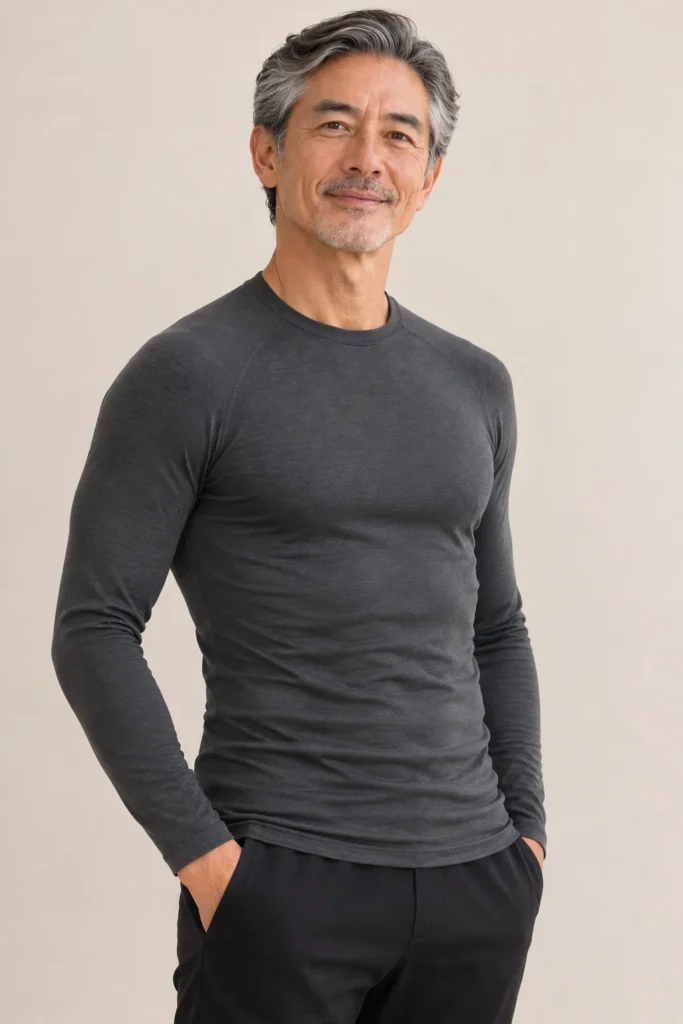
Seamless base layers are a good choice if regular thermal shirts leave marks or feel rough under your clothes.
They have fewer seams, which can help reduce rubbing around the shoulders, sides, and waist. This makes them useful for long days at work, travel, or everyday wear.
Look for a close fit that does not pull across your chest or stomach. A soft stretch fabric can help the shirt move with your body. Check the neck and sleeve edges too, as tight finishing can still cause discomfort.
What to look for:
- Flat or bonded seams
- Soft, stretchy fabric
- Smooth edges around the neck and sleeves
Best for: Men who want a smooth layer under shirts, sweaters, and jackets.
Why Choose a Seamless Base Layer?
Less rubbing under daily clothes.
Moves with your body as you sit or walk.
Sits neatly under shirts and sweaters.
12. Midweight Base Layers for Men Who Feel Cold Easily
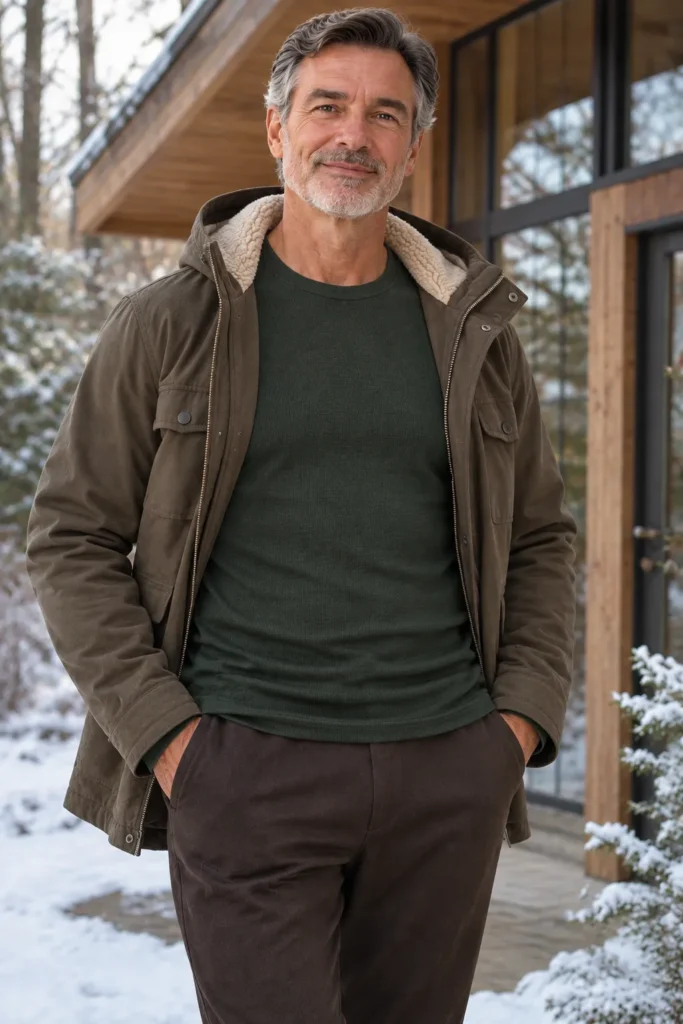
If lightweight thermals do not keep you warm enough, try a midweight base layer. It gives you more warmth than a thin undershirt without the bulk of a thick sweater.
Wear it under a shirt, fleece, or winter jacket on cold mornings and outdoor days.
Choose a fabric that feels soft against your skin and fits close without squeezing. Merino wool blends and synthetic thermal fabrics are common options.
Check the fabric weight and care label before buying, as midweight products can differ in thickness.
A simple buying checklist:
- Choose midweight fabric for colder days.
- Check that the sleeves stay in place.
- Avoid a fit that feels tight around the chest or waist.
- Pick a fabric that suits your activity and washing needs.
Best for: Men who feel cold easily and need extra warmth during winter.
Midweight Base Layer Checklist
Look for a midweight option for more warmth than a thin thermal shirt.
It should sit close to the body without pulling or pinching.
Check washing instructions before you buy.
Use a midweight layer on colder days and a lighter one when the weather is mild.
Conclusion
The right base layer can keep you warm without making your outfit feel heavy. You do not need to buy the thickest thermal shirt or the most expensive fabric. Start with your daily routine, the weather, and how much warmth you need.
For everyday wear, a lightweight thermal shirt or merino wool top is a good place to start.
If you spend time outdoors in cold weather, try a midweight or fleece-lined option. For a smooth fit under trousers, add thermal leggings to your winter wardrobe.
Before buying, check the fabric, fit, seams, and washing instructions. A base layer should feel comfortable against your skin and sit neatly under your regular clothes.
Start with one good base layer. Wear it with clothes you already own, then decide if you need another weight or style.
Save this guide on Pinterest so you can refer to these base layer ideas before your next winter clothing purchase.