
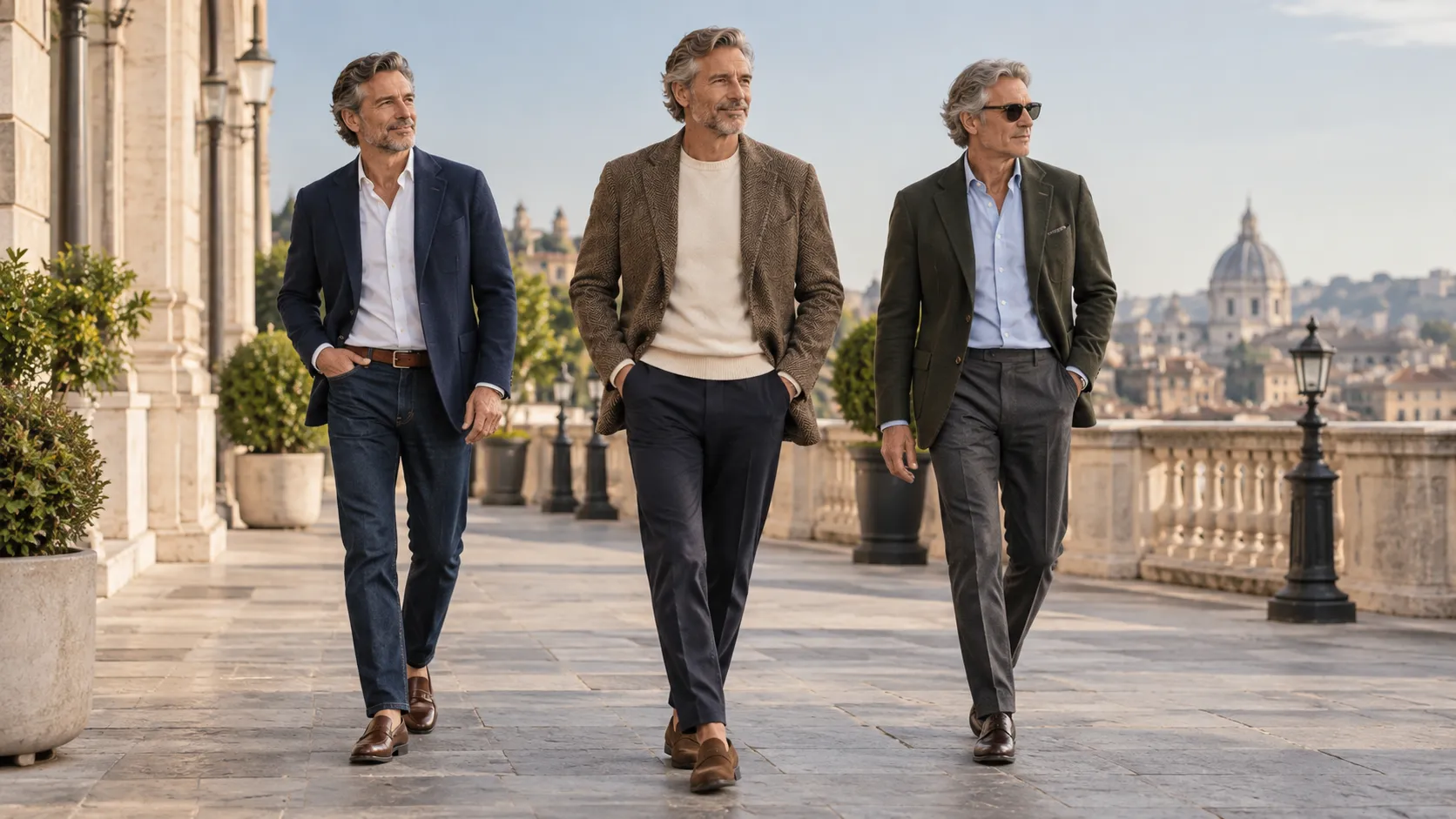
A good blazer can fix an outfit before you have time to think about it. The right one makes jeans look sharper, gives simple trousers more shape, and can turn an open-collar shirt into a complete outfit.
The trick is choosing blazers that fit your life and your existing clothes. A closet full of loud patterns or stiff jackets will not help much if you prefer relaxed dinners, weekend lunches, travel, or smart-casual events.
The best blazers for men over 50 are usually the ones you can wear in several ways without feeling overdressed.
Fit matters just as much as color. A jacket that sits cleanly on the shoulders, has enough room across the chest, and ends at a sensible length will usually look better than an expensive jacket with poor proportions.
Here are 12 blazer ideas worth considering, starting with the easiest options and moving into more distinctive choices.
1. Start With a Soft Navy Blazer for Easy Everyday Polish
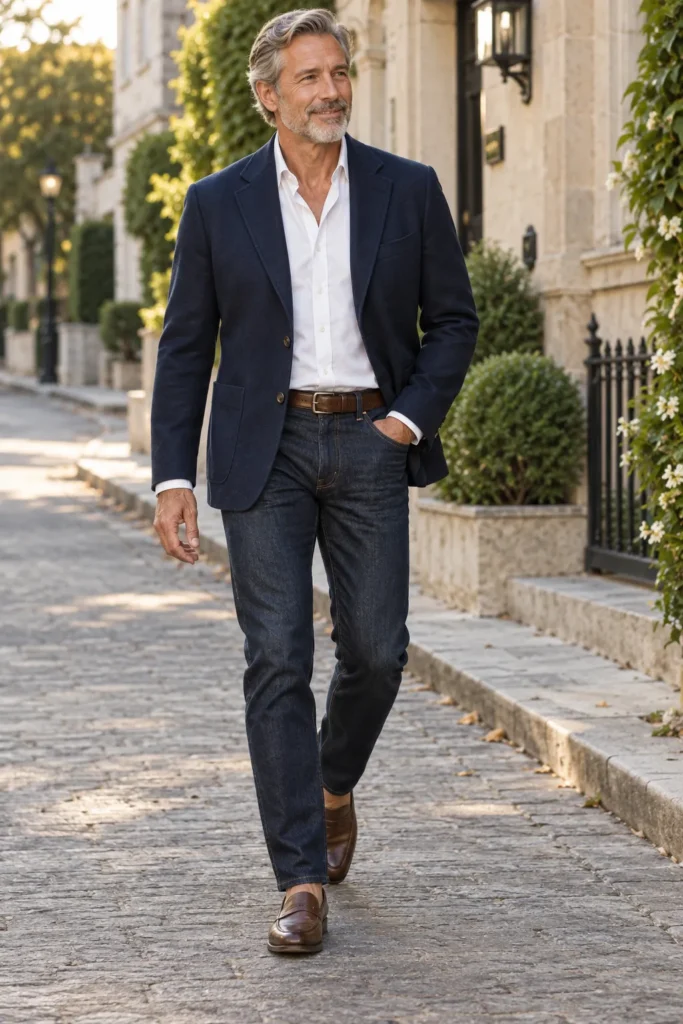
Navy is the easiest place to begin because it works with clothes most men already own.
A softer construction also keeps the jacket from feeling like part of a business suit. Look for a natural shoulder, moderate lapels, and a fabric with a little texture.
Easy pairings:
- Dark blue jeans + white shirt + brown loafers
- Stone chinos + pale blue shirt + suede shoes
- Gray trousers + fine-knit sweater + leather shoes
A navy blazer also works well with an open collar. Leave the tie at home and let the shirt sit naturally beneath the jacket.
Quick Reference
2. Choose a Textured Brown Blazer for Cooler Months
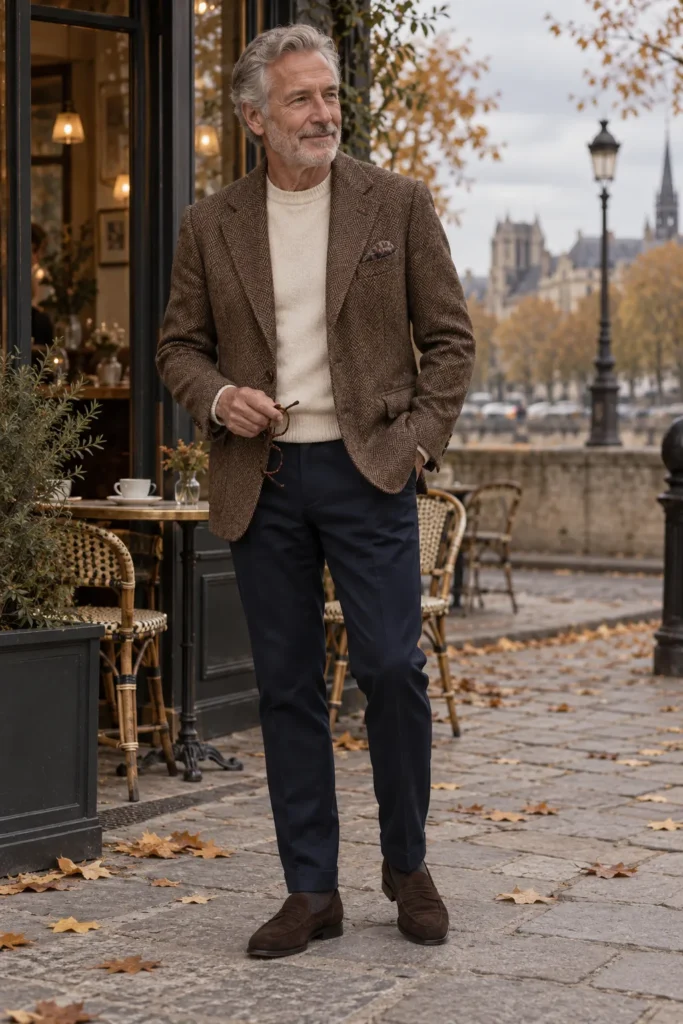
A brown blazer gives your wardrobe a warmer feel, especially in autumn and winter.
The fabric does much of the work here. Look for subtle texture such as brushed wool, herringbone, or a soft tweed rather than a shiny smooth finish.
Keep the rest of the outfit fairly quiet.
Good combinations include:
- Brown blazer with cream knitwear and dark denim.
- Tobacco brown blazer with a light blue shirt and charcoal trousers.
- Dark brown blazer with an ecru sweater and navy trousers.
A brown leather belt and matching shoes pull the outfit together without making it look overly planned.
💡 Quick Tip
If the blazer has a strong texture, keep your shirt and trousers relatively simple. Too many competing textures can make the outfit feel heavy.
3. Pair a Light Gray Blazer With Dark Trousers
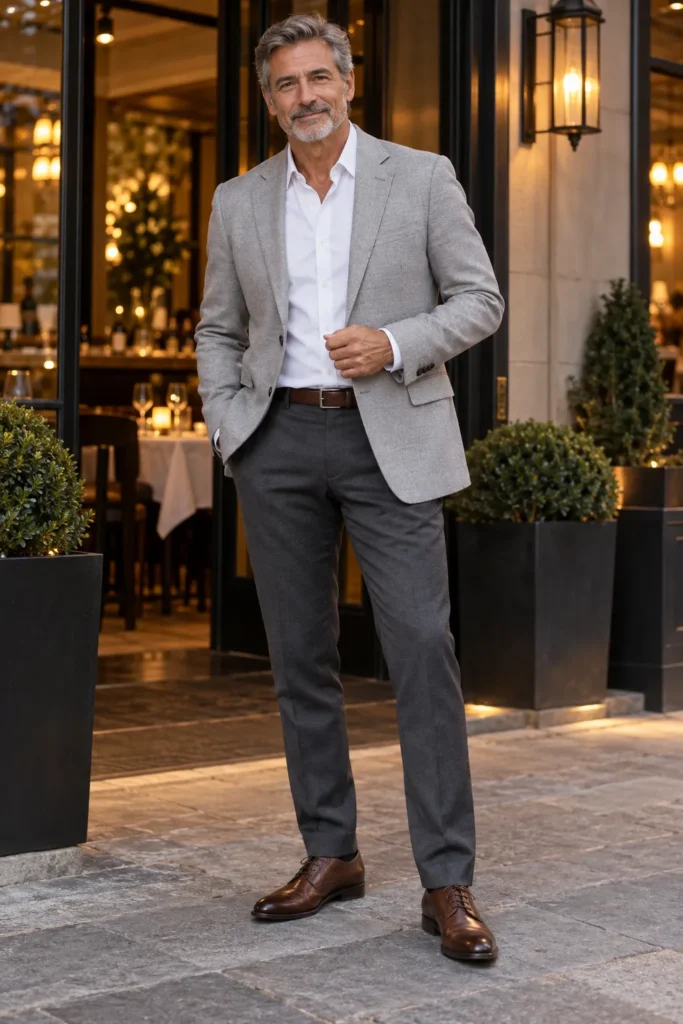
Light gray can sometimes look flat on its own. Dark trousers give it the contrast it needs.
This combination is useful for dinners, lunches, meetings, and events where a complete suit feels like too much. Try charcoal trousers with a light gray jacket, then add a white or pale blue shirt.
For a more relaxed version, swap the dress trousers for dark indigo jeans.
Before and After
Light gray jacket with pale trousers and a low-contrast shirt can make the whole outfit blend together.
Light gray blazer with charcoal trousers, a white shirt, and dark brown shoes gives the outfit a clearer shape.
The key is simple: light jacket, darker lower half. It creates a clean break without needing a bold pattern.
4. Add a Linen-Blend Blazer for Warm Weather
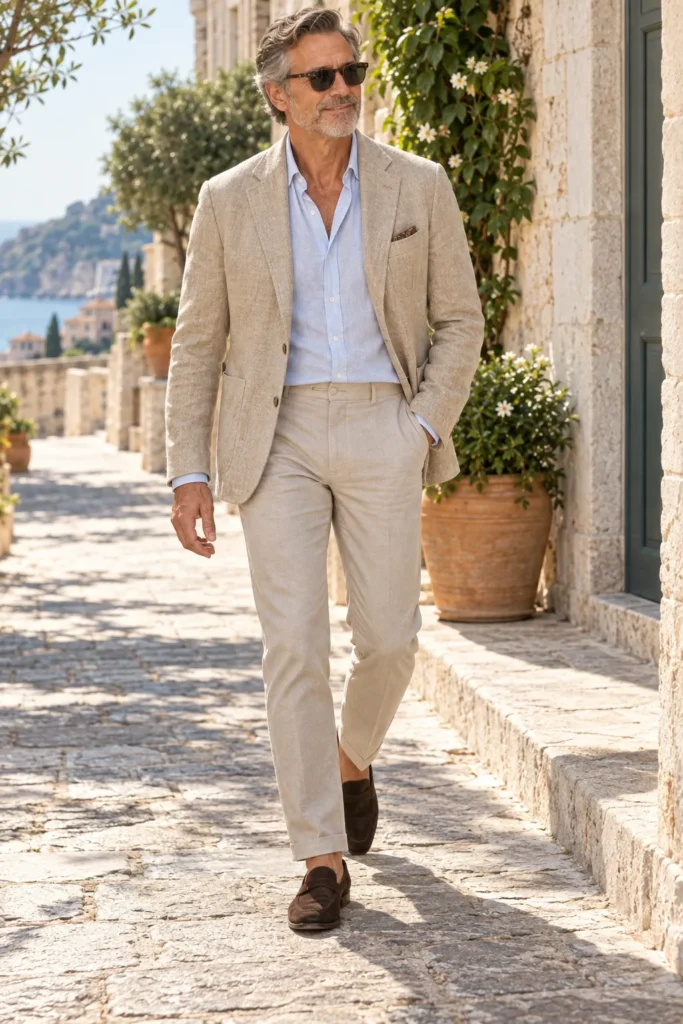
Summer dressing can be tricky because a traditional blazer may feel too heavy.
A linen-blend jacket gives you a lighter option while keeping the structure of a jacket. A little natural wrinkling is part of the appeal, so it does not need to look pressed within an inch of its life.
Try shades such as stone, sand, light olive, or soft navy.
Warm-Weather Checklist
What to pair with it
For hot days, skip the tie and heavy layers. The jacket should feel like a light finishing piece, not another layer you have to fight with.
5. Try a Subtle Windowpane Blazer Instead of Loud Checks
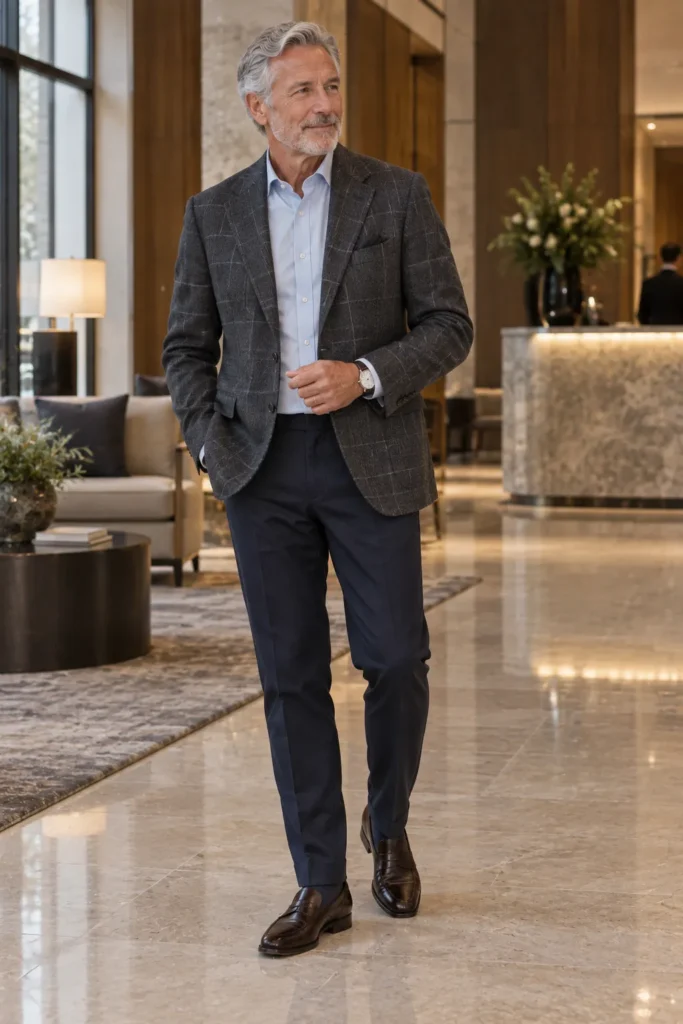
A patterned blazer can bring some character to a simple wardrobe, but the pattern should stay controlled.
A subtle windowpane check is a good middle ground. The lines are visible up close but do not dominate the outfit from across the room.
Keep the shirt solid and choose trousers in a color already found in the blazer.
Pattern Rule
Keep the shirt plain when the blazer has a visible check.
Pick trousers that repeat one quiet color from the jacket.
Avoid combining a loud checked blazer with a bold patterned shirt.
Skip trousers with another large pattern.
A subtle pattern works best when everything around it stays calm. Let the blazer be the interesting part of the outfit.
6. Wear a Deep Olive Blazer With Neutrals
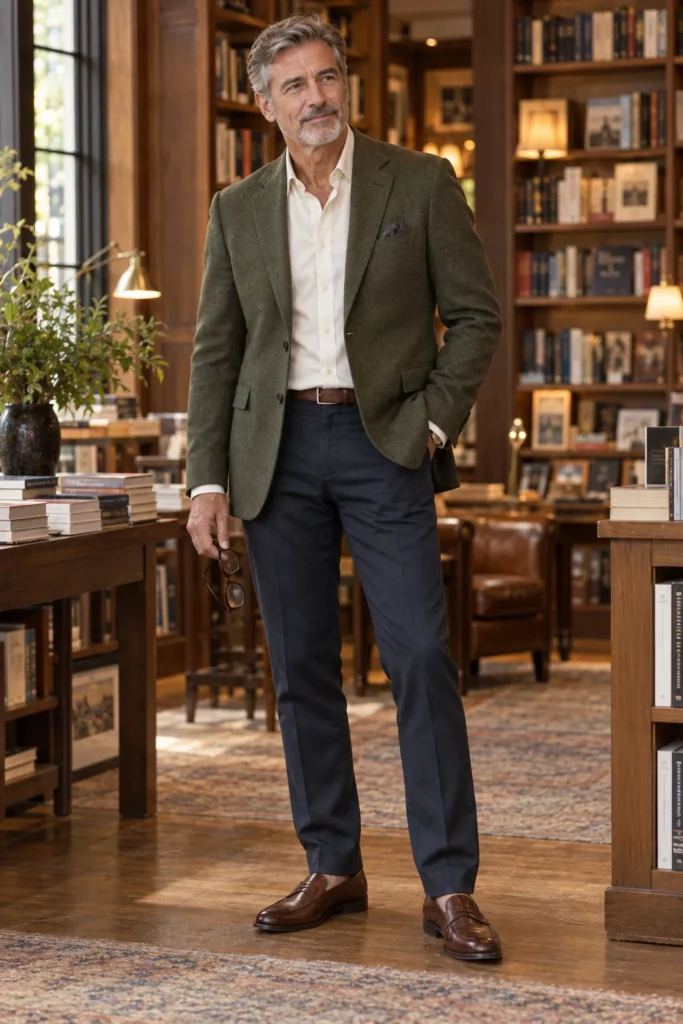
Olive is a useful choice if your closet already has plenty of navy, gray, and brown. It feels different without being difficult to wear.
The easiest approach is to keep the rest of the outfit neutral. A cream shirt gives the jacket more light, while navy trousers make the olive look deeper and richer.
Easy Pairing Guide
| Shirt | Trousers | Shoes |
|---|---|---|
| Cream | Navy | Brown leather |
| White | Charcoal | Dark brown |
| Light blue | Stone | Suede loafers |
Avoid matching olive with too many earthy colors at once. Olive jacket, brown shirt, tan trousers, and brown shoes can become too close in tone. One warm shade is usually enough.
7. Pick a Knit Blazer for a Relaxed Smart-Casual Look
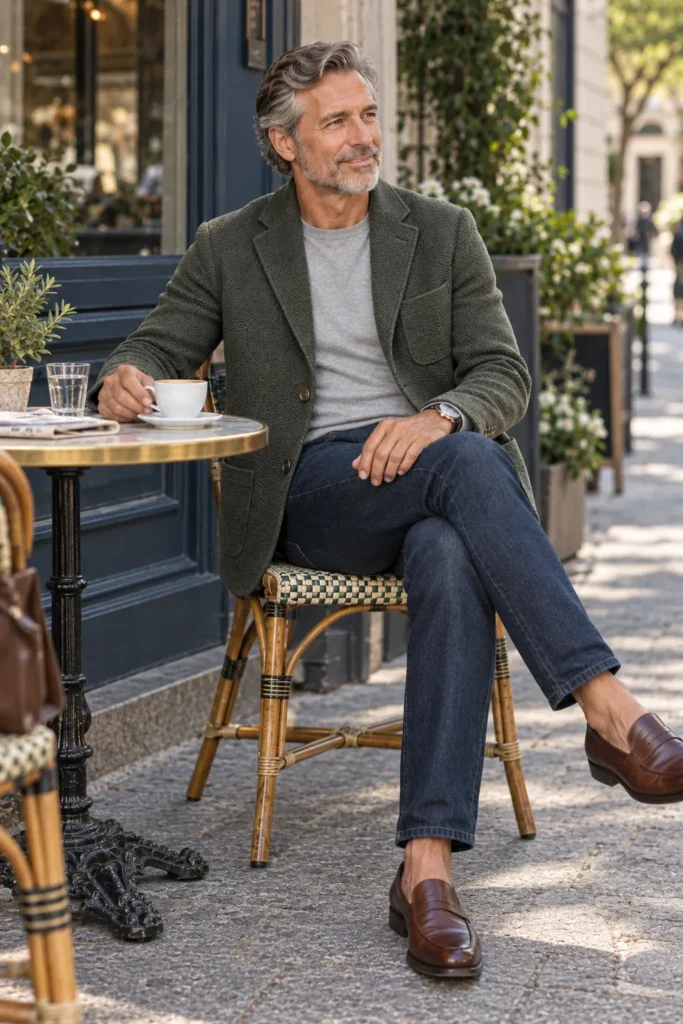
A knit blazer sits between a traditional jacket and a cardigan.
That makes it useful for men who want to look dressed without feeling as if they are heading to a formal office. The softer fabric also works well with jeans and casual trousers.
A navy or charcoal knit blazer is a safe starting point. Wear it over a fine-gauge crewneck, polo shirt, or open-collar shirt.
At a Glance
The fit should still resemble a blazer. If it becomes too loose or long, the outfit can start looking like a sweater layered over trousers.
8. Use a Double-Breasted Blazer for Stronger Structure
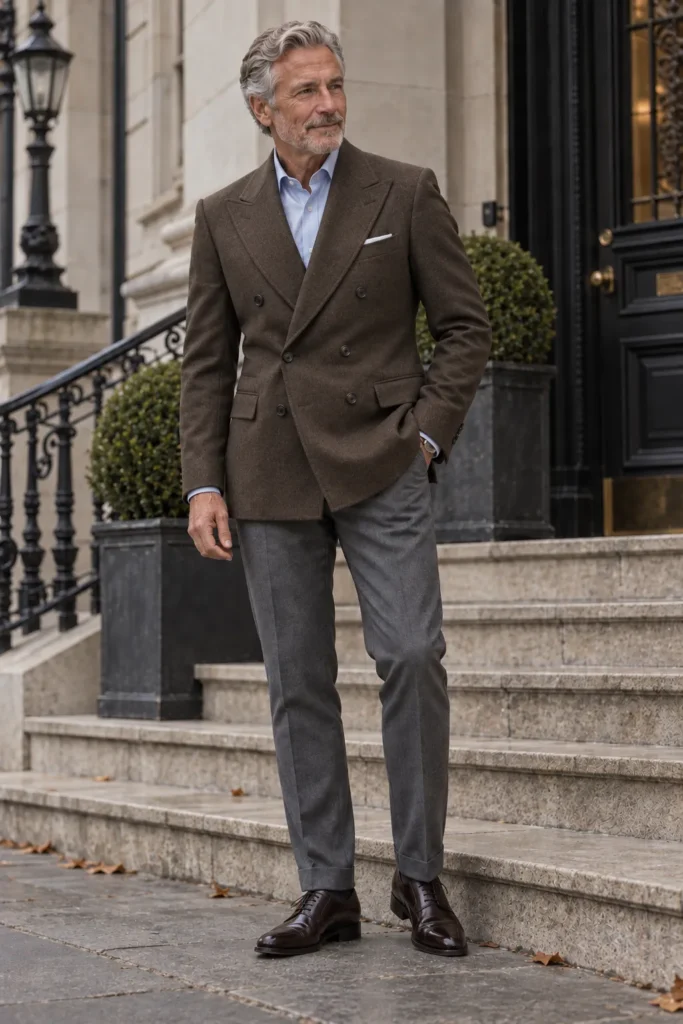
A double-breasted blazer gives an outfit a more defined shape without requiring a full suit.
The key is fit. The front should close comfortably, the shoulders should sit in the right place, and the jacket should not pull across the stomach when buttoned.
Three Fit Checks
Check the shoulders first. The seam should sit close to your natural shoulder line.
Button the jacket and check the chest and midsection. There should be no strong pulling or bunching.
Keep the trousers fairly clean and straight so the stronger jacket does not make the whole outfit look busy.
For a first double-breasted blazer, navy, charcoal, or dark brown is easier to wear than a bright color or large check.
9. Make a Navy Blazer and Gray Trousers Your Reliable Dress-Up Pair
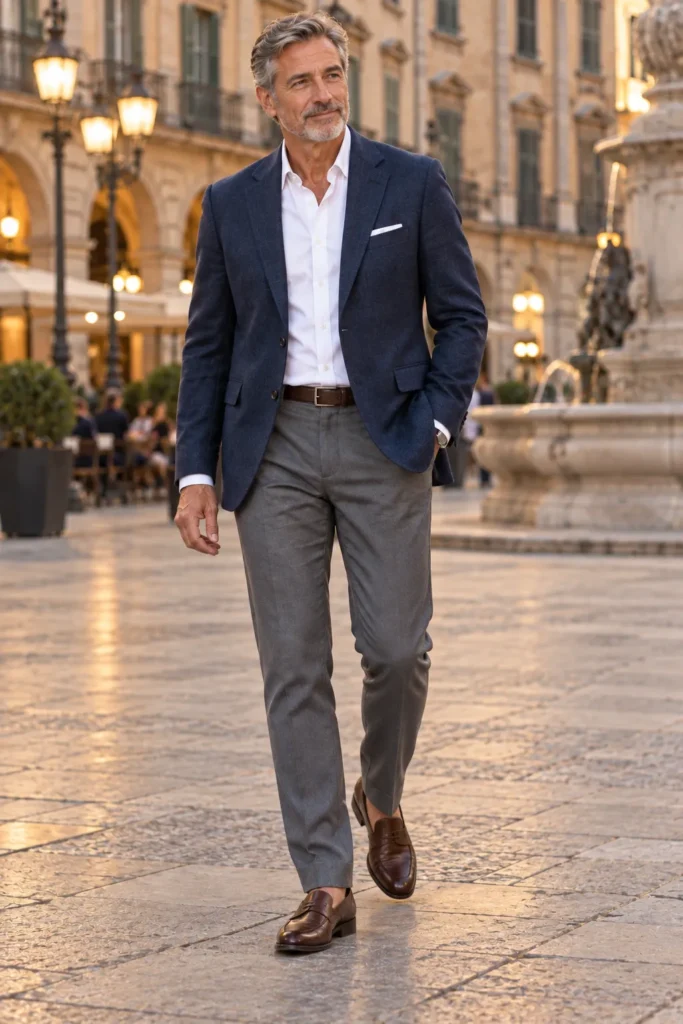
Some combinations earn their place because they work almost every time.
A navy blazer with gray trousers is one of those combinations. It gives you the structure of tailoring while keeping the jacket and trousers separate.
Add a light blue or white shirt for a classic look. For a less formal outfit, replace the dress shirt with a fine merino sweater and use loafers instead of lace-up shoes.
THE ONE THING TO REMEMBER
Navy blazer + gray trousers + light shirt + brown leather shoes gives you a dependable dressed-up outfit without wearing a full suit.
This is also a useful combination to keep ready for those occasions where you need to dress well but do not want to spend 20 minutes deciding what to wear.
10. Try a Corduroy Blazer for Texture and Personality
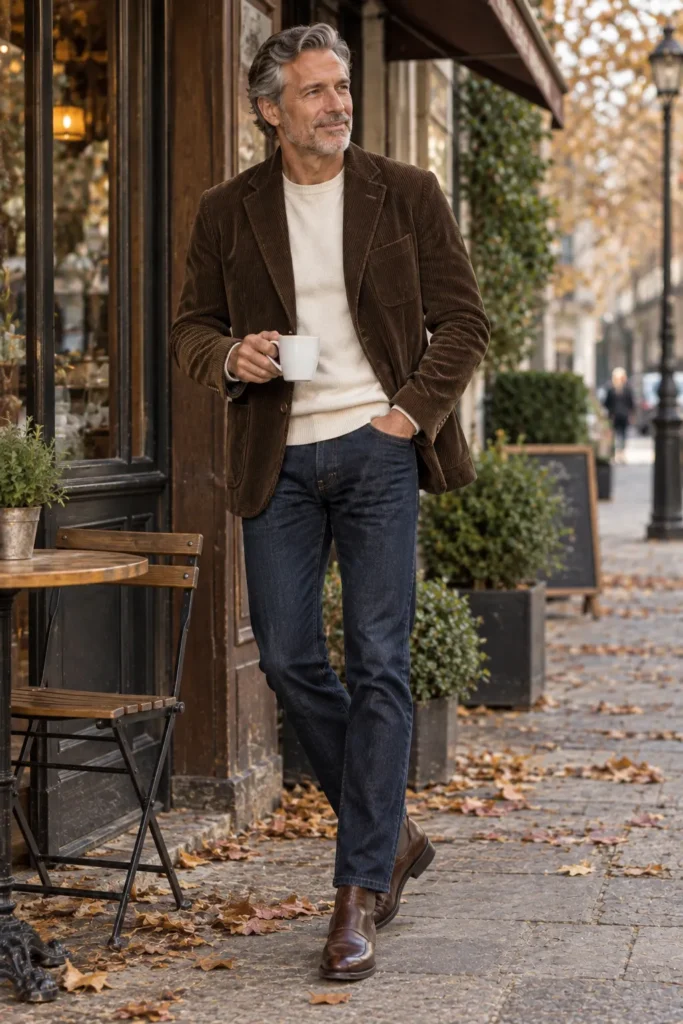
Corduroy brings texture that you can see from across the room, which makes it a strong choice for autumn and winter.
Fine-wale corduroy is easier to dress up than very wide wale fabric. Dark brown, tobacco, olive, and navy are especially easy to work into an older man’s wardrobe.
Wear it with a simple shirt or knit and let the fabric provide most of the visual interest.
💡 Quick Tip
Keep the rest of the outfit cleaner when wearing corduroy. A plain shirt, simple trousers, and leather shoes give the jacket room to stand out without making the outfit look busy.
A tobacco corduroy blazer with dark denim and an off-white sweater is a strong weekend combination. For a dressier setting, switch to charcoal trousers and a white shirt.
One more detail: check the cuffs and trouser hem before leaving home. Corduroy catches the eye, so small fit issues can be easier to notice.
11. Choose a Dark Charcoal Blazer for Evening Wear
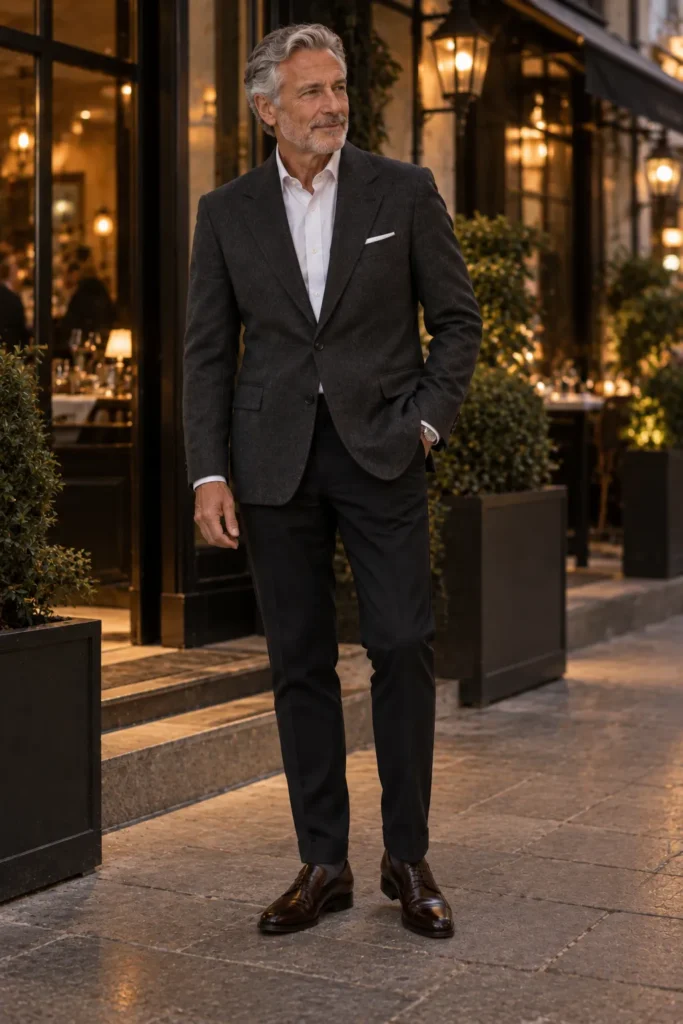
A charcoal blazer is a useful middle ground between a navy jacket and a black suit.
It works well for evening dinners, date nights, drinks, and events where you want to look dressed without wearing a complete suit. Pair it with a white shirt for a sharper look, or use a black or dark gray shirt for something more relaxed.
Three Easy Evening Combinations
Keep the accessories restrained. A simple watch, leather belt, and clean shoes are enough. You do not need several statement pieces competing for attention.
12. Finish With a Soft-Shoulder Blazer That Looks Natural
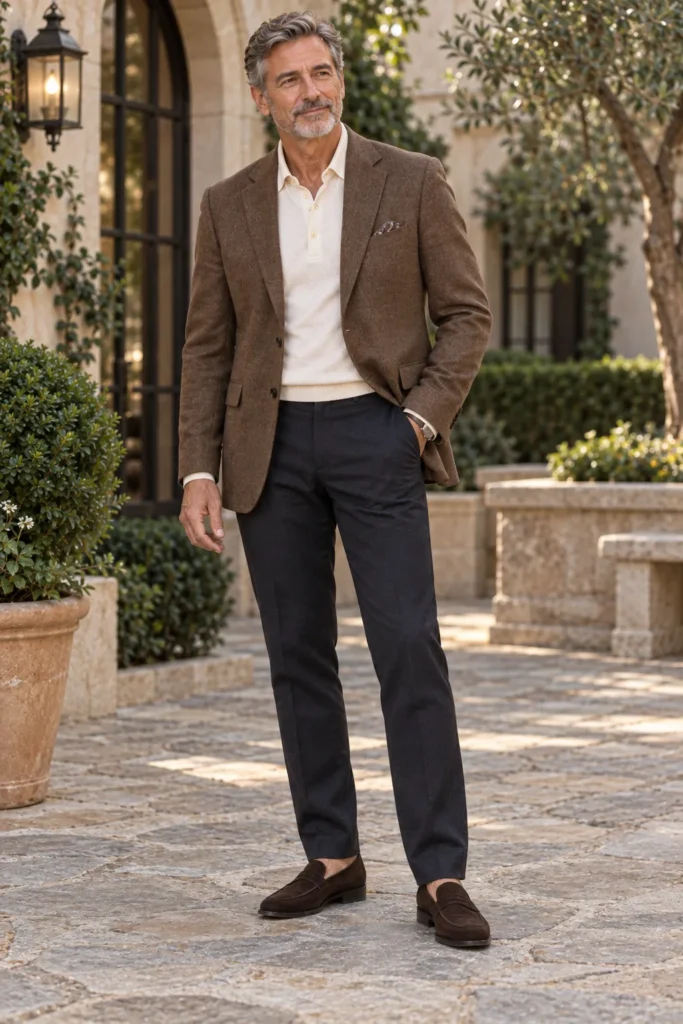
A blazer does not have to make your shoulders look wider or give you a stiff, formal shape.
A soft-shoulder jacket follows your natural frame more closely. This makes it especially useful if most of your clothes are casual and you want a blazer that feels like a natural part of your wardrobe.
Look at the shoulder seam first. It should sit close to your own shoulder rather than dropping far down the arm.
Soft-Shoulder Fit Checklist
Check these details before buying
This style works especially well with dark denim, chinos, loafers, suede shoes, and fine knitwear. The result feels relaxed, but the jacket still gives the outfit a clear shape.
The best part is that you can wear this kind of blazer on an ordinary day. You do not need a special event to justify putting it on.
Conclusion
A good blazer should make getting dressed easier, not give you another complicated decision every morning. Start with the colors and fabrics that fit your current wardrobe, then add a pattern or stronger cut once you feel comfortable.
For most men over 50, a few well-chosen jackets can cover a lot of occasions. A soft navy blazer, textured brown jacket, gray blazer, or relaxed knit style can all work with clothes you already own. The best blazers for men over 50 are the ones that fit well, feel comfortable, and give you more outfit options.
Pick one style that matches your daily life, build an outfit around it, and wear it often. Good style gets easier with practice.
Save this list on Pinterest so you can come back to these blazer ideas when you are planning your next outfit.