

A good wardrobe does not need constant replacing. With a few good habits, your shirts, trousers, sweaters, jackets, and favorite shoes can stay in good shape for much longer.
If you have ever pulled a favorite shirt from the wash and found it faded, stretched, or smaller than before, the problem may be your care routine.
Small changes can make a big difference. Cooler water, proper drying, early stain treatment, and better storage can help reduce wear.
This guide shows you how to care for your clothes so they last men over 50, using steps you can follow at home.
You will learn what to check before washing, how to protect different fabrics, and how to store clothes when you are not wearing them.
Most of these habits take only a few minutes. You do not need expensive products or special equipment. The main goal is to treat your clothes with a little more care each time you wear or wash them.
What You Need
At a Glance
- Check the care label before washing
- Sort your clothes before washing
- Wash your clothes with cold water
- Choose a gentle wash cycle
- Air-dry your clothes when possible
- Treat stains before they set
- Fold knitwear instead of hanging it
- Rotate your favorite clothes
- Repair small damage early
- Store seasonal clothes properly
Check the Care Label Before Washing

The small label inside a shirt, sweater, or pair of trousers tells you how the maker expects the garment to be cleaned. Look for washing, drying, ironing, and dry-cleaning symbols before putting anything in the machine.
Pay special attention to wool, linen, silk, and garments with special finishes. A care label can prevent a costly mistake. If the label says cold wash, do not use hot water because you think it will clean better.
For older clothes with a faded label, check the fabric and garment type before choosing a cleaning method. If you are unsure, use the gentler option.
Do not remove a care label before checking its instructions. If you cut it out, you may lose useful information the next time the garment needs washing.
Sort Your Clothes Before Washing

Separate your laundry into basic groups before the machine starts. Keep dark colors away from whites, and separate delicate fabrics from heavier items such as jeans and towels.
A useful system is:
- Whites and very light colors
- Dark colors
- Bright colors
- Delicate fabrics
- Heavy items
Sorting reduces color transfer and helps prevent delicate shirts from rubbing against rough fabrics. Empty every pocket and close zippers before washing.
White & cream
Navy & black
Bright shades
Fine fabrics
Wash Your Clothes With Cold Water
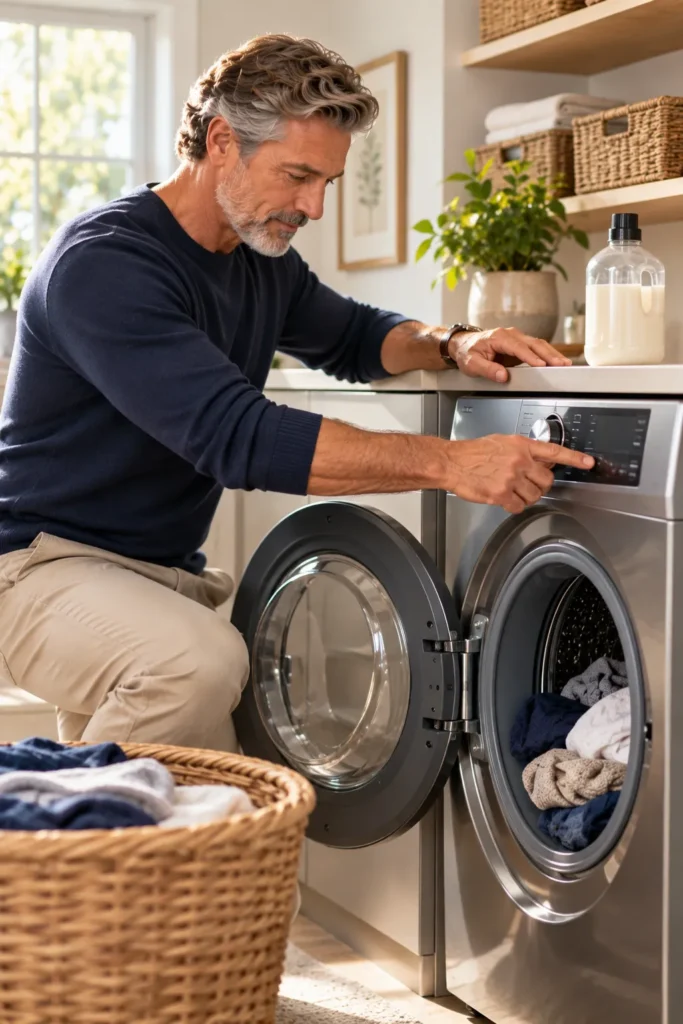
Cold water works well for many everyday garments and can help reduce fading and shrinking. It is also a gentler choice for many fabrics than very hot water.
Set the machine to a cold-water wash when the care label allows it. Use the amount of detergent recommended on the package rather than adding extra because you think more soap means cleaner clothes.
If a garment has a heavy stain, treat the stain before washing instead of relying on a cold cycle to remove it. This gives the fabric a better chance of staying clean without repeated harsh washing.
Use cold water when the label allows it.
Follow the amount on the package.
Treat them before the wash.
If you are unsure about a garment, check its care label before choosing the wash temperature. The label should guide the final choice.
Choose a Gentle Wash Cycle

A rough wash cycle can put extra stress on fabric, especially on shirts, knitwear, and lighter trousers. Check the care label and choose a gentle or delicate setting when the garment calls for it.
Keep the machine load balanced and avoid packing it tightly. Clothes need room to move through the water. A crowded drum can leave garments poorly washed and can increase rubbing between fabrics.
Care label
Gentle setting
Overloading
Air-Dry Your Clothes When Possible

High dryer heat can be hard on some fabrics and may cause shrinking, fading, or loss of shape. When the care label allows it, air-drying gives your clothes a gentler option.
Shake each garment lightly after washing to loosen folds. Hang suitable shirts on a good hanger and place other pieces flat on a drying rack. Keep clothes away from strong direct sunlight if the fabric is prone to fading.
For sweaters and other stretchy knits, use a flat surface rather than a hanger. The weight of wet fabric can pull the shoulders out of shape.
Treat Stains Before They Set
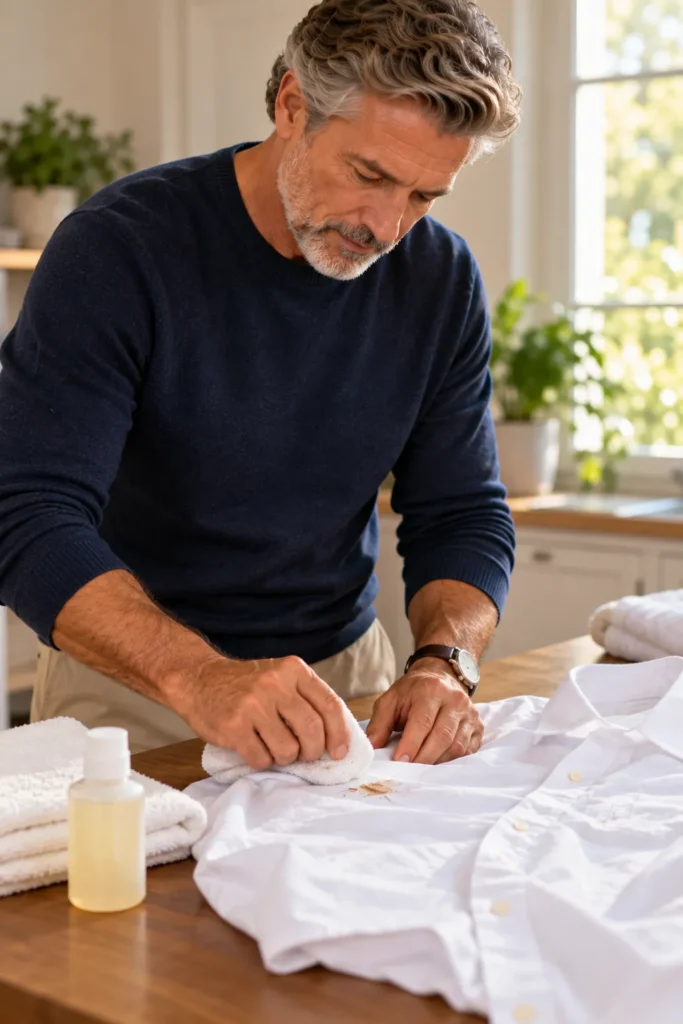
A fresh stain is usually easier to deal with than one that has been dried into the fabric. Check your shirt, trousers, and other visible pieces before putting them away after wearing them.
Blot a fresh spill with a clean cloth instead of rubbing it hard. Rubbing can push the stain deeper or spread it across a larger area. Follow the stain product instructions and test it on a hidden area first if you are unsure how the fabric will react.
Use a clean cloth
Follow product directions
Look before drying
Fold Knitwear Instead of Hanging It

Heavy sweaters can stretch when they stay on a hanger for long periods. The shoulders may develop bumps, while the body can lose its original shape.
Fold wool, cashmere, cotton knitwear, and other stretchy sweaters across the middle and place them on a shelf. Keep the stack low enough that the bottom garments do not become badly compressed.
Sweaters, chunky knits, and stretchy wool pieces.
Structured shirts and suitable jackets on proper hangers.
Rotate Your Favorite Clothes

Wearing the same shirt, trousers, or sweater every few days can lead to faster wear in areas that receive the most friction. Give frequently worn pieces some time between uses.
Build a small rotation with several shirts, trousers, and sweaters. After wearing an item, check it for marks, odors, loose threads, or wrinkles before deciding whether it needs washing or can be aired and worn again.
Shirt A
Shirt B
Shirt C
Shirt D
A larger rotation gives frequently worn clothes more time between uses.
Repair Small Damage Early
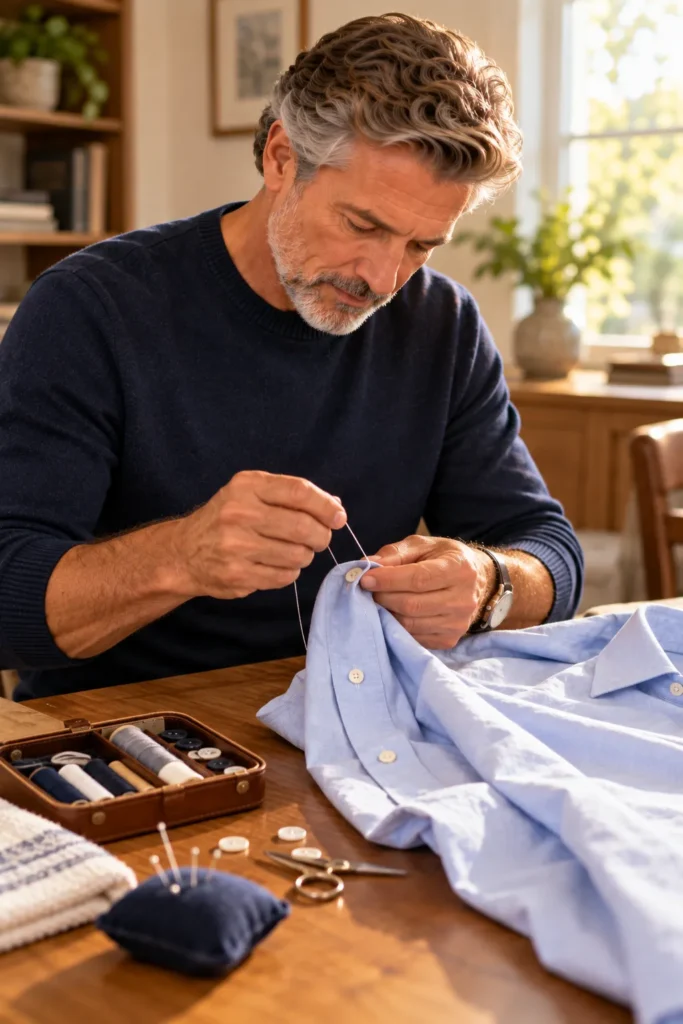
A loose button or small tear may seem minor, but repeated wear can make the problem larger. Check your clothes when you fold them or return them to the wardrobe.
Keep a small repair kit with matching thread, spare buttons, a needle, and small scissors. For expensive jackets, suits, or difficult repairs, a professional tailor may be a better choice.
Loose or missing?
Any loose stitching?
Working smoothly?
Any small tear?
Store Seasonal Clothes Properly

Clothes that stay packed away for months still need care. Wash or clean each garment according to its care label before storage, because body oils, food marks, and dirt can become harder to deal with later.
Choose breathable storage for suitable fabrics and keep stored clothes in a cool, dry place. Avoid crushing delicate pieces under heavy boxes.
Before storing expensive jackets or suits, follow their care instructions and use suitable garment covers.
Troubleshooting Common Clothing-Care Problems
Even with a good routine, clothes can sometimes develop problems. The table below covers some of the most common issues and what you can try before giving up on the garment.
Answer Common Beginner Questions
Clothing care can feel confusing when different fabrics need different treatment. These quick answers cover the questions that often come up during a normal laundry routine.
Clothing Care FAQ
Not every garment needs washing after one normal wear. Check for stains, sweat, odors, and visible dirt before deciding.
Cold water can be a gentler choice for many garments and may help reduce fading and shrinking. Always follow the care label.
Many knit sweaters are better folded. Their weight can pull the shoulders out of shape when they stay on a hanger.
Use the wash setting listed on the care label, avoid unnecessary high heat, and keep suitable garments away from strong direct sunlight.
Deal with small problems such as loose buttons or stitching early. A small repair can prevent a larger tear later.
Quick Reference: Make Your Clothes Last Longer
- Check the care label before washing.
- Sort clothes by color and fabric.
- Use cold water when the label allows it.
- Choose a gentle cycle for delicate garments.
- Air-dry suitable clothes when possible.
- Treat fresh stains before they set.
- Fold sweaters and other stretchy knitwear.
- Rotate your most-worn clothes.
- Repair loose buttons, seams, and small damage early.
- Clean and store seasonal clothes in a cool, dry place.
Conclusion
Good clothing care does not need to take much time. Small habits can help your favorite shirts, trousers, sweaters, jackets, and shoes stay useful for longer.
If you follow these steps regularly, you can reduce unnecessary washing, heat damage, stains, stretching, and small repairs. This is a practical way to learn how to care for your clothes so they last men over 50.
Start with one change today, such as checking care labels or using a better clothing rotation. Over time, these habits can become a normal part of your wardrobe routine.
Save this guide to Pinterest so you can return to these clothing-care steps whenever you need them.