
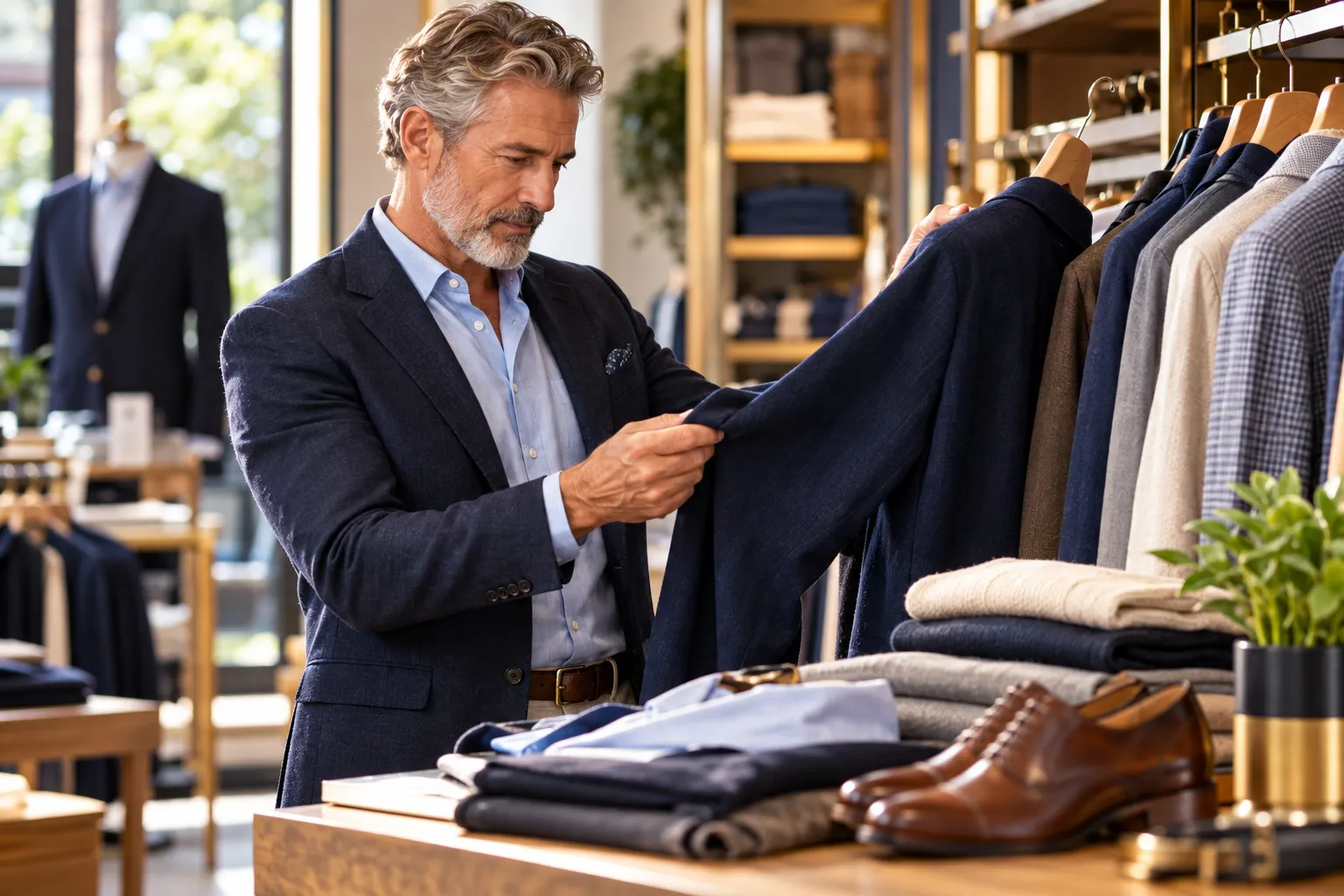
Fast fashion can make shopping feel cheap, but a low price does not always mean good value. After 50, many men find that buying fewer clothes that fit well and last longer makes getting dressed much easier.
The hard part is knowing what to check before paying for a shirt, pair of trousers, jacket, or shoes.
This guide shows how to shop for quality over fast fashion for men over 50 without needing expert fashion knowledge. You will learn what to look at, what to feel, and what questions to ask before buying.
You will also learn how to avoid paying more for a piece that only looks good on the rack.
You do not need to replace your whole wardrobe. Start with the next item you plan to buy. Check its fabric, seams, fit, and small details. Think about how often you will wear it and how well it works with clothes you already own.
The goal is simple: buy pieces you enjoy wearing, can use often, and expect to keep for years.
Check the Fabric Before You Buy
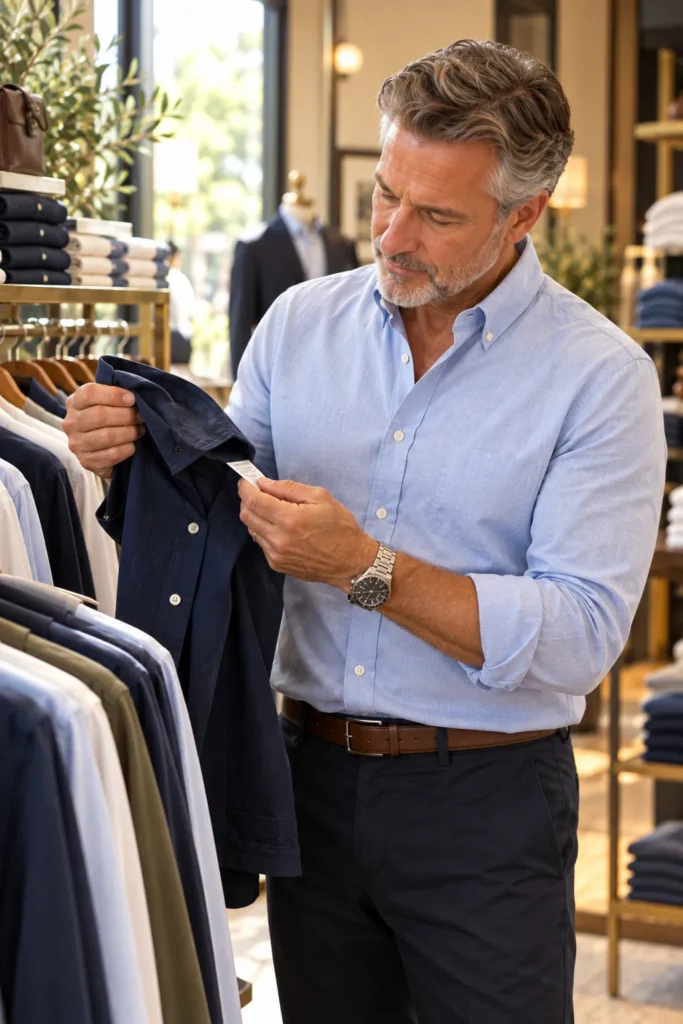
Fabric gives you a useful first clue about a garment. Read the care label and check what the main material is before you focus on the brand or price.
For shirts, trousers, and jackets, look for fabrics that feel comfortable and suit how you plan to wear the piece. Cotton, linen, wool, and well-made blends can all work well.
Avoid buying something only because the label says premium. The actual fabric and construction matter more.
Check the fabric label before looking at the brand name. A familiar brand does not guarantee that every garment has the same level of quality.
Inspect the Stitching and Seams
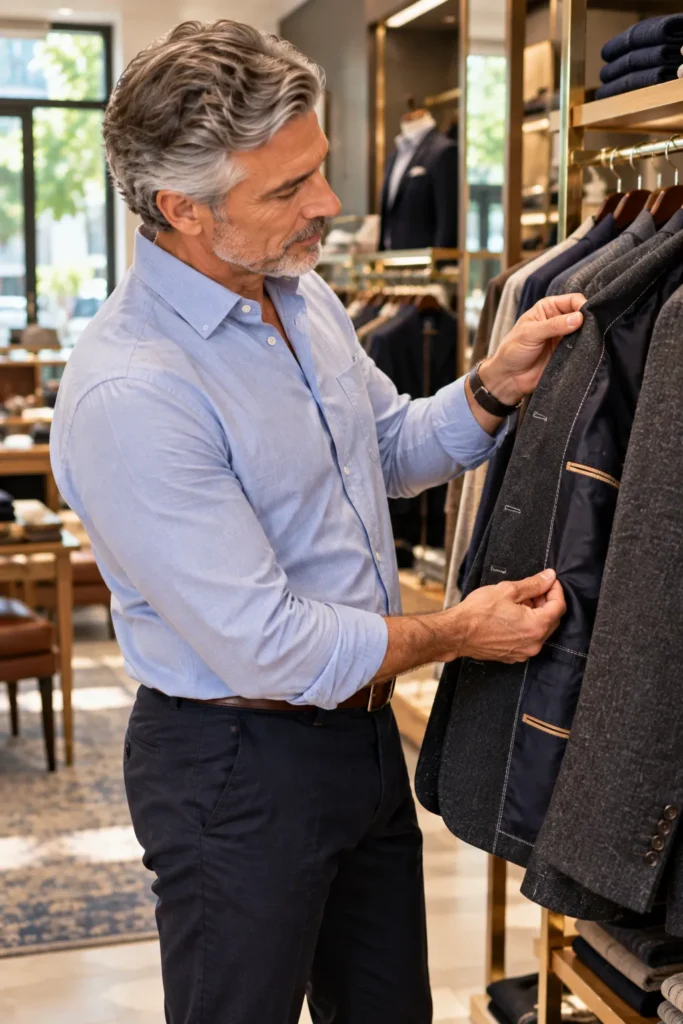
Hold the garment close and look at the seams. Good stitching should look even, with no loose threads, skipped stitches, or large gaps.
Pay extra attention to high-stress areas, such as the armholes, pockets, waistband, and seat of trousers. Pull the fabric gently near a seam.
If the stitching opens easily, put the item back. Small flaws can become bigger problems after a few washes or wears.
Do not ignore loose threads because the rest of the garment looks good. Check the seams at stress points before you pay.
Test the Fit in a Full-Length Mirror
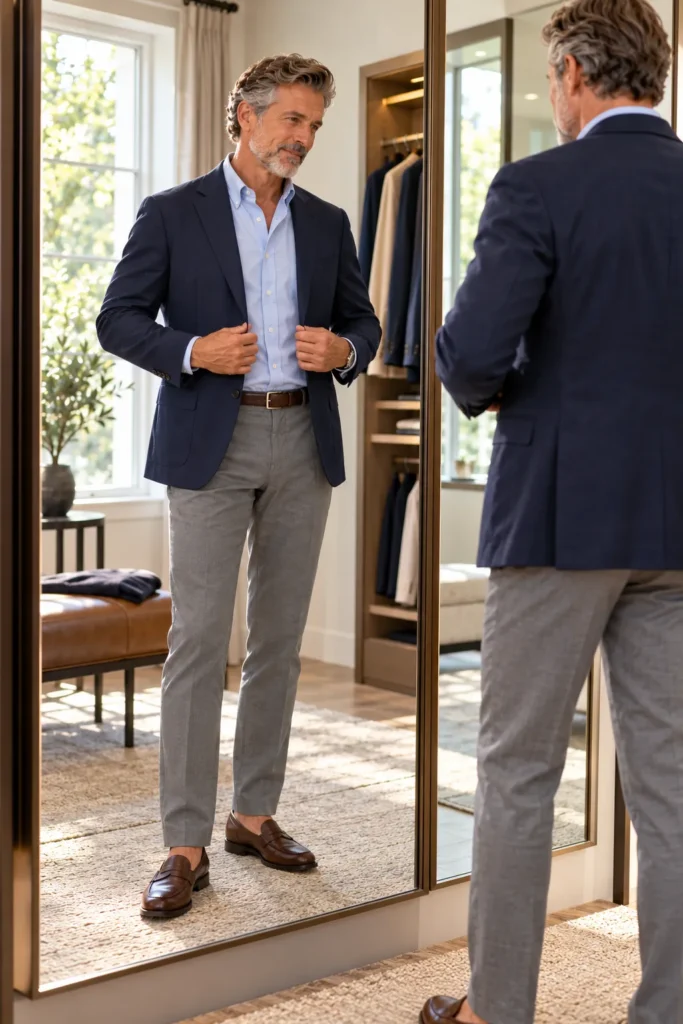
A quality garment still needs to fit your body well. Put it on and check the shoulders, chest, waist, sleeves, and trouser length from more than one angle.
For a shirt or jacket, raise your arms and move them forward. For trousers, sit down and stand up.
The fabric should allow normal movement without pulling hard. If the item feels good but needs a small alteration, ask about tailoring before you decide to buy it.
Stand naturally in front of the mirror. Check the front, side, and back. A good fit should let you sit, walk, and move your arms without pulling or bunching.
Feel the Weight and Structure
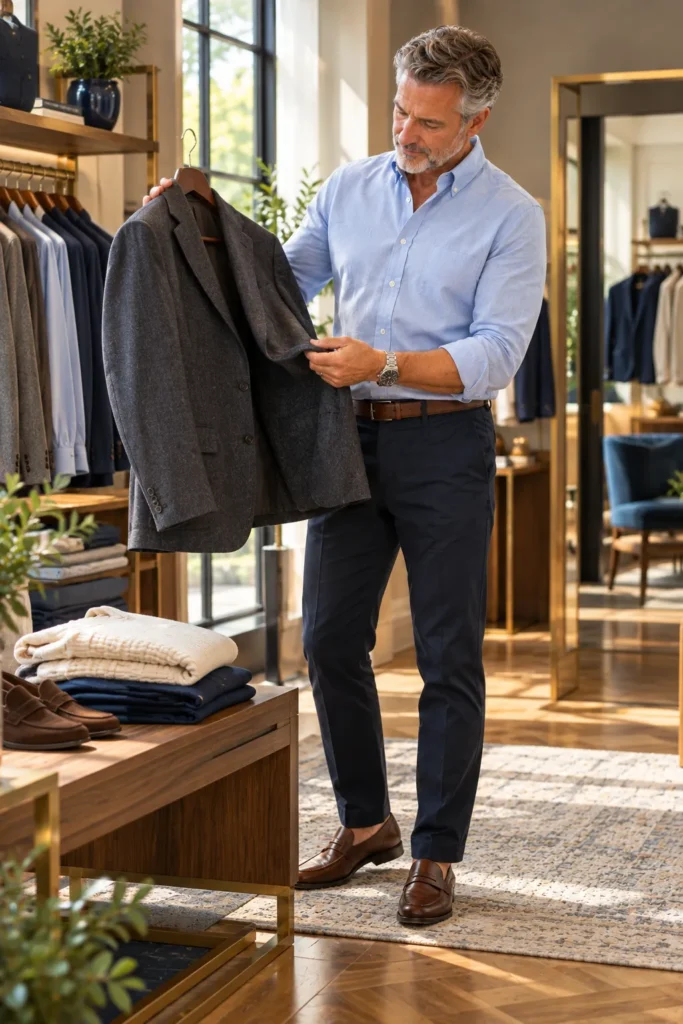
Pick up the garment and feel how the fabric hangs in your hands. It should have a structure that suits the item, without feeling stiff or poorly made. A quality shirt may feel light, while a good wool jacket may have more body.
Look at how the garment hangs on the hanger. It should keep its shape rather than collapsing or twisting. For trousers and jackets, check the areas that should hold their form, such as the waistband, shoulders, and front panels.
Do not judge quality by weight alone. A heavy garment is not always better. Look for fabric that feels suitable for the way you plan to wear it.
Check the Buttons, Zippers, and Hardware
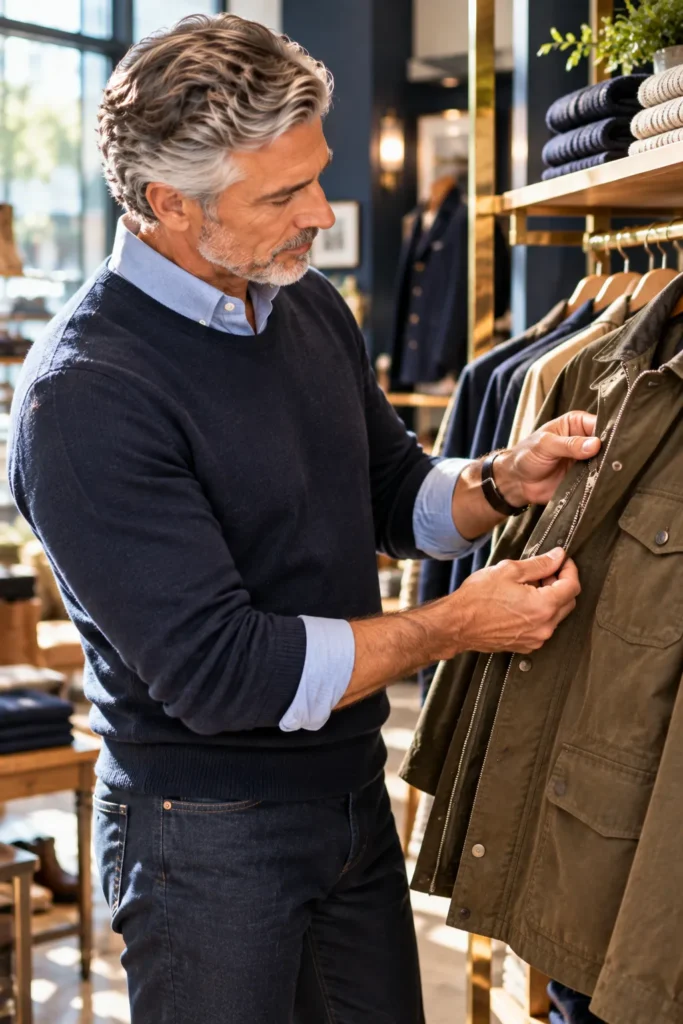
Small details can tell you a lot about how carefully a garment was made. Check every button, zipper, snap, and buckle before buying it. Buttons should feel secure, while zippers should move without catching.
Look inside the garment too. Check that buttonholes are neat and that pockets are attached well. On trousers, pull the waistband gently and check the fastening.
These small checks take less than a minute and can save you from buying a piece that needs repair soon.
Open and close each zipper once. Press each button gently. If something feels loose, catches, or looks poorly attached, inspect the area before buying.
Compare the Price With Expected Wear
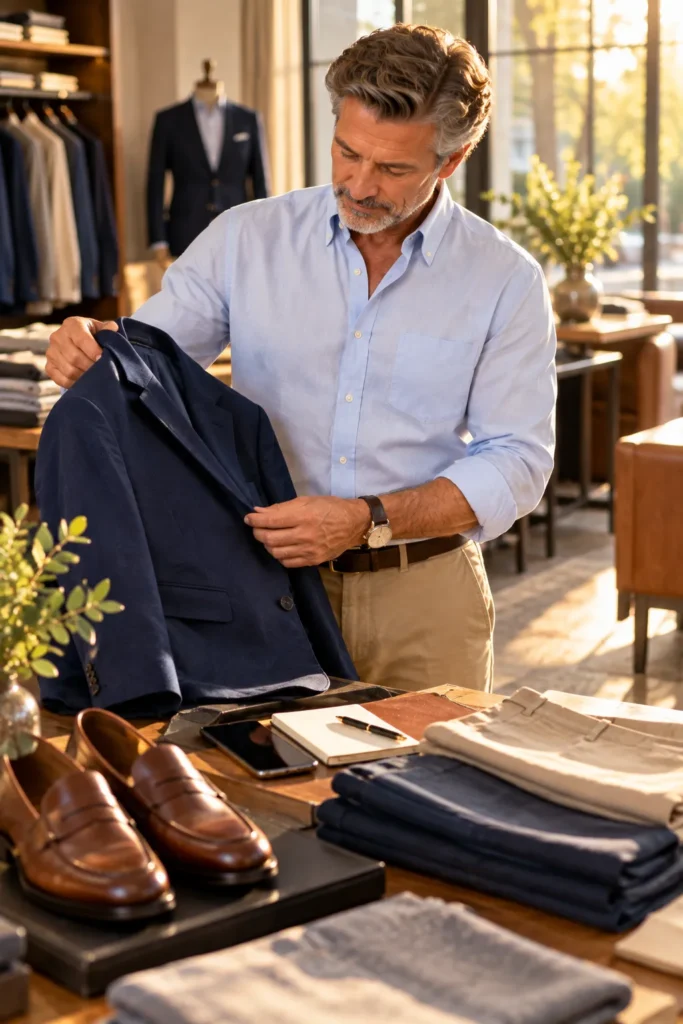
A higher price does not automatically mean better quality. Think about how many times you expect to wear the item and how many outfits it can make.
A $100 jacket worn once is poor value compared with a $150 jacket worn twice a week for several years. Before buying, ask yourself three questions: Can I wear this often? Can I pair it with at least three outfits? Will I still want it next year?
This gives you a better way to judge a purchase than the price tag alone.
Choose Classic Pieces Over Short Trends

A quality garment has more value if you can wear it for several years. Look for clean shapes and colors that work with clothes you already own.
For men over 50, pieces such as navy trousers, Oxford shirts, knit sweaters, sport coats, and leather shoes can work across many outfits.
Trends can still have a place in your wardrobe. The key is to avoid spending most of your clothing budget on items that may look dated after one season.
Before buying, ask if you would still wear the piece two or three years from now.
Use trend pieces as small additions rather than the base of your wardrobe. A classic jacket can stay useful for years, while a trendy shirt may have a shorter life in your closet.
Build Outfits Around Quality Basics
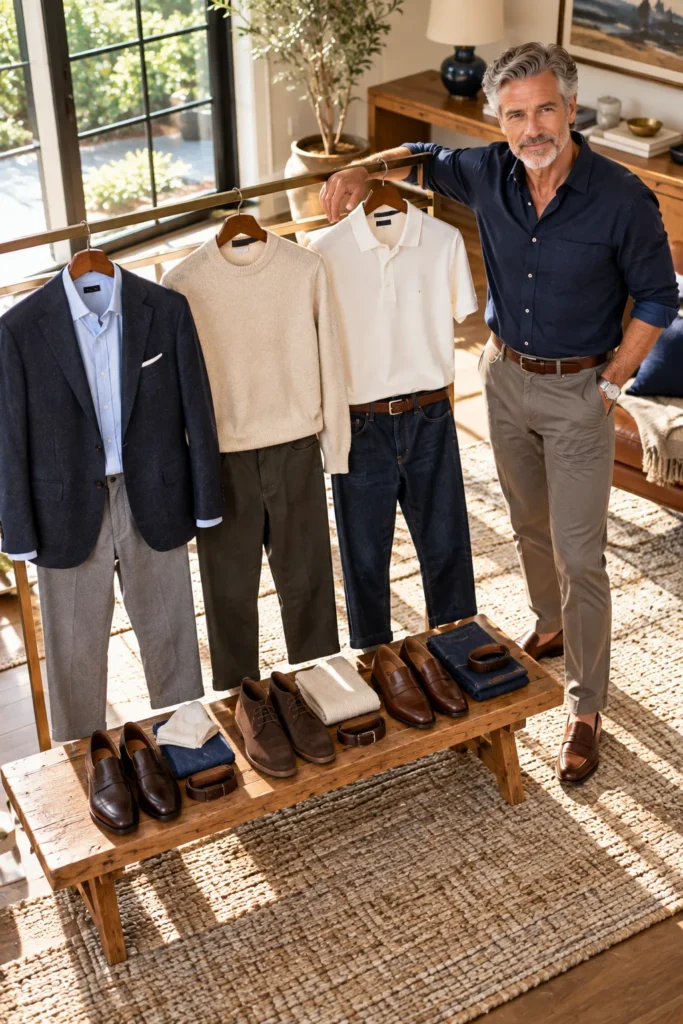
A good quality item becomes more useful when it works with several things you already own. Before buying, picture at least three outfits using the new piece.
For example, a navy sport coat can work with a white shirt and gray trousers for a dressier look. The same jacket can work with a polo and dark jeans for a relaxed outfit. This makes one purchase useful in more situations.
Dressy
Smart casual
Relaxed
If you cannot create three outfits with clothes you already own, think twice before buying the item.
Shop Your Closet Before Buying More
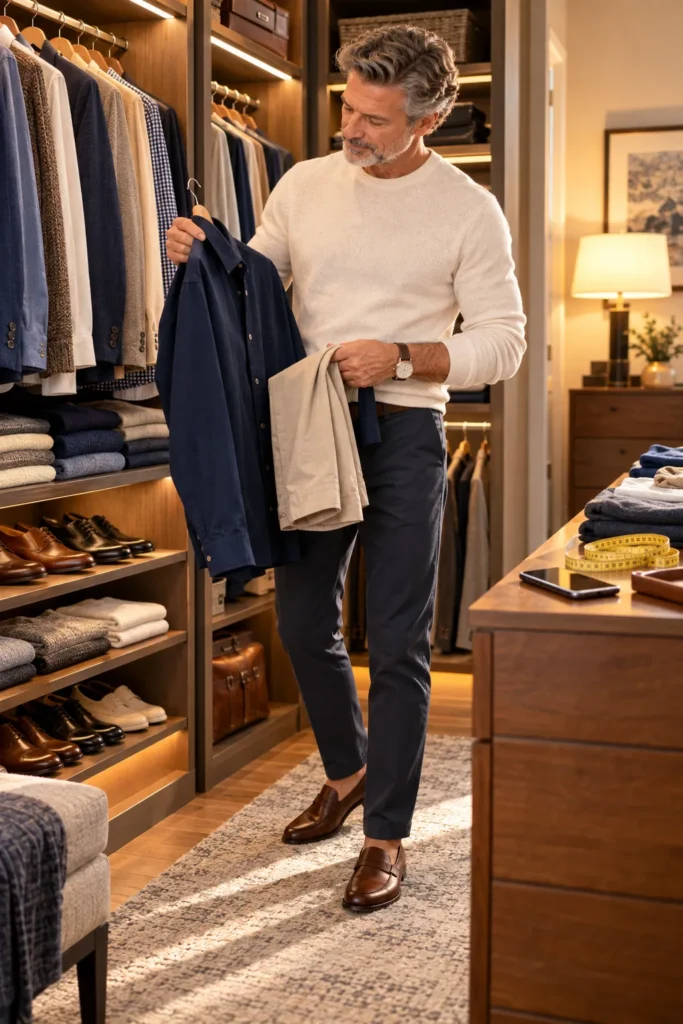
Open your wardrobe before you head to the store or place an online order. Look for gaps instead of buying another version of something you already have.
Check your most-used shirts, trousers, jackets, sweaters, and shoes. Note what needs replacing and what you rarely wear. This small review can help you spend money on pieces that fill a real need.
For online shopping, save the measurements of a garment that fits you well. Compare those measurements with the seller’s size chart instead of choosing a size based only on the label.
Do not buy a quality piece only because you like it. If it does not fill a gap or work with your existing clothes, the money may be better spent elsewhere.
Troubleshooting Common Shopping Problems
Even after checking fabric, stitching, fit, and price, a few problems can still appear. Use this table before you decide to buy. It can help you separate a good-looking item from one that will work well in your wardrobe.
Troubleshooting Table
| If This Happens | Try This |
|---|---|
| The item costs more but feels poorly made | Check the fabric, seams, hardware, and fit instead of relying on the price. |
| The fabric feels good but the fit is poor | Try another size or ask if the garment can be altered. |
| You like the item but have nothing to wear with it | Use the three-outfit test before buying. |
| A classic piece feels more expensive | Estimate how often you will wear it and compare the cost per wear. |
| Online sizing feels uncertain | Measure a garment that fits you well and compare those numbers with the seller’s chart. |
Frequently Asked Questions
These are the questions that often come up when you start buying fewer, better-made clothes.
Is expensive clothing always better quality?
No. A higher price does not guarantee better fabric, stitching, or construction. Check the garment itself before deciding.
Which fabrics should men over 50 look for?
There is no single fabric that works for every garment. Cotton, linen, wool, and good blends can all be useful. Choose based on comfort, climate, use, and care needs.
How many outfits should one new item make?
A useful target is three outfits. If a new shirt, jacket, or pair of trousers works with several things you already own, you are more likely to wear it often.
Should I buy fewer expensive clothes?
The better question is how often you will wear each piece. A more expensive item can make sense if you wear it often and it holds up well. A cheap item can cost more over time if you replace it again and again.
Should I care about the brand?
Brand name can give you some information, but it should not be your main test. Check the actual fabric, stitching, fit, hardware, and construction of the garment.
Is tailoring worth paying for?
It can be. A well-made garment that is slightly loose or long may become a much better fit after a small alteration. Major changes are harder, so check the fit carefully before buying.
Use This Quick Reference Before You Buy
Keep this checklist on your phone when you shop. It gives you the full process in a few quick checks.
Quality Shopping Quick Reference
Phone • Full-length mirror • Measuring tape • Your clothing sizes • Existing wardrobe list • Spending limit
- Check the fabric.
- Inspect the stitching and seams.
- Test the fit in a full-length mirror.
- Feel the weight and structure.
- Check the buttons, zippers, and hardware.
- Compare the price with expected wear.
- Choose classic pieces over short trends.
- Build outfits around quality basics.
- Shop your closet before buying more.
Build a Better Wardrobe One Purchase at a Time
You do not need a closet full of expensive clothes to dress well after 50.
Check the fabric, stitching, fit, construction, and expected wear before you buy.
Choose pieces that work with clothes you already own and that you can wear often.
The next time you shop, use these 9 checks before reaching for your wallet. Save this guide to Pinterest so you can use the checklist on your next shopping trip.