
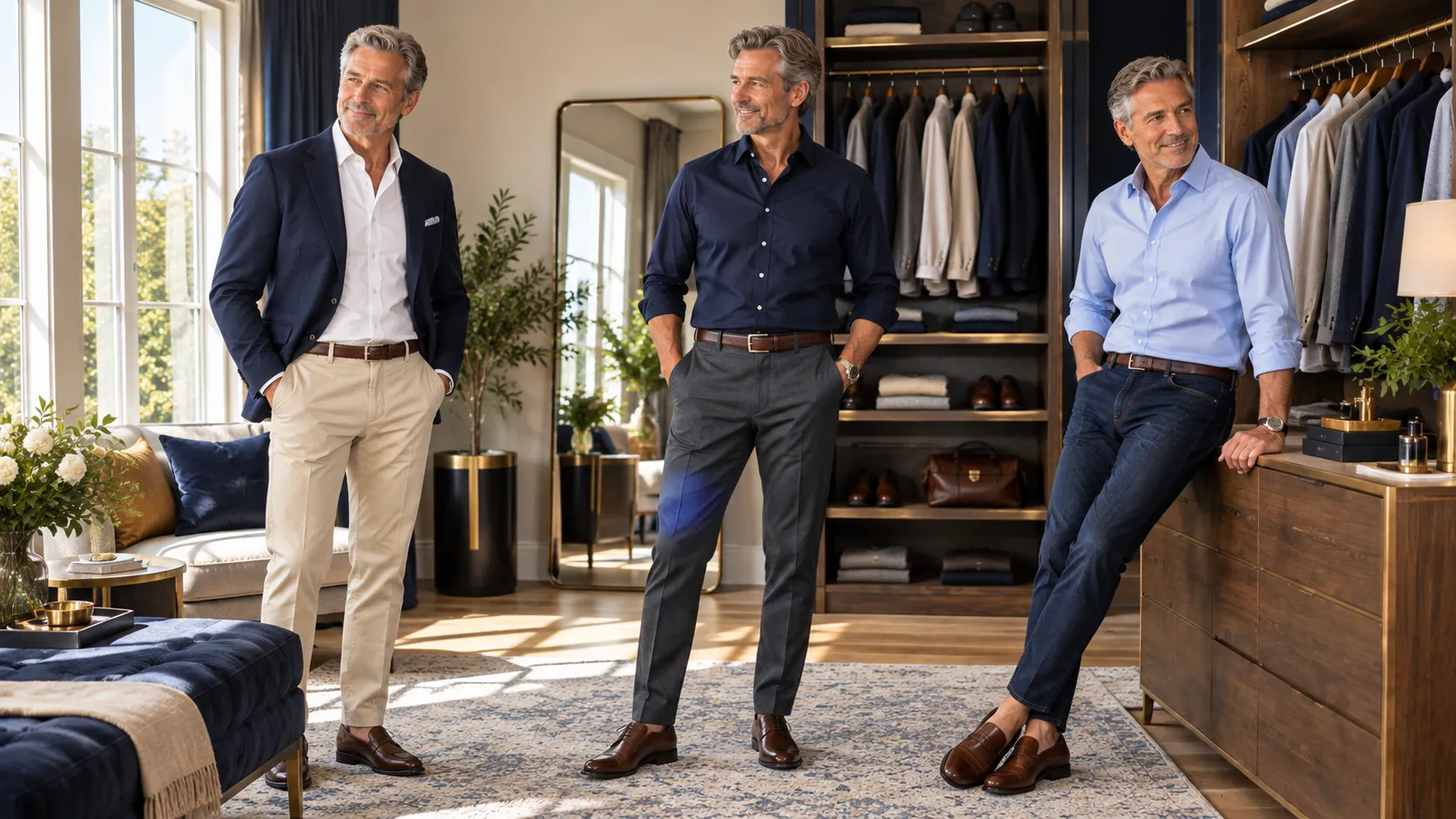
Getting dressed well after 50 does not mean buying a whole new wardrobe or dressing like a younger man. The biggest changes often come from small choices: the fit of your shirt, the length of your trousers, the colors you pair, and the condition of your shoes.
These men’s style secrets for men over 50 that nobody tells you can help you look sharper without making your clothes feel uncomfortable or forced. You can use them with jeans, chinos, shirts, blazers, sweaters, and the clothes you already own.
The goal is simple. Build outfits that fit your body, suit the occasion, and feel like you. Most of these changes take only a few minutes to apply. You do not need expensive brands or the latest trends.
By the end, you will have nine practical style rules you can use before your next lunch, dinner, trip, or casual weekend outing.
Choose fit over fashion trends
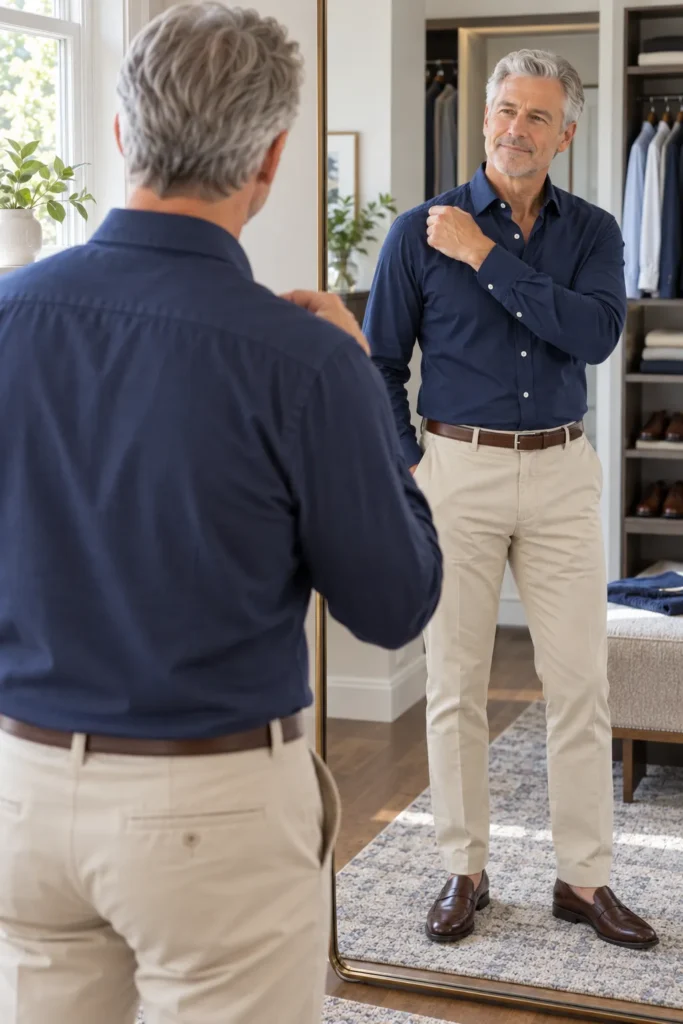
A shirt can be expensive and still look wrong if the shoulders are too wide or the body hangs too loose. Check the shoulder seam first. It should sit close to the edge of your shoulder without falling down your arm.
Look at the chest and waist next. You should have enough room to move and button the shirt without pulling fabric. A good fit gives you a clean shape while letting you sit, walk, and reach comfortably.
Reduce oversized shirts
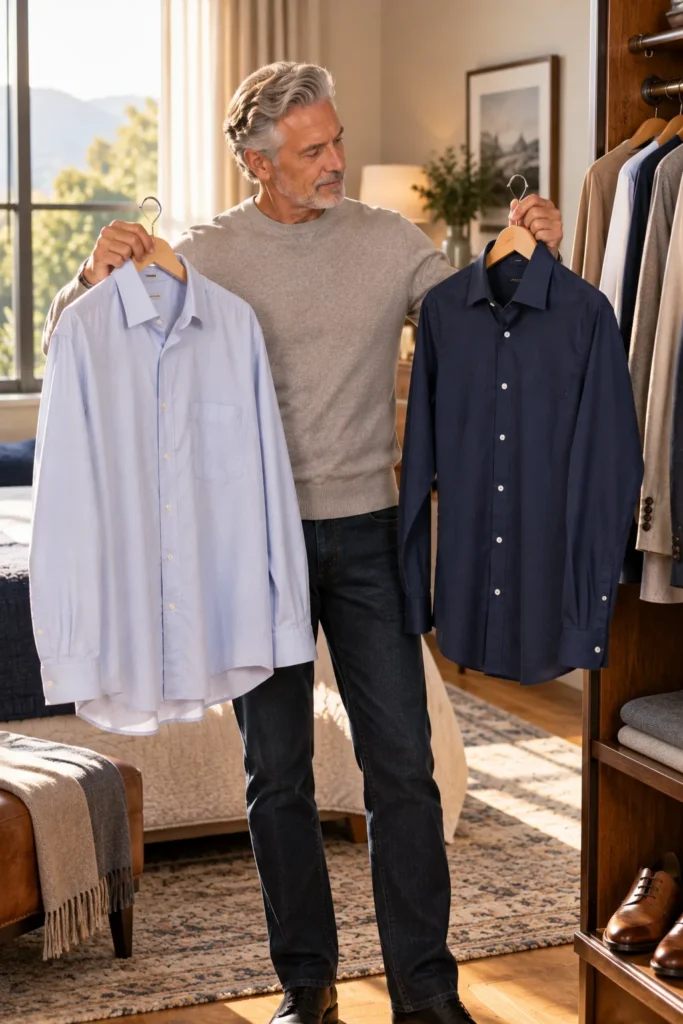
Very loose shirts can hide your shape and make an outfit look untidy. Try a shirt that follows your body without sticking to it. The shoulder seam should sit near your natural shoulder, while the shirt body should fall straight instead of forming a large tent shape.
For casual wear, leave enough room to move your arms. If the shirt bunches heavily around your waist, try one size smaller or choose a regular-fit cut with a shorter body. A tailor can also reduce extra fabric if the shoulders already fit well.
Do not judge shirt size by the label alone. Try the shirt on and check the shoulders, chest, sleeve length, and body shape. Different brands can use very different cuts.
Pick trousers with the right break
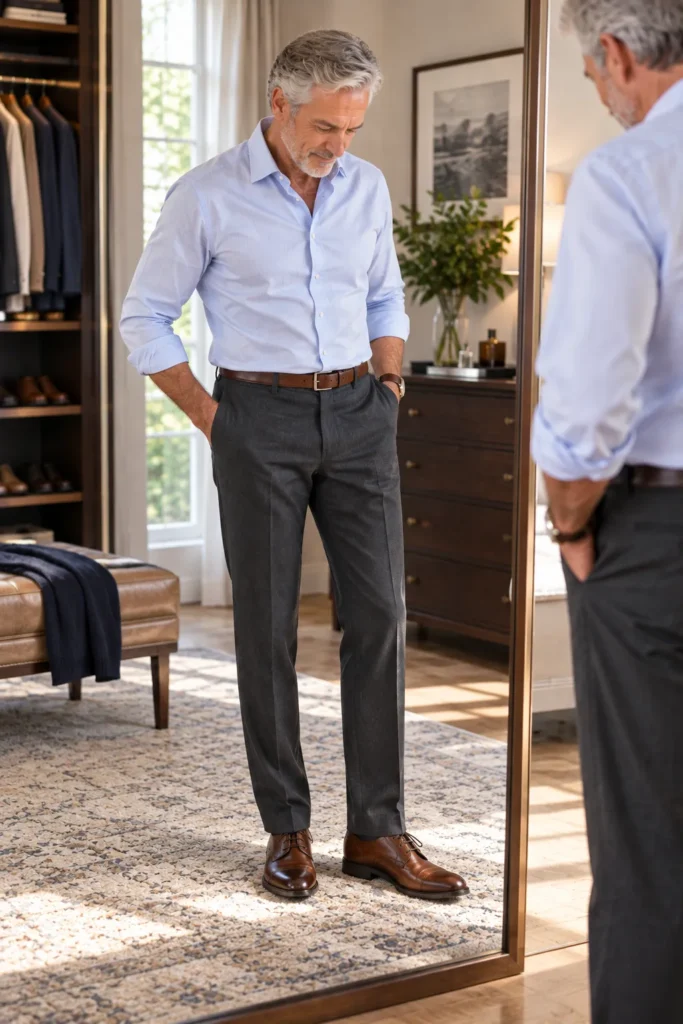
Stand in front of a full-length mirror while wearing the shoes you plan to use. The trouser hem should meet the shoe with a small, clean fold rather than piling up around the ankle.
For a modern look, aim for a slight break or little to no break. Keep the back hem from dragging on the floor. If your trousers fit well everywhere else but look too long, a tailor can usually fix the hem without changing the rest of the fit.
Build outfits around classic colors
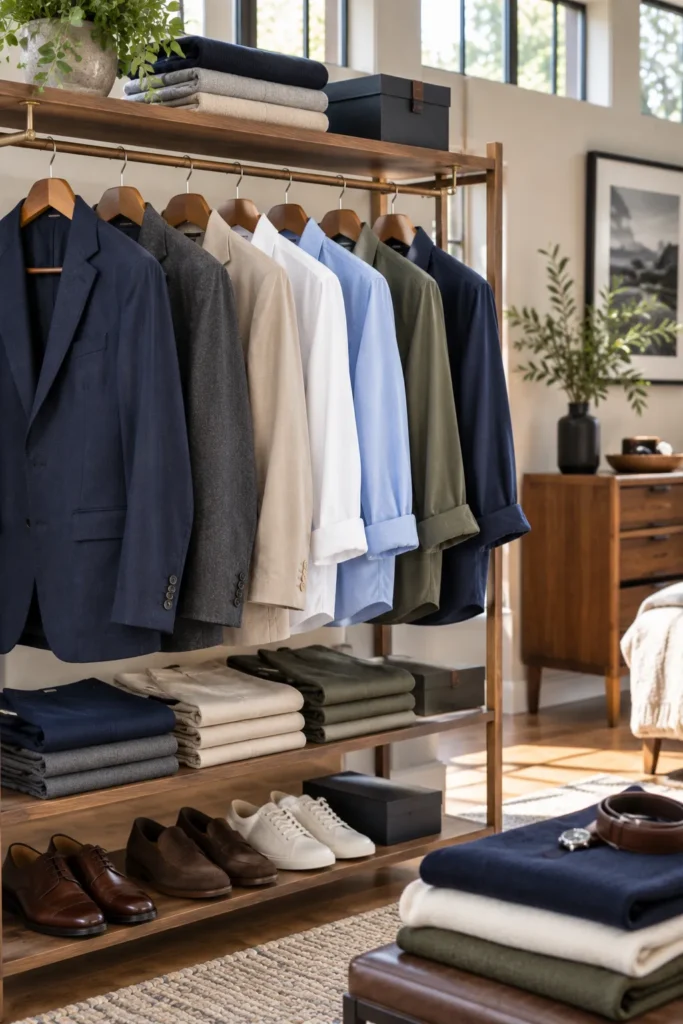
Start with a small group of colors that work well together. Navy, charcoal, white, beige, olive, brown, and light blue are easy choices for a men’s wardrobe over 50.
Keep the main outfit to two or three colors. For example, pair a navy shirt with beige chinos and brown shoes. You can also wear a white shirt with charcoal trousers and dark brown shoes. These combinations look clean without needing bold patterns or loud colors.
Match your shoes and belt
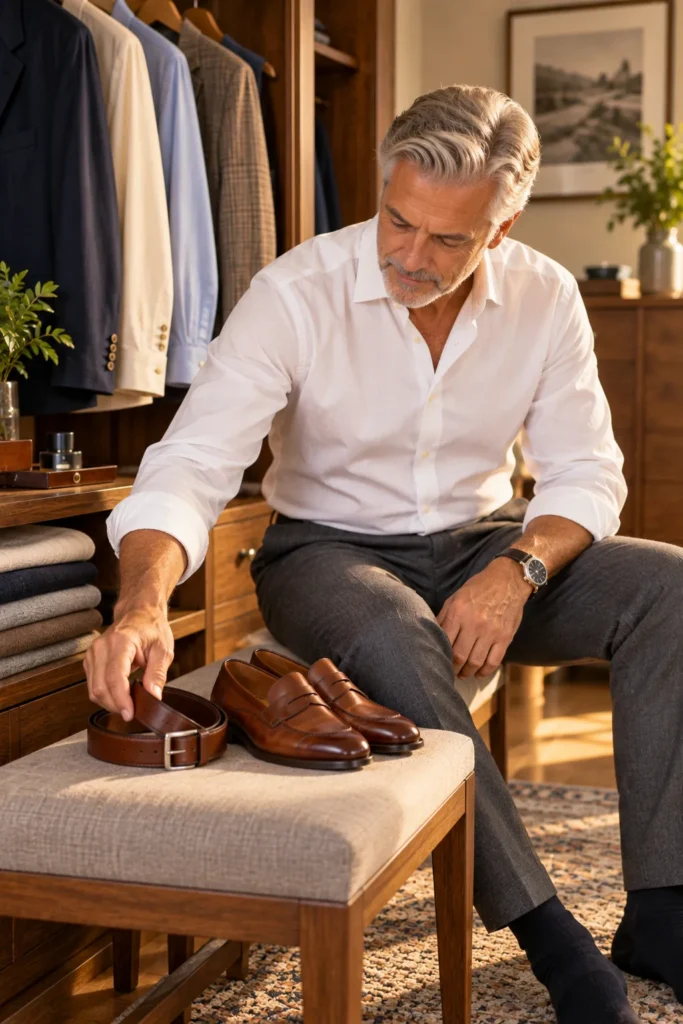
Your shoes and belt do not need to be an exact match, but they should look like they belong together. Brown shoes work best with a brown or similar-tone belt, while black shoes pair well with a black belt.
Use the same rule for dressier outfits and smart-casual looks. A dark brown leather belt with brown loafers creates a cleaner finish than mixing brown shoes with a black belt.
Keep the leather clean and in good shape because worn accessories can make an otherwise good outfit look old.
For everyday outfits, think in pairs: brown shoes with a brown belt, black shoes with a black belt. You can vary the shade as long as the colors are close.
Stop wearing clothes that look worn out
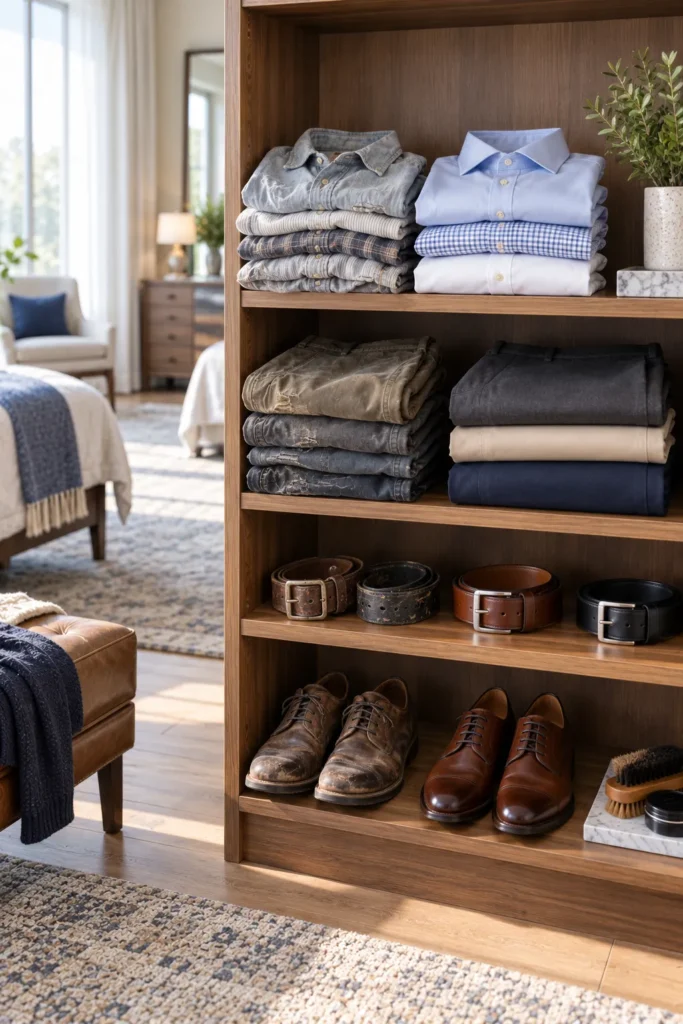
Look closely at the clothes you reach for most often. Check the collar, cuffs, knees, pockets, and seams for fading, stretching, loose threads, or fabric that has lost its shape.
A favorite shirt does not have to last forever. If the collar stays curled, the color looks badly faded, or the fabric has become thin, replace it. Keep your best-looking basics for days when you want to look sharp. Your clothes do not need to be expensive, but they should look clean, neat, and cared for.
Use one strong layer

A good jacket or overshirt can make a basic outfit look much sharper. Choose one layer that gives the outfit shape, such as a navy blazer, lightweight jacket, cardigan, or clean overshirt.
Keep the layer fitted around the shoulders without pulling across the chest. Leave enough room for the shirt underneath. If the rest of your outfit is simple, let this one piece add structure instead of adding several layers at once.
Avoid a jacket that is too tight across the shoulders. If the fabric pulls when you button it or raise your arms, the fit is too small.
Keep accessories clean and simple
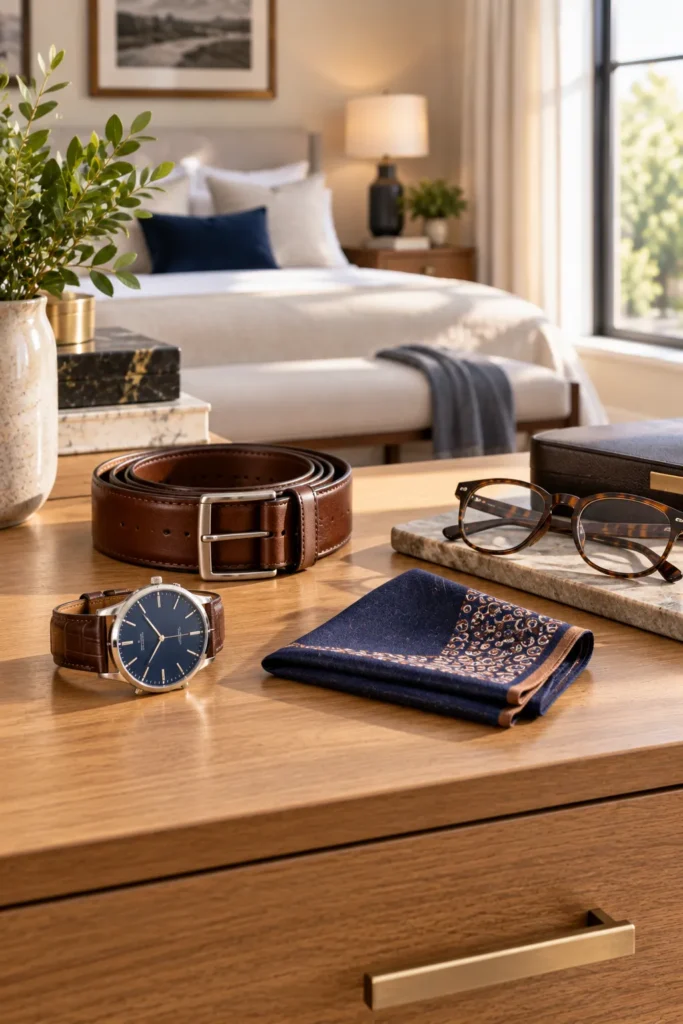
Small details can finish an outfit, but too many can make it look busy. Pick one or two useful accessories, such as a watch, leather belt, glasses, or pocket square.
Keep each piece in good condition. A scratched watch, cracked belt, or heavily worn glasses can take attention away from well-fitting clothes. For a smart-casual outfit, a clean watch and matching belt may be all you need.
Dress for the occasion
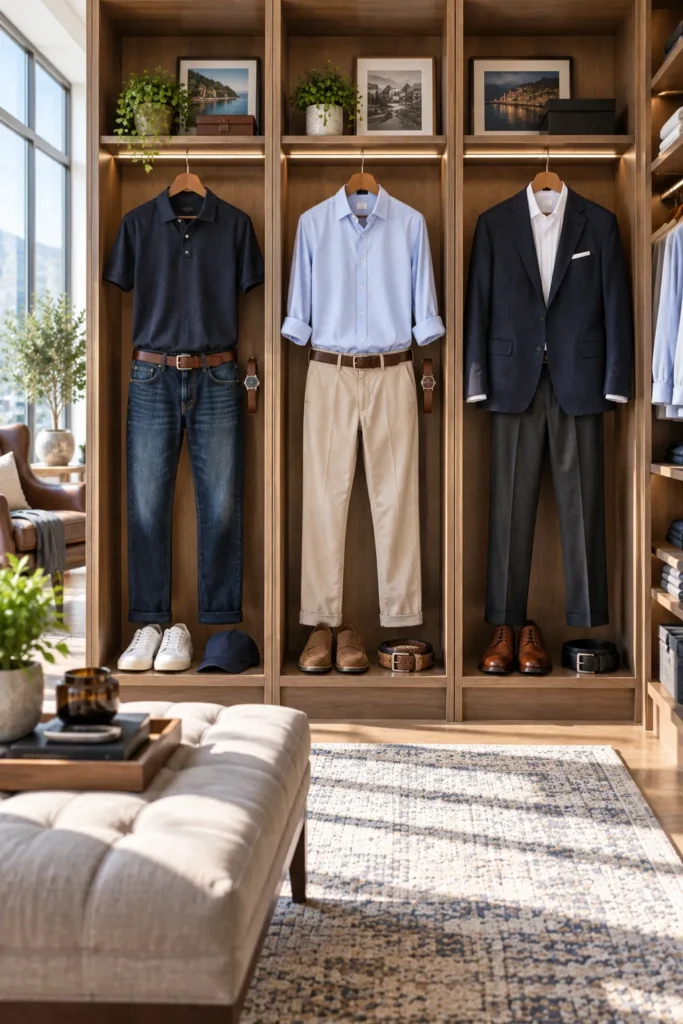
Check where you are going before choosing your clothes. A casual lunch may call for dark jeans, a polo shirt, and loafers, while a dinner event may need trousers, a shirt, and a blazer.
Aim to look a little more polished than the most casual option for the setting. If you are unsure, take off one formal layer rather than starting too casual. This keeps your outfit neat without making you look overdressed.
Common Mistakes to Avoid
Common Style Mistakes
Extra fabric can make your body look wider and hide the shape of the outfit. Choose room for comfort without excess fabric.
Large folds around your shoes can make even good trousers look messy. A small hem adjustment can make a big difference.
Too many strong colors can make an outfit feel disconnected. Keep the main outfit to two or three colors.
A cracked belt or badly scratched watch can make fresh clothes look less polished. Replace pieces that are clearly past their best.
Get the most from these men’s style secrets over 50
These rules work best as small changes, not a reason to replace your whole closet. Start with the clothes you wear most often and fix the fit, length, color, and condition first.
Once those basics look right, your outfits will feel cleaner and more natural.
A few good pieces can do a lot when they fit well and suit the occasion.
FAQ
Frequently Asked Questions
You can use trends in small ways, but fit and comfort should come first. Classic pieces are often easier to wear and combine.
It should give you room to move without hanging far from your body. Check the shoulders first, then look at the chest and waist.
Yes. Dark, clean jeans with a straight or slim-straight fit can work well for casual and smart-casual outfits.
Two or three main colors are a good starting point. Neutral colors make it easier to create outfits that work together.
No. They should look close in color and style. Brown shoes with a similar brown belt are a safe choice.
Quick Reference Card
Mens Style Secrets Over 50: Quick Reference
Well-fitting shirts, dark jeans, neutral chinos, a navy or charcoal blazer, clean shoes, a matching belt, a simple watch, and a full-length mirror.
- Choose fit over fashion trends.
- Reduce oversized shirts.
- Pick trousers with the right break.
- Build outfits around classic colors.
- Match your shoes and belt.
- Replace clothes that look worn out.
- Use one strong layer.
- Keep accessories clean and simple.
- Dress for the occasion.
Finish with confidence
Good style after 50 is less about chasing trends and more about wearing clothes that fit, work together, and suit the moment.
Start with one change today. Check your shirts, fix the fit, and remove the pieces that no longer look their best.
These men’s style secrets over 50 that nobody tells you can help you build better outfits with the clothes you already have.
Save this guide on Pinterest and come back before your next outfit-shopping trip.