
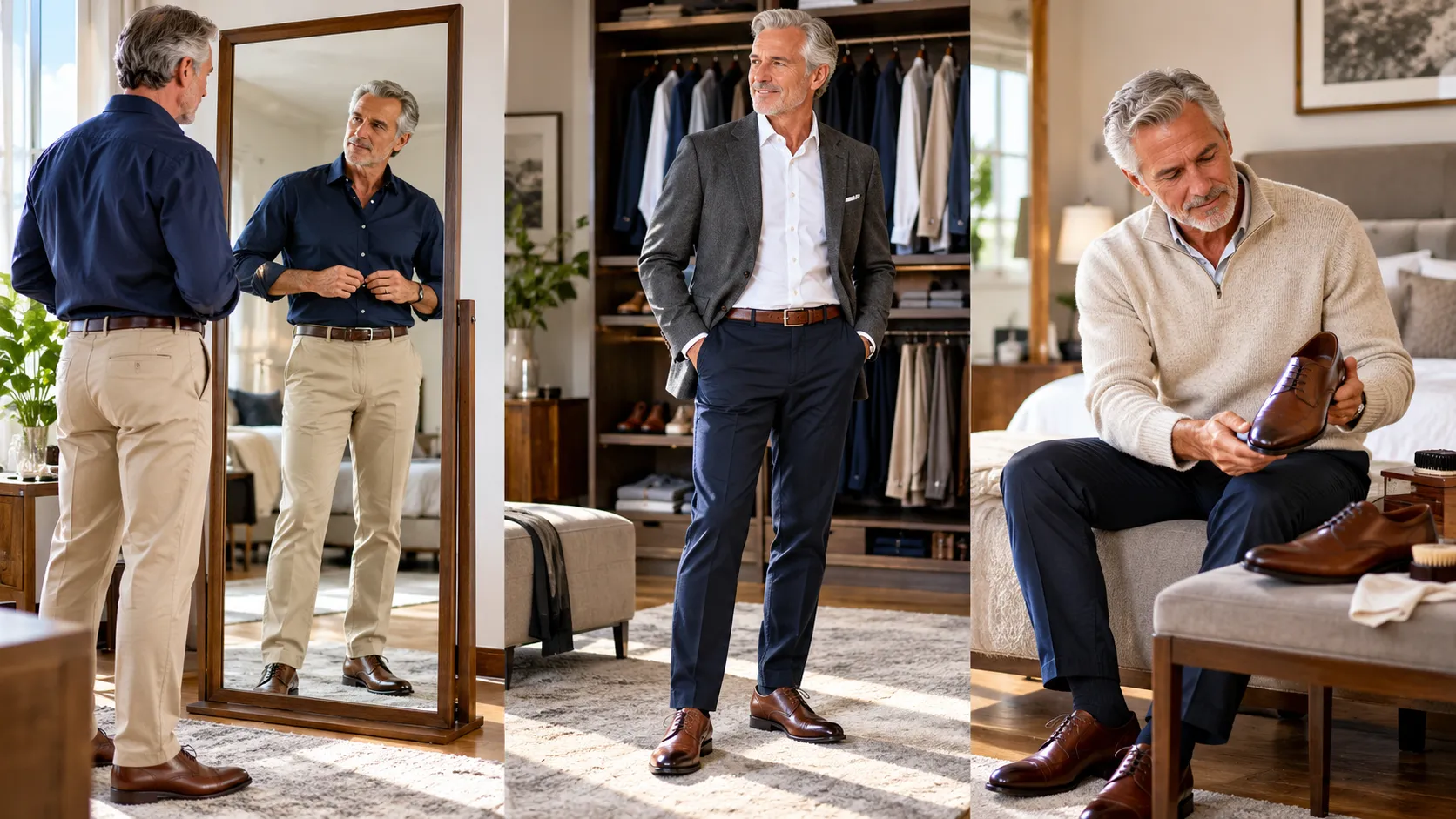
If your clothes feel a little dated even though they still fit, the problem may be small details rather than your whole wardrobe. The wrong trouser length, an oversized shirt, worn shoes, or colors that no longer work well together can make an outfit look older than you want.
This guide covers mens fashion mistakes over 50 to avoid and gives you a clear fix for each one.
You do not need a new wardrobe. Most of these fixes involve better fit, cleaner combinations, and paying attention to the condition of your clothes. You can work through the list with pieces you already own, then replace a few items as needed.
By the end, you will know what to check before leaving the house and how to build outfits that look neat, current, and comfortable. The goal is not to dress like a younger man. It is to make your clothes fit your life and your body today.
Wear Clothes That Fit Your Current Body
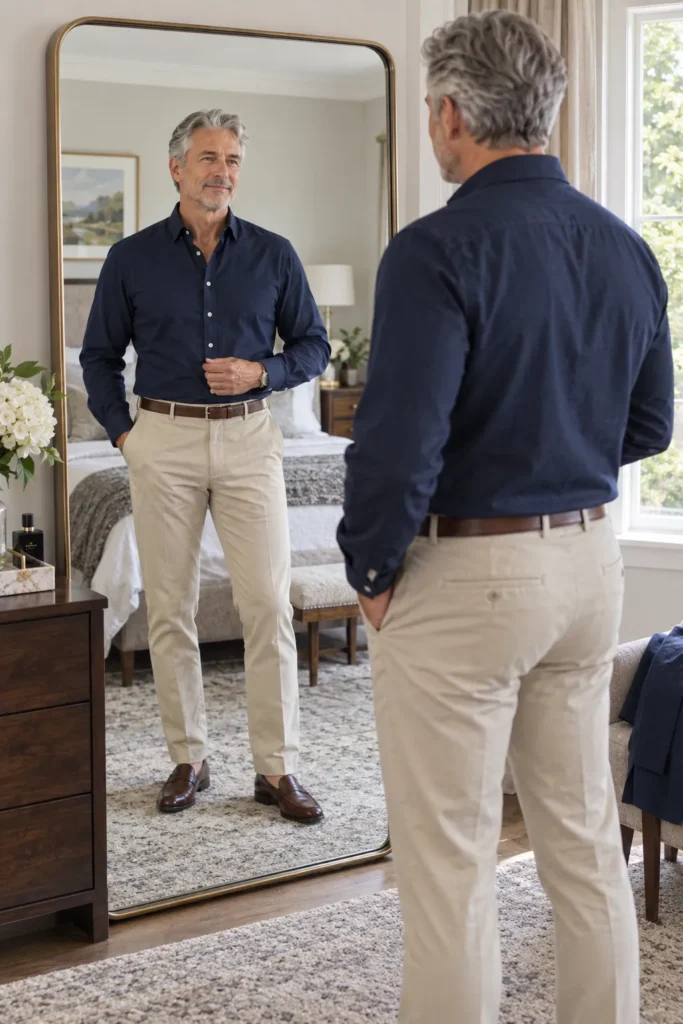
Stand in front of a full-length mirror wearing one outfit you use often. Check the shoulder seams, shirt length, jacket buttons, and trouser waist.
Your clothes should follow your shape without pulling across the chest or hanging far from the body.
Weight and body shape can change over time, so a size that worked ten years ago may not look the same today. Good fit often makes a bigger difference than buying expensive clothes.
Reduce Oversized Shirts
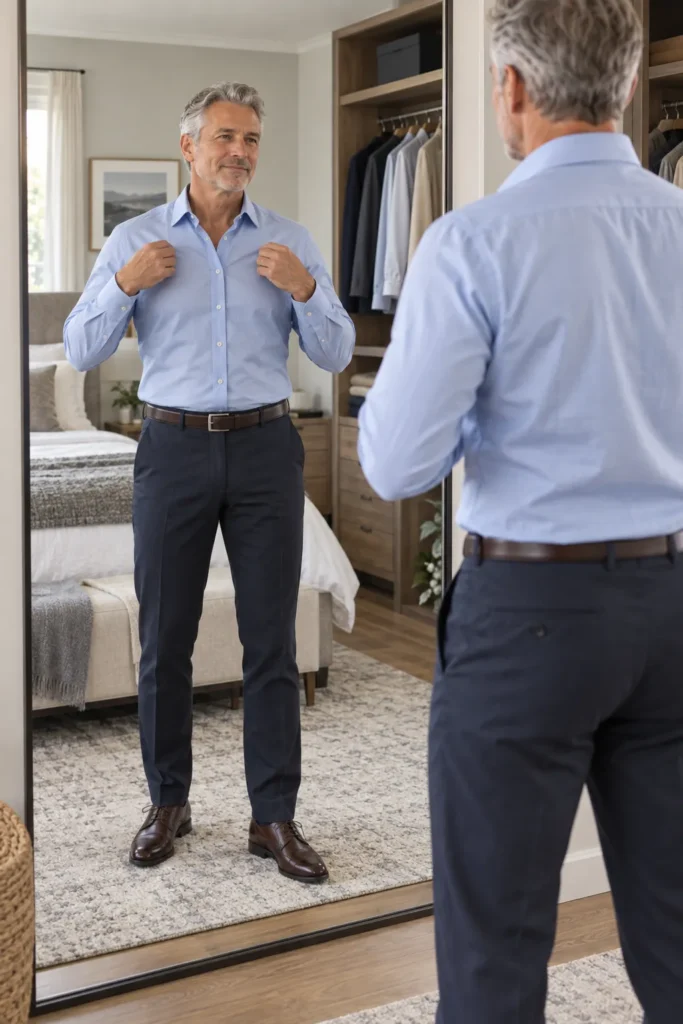
A shirt should give you enough room to move without hiding your shape. Check the shoulder seams first. They should sit close to the edge of your shoulders, not several inches down your arms.
Look at the sides too. Large folds around your waist usually mean the shirt is too loose. Choose a relaxed fit that gives you comfort while keeping a clean shape. This small change can make your whole outfit look neater.
Choose Trousers With the Right Rise and Length
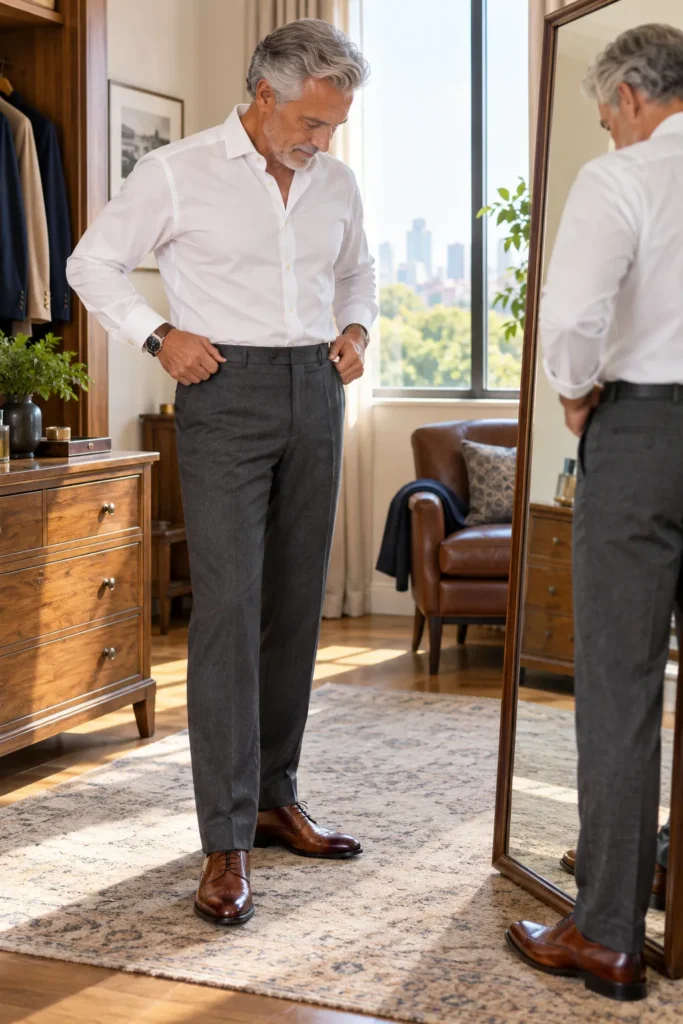
Check where the waistband sits before looking at the label size. Trousers should stay in place without needing a tight belt, while the hem should reach the shoe without creating a large pile of fabric.
For a clean casual look, aim for a small break at the shoe. If your trousers bunch heavily around your ankles, ask a tailor to shorten them rather than rolling them up.
Replace Worn-Out Shoes
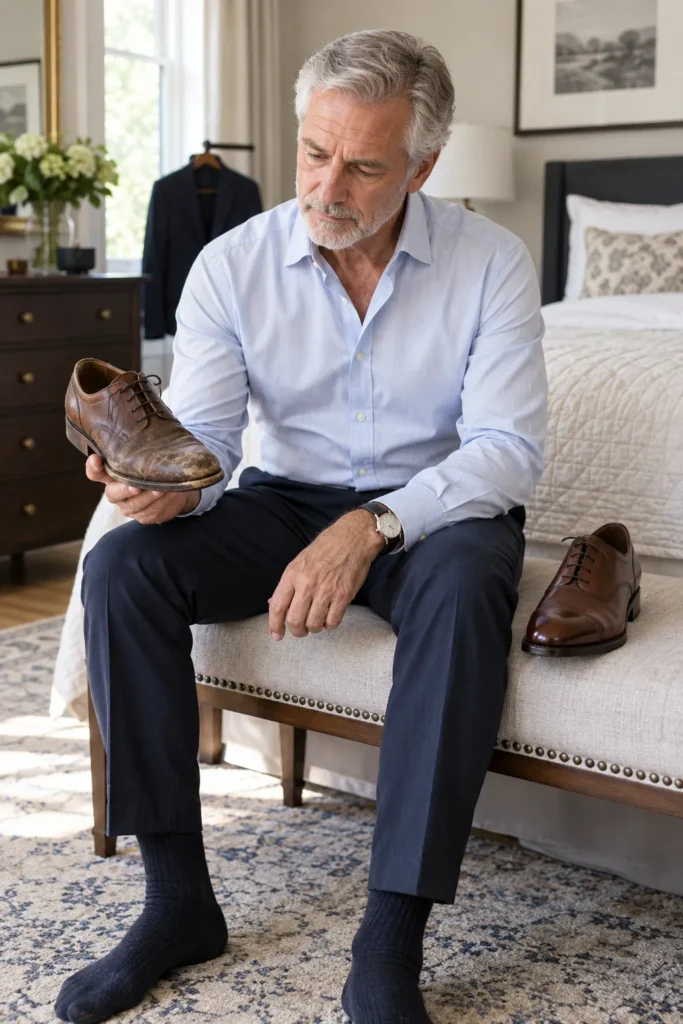
Look closely at the soles, heels, leather, and laces of your regular shoes. Deep creases, badly worn heels, dirty laces, and cracked leather can make an otherwise good outfit look tired.
You do not need many pairs. Start with one clean pair of brown or black leather shoes and one neat casual pair. Clean them before deciding they need replacing. A good shoe brush and damp cloth can often bring a usable pair back into shape.
Pick Better Colors for Your Wardrobe
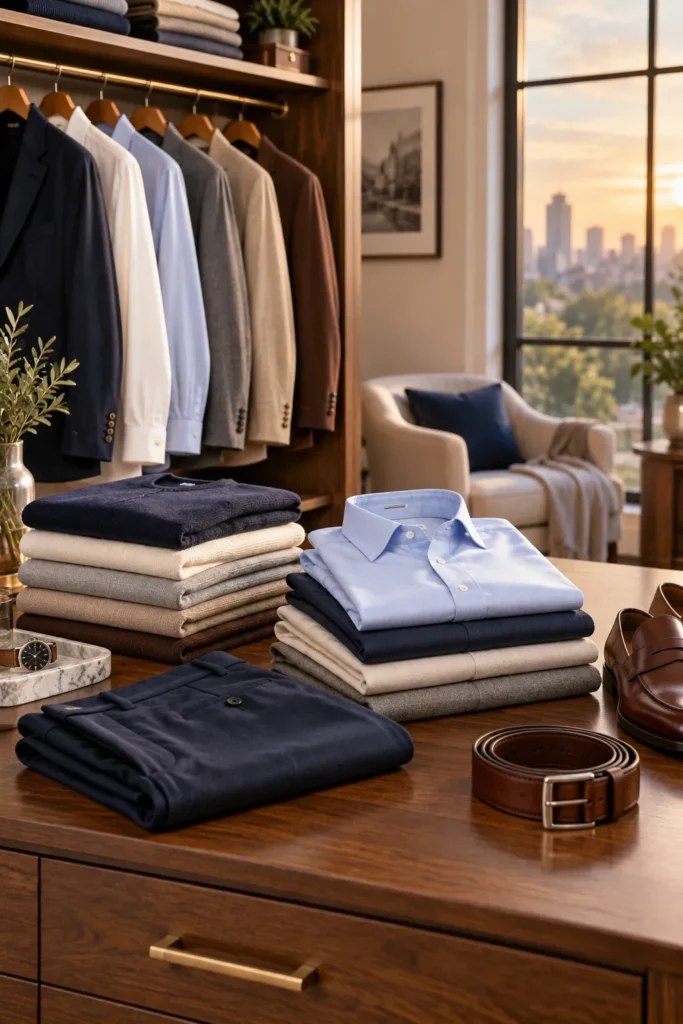
Your clothing colors can make a big difference in how an outfit looks. Avoid filling your wardrobe with the same dark shades. Add useful colors such as navy, light blue, cream, beige, gray, and olive.
These shades are easy to mix and work well with classic men’s clothing. Start with one new color at a time and see how it works with the trousers and shoes you already own.
Update Your Jeans Without Chasing Trends
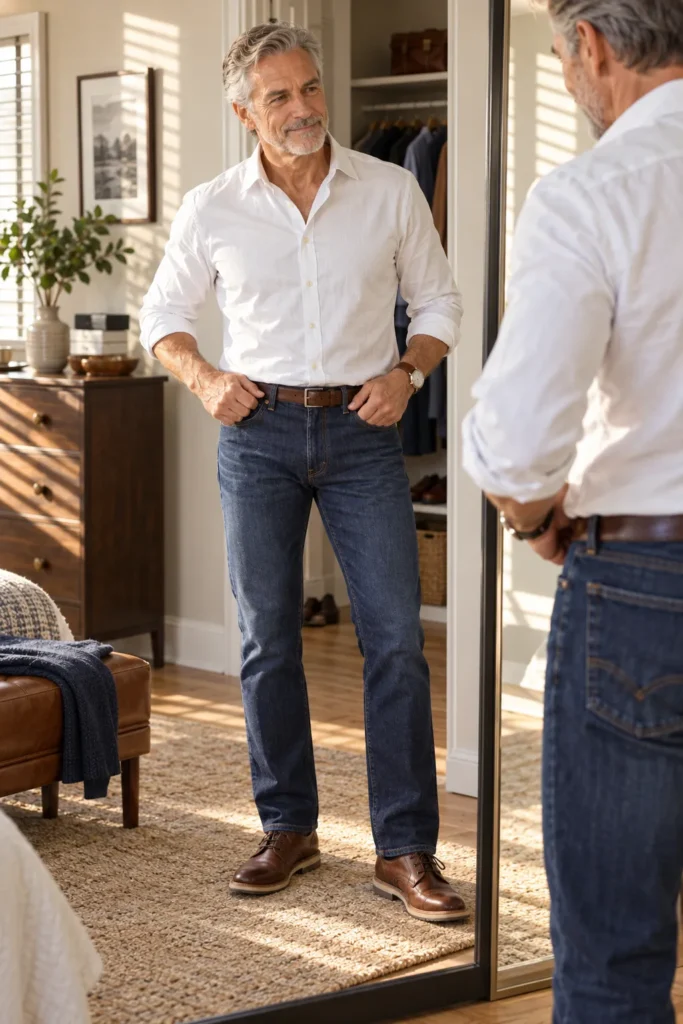
A good pair of jeans should fit your waist and seat without feeling tight. Check the leg shape too. A straight or gently tapered leg usually gives a clean look without looking extreme.
Avoid very baggy jeans and very tight styles if they do not suit your build. Dark blue jeans work well for dinners and smart-casual outfits, while medium blue pairs are useful for relaxed days.
Match Your Belt and Shoes
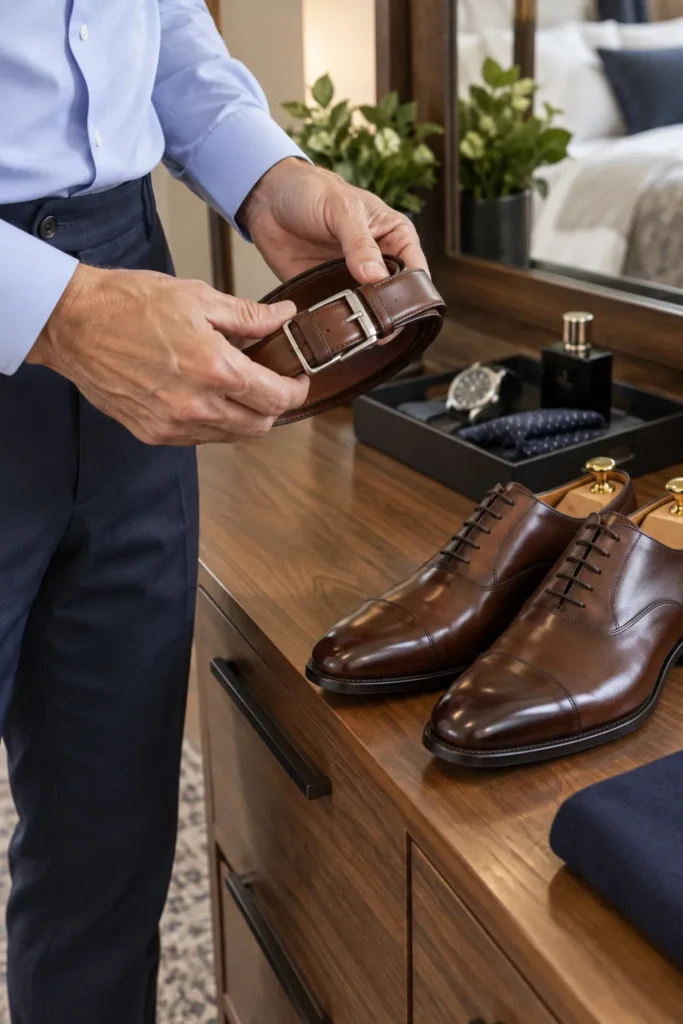
Pick the belt after choosing your shoes, especially for dressier outfits. Brown shoes pair best with a brown belt, while black shoes work best with a black belt.
The shades do not need to be an exact match, but they should look like they belong together. For casual outfits, you have more freedom, so a simple leather belt can work with jeans and casual leather shoes.
Avoid Wearing Too Many Patterns
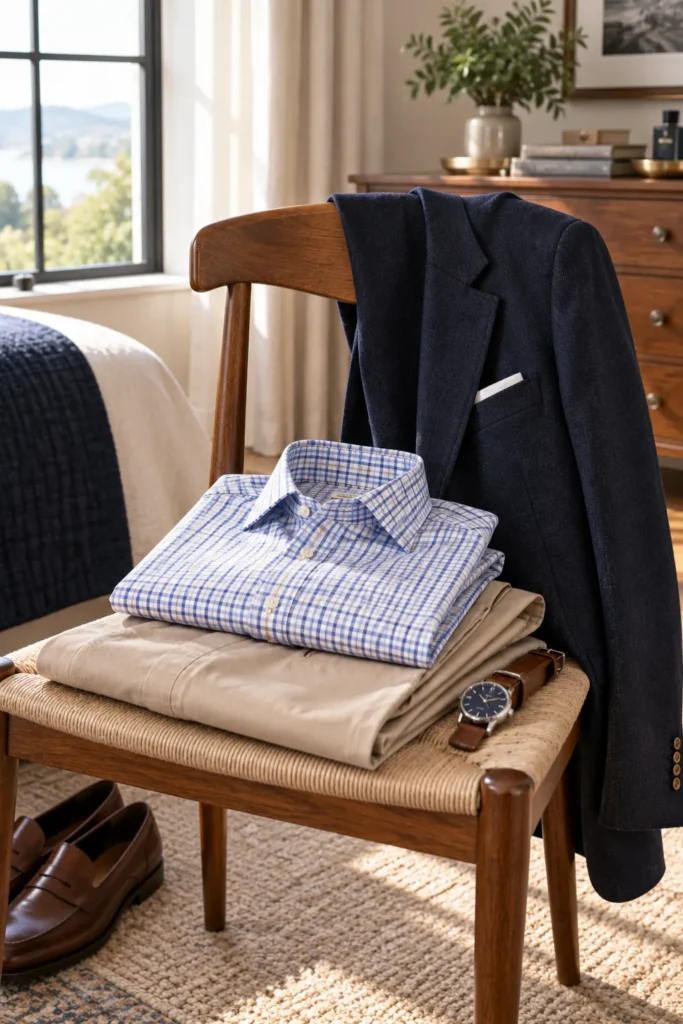
Use one strong pattern as the main focus of an outfit. A checked shirt can work with plain trousers, while patterned trousers are easier to wear with a solid shirt.
If your shirt, jacket, tie, and pocket square all have different patterns, the outfit can look busy. Start with one patterned piece and keep the rest quiet. This gives your clothes a cleaner shape and lets each piece look intentional.
Choose Jackets With a Clean Fit

A jacket should sit flat across your shoulders and close without pulling at the buttons. Check the sleeve length too. A small amount of shirt cuff showing is usually enough.
For casual jackets, avoid sleeves that cover most of your hands. If the shoulders fit well but the sleeves are too long, a tailor can often fix the sleeves without changing the whole jacket.
Keep Your Clothes in Good Condition
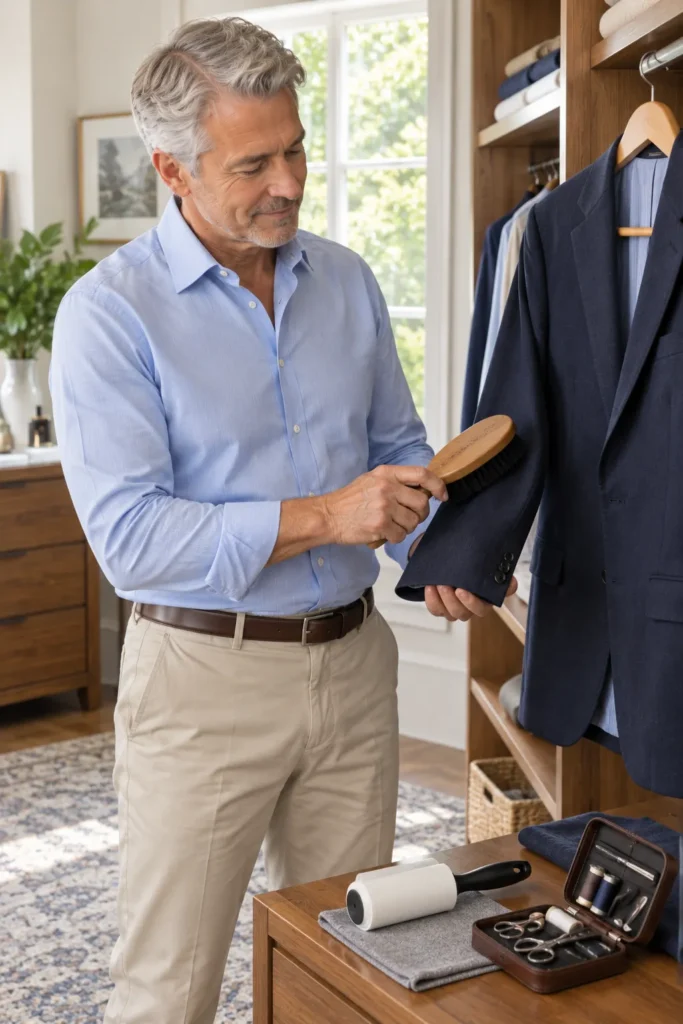
Before putting an outfit on, check the small details that are easy to miss. Look for loose buttons, stains, wrinkles, fading, and worn collars.
A clean shirt can look far better than an expensive shirt that needs care. Keep jackets on proper hangers, fold knitwear instead of hanging it, and remove small marks before they set into the fabric.
Dress for the Occasion
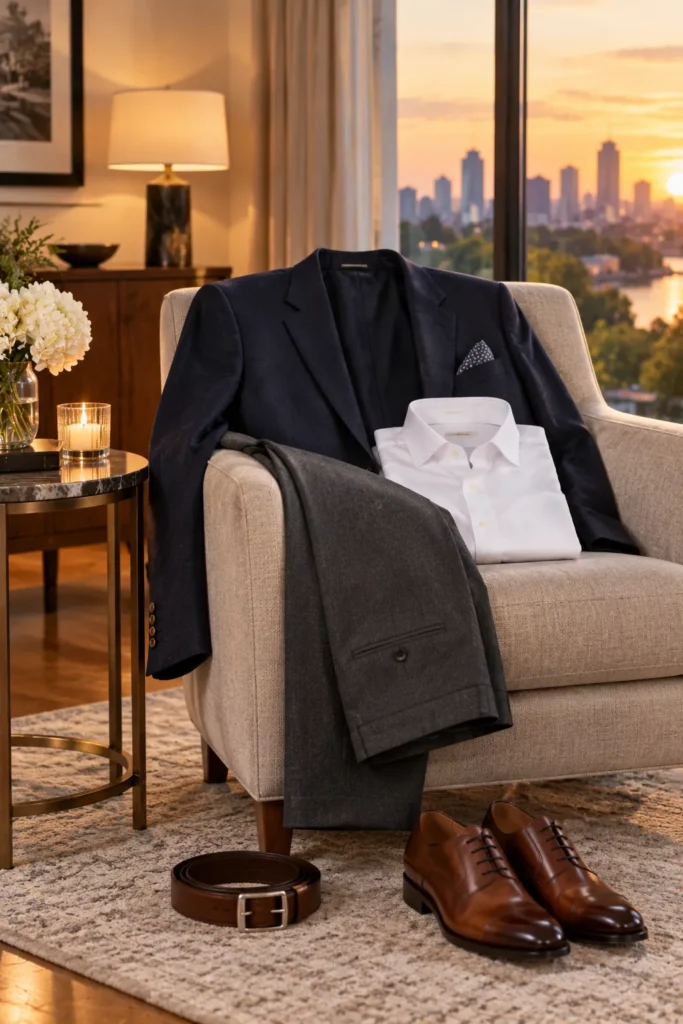
Check the setting before choosing your clothes. A relaxed lunch, family event, wedding, and business dinner can all call for different outfits. If you are unsure, choose a slightly more polished option rather than showing up too casually.
A clean button-down shirt, well-fitted trousers, and leather shoes can cover many smart-casual occasions without looking overdressed.
Common Mistakes to Fix
1. Buying a larger size for comfort
A larger shirt or jacket can feel comfortable but may make your shape look wider. Look for a relaxed fit that still follows your shoulders and body.
2. Letting trousers bunch at the shoes
Too much fabric around the ankle makes trousers look untidy. Have the hem shortened if the waist and seat already fit well.
3. Keeping damaged shoes for dressy outfits
Scuffed leather, worn heels, and dirty soles can take away from a well-planned outfit. Clean, repair, or replace them before an important event.
4. Mixing too many strong patterns
Keep one patterned item as the main feature. Pair it with solid colors and simple textures so the outfit stays balanced.
5. Wearing clothes without checking the occasion
An outfit can look good and still be wrong for the event. Check the dress code before choosing your shoes, trousers, shirt, and jacket.
Frequently Asked Questions
Should men over 50 stop wearing jeans?
No. Choose jeans with a clean fit and a classic leg shape. Dark or medium blue jeans can work well for many casual outfits.
Should my belt match my shoes?
For dressier outfits, yes. Keep brown shoes with a brown belt and black shoes with a black belt.
How should trousers fit after 50?
The waistband should stay in place without feeling tight. The legs should have enough room to move, while the hem should sit neatly on the shoe.
Do expensive clothes look better?
Price does not fix poor fit. A well-fitting, clean, cared-for outfit can look better than expensive clothes that are too large or worn out.
What is the biggest style mistake to fix first?
Start with fit. Check your shirts, trousers, jackets, and jeans in a full-length mirror before buying anything new.
Men’s Fashion Over 50 Quick Reference
What You Need
Shirts • Trousers • Jeans • Jacket • Dress shoes • Casual shoes • Belt • Full-length mirror
12 Checks
- Check your current fit.
- Fix trouser rise and length.
- Replace worn shoes.
- Reduce oversized shirts.
- Choose flattering colors.
- Keep jeans clean and well fitted.
- Match belt and shoes.
- Limit strong patterns.
- Check jacket fit.
- Care for every garment.
- Dress for the event.
- Build complete outfits.
Build Outfits Instead of Wearing Random Pieces
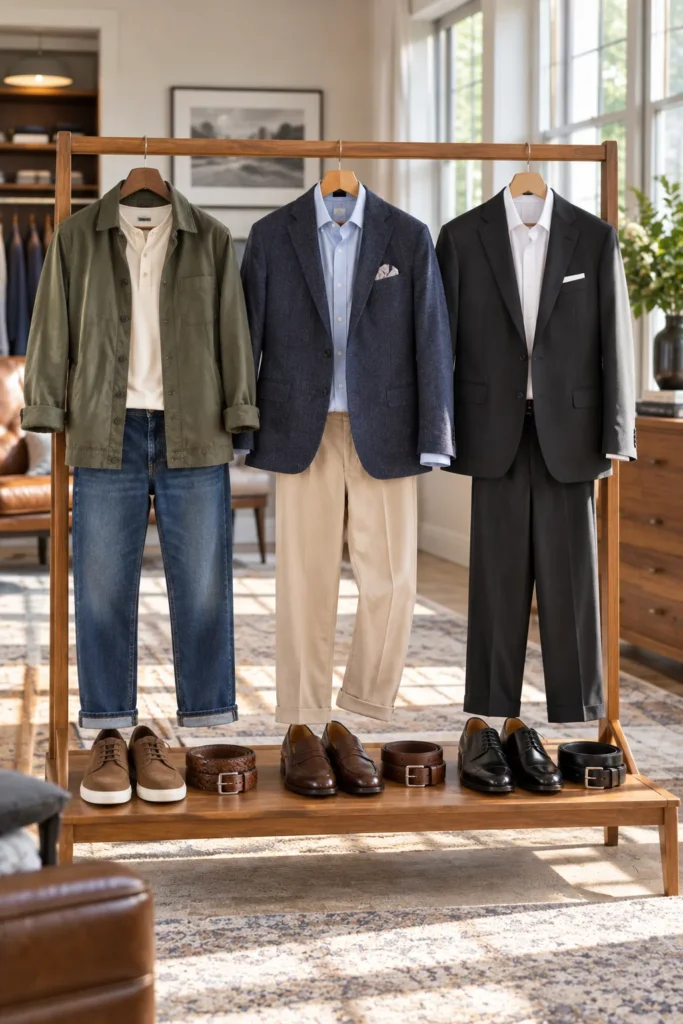
Pull out three complete outfits from your wardrobe and place each one together before putting it on. Check the shirt, trousers, shoes, belt, and jacket as one group.
The colors should work together, and each item should suit the same level of formality. This small habit helps you spot problems before you are dressed and makes getting ready much faster.
Before
Loose shirts, long trousers, worn shoes, mixed patterns, and outfits that do not fit the occasion.
After
Better fit, clean shoes, balanced colors, fewer loud patterns, and complete outfits that suit the setting.
Final Check
Look at your outfit once from the front and once from the side. Check the fit, trouser length, shoes, belt, colors, and overall balance.
You do not need to replace your whole wardrobe. Small changes can make your clothes look cleaner and more current.
The biggest of these mens fashion mistakes over 50 to avoid is often poor fit. Start there before buying anything new.
Save this guide on Pinterest and come back to it the next time you clean out your wardrobe.