
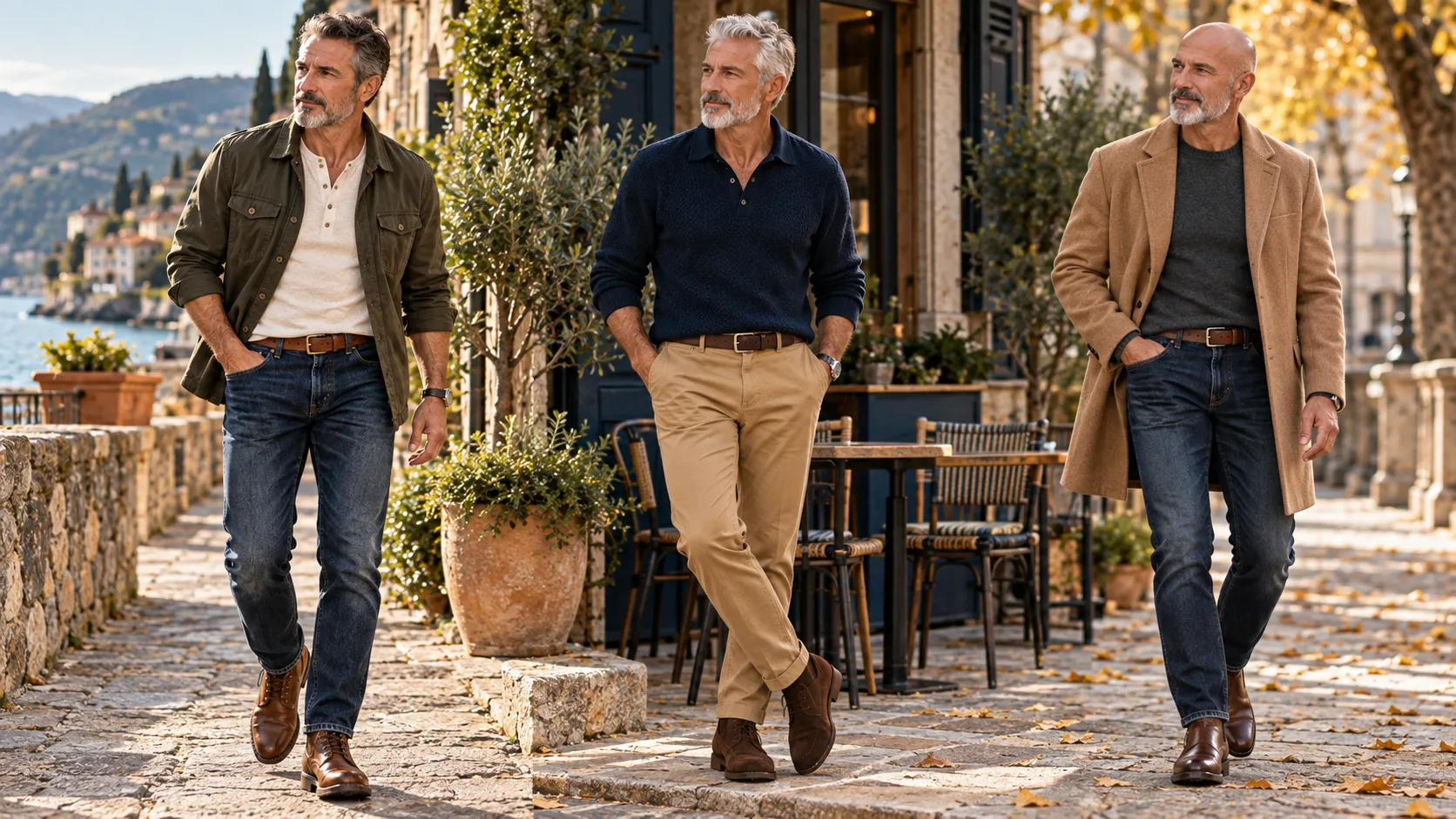
A rugged outfit does not need to look rough from head to toe. For men over 50, the best rugged masculine outfits mix strong fabrics, useful layers, clean colors, and a good fit.
The goal is to look confident and masculine without looking like you are wearing a costume.
The biggest mistake is adding too many rugged pieces at once. A heavy flannel, distressed jeans, work boots, leather jacket, and large belt can quickly make an outfit look busy. A better approach is to start with a clean base and add one or two stronger pieces.
In this guide, you will learn how to build Rugged Masculine Outfits for Men Over 50 step by step. You will see what fabrics work, how to mix colors, how much layering to use, and how to choose footwear and accessories.
You do not need a new wardrobe. A few well-fitting basics can create several rugged looks. Most outfits can be put together in 5 to 10 minutes once your main pieces are ready.
What You Need
You do not need every item for one outfit. Pick a few pieces that work together and build from there.
What You Need
At a Glance
9 Steps to a Rugged Outfit
- Start With a Clean Neutral Base
- Choose Rugged Fabrics That Look Refined
- Add One Strong Rugged Layer
- Balance Dark and Light Colors
- Pick Footwear That Grounds the Outfit
- Fit Every Piece Through the Shoulders and Waist
- Add Leather Accessories With Restraint
- Finish With One Seasonal Layer
- Check the Outfit Before You Leave
1. Start With a Clean Neutral Base
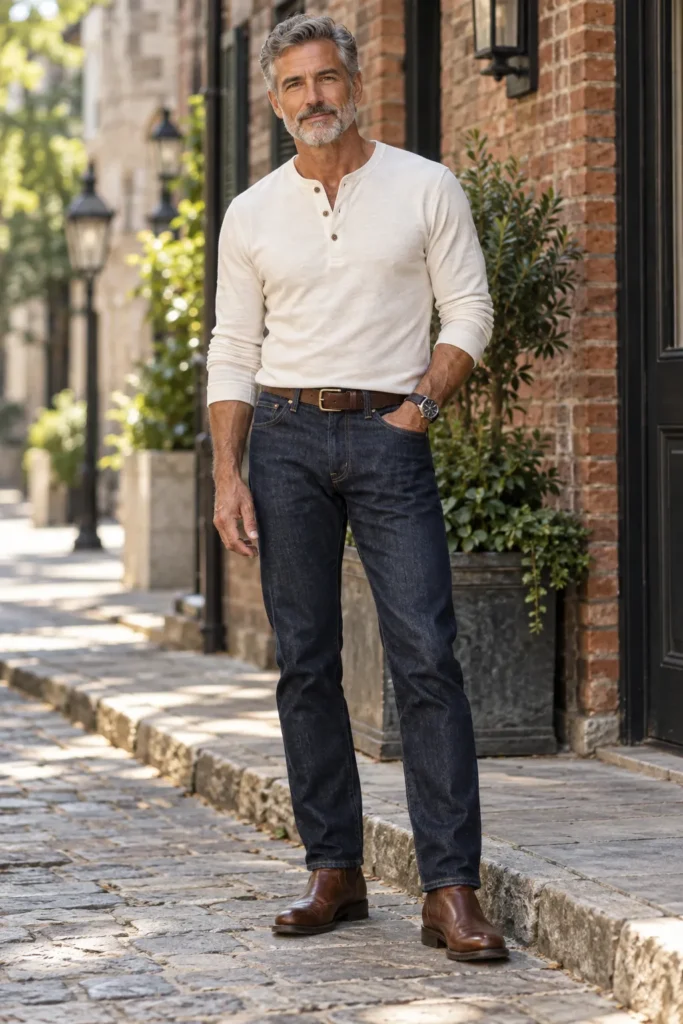
Begin with one plain shirt and one pair of trousers or jeans that fit well. Good starting colors include white, cream, navy, charcoal, olive, tan, and medium blue. These shades give the stronger pieces room to stand out.
A plain henley with dark jeans is a strong starting point. You can also use an Oxford shirt with olive chinos for a cleaner look.
Avoid starting with distressed denim or a loud patterned shirt. The base should stay quiet so the rugged details look intentional.
2. Choose Rugged Fabrics That Look Refined
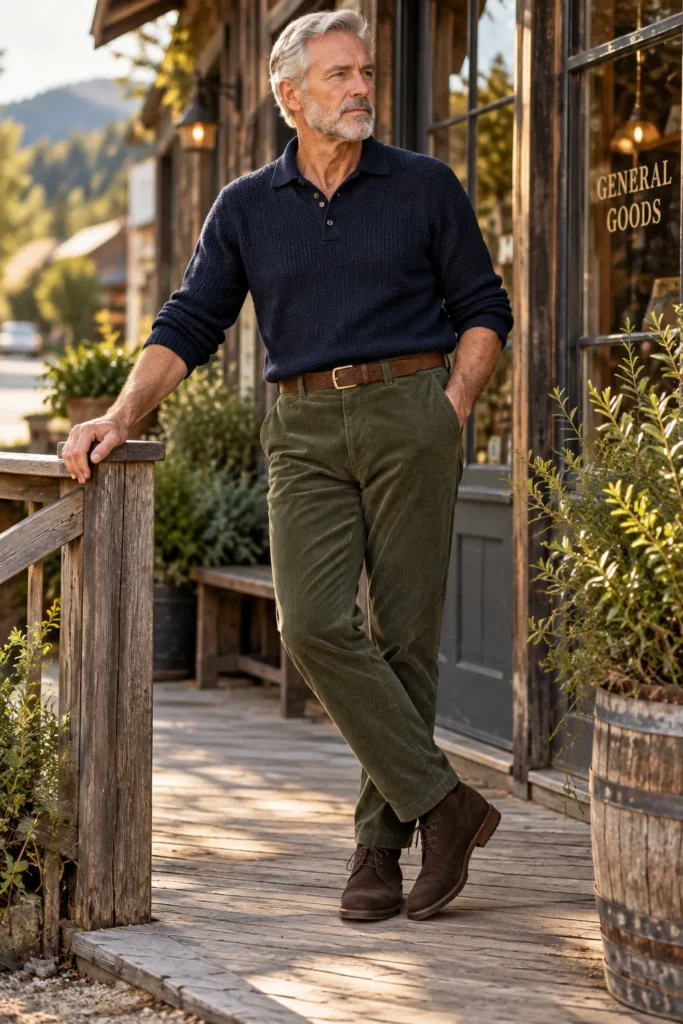
Look for fabrics with visible texture and a little weight. Denim, suede, corduroy, waxed cotton, flannel, and textured knitwear all work well for this style.
The key is condition. Worn-in fabric can look great, but clothing with heavy tears, loose threads, or large faded patches can make the outfit look untidy.
If you want a rugged feel without looking rough, choose clean denim, brushed cotton, textured sweaters, or a well-kept suede jacket.
3. Add One Strong Rugged Layer

Choose one outer piece to give the outfit its main rugged character. Good options include a denim jacket, field jacket, chore jacket, canvas overshirt, or suede jacket.
Keep the rest of the outfit cleaner when the outer layer is strong. For example, pair an olive field jacket with a cream henley and dark jeans. The jacket gives you the rugged look, while the simple shirt and jeans keep the outfit neat.
If the jacket feels too heavy for the weather, use a cotton overshirt instead. You want the layer to look natural for the season, not like an extra piece added for style alone.
4. Balance Dark and Light Colors
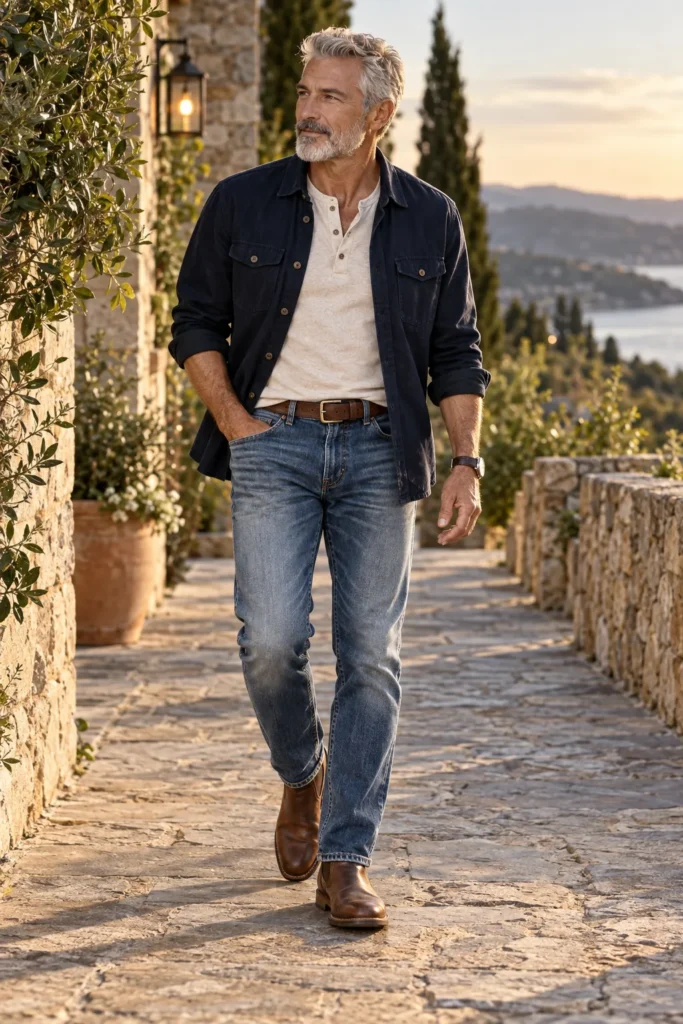
Pair one darker piece with one lighter piece to keep the outfit balanced. For example, wear a navy overshirt with a cream henley and medium-blue jeans. Olive jackets also work well with tan chinos and a white shirt.
Avoid wearing dark brown, black, charcoal, and dark olive all together unless you want a very dark outfit. A lighter shirt or trouser can break up the darker shades and make the outfit look cleaner.
Color Balance Guide
Navy, charcoal, dark denim, or brown.
Cream, white, tan, or light blue.
Olive, rust, camel, or warm brown.
5. Pick Footwear That Grounds the Outfit
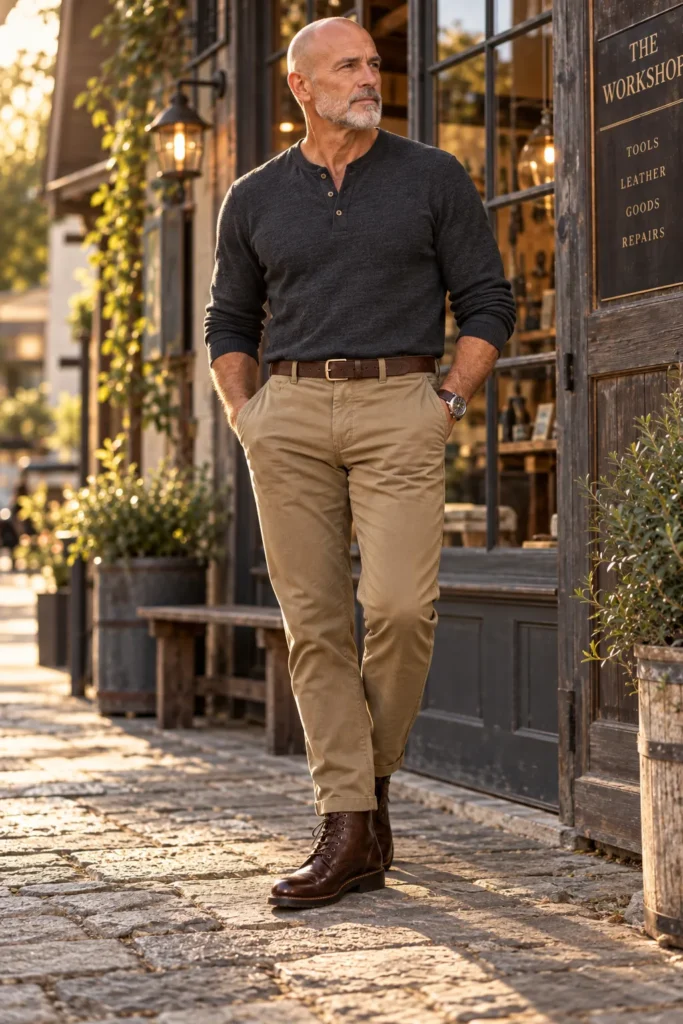
Choose footwear that matches the weight of your clothing. Brown leather boots work well with jeans and field jackets, while suede chukka boots give a softer look with chinos.
Keep the footwear clean and in good shape. Scuffed boots can add character, but badly worn soles or cracked leather can make the whole outfit look neglected.
Match your belt to the main color of your footwear when possible.
Choose the Right Footwear
Best with dark jeans, denim jackets, and field jackets.
Good with chinos, knitwear, and softer layers.
Useful for warmer days and relaxed outfits.
6. Fit Every Piece Through the Shoulders and Waist
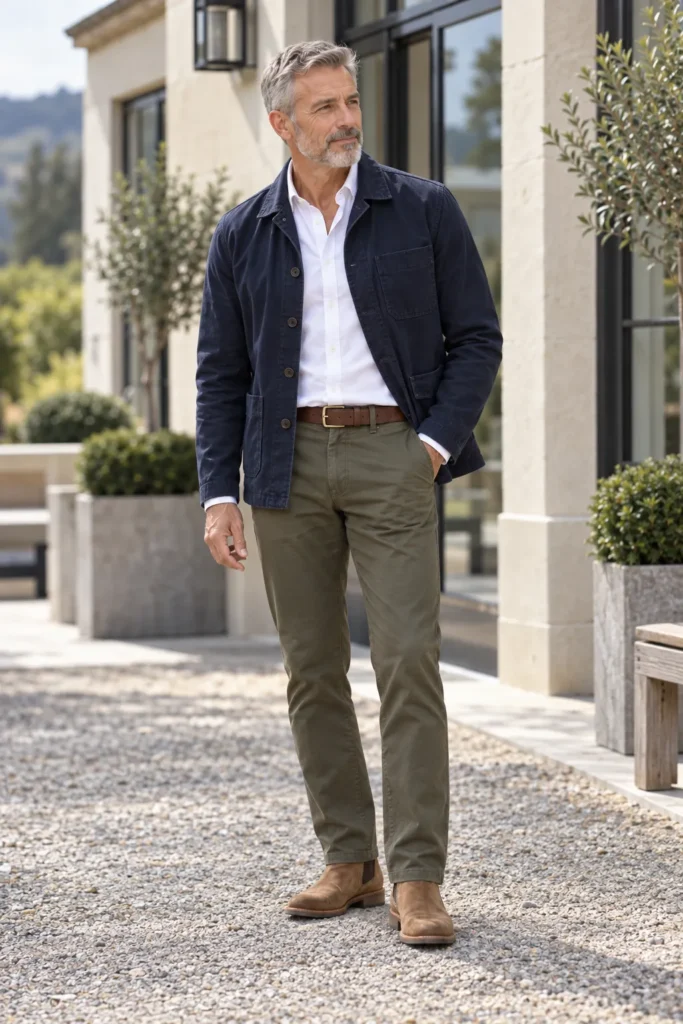
Check the fit before adding more clothing. A jacket should sit flat across your shoulders, while the sleeves should finish near your wrist bone. Jeans and chinos should follow your legs without pulling across the thighs.
For a rugged look, avoid going too loose. Oversized jackets and wide trousers can hide your shape and make several layers look bulky. A clean fit gives rugged fabrics a sharper appearance and works well for men over 50.
Fit Check Before You Leave
The jacket seam should sit close to your natural shoulder.
Aim for the wrist bone without covering your hands.
The shirt or jacket should not pull across your middle.
Keep the legs clean without large folds or excess fabric.
Move your arms, sit down, and walk a few steps. If the jacket pulls across your back or the trousers pinch when you sit, try a different size or cut.
7. Add Leather Accessories With Restraint
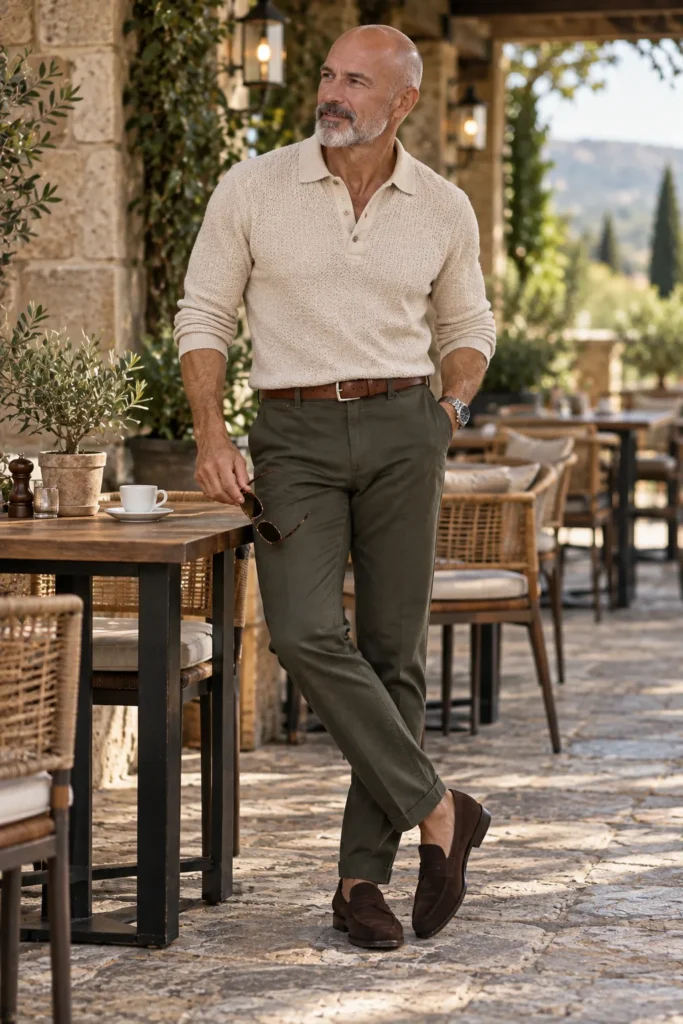
Choose one or two accessories that support the outfit instead of adding every rugged detail you own. A brown leather belt and a simple watch are enough for most looks.
A leather bracelet or compact leather bag can work if the rest of the outfit stays quiet.
Keep the accessories close in color to your shoes. A brown belt with brown boots creates a clean connection. Avoid oversized buckles, large logos, and too many bracelets. The goal is a mature rugged look that feels natural.
Accessory Formula
Match it with your main shoe color.
Choose leather or a simple metal band.
Add a bag or bracelet only if needed.
8. Finish With One Seasonal Layer
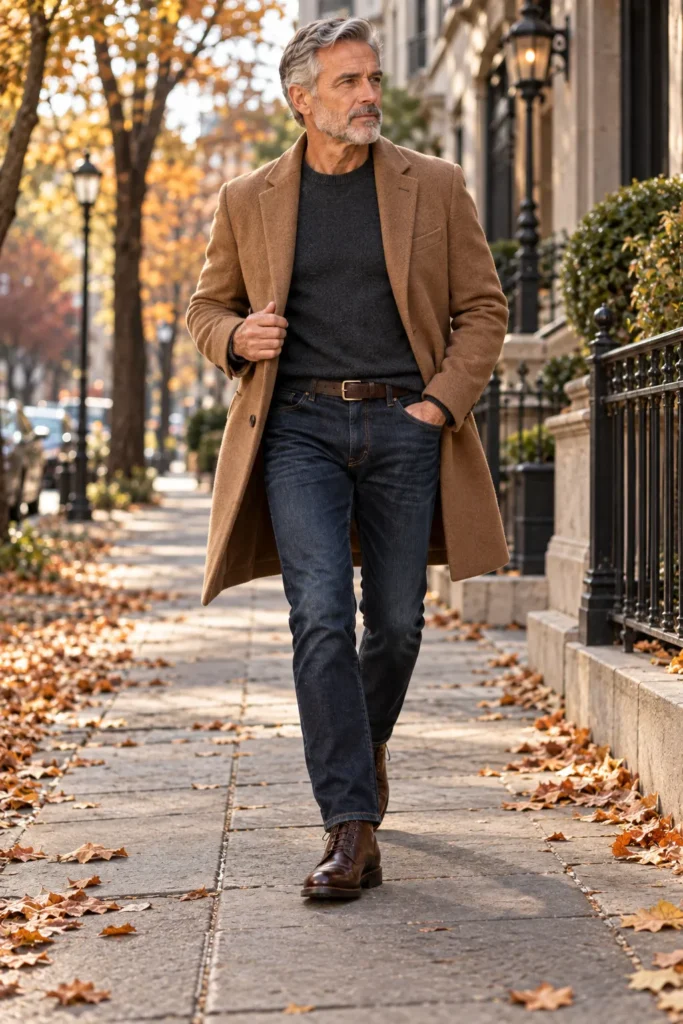
Choose the final layer based on the weather instead of adding clothing for appearance alone. For cooler days, use a wool overshirt, quilted jacket, field jacket, or textured knit. In mild weather, a cotton overshirt or lightweight chore jacket can finish the outfit.
Keep the seasonal layer close to the colors already in your outfit. A tan jacket works well with navy and cream, while an olive jacket pairs nicely with denim and brown footwear.
Leave enough room for movement so the extra layer does not make your outfit look bulky.
Seasonal Layer Guide
Cotton overshirt or lightweight chore jacket.
Field jacket, denim jacket, or quilted jacket.
Wool coat or heavier insulated outer layer.
9. Check the Outfit Before You Leave

Stand in front of a mirror and look at the full outfit from head to toe. Check the fit, color balance, footwear, and number of rugged pieces. If three or four items are competing for attention, remove one.
Look at the outfit from the side as well. This helps you spot bulky jackets, long shirts, or trousers that bunch around the shoes. Take one quick photo if you are unsure. A photo often shows balance problems that are easy to miss in the mirror.
Final Outfit Checklist
Before vs. After
Before
- Too many rugged pieces
- Loose or bulky fit
- Too many dark colors
- Worn-out footwear
- Too many accessories
After
- One strong rugged layer
- Clean, comfortable fit
- Balanced light and dark shades
- Well-kept footwear
- Two or three useful details
Fix Common Rugged Outfit Problems
A rugged outfit can lose its clean look if one part feels too heavy, loose, dark, or worn. Use the table below to spot the problem and make a quick adjustment before you leave.
Rugged Outfit Troubleshooting
| Problem | Likely Cause | Quick Fix |
|---|---|---|
| The outfit looks too bulky | Too many heavy layers | Remove one jacket, overshirt, or thick layer. |
| The outfit looks too dark | Most pieces are black, navy, or dark brown | Add a cream, white, tan, or medium-blue piece. |
| The outfit looks too young | Heavy distressing or oversized details | Choose cleaner denim and a neat jacket. |
| The outfit feels messy | Loose fit or worn-out footwear | Check the shoulders, waist, trouser length, and shoes. |
| The outfit feels like a costume | Too many rugged details at once | Keep one strong rugged piece and make the rest clean. |
Answer Common Questions
These questions cover the small choices that often make a rugged outfit work better for men over 50.
Can I wear rugged outfits with jeans?
Yes. Dark or medium-wash jeans are a strong base. Pair them with a plain henley, Oxford shirt, or knit shirt. Add one rugged layer, such as a field jacket or denim jacket.
What colors work best for rugged outfits?
Start with navy, olive, tan, cream, white, charcoal, brown, and medium blue. A simple formula is one dark color, one light color, and one earthy accent.
Do rugged outfits have to include boots?
No. Leather or suede boots work well, but clean suede shoes, casual leather shoes, or other neat footwear can also fit the style. Keep the shoes in good condition.
How many rugged pieces should I wear at once?
Start with one strong rugged piece. For example, wear a field jacket with a clean shirt, straight-leg jeans, and neat boots. Add another rugged detail only if the outfit still looks balanced.
Use the Quick Reference Card
Use this checklist when you want to build a rugged outfit without overthinking each piece.
Rugged Outfit Quick Reference
Choose a plain shirt, henley, Oxford shirt, or knit shirt.
Look for denim, suede, corduroy, flannel, canvas, or textured knitwear.
Try a field jacket, chore jacket, denim jacket, or suede jacket.
Use one dark shade, one light shade, and one earthy accent.
Choose clean leather boots, suede boots, or neat casual shoes.
Make sure the shoulders, sleeves, waist, and trouser length sit well.
A leather belt and simple watch are enough for most outfits.
Use lighter layers in mild weather and thicker outerwear in cold weather.
Look for bulk, color balance, fit, worn footwear, and extra accessories.
Clean Base + One Rugged Layer + Good Fit + Clean Footwear
Build Rugged Masculine Outfits for Men Over 50 With Confidence
Rugged style does not need a lot of heavy pieces. Start with clean basics, add texture, and choose one strong layer.
Focus on fit, color balance, good footwear, and a few useful accessories. These small choices keep the outfit masculine without making it look forced.
Now you have a simple system for creating rugged outfits for different seasons and occasions. Save this guide on Pinterest so you can use the outfit formula when you need a quick style idea.