
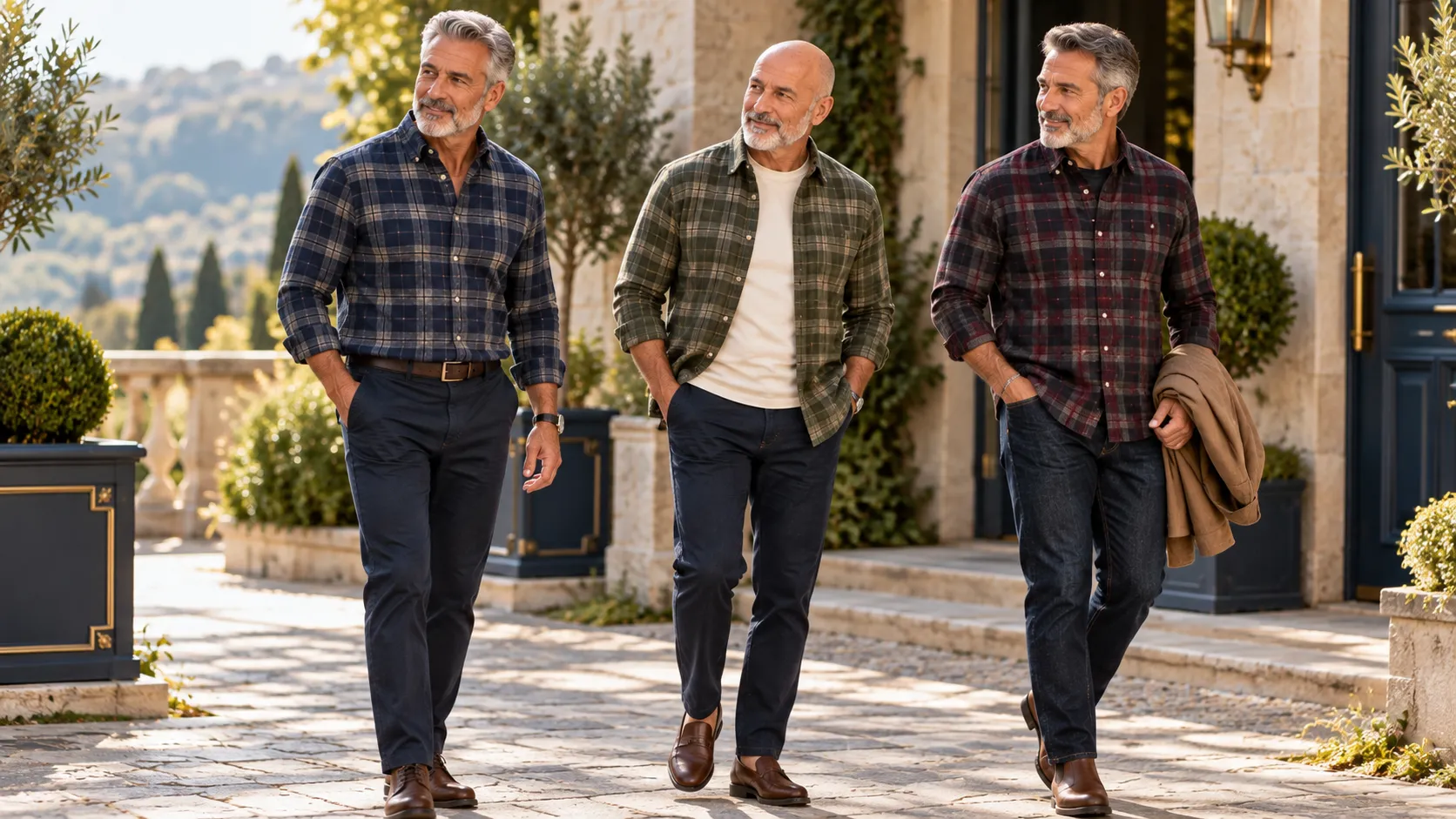
A good flannel shirt should feel comfortable, fit your body well, and work with clothes you already own. After 50, the goal is not to find the thickest plaid shirt on the rack. It is to find one with the right shape, fabric, weight, and color for your needs.
I have found that many flannel shirts look good on the hanger but feel too loose, too heavy, or too short once you put them on. A few small checks can prevent that mistake before you buy.
The shoulder fit matters more than the size printed on the tag. Fabric weight also matters because a thick winter flannel can feel uncomfortable in mild weather.
This guide focuses on those buying details. You will learn what to check before buying, which fabrics work for different seasons, and how to pick a shirt that feels natural in your wardrobe.
The goal is a flannel shirt you can wear often, not one that stays at the back of the closet.
What You Need
At a Glance
- Check the shoulder seams before judging the fit
- Choose a fabric weight for your climate
- Look for soft fabric without excess bulk
- Pick a collar that suits your wardrobe
- Choose a pattern with a balanced scale
- Select colors that work with your clothes
- Check the shirt length before buying
- Inspect the cuffs, buttons, and stitching
- Match the shirt to how you plan to wear it
- Build your first flannel around three reliable pieces
1. Check the shoulder seams before judging the fit
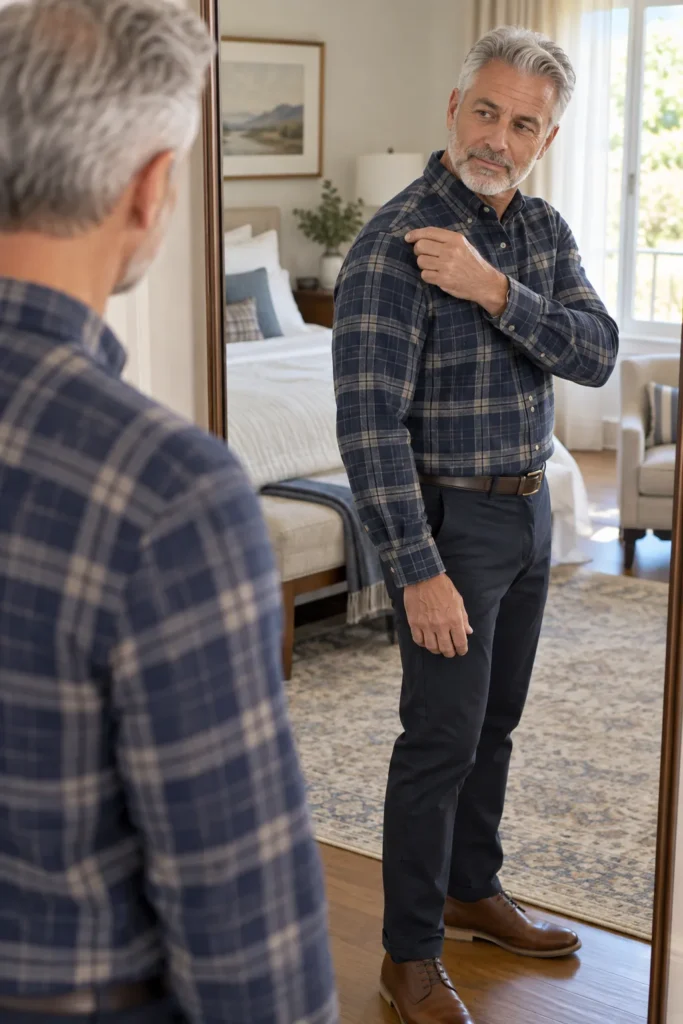
The shoulder seam should sit close to the point where your shoulder naturally ends. If it falls far down your upper arm, the shirt is likely too large, even if the chest feels comfortable.
Stand straight in front of a mirror with your arms relaxed. Check both shoulders, then raise your arms once. Look for these three things:
- The shoulder seam sits near the edge of your shoulder.
- The upper back has enough room for movement.
- The fabric does not pull sharply across your shoulders.
This check matters because shoulder fit is difficult to fix with a different styling choice.
2. Choose a fabric weight for your climate
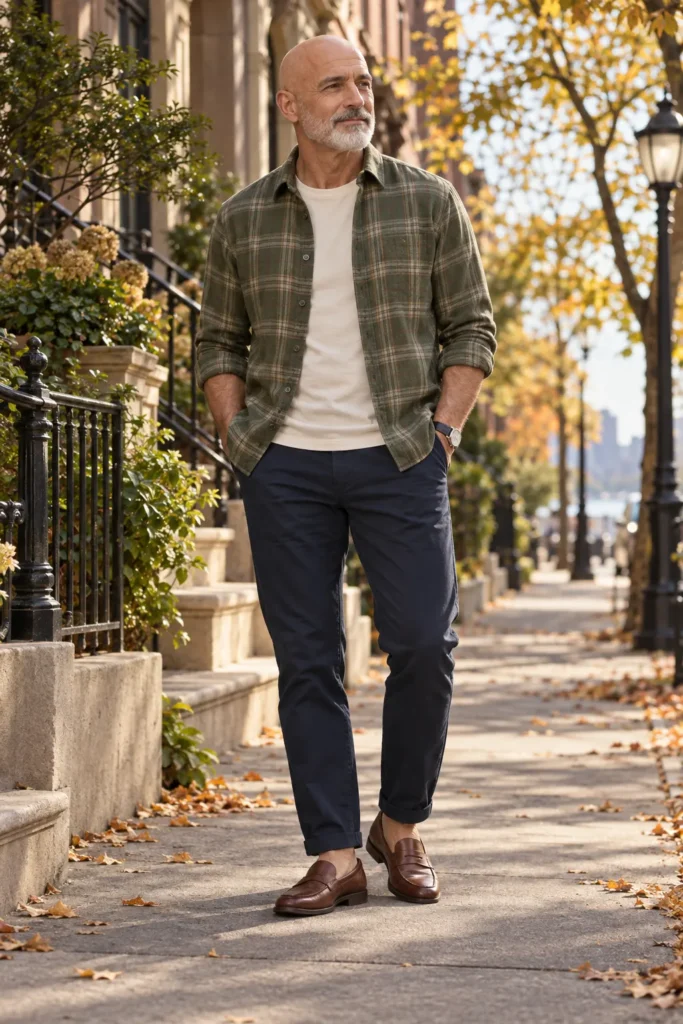
Flannel comes in different weights, and the right choice depends on where and when you plan to wear it. A light flannel can work well in mild weather, while a heavier version gives more warmth in cold months.
Use these basic points when comparing shirts:
- Lightweight: Good for mild weather and indoor wear.
- Midweight: A useful choice for fall and cool days.
- Heavyweight: Better for cold weather and outdoor use.
If you already own a warm jacket, a midweight shirt may give you more options.
Hold the shirt up and check how much it weighs before trying it on. If the fabric feels stiff and heavy, think about how comfortable it will be after several hours of wear.
3. Look for soft fabric without excess bulk
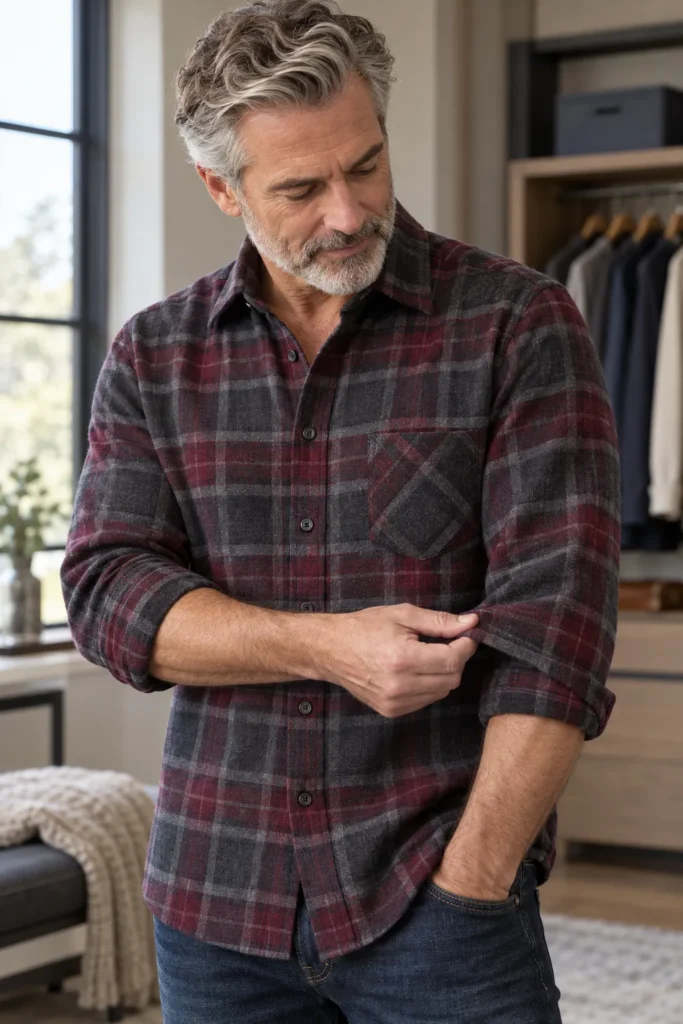
Run your hand across the inside and outside of the shirt. Good flannel should feel soft enough for regular wear without feeling so thick that it restricts movement.
Pay attention to these areas:
- Inside surface, where rough fabric can cause discomfort.
- Under the arms, where excess fabric can feel bulky.
- Elbows, where stiff material can limit movement.
- Back panel, where thick fabric can add extra volume.
A shirt can look good but become uncomfortable if the fabric feels rough. Check how the material folds when you move your arms. You want enough room to move without the shirt feeling heavy or stiff.
Do not judge flannel by thickness alone. A very heavy shirt is not automatically better. If you cannot move your arms freely in the fitting room, choose a lighter fabric.
4. Pick a collar that suits your wardrobe
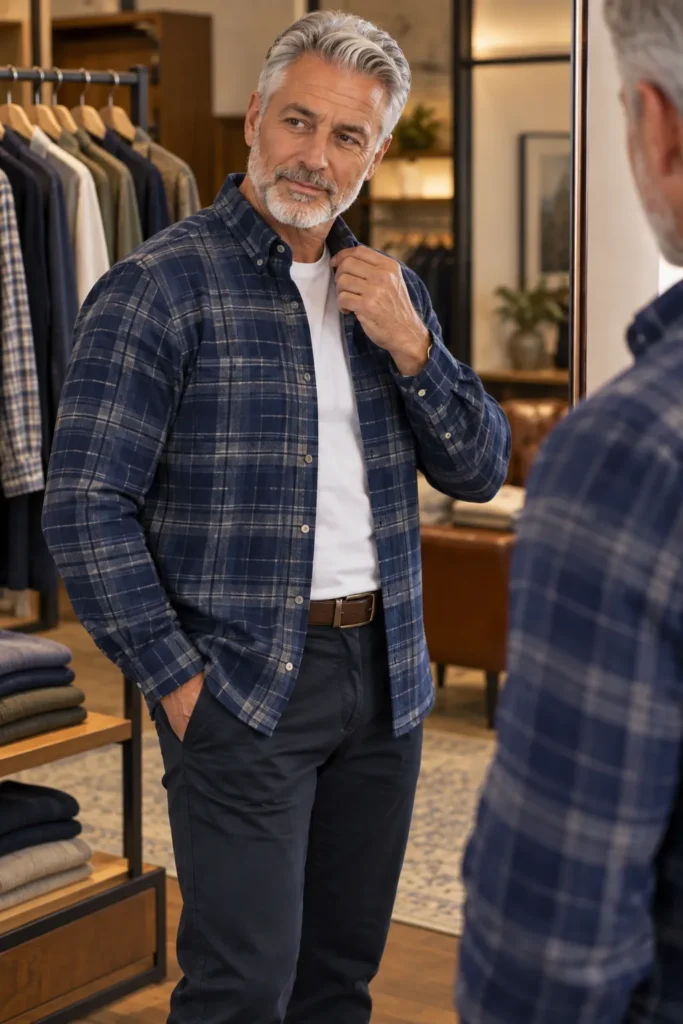
The collar changes how the shirt looks around your face and neck. It also affects how well the flannel works with a jacket, sweater, or plain T-shirt.
Look for a collar that stays in place without feeling stiff. Common choices include:
- Button-down collar: A neat choice for smart-casual outfits.
- Spread collar: Gives the shirt a cleaner, wider opening.
- Classic point collar: Works well with simple everyday clothes.
Try the shirt with the type of layer you normally wear. If the collar bunches under a jacket, try another shape.
Choose the collar based on how you dress
Good for neat casual outfits and layered looks.
Works well when you want a wider, cleaner neckline.
A simple option for everyday shirts and plain layers.
5. Choose a pattern with a balanced scale
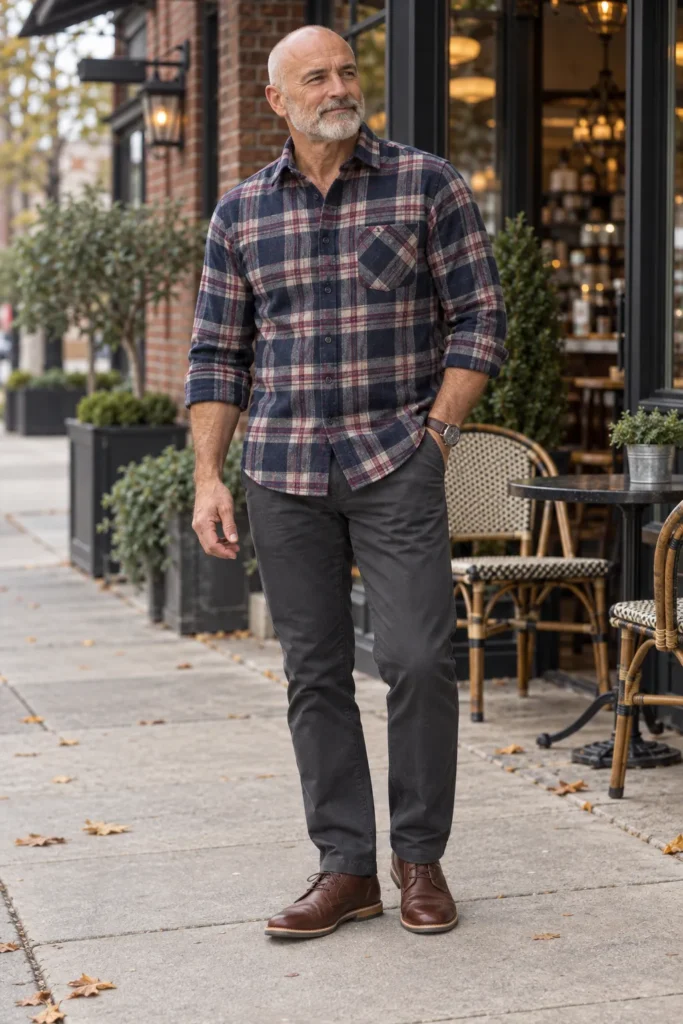
Large checks can make a shirt look more casual, while smaller patterns can give it a cleaner appearance. The goal is to choose a pattern that fits your build and the rest of your wardrobe.
Stand a few feet away from a mirror and check the overall pattern rather than looking at one section. Keep these points in mind:
- Small checks: Give a quieter appearance.
- Medium plaids: Work well with plain pants.
- Large checks: Draw more attention to the shirt.
If you already own several patterned jackets or sweaters, a calmer flannel pattern may give you more outfit options.
Flannel Pattern Guide
Quiet and easy to pair
Balanced everyday choice
More visual attention
6. Select colors that work with your clothes
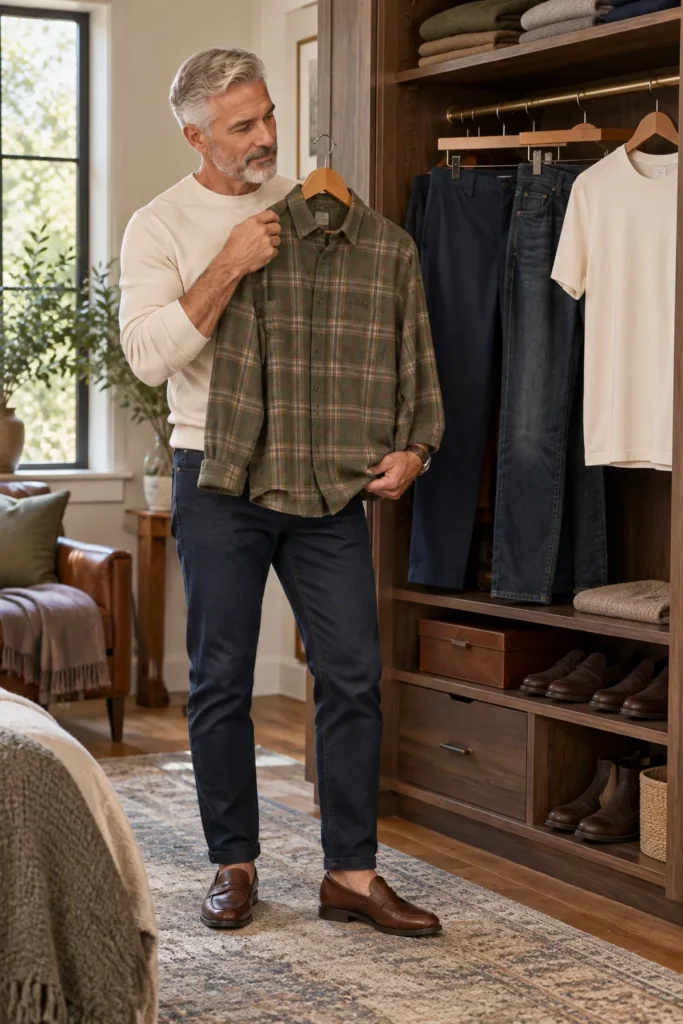
A flannel shirt becomes more useful when its colors work with several pieces you already own. You do not need a bright plaid to make the shirt interesting.
Before buying, check whether the main color works with your usual pants and shoes. Good starting options include:
- Navy and gray: Works with cool, muted outfits.
- Olive and brown: Fits earthy color combinations.
- Burgundy and navy: Adds deeper seasonal color.
- Cream and charcoal: Creates a softer neutral look.
Hold the shirt beside your usual jeans or chinos if you are shopping in person. This quick check can prevent buying a color that looks good alone but rarely works with your clothes.
Four useful flannel color groups
7. Check the shirt length before buying
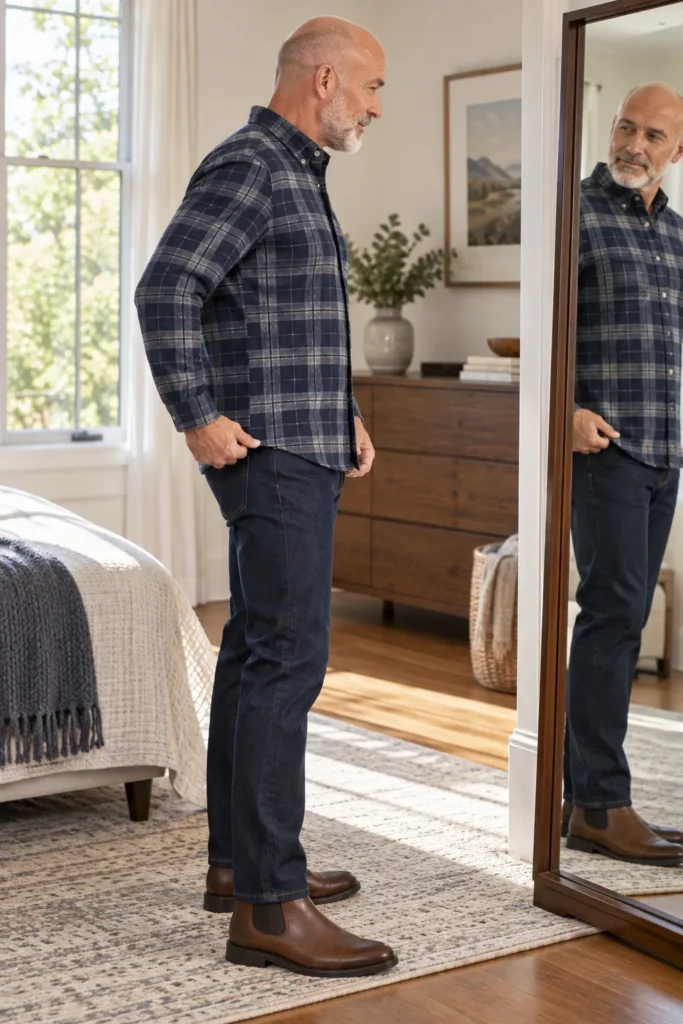
The right length depends on how you plan to wear the flannel. A shirt meant to stay untucked should usually end around the lower part of your hip rather than hanging far below it.
Try the shirt with the type of pants you wear most often. Check these points:
- The hem should cover your waistband.
- The shirt should not hang far below your hips.
- The front and back should sit evenly.
- You should be able to sit without the hem pulling hard.
Raise your arms and sit down once. If the shirt rides up too much or feels tight across your waist, try another size or cut.
Check the hem in three positions
Hem sits around the lower hip.
Shirt does not ride up too far.
Fabric stays comfortable around the waist.
8. Inspect the cuffs, buttons, and stitching
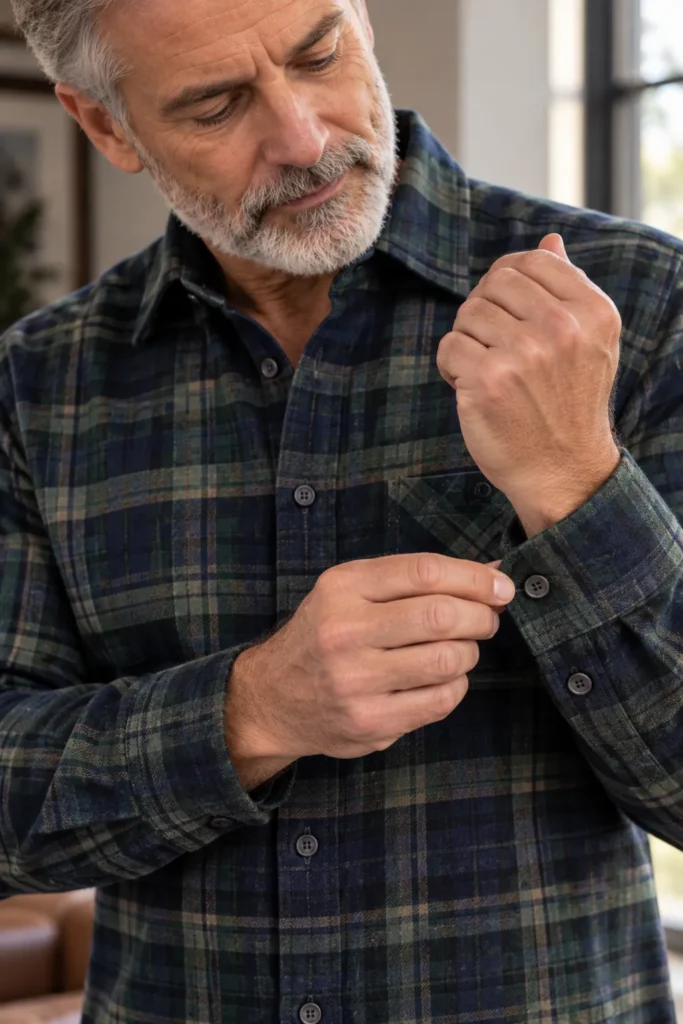
Small construction details can tell you a lot about how a shirt is made. You do not need to study every stitch. Spend a minute checking the areas that receive the most use.
Look closely at:
- Cuffs: They should close without squeezing your wrist.
- Buttons: They should sit firmly without loose threads.
- Stitching: Seams should look even and secure.
- Pocket: The edges should lie flat against the shirt.
Open and close the cuffs once. Check two or three buttons as well. If loose threads are already visible on a new shirt, consider another option.
60-Second Quality Check
9. Match the shirt to how you plan to wear it
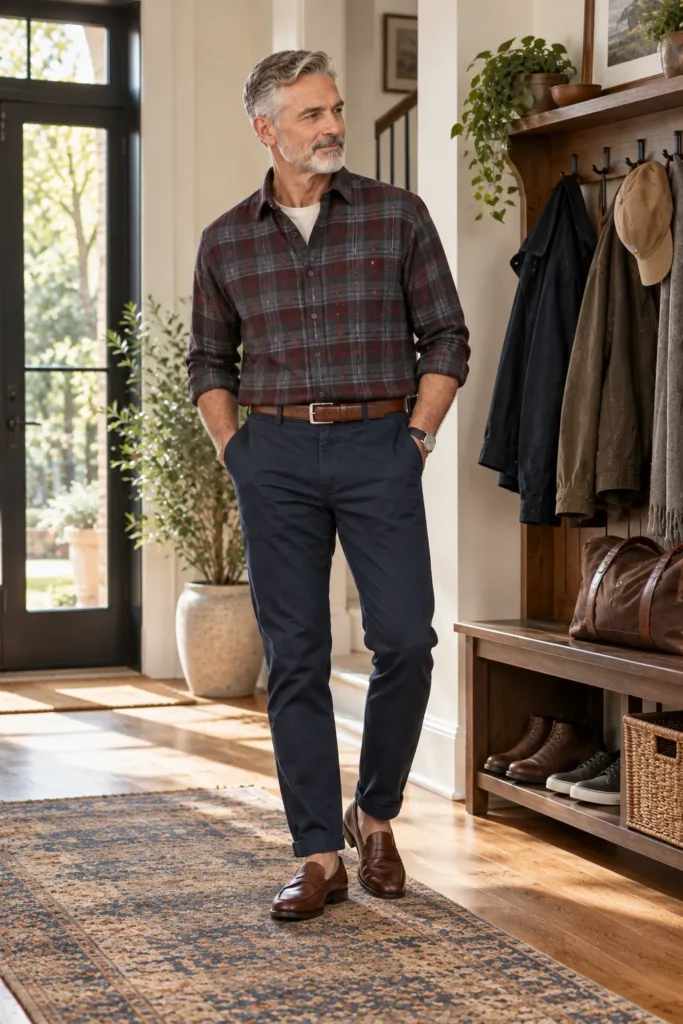
Think about where the shirt will actually be used before choosing the final one. A flannel for weekend errands does not need the same fabric or finish as one you plan to wear with chinos and a jacket.
Use your normal routine as the guide:
- Weekend wear: Choose a soft, relaxed flannel.
- Travel: Pick a lighter shirt that packs without taking up much space.
- Smart-casual use: Look for a cleaner pattern and moderate fabric weight.
- Cold outdoor use: Choose a heavier fabric with enough room for a base layer.
This approach helps you buy a shirt that earns regular wear. A good flannel should fit into your existing clothes rather than forcing you to build a whole new wardrobe around it.
Choose by Use
Soft fabric with a relaxed but neat fit.
Lightweight fabric that packs well.
Moderate weight with a clean pattern.
Heavier fabric with room for a base layer.
Fix Common Flannel Shirt Problems
A flannel can look good on the rack and still feel wrong once you wear it. These quick fixes can help you spot the problem before you buy.
Answer Common Flannel Questions
Should flannel shirts be loose after 50?
They can have some room, but excessive looseness can make the shirt look larger than it is. Check the shoulders first, then make sure the chest and waist allow comfortable movement.
Is thick flannel better for older men?
Thickness does not decide quality. A heavy shirt can be useful in cold weather, but a lighter fabric may feel better for everyday use or mild weather.
What flannel colors are easiest to wear?
Navy, gray, olive, brown, cream, and burgundy are useful starting points. Pick a color that works with pants and shoes you already own.
Should flannel shirts be tucked in?
That depends on the shirt length and the outfit. A shorter shirt made for untucked wear can sit naturally over jeans or chinos. A longer shirt can work better when tucked.
How should a flannel shirt fit around the stomach?
The fabric should skim the body without pulling tightly. Leave enough room to sit, bend, and move your arms without the buttons stretching across the stomach.
Quick Reference Card: Choose the Right Flannel Faster
Flannel Shirt Buying Checklist
Seams should sit close to the shoulder edge.
Choose a weight that suits your climate.
Look for soft fabric without excess bulk.
Pick a collar that fits your usual outfits.
Use small or medium checks for easier styling.
Choose shades that already work with your wardrobe.
Check the hem while standing and sitting.
Inspect cuffs, buttons, stitching, and pockets.
Buy for the way you actually dress.
Start with three reliable wardrobe pieces.
Conclusion
Finding the Best Flannel Shirts for Men Over 50 starts with fit and comfort, not a loud pattern or heavy fabric. Check the shoulders, choose the right weight, and make sure the shirt works with clothes you already own.
A good flannel should feel comfortable when you stand, sit, and move. Take a few extra seconds to check the details before buying.
Save this guide on Pinterest so you can use the checklist the next time you shop for a flannel shirt.