

Buying clothes online can save time, but getting the right fit is not always easy. A shirt may look great in the photos but feel too tight across your chest.
Trousers may fit your waist but be too long in the legs. These problems are common, especially when every brand uses a different size chart.
The good news is that you can avoid many of these mistakes with a few simple checks. In this guide, you will learn how to measure your body, read size charts, check fabric details, and spot useful clues in customer reviews.
You will also learn how to choose cuts that feel comfortable and look good.
You do not need expensive tools or a tailor to get started. A soft measuring tape, a shirt that already fits you well, and your phone or computer are enough. Set aside about 30–45 minutes to follow these eight steps at your own pace.
The method is simple: compare real measurements instead of trusting size labels alone. This helps you choose clothes that fit your body, suit your style, and are less likely to need a return.
Time and Difficulty
What You Need
For chest, waist, and leg measurements.
Use it to compare shirt sizes.
Check waist, rise, and leg length.
Open size charts and product pages.
Save your measurements for later.
Helps you check the fit of your current clothes.
At a Glance
Step 1: Measure Your Body Before Choosing a Size
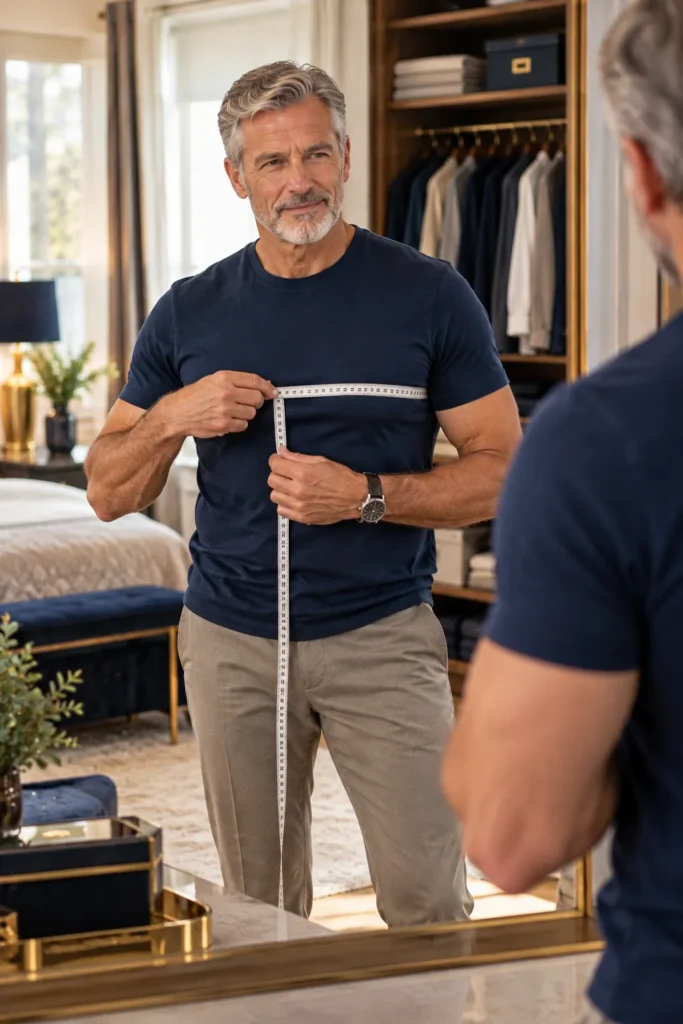
A size label such as L or XL does not mean the same thing across every brand. Your measurements give you a better starting point, especially if your chest, waist, and shoulders need different sizes.
Use a soft measuring tape and wear a thin shirt or light clothing. Record these measurements in inches:
- Chest: Wrap the tape around the fullest part of your chest.
- Waist: Measure around the area where your trousers usually sit.
- Neck: Measure around the base of your neck for dress shirts.
- Sleeve: Measure from your shoulder point to your wrist.
- Inside leg: Measure from the top of your inner thigh to your ankle.
Keep the tape close to your body without pulling it tight. Write each number in your phone so you can use it again.
Step 2: Compare Your Measurements With the Size Chart
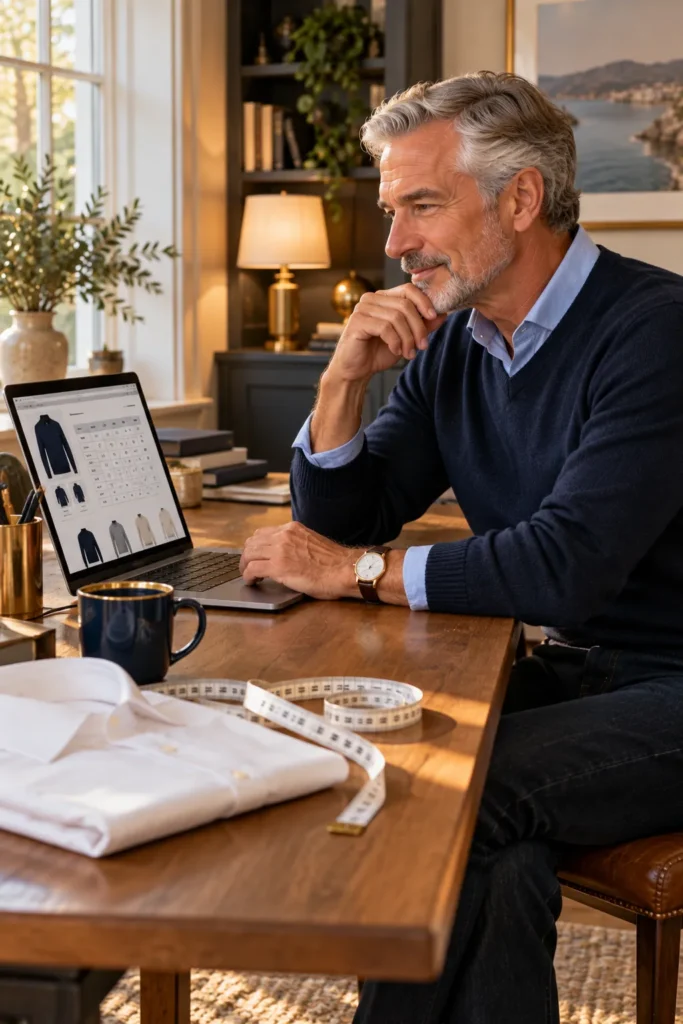
Every product page should have a size chart or a link to one. Open it before picking your size, even if you have bought from the brand before.
Look for the chart made for that exact item because shirts, jackets, and trousers can have different sizing.
Check whether the chart lists body measurements or garment measurements. Body measurements describe the person the item is meant to fit.
Garment measurements describe the clothing itself, which may include extra room for movement.
If your chest fits one size but your waist fits another, focus on the area that needs the most room. For a jacket, that may be your chest and shoulders.
For trousers, check the waist and seat. If the chart remains unclear, contact the seller before paying.
Step 3: Check the Model’s Height and Clothing Size
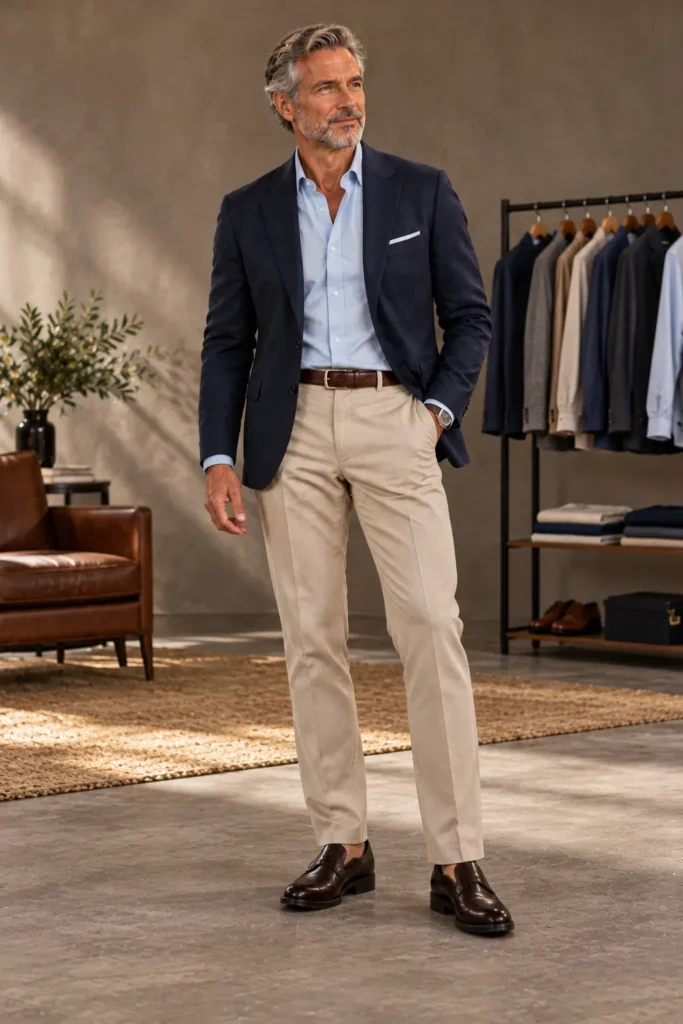
Product photos can help you judge the length and shape of an outfit, but the model may have a different build from yours. Look below the photos or in the product details for the model’s height and the size he is wearing.
For example, if a model is 6 feet 2 inches tall and wears a medium shirt, that does not mean a medium will fit you the same way. Your chest, shoulders, arms, and torso may have different proportions.
Check several photos of the same item. A front view helps you judge the width, while a side view can show how the shirt or jacket sits around the waist.
If no model details are listed, use the size chart and garment measurements as your main guide.
Step 4: Read Fabric Details Before You Buy
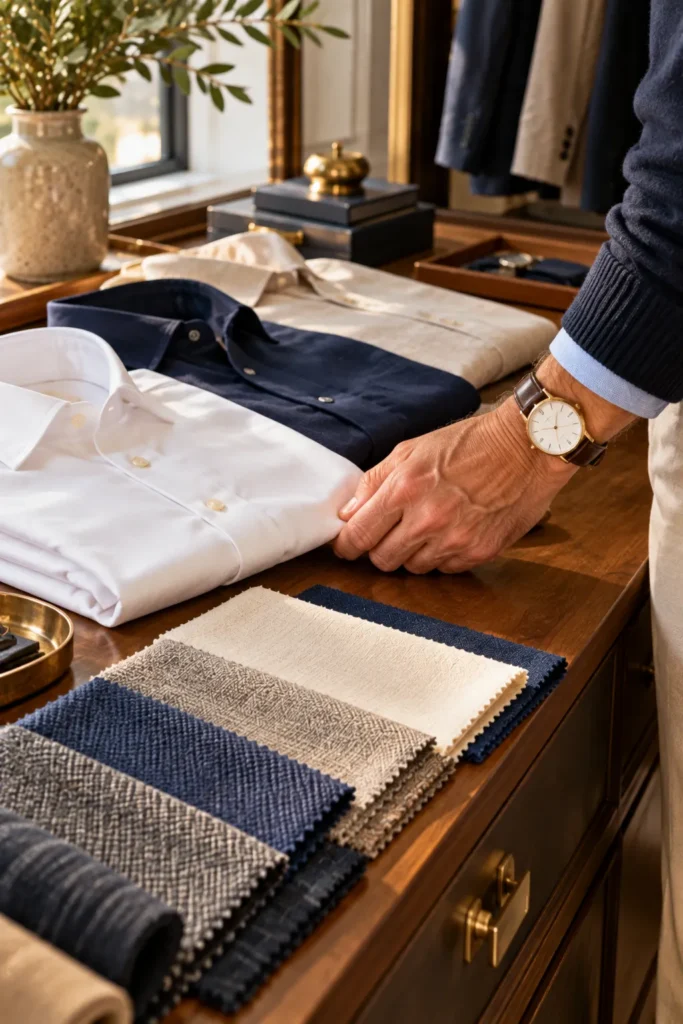
The fabric affects how a shirt feels, how it hangs on your body, and how much care it needs. Check the fabric section on the product page before placing an order.
A close-fitting shirt with little stretch may feel tight across your chest, while a fabric with some stretch can allow more movement.
Look for these common fabric types:
- Cotton: Soft and breathable, but some items may shrink after washing.
- Cotton with elastane: Offers a little stretch for added comfort.
- Wool: A good choice for cool weather and dressier outfits.
- Linen: Light and airy, though it wrinkles more easily.
- Polyester blends: Often hold their shape and dry faster.
Look for a small amount of elastane or another stretch fiber.
Check cotton or linen items for breathability.
Look for fabrics labeled wrinkle-resistant or easy-care.
Read the care label and follow the washing instructions.
Step 5: Study Customer Reviews for Fit Clues
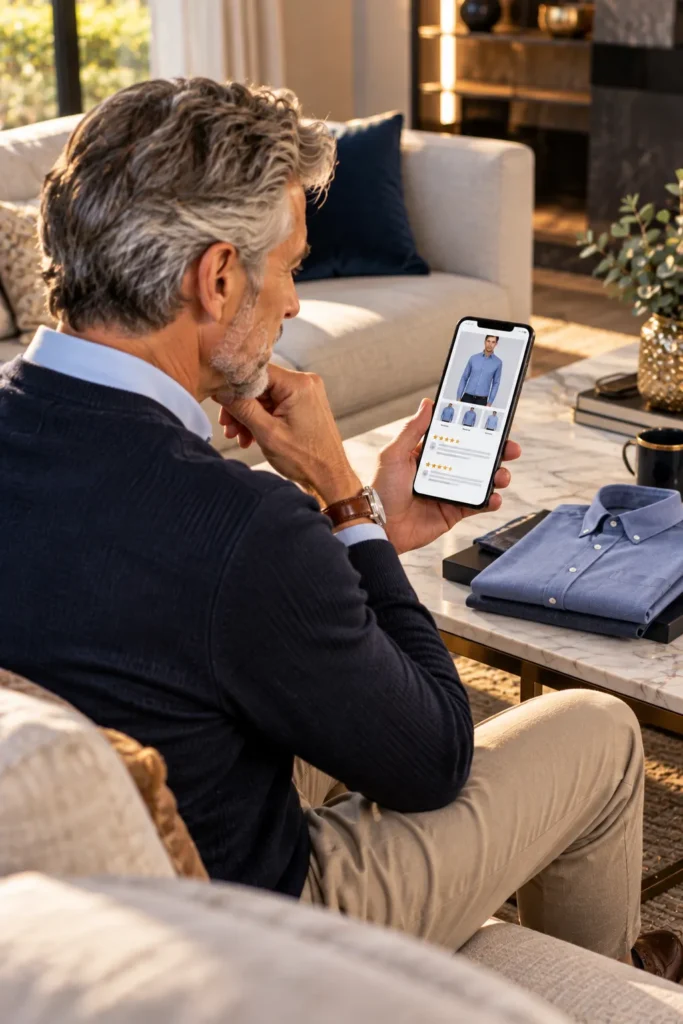
Customer reviews can tell you things that product photos cannot. Look for comments about the fit around the chest, waist, shoulders, and thighs.
Reviews from people with a similar height or build may be more useful than general comments such as great shirt or good quality.
Use the review filters, if available, to find feedback about size. Pay attention to repeated comments. If several buyers say the sleeves run short or the waist feels tight, take that as a warning.
Step 6: Check the Return Policy Before Ordering

Even after checking measurements, you may receive an item that does not fit as expected. A clear return policy gives you a way to deal with that problem. Read the policy before paying, especially if you are buying from a new store.
Check these details:
- Return window: How many days do you have to send the item back?
- Return costs: Does the seller pay for return shipping?
- Item condition: Must the tags remain attached?
- Refund method: Will you receive money back or store credit?
- Final-sale items: Can discounted clothing be returned?
Some stores do not accept returns on sale items, altered clothing, or products with removed tags.
Save a screenshot of the return policy and order confirmation. If the fit is wrong, you will have the key details ready.
If you are ordering from another country, check the cost of sending the item back. A low-priced shirt may not be worth returning if international shipping costs more than the shirt itself.
Step 7: Choose Cuts That Suit Your Body Shape

The right cut can make a big difference in how your clothes look and feel. Instead of choosing a size based on age, focus on your body shape and the fit you prefer.
Clothes should allow you to sit, walk, and move your arms without pulling or feeling tight.
Use these tips when shopping for men’s clothing online:
- Broad shoulders: Look for jackets with enough room across the shoulders and chest.
- A fuller waist: Try straight-cut shirts and trousers with a comfortable waist.
- A slim build: Consider slim or regular cuts that follow your shape without hanging loosely.
- Long arms or legs: Check sleeve and inseam measurements before ordering.
- A larger chest: Look for shirts that fit your chest without pulling at the buttons.
Use these suggestions as a starting point. Your measurements and comfort should guide your choice.
A good starting point for everyday shirts, trousers, and jackets.
A closer shape for those who prefer less extra fabric.
Offers more room through the body or legs for added comfort.
Do not assume that every man over 50 needs a loose fit. A well-fitted jacket or a pair of straight-leg trousers can look neat without feeling tight. Check the product’s actual measurements before deciding.
Step 8: Compare Your Best-Fitting Clothes With Online Listings
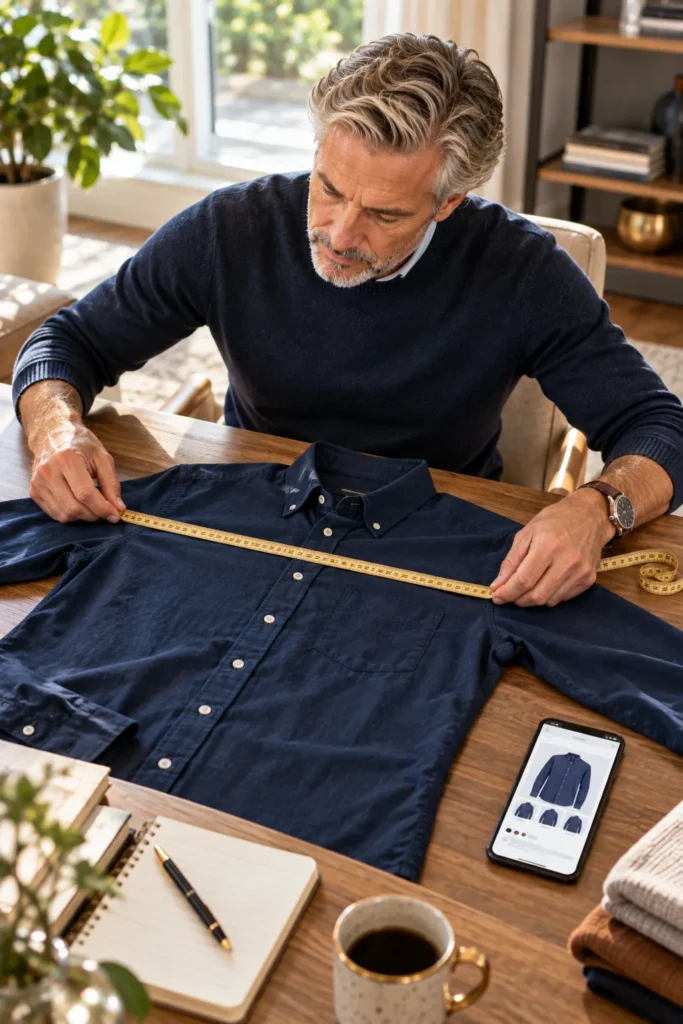
One of the most useful ways to shop online is to compare a new item with clothing you already own. This gives you a real example of the fit you like, rather than relying on a model’s photos.
Lay a clean shirt on a flat surface without stretching it. Measure the chest from one armpit to the other, the shoulder width, and the sleeve length. For trousers, measure the waistband across, the inside leg, and the rise from the crotch to the top of the waistband.
Check whether the seller lists measurements taken in the same way. A flat garment measurement is not the same as a body measurement, so do not compare the two directly. If the listing does not provide enough details, ask the seller before ordering.
Match the listed measurements to your own.
Use a shirt or trousers that fit you well.
Look for signs of shrinkage, tight fits, or short sleeves.
Check the deadline, fees, and refund method.
Troubleshooting Table: Fix Common Online Clothing Fit Problems
Even after checking the size chart, you may still receive clothes that do not fit as expected. Use this table to decide what to check before ordering another size.
Common Mistakes to Avoid
A few small mistakes can lead to poor fit, wasted money, and extra returns. Check these points before you place your next order.
Frequently Asked Questions
No. Choose a size based on your measurements and the brand’s chart. Age alone does not tell you which size will fit.
Check which body area matters most for that item. For jackets, check the chest and shoulders. For trousers, focus on the waist and seat. Read the brand’s sizing advice before choosing.
Measure the inseam of trousers that fit you well. Compare it with the seller’s inseam measurement, making sure both measurements use the same method.
They can help, especially when several buyers report the same fit issue. Use reviews alongside the size chart rather than relying on them alone.
Neither is always better. Regular fit offers more room in many styles, while slim fit has a closer shape. Pick the cut that feels comfortable and suits your build.
Quick Reference Card: Buy Clothes Online That Fit
Save this checklist and use it each time you shop for men’s clothing online.
Conclusion
Buying clothes online gets easier when you know your measurements and check the details before paying. These eight steps can help you find shirts, trousers, and jackets that fit your body and suit your style.
Start by measuring one shirt and one pair of trousers you already like. Save those numbers on your phone so you can use them during your next shopping trip.
If this guide helped, save it to your Pinterest fashion board so you can use the checklist the next time you shop for clothes.