

Your body may not look the same at 50, 60, or 70 as it did at 30. That is normal. The goal is not to hide your body. The goal is to choose clothes that fit the body you have now.
In this guide, you will learn how to dress for your body type after 50 using simple changes to shirts, trousers, jackets, colors, layers, and shoes. You do not need a whole new wardrobe. A few better choices can make your outfits look cleaner and feel more comfortable.
The key is balance. A good outfit should sit well on your shoulders, give your waist enough room, and keep your trousers and shoes in proportion with the rest of your body.
You also want clothes that let you move without pulling, bunching, or hanging too loose.
You can use these eight steps with clothes you already own. Take your time with the fit. Check each piece in a mirror before buying more. By the end, you will have a better way to build outfits that suit your current shape.
What You Need
At a Glance
Identify your current body shape
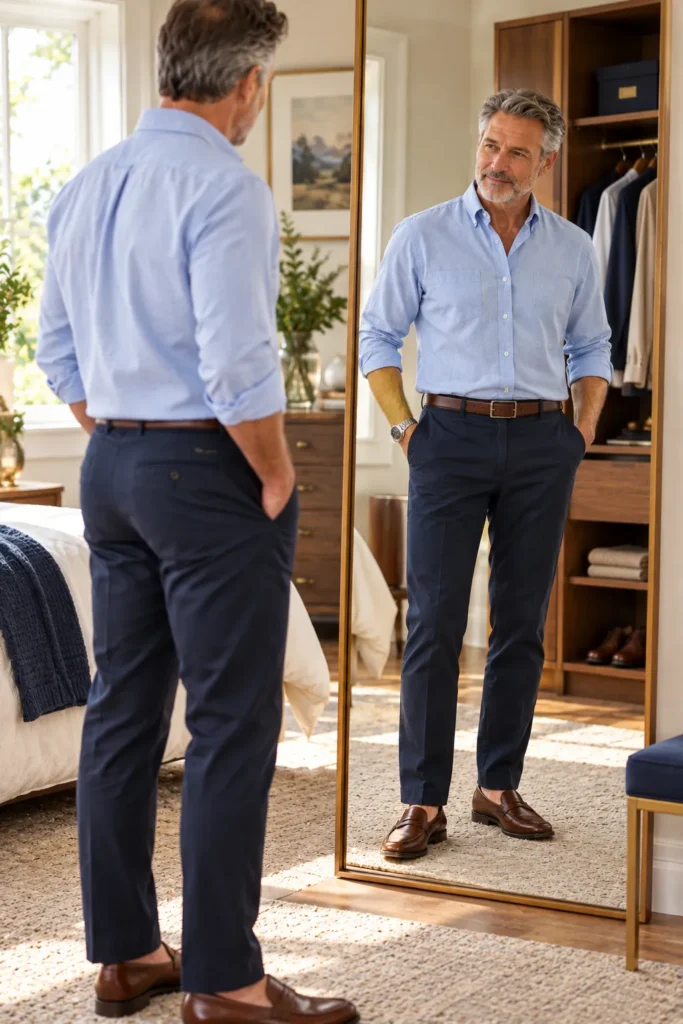
Stand in front of a full-length mirror wearing a thin shirt and trousers that fit you well. Look at your shoulders, chest, waist, and hips as one shape.
You do not need a perfect body-type label. Look for the area that is widest and the area that is narrowest.
Write down what you see: broader shoulders, a fuller waist, a straighter frame, or a wider lower body.
This gives you a starting point for choosing clothes that create a balanced look instead of forcing your body into an old size or style.
Choose shirts that follow your frame
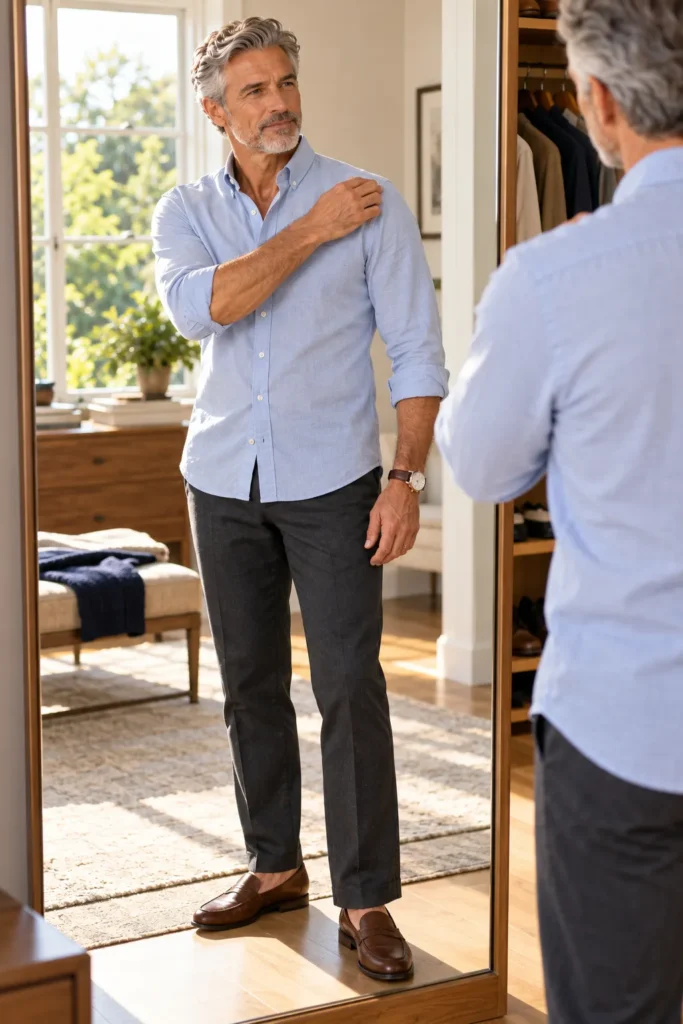
A shirt should follow your body without pulling across the chest or stomach. Check the shoulder seam first. It should sit close to the point where your shoulder naturally ends.
For a fuller middle, choose shirts with a straight or relaxed cut rather than a very tight slim cut. For a straighter frame, a lightly fitted shirt can add shape.
Leave enough room to move your arms, but avoid extra fabric hanging far from your sides.
Pick trousers that balance your shape
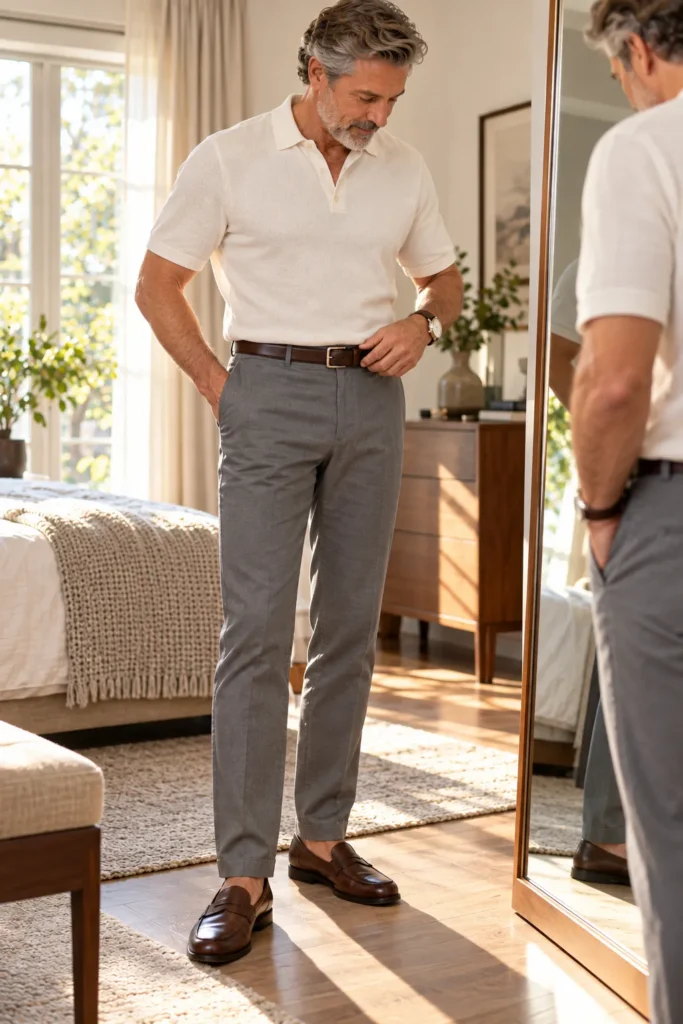
Use the waistband as your first fit check. It should sit securely without digging into your stomach. You should be able to sit down without the waistband feeling tight.
Straight-leg trousers work well as a starting point because they keep a steady line from the hip to the ankle. If your upper body is broad, a slightly fuller trouser can keep the outfit balanced.
If your lower body is fuller, avoid trousers that taper sharply at the ankle.
Use jackets to add clean structure
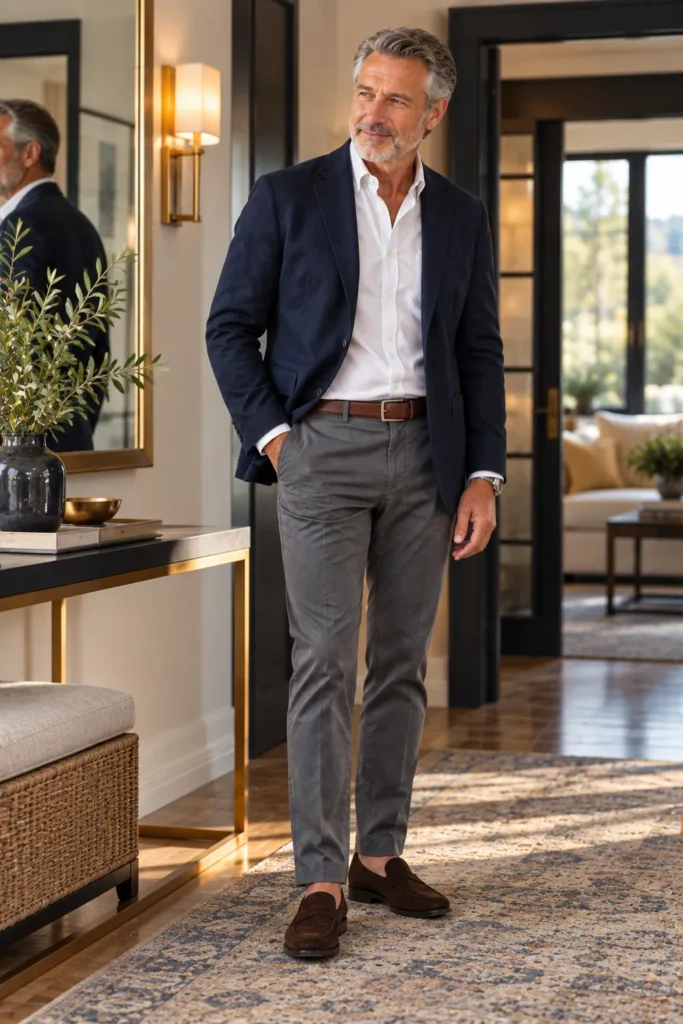
A jacket can change the shape of an outfit without making you look dressed up. Look for a shoulder line that sits in the right place and a jacket that closes without pulling across your stomach.
A two-button jacket worn open can give a longer vertical line. For casual outfits, try a chore jacket, overshirt, or lightweight field jacket. Keep the length around the hip so the jacket does not stop at the widest part of your body.
Dress a fuller midsection with longer layers
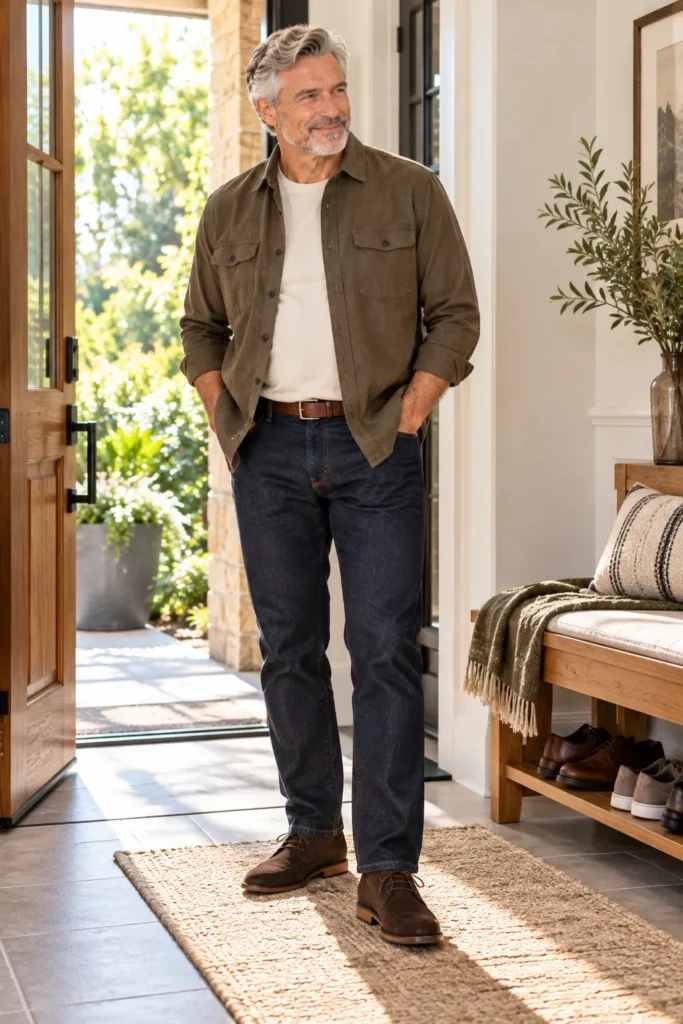
A fuller waist does not mean you need oversized clothes. Extra fabric can make your body look larger and can also make the outfit feel untidy. Instead, use layers that skim the body.
Try an open shirt jacket over a plain T-shirt or a casual blazer over a button-up shirt. Keep the outer layer long enough to cover the waistband area. Leave it open when the shirt underneath fits well, which creates a clean vertical line.
Create balance with color and patterns
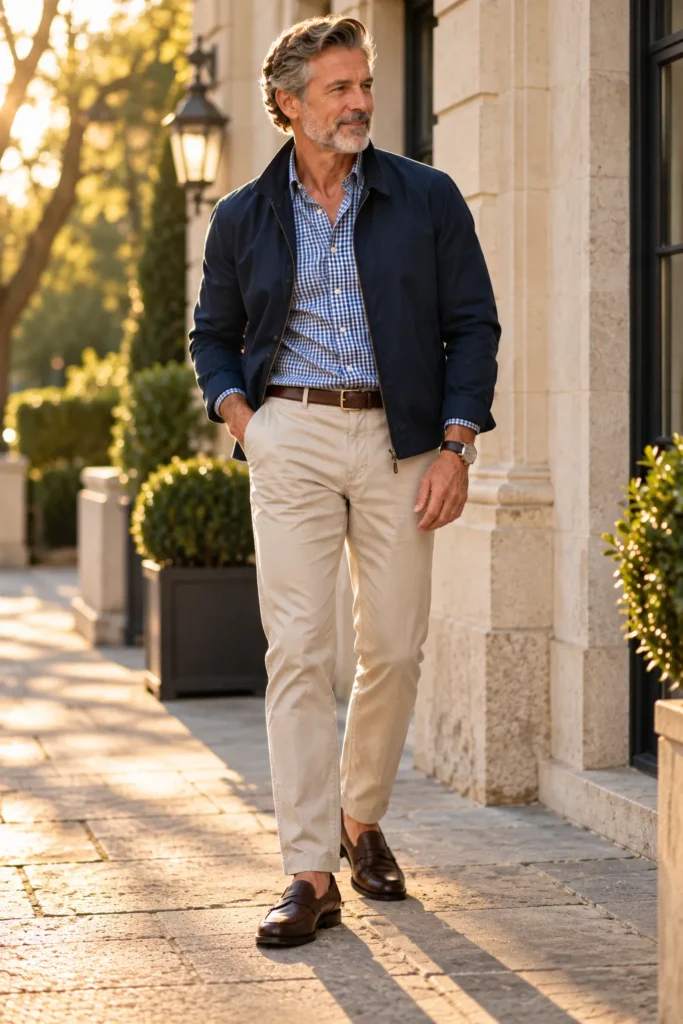
Use color to guide the eye and keep the outfit balanced. Darker trousers with a lighter shirt can give more focus to your upper body. A dark jacket over a lighter shirt can create a clear center line.
Small checks, fine stripes, and quiet patterns are useful choices for everyday outfits.
If you have a fuller middle, avoid very large prints placed across the stomach. Keep patterns neat and let one piece carry most of the visual detail.
Choose shoes that match your proportions
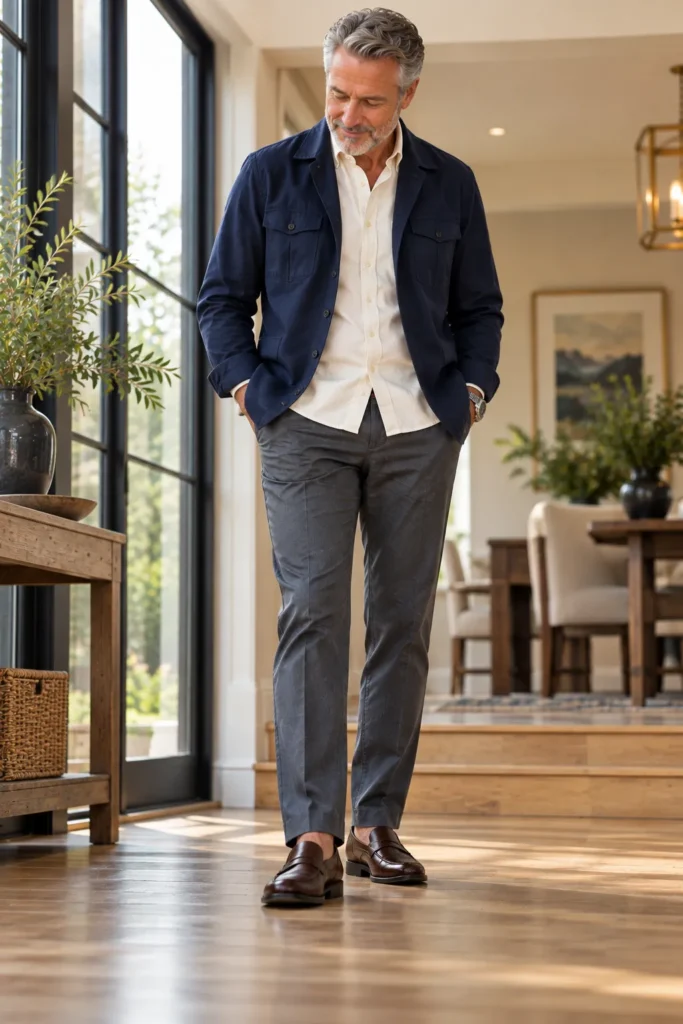
Shoes finish the shape of your outfit. Very small shoes can look out of balance with wider trousers or a larger frame. Very bulky shoes can make slim trousers look heavy.
Start with clean leather sneakers, loafers, desert boots, or simple dress shoes. Match the shoe width to your foot and trouser width. Keep the trouser hem neat, with a small break at the shoe instead of a large pile of fabric.
Check the full outfit before you leave
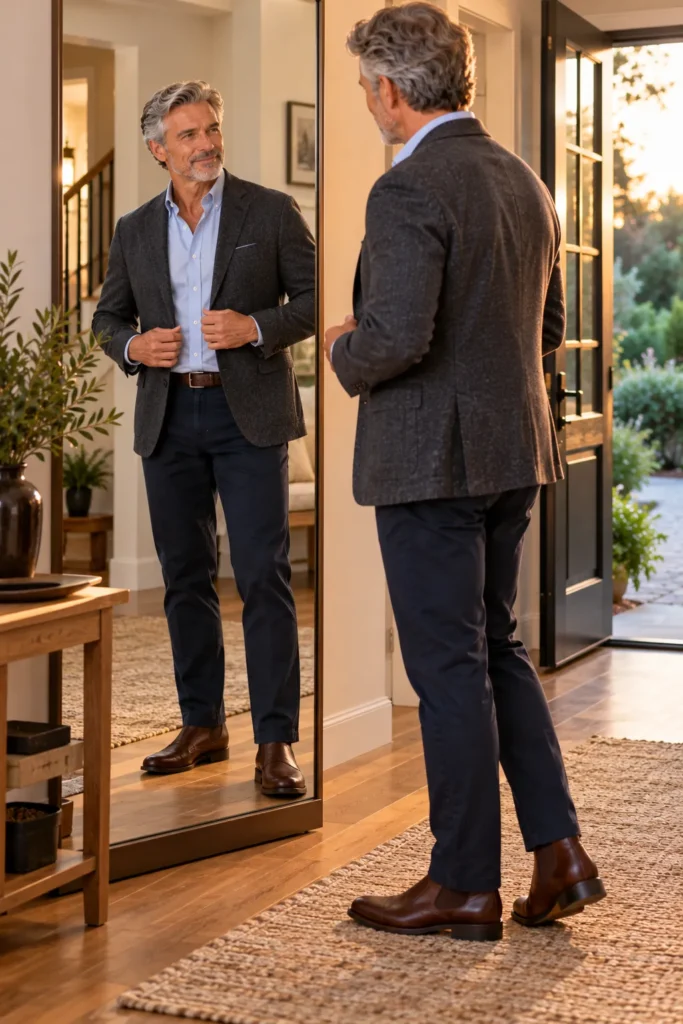
Stand in front of a full-length mirror and check the outfit from the front and side. Look at the shoulder seams, shirt length, waistband, trouser line, and shoe-to-trouser balance.
Take a few steps and sit down. Watch for fabric pulling at the chest, stomach, hips, or thighs. If one area feels tight while another has too much fabric, change that piece rather than sizing up the whole outfit.
Fix a shirt that pulls across the middle
A shirt that pulls at the buttons usually needs a different cut, not a bigger size. Try a regular or relaxed fit with enough room across your chest and waist.
If the shoulders fit well but the waist feels tight, consider having the waist adjusted by a tailor.
Replace trousers that bunch at the ankle
Too much fabric around the shoes can make the whole outfit look heavy. Choose a straight-leg cut and check the hem while wearing the shoes you plan to use.
A small break at the shoe gives a clean line without making the trousers look too short.
Avoid hiding your shape with oversized clothes
Loose clothing does not always make a fuller body look smaller. It can add extra fabric around the chest, waist, and hips.
Choose clothes that skim your body instead. You want room to move without large folds hanging from the sides.
FAQ
What is the best shirt fit after 50?
A regular or lightly fitted shirt is a good starting point. It should follow your chest and shoulders without pulling, while giving your waist enough room to move.
Should men over 50 wear slim-fit clothes?
You can wear a slim fit if it feels comfortable and fits your current shape. Avoid any cut that pulls at the buttons, restricts movement, or creates deep folds.
What trousers work for most body types?
Straight-leg trousers are a useful starting point because they create a steady line from the hip to the ankle. Adjust the rise, waist, and leg width based on your own shape.
Can a jacket make you look slimmer?
A well-fitting jacket can create a cleaner vertical line and give your outfit more structure. The jacket should fit the shoulders and close without pulling across the middle.
Should I wear dark colors if I have a fuller stomach?
Dark colors can create a quieter visual line, but you do not need to wear dark clothes all the time. Fit and proportion usually matter more than color alone.
Dress for Your Body Type After 50
- Identify your current body shape.
- Choose shirts that follow your frame.
- Pick trousers that balance your shape.
- Use jackets to add clean structure.
- Dress a fuller midsection with longer layers.
- Create balance with color and patterns.
- Choose shoes that match your proportions.
- Check the full outfit before you leave.