
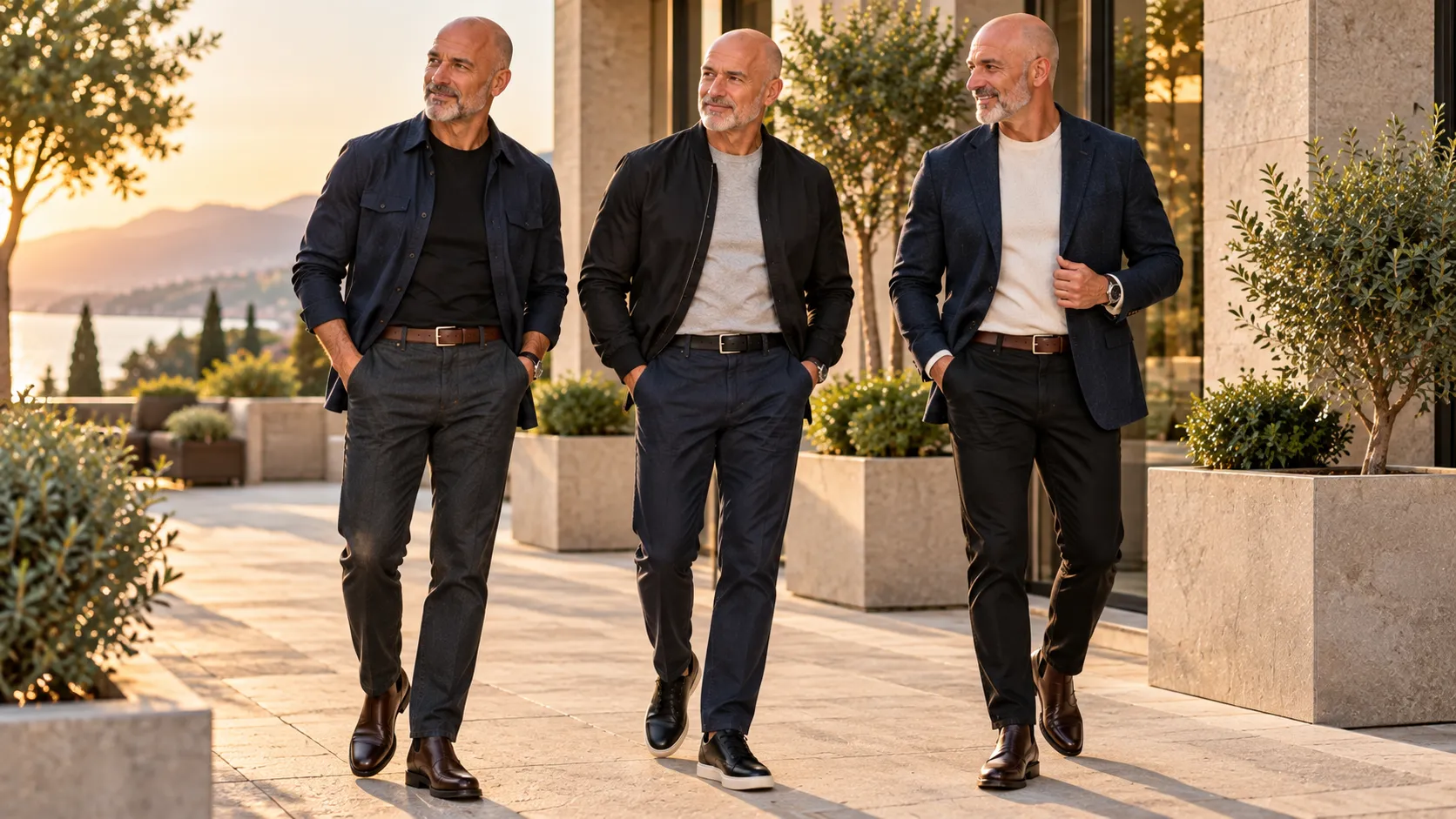
A black or navy outfit can look sharp, clean, and mature. But wearing too many dark pieces together can make your face look harder, especially if you are bald and have little or no hair to break up the dark colors around your face.
I have found that the fix is rarely about adding more color. It is about placing the right amount of contrast in the right spots.
This guide shows you how to build Dark Outfits for Bald Men using black, navy, gray, white, brown, and other easy-to-wear shades.
You will learn how to choose a dark base, soften the area around your face, mix textures, and finish the outfit with the right shoes and accessories.
You do not need a large wardrobe. A few well-fitting pieces can give you several outfit options. The full process can take about 10 minutes once your clothes are ready.
The goal is a dark outfit that looks strong and polished without making your face or clothing look too severe.
What You Need
What You Need
At a Glance
- Choose one dark color as your main base
- Add contrast around your face
- Mix black and navy with different textures
- Pick the right fit for your body
- Balance dark clothes with lighter details
- Match your shoes to the outfit
- Add one warm accent
- Check the full outfit before you leave
Choose One Dark Color as Your Main Base

Build the outfit around 1 main dark color. Let black or navy cover about 60% of the visible clothing, then use the second dark shade for about 30%. Keep the last 10% for a lighter or warmer accent.
For example, wear navy trousers and a navy jacket with a black T-shirt. Or reverse it with black jeans, a black jacket, and a navy shirt.
This keeps the outfit controlled instead of making every piece compete for attention. A clear lead color is also one of the easiest ways to make black and navy look intentional.
Quietly Well Dressed:
Add Contrast Around Your Face
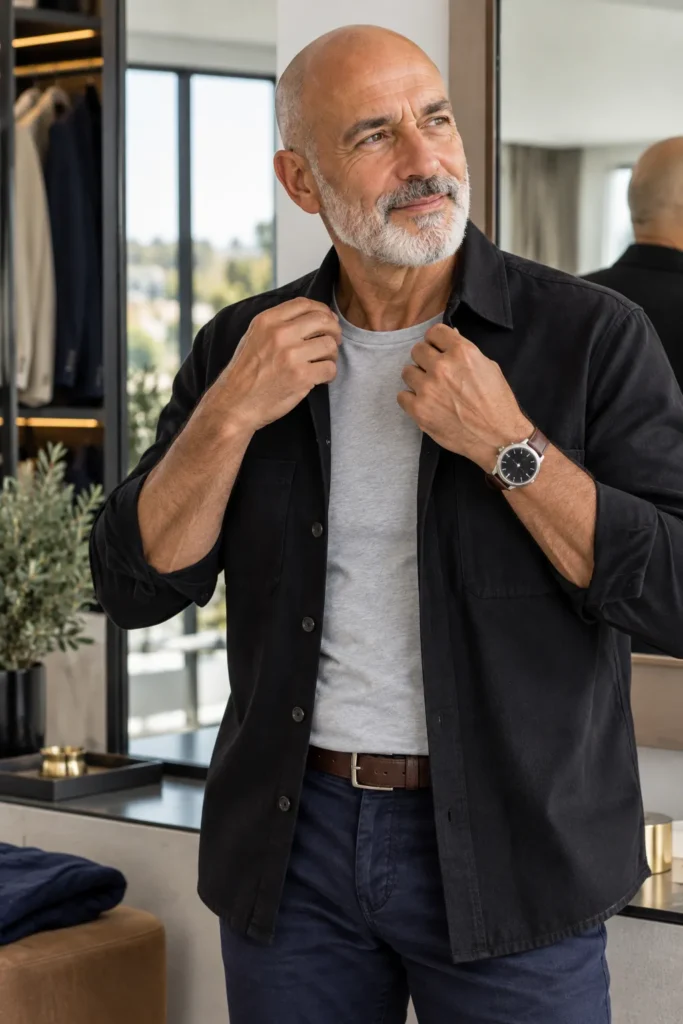
Use 1 lighter layer near your face if the outfit feels too dark. White, cream, light gray, or pale blue can create enough separation between your skin and a black or navy jacket.
A white crew-neck T-shirt under a black overshirt is an easy starting point. For a softer look, try a light gray knit under navy. Keep the lighter color limited to about 10% to 20% of the visible outfit so it adds contrast without taking over.
Mix Black and Navy With Different Textures
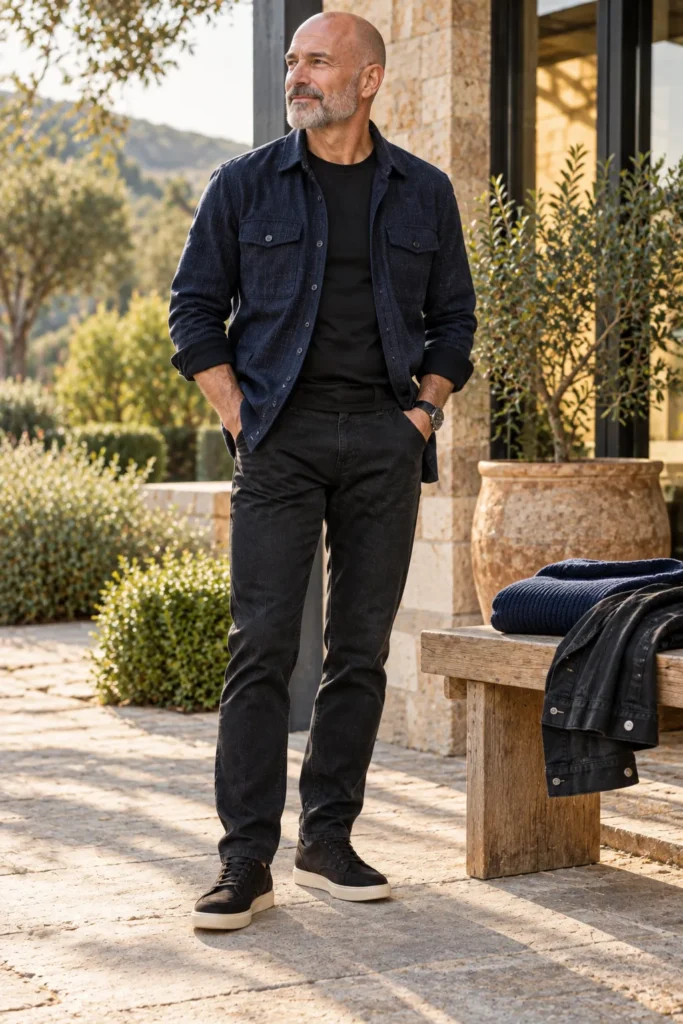
Keep the two dark colors from looking like one large block by using 2 different fabric textures. Try matte black denim with a textured navy overshirt, or smooth black cotton with a brushed navy jacket.
The color difference can be small, so fabric becomes useful. A navy jacket that has visible texture will separate better from black trousers than two smooth fabrics with almost the same depth.
Avoid using 3 or more very smooth dark pieces together because the outfit can lose definition, especially in dim indoor light.
Quietly Well Dressed
Pick the Right Fit for Your Body
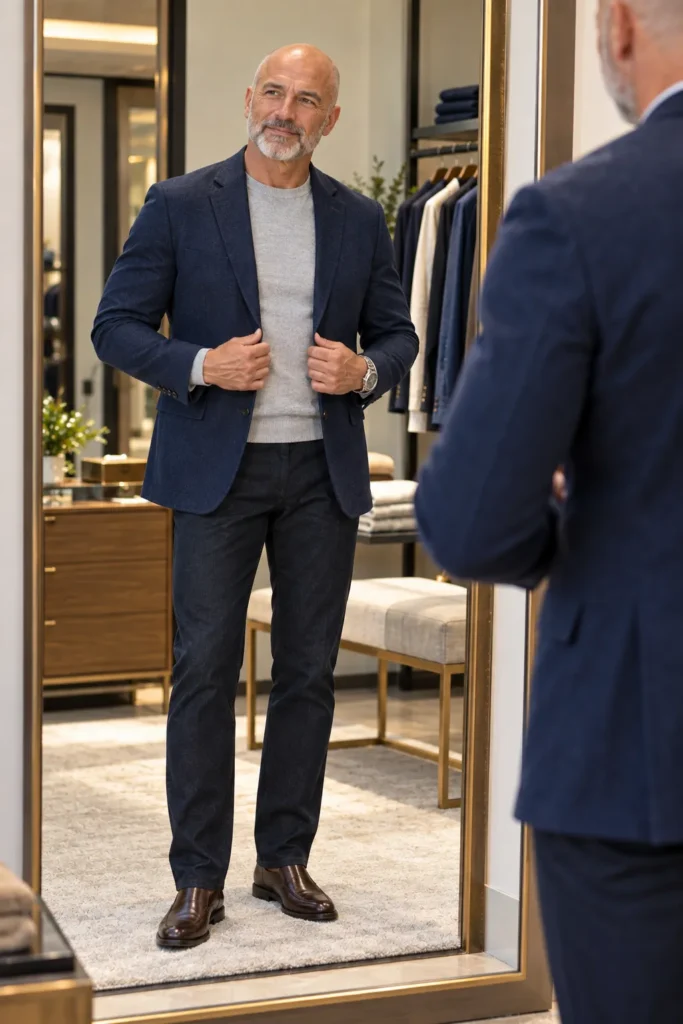
Use 3 fit checks before keeping a dark outfit: shoulder line, shirt length, and trouser break. The shoulder seam should sit close to your natural shoulder.
Your shirt should end around the hip area, and your trousers should fall cleanly without a large pile of fabric over the shoes.
Dark colors can make loose clothing look heavier. A clean fit keeps the outfit sharp without making it feel tight.
If you are between sizes, compare both sizes in front of a mirror and choose the one that gives your shoulders and waist the cleaner line.
Balance Dark Clothes With Lighter Details
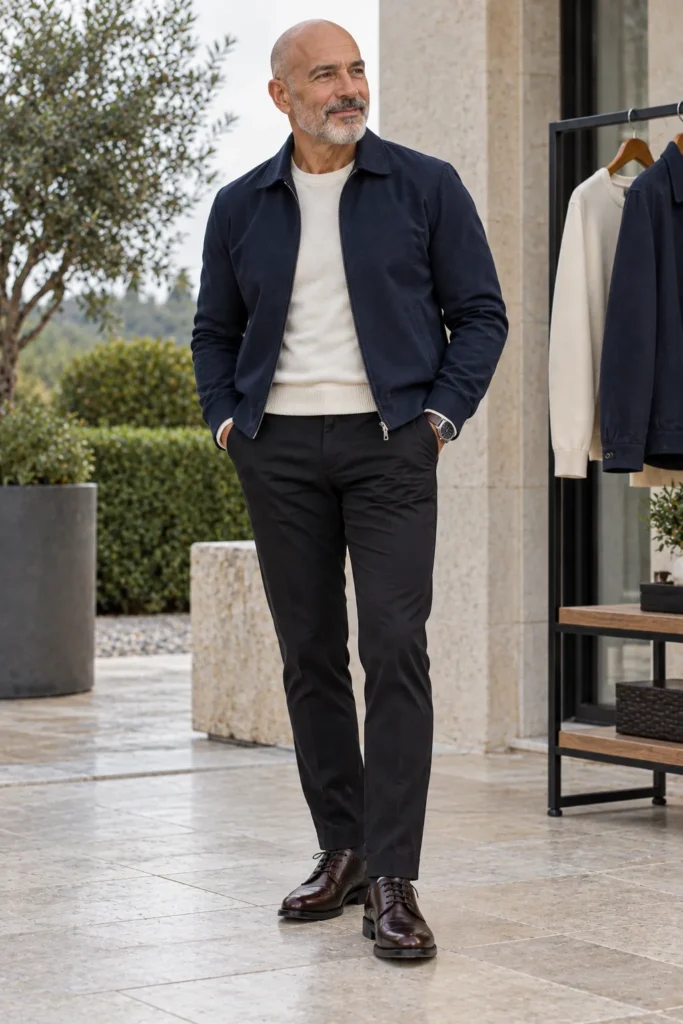
Use 1 or 2 lighter details to break up a dark outfit. A cream T-shirt, light gray sweater, white pocket square, or pale blue shirt can do the job without changing the main color scheme.
Keep these lighter pieces separated rather than stacking many of them together. For example, a navy sport coat, light gray sweater, black trousers, and brown shoes gives you clear color breaks from top to bottom.
This makes the outfit easier to read and keeps the dark pieces from forming one solid block.
Match Your Shoes to the Outfit
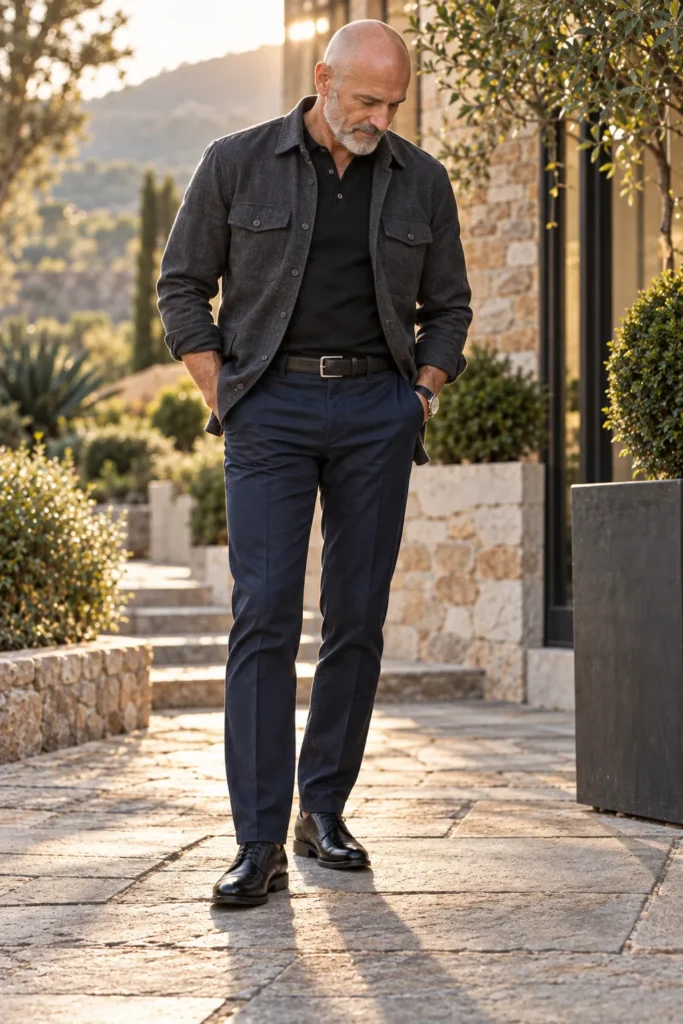
Give your shoes 1 clear job: either continue the dark color or add warmth. Black leather shoes work well with black trousers and navy jackets when you want a clean city look.
Brown or dark tan shoes can soften navy and add warmth to the outfit.
Keep the belt close to the shoe color. A black belt with black shoes creates a clean line, while a brown belt with brown shoes keeps the warmer parts of the outfit connected.
Check the shoes before leaving because worn or overly bulky footwear can make an otherwise clean outfit look heavy.
These three steps keep the outfit controlled: 3 fit checks, 1–2 contrast details, and 2 main shoe routes. The next section will add a warm accent and show how to check the full outfit before leaving.
Add One Warm Accent
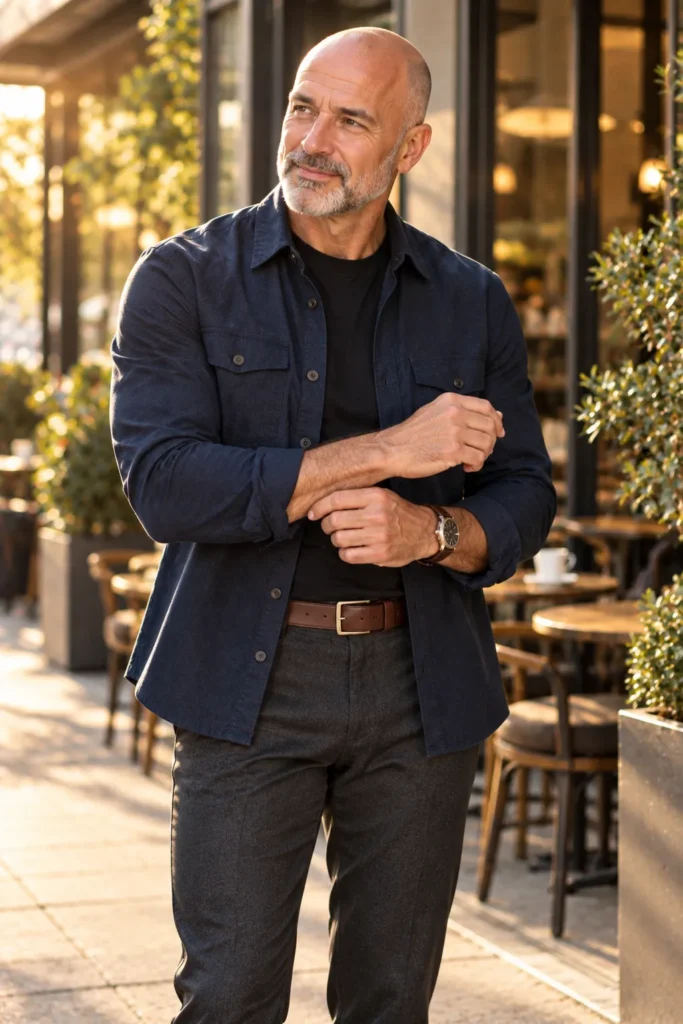
Use 1 warm accent if the outfit feels too cold or flat. Brown leather, tan suede, burgundy, or muted gold can soften black and navy without taking attention away from the main pieces.
A brown leather belt and matching shoes are an easy choice. You can also use a brown watch strap or burgundy pocket square. Keep the accent small. If you add 3 or more warm colors, the outfit can lose its clean dark look.
Check the Full Outfit Before You Leave

Stand in front of a full-length mirror and check 4 areas: face contrast, color balance, fit, and shoes. Look at the outfit from a few feet away rather than focusing on one item at a time.
Take 30 seconds for this check. If everything looks almost the same shade, add one lighter detail. If one item catches your eye first, remove or replace it.
Your final outfit should have one clear dark base, one supporting dark shade, and one or two small details that break up the look.
Build the Finished Look
A strong dark outfit does not need many pieces. Start with 1 dark base, add 1 contrasting layer, use 1–2 lighter details, and finish with 1 warm accent when needed.
For example, try a navy sport coat, light gray crew-neck sweater, black trousers, brown leather belt, and dark brown boots.
The navy and black keep the outfit strong, while the gray and brown stop the colors from looking too severe. This same formula works with jeans, polos, overshirts, and casual jackets.
Fix Common Dark Outfit Problems
Dark outfits can look very different under indoor light, outdoor light, and phone cameras. Use the checks below before replacing clothes.
Most problems come from too much of one shade, weak contrast near the face, or poor fit.
Dark Outfit Troubleshooting
| If This Happens | Try This |
|---|---|
| Your face looks too close to the black shirt | Add 1 white, cream, or light gray layer. |
| Black and navy look almost the same | Change 1 fabric to a different texture. |
| The outfit looks too heavy | Replace 1 dark piece with a lighter neutral. |
| The outfit feels flat | Add 1 warm detail such as brown leather. |
| The lower half looks bulky | Try trousers with a cleaner leg line and less fabric at the shoes. |
Answer Common Questions
Dark Outfit FAQ
Use This Quick Reference Before Getting Dressed
- Choose 1 main dark color.
- Add 1 light detail near your face.
- Use 2 different fabric textures.
- Check 3 areas: shoulders, shirt length, trousers.
- Add 1–2 lighter details.
- Choose 1 shoe route: dark or warm.
- Add 1 warm accent if needed.
- Take a 30-second mirror check.
Wear Dark Outfits for Bald Men With More Balance
You now have a simple system for building Dark Outfits for Bald Men without making the look too hard or flat.
Start with 1 main dark color, add 1 lighter detail near your face, and use 2 different textures for more depth.
Finish with well-fitting clothes, matching shoes, and 1 warm accent when the outfit needs it.
For your next outfit, try the navy jacket, light gray shirt, black trousers, and brown leather combination. Take a quick mirror photo and save the version you like for your next Pinterest outfit idea.