
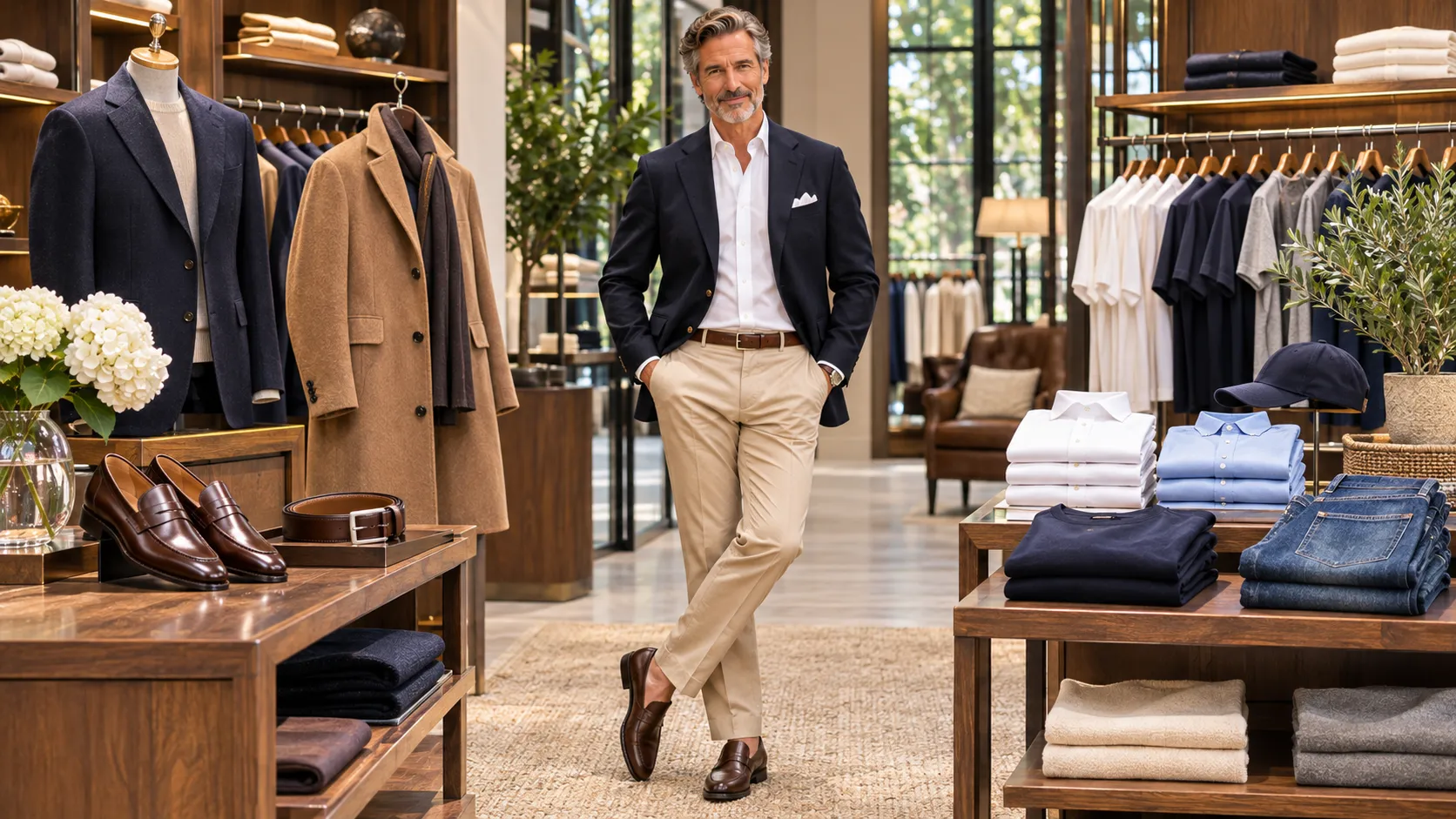
Buying clothes after 50 can get expensive, especially when every store seems to offer something new.
A good blazer, leather shoes, or a quality sweater can cost a lot. But does every item in your wardrobe need to come with a high price tag? Not at all.
The smart approach to Splurge or Save? Where to Spend and Where to Cut Back After 50 is to know which clothes deserve more money and which ones do not.
A well-made jacket may last for years, while an expensive T-shirt may offer little more than a cheaper one.
This guide will help you make better clothing choices without spending your entire budget. You will learn where to invest in quality, where affordable options work well, and how to avoid paying extra for a brand name.
You do not need a huge wardrobe or designer labels to dress well. A few well-chosen pieces can give you plenty of outfit options.
Set aside some time, check your current wardrobe, and follow these steps before your next shopping trip.
Time and Difficulty Strip
What You Need
Your Smart Shopping Checklist
You do not need to buy all these items. Most are things you already have at home.
At a Glance
Your 9-Step Shopping Plan
1. Set a Realistic Budget Before Shopping
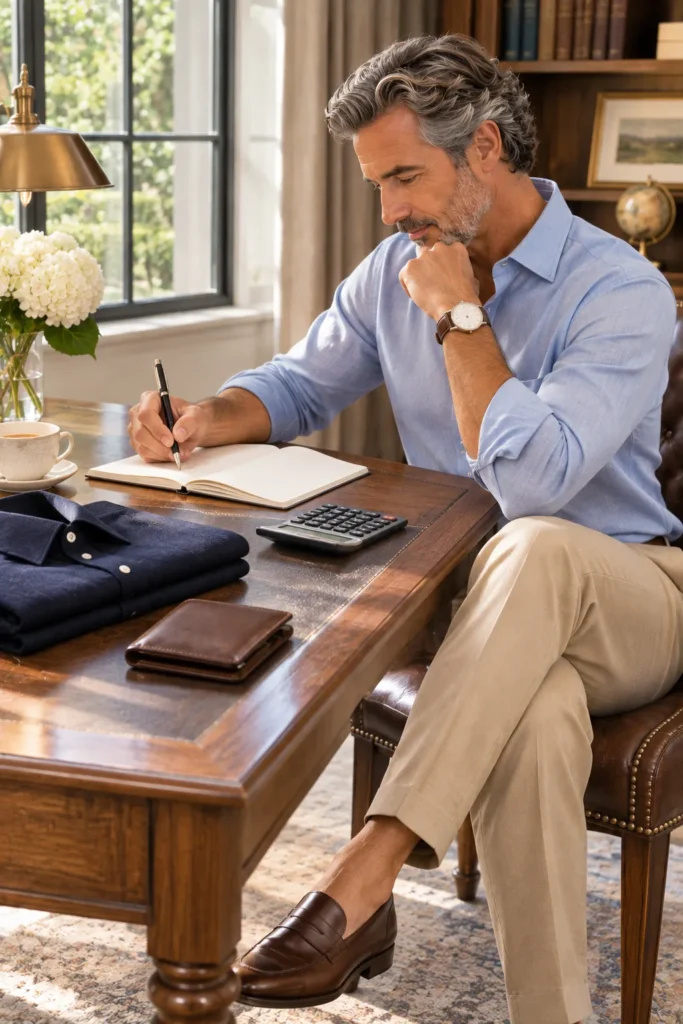
A clothing budget helps you avoid buying things that look good in the store but add little value to your wardrobe. Start by choosing an amount you can comfortably spend each month.
For example, set aside $150–$200 if that fits your income and needs. Divide it between shoes, trousers, shirts, and occasional purchases.
Keep some money for repairs or alterations. You do not need to spend your full budget every month.
2. Check Your Wardrobe Before Buying Anything
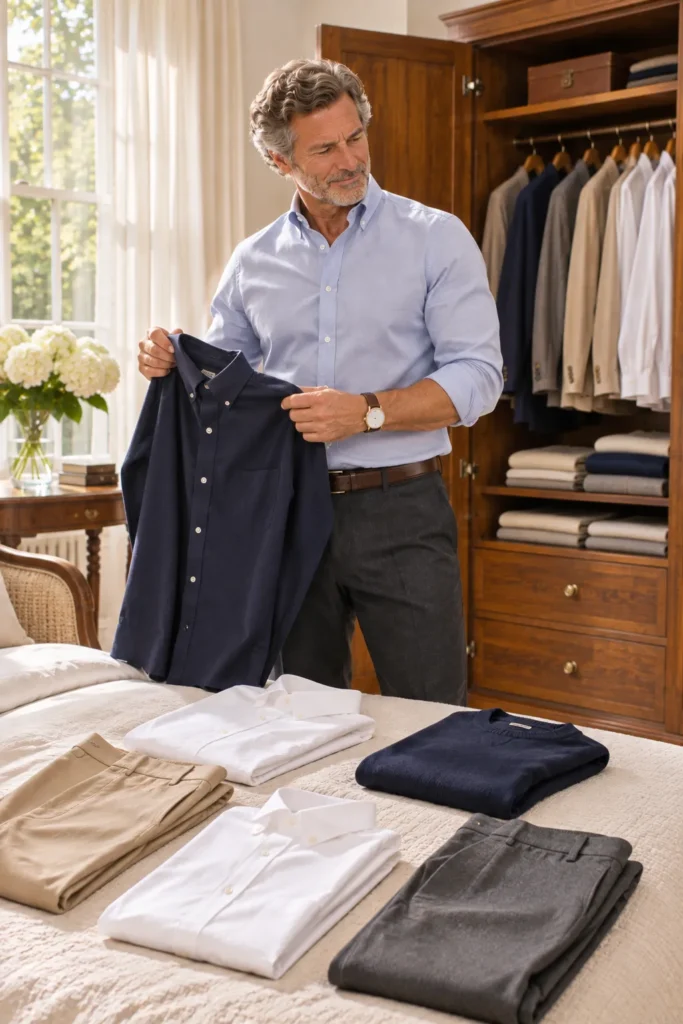
Open your wardrobe and take out the clothes you wear most often. Place them on your bed so you can see what you already own.
Look for missing basics, faded shirts, loose trousers, and shoes that need replacing. Make three groups:
- Clothes you wear regularly.
- Clothes that need repair or alteration.
- Clothes you no longer wear.
This check stops you from buying another navy shirt when you already own three good ones. Write down the items you genuinely need.
3. Spend More on Well-Fitted Jackets and Blazers
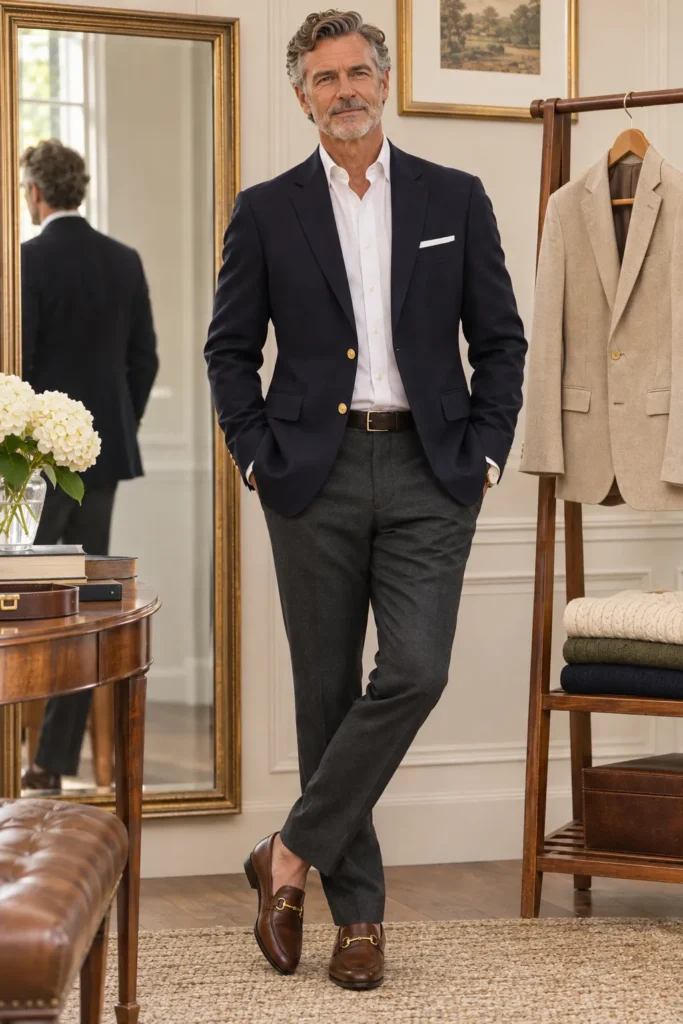
A good blazer can make a plain shirt and trousers look much better. This is one item worth spending more on because the fit and fabric are easy to notice. Check the shoulder seams first.
They should end close to your natural shoulders. The jacket should close without pulling across your stomach. Look for wool blends, quality cotton, or textured fabrics.
A navy or charcoal blazer is a useful first choice because it works with several trousers.
4. Invest in Quality Shoes You Can Wear Often
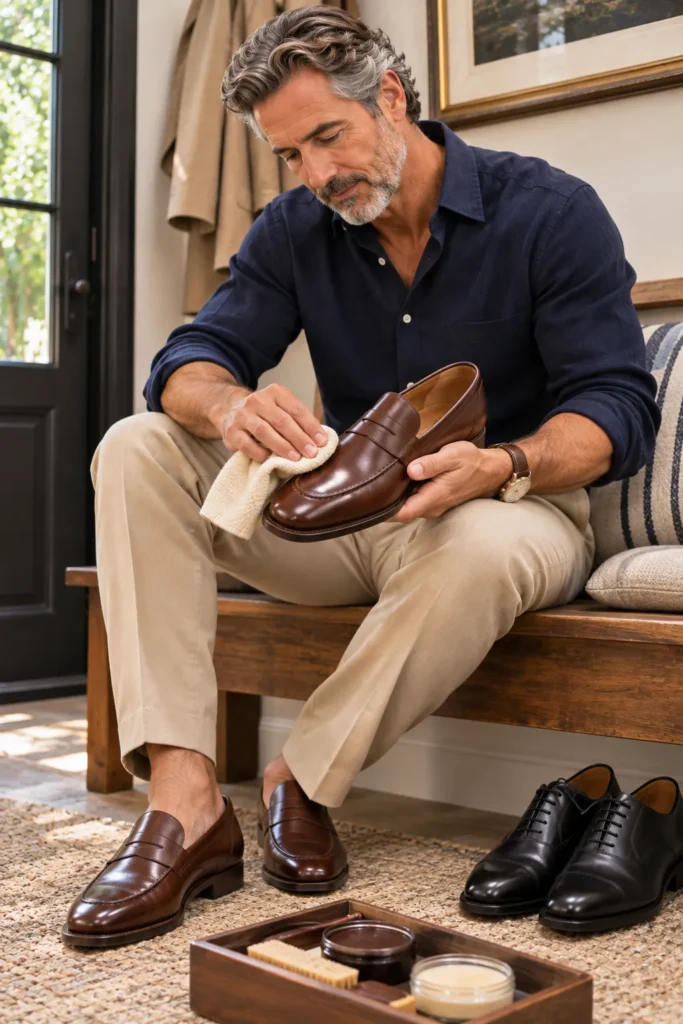
Your shoes are one of the first things people notice about an outfit. A good pair of leather loafers, Oxford shoes, or casual leather sneakers can last for years with proper care.
Look for strong stitching, a comfortable sole, and soft leather that does not hurt your feet.
Brown and black are useful colors because they match many outfits. You do not need five pairs of expensive shoes. Start with one or two pairs that suit your daily needs.
Check the soles before buying leather shoes. A well-made sole and a strong heel can help your shoes last longer. Keep them clean and use shoe trees or paper to hold their shape.
5. Save Money on Basic Shirts and Everyday T-Shirts

A plain white shirt or navy T-shirt does not need to carry a designer label. Spend your money on a good fit and comfortable fabric instead.
Cotton shirts from affordable brands can look as good as expensive options if they sit well on your shoulders and chest. Check the stitching around the collar and sleeves.
Avoid thin fabric that becomes see-through after washing. Buy basic colors such as white, light blue, grey, and navy. These shades work with most trousers and jackets.
Do not buy a pack of shirts only because the price looks low. Check the fabric and size first. A cheap shirt that loses its shape after two washes is money wasted.
6. Spend Wisely on Jeans and Tailored Trousers
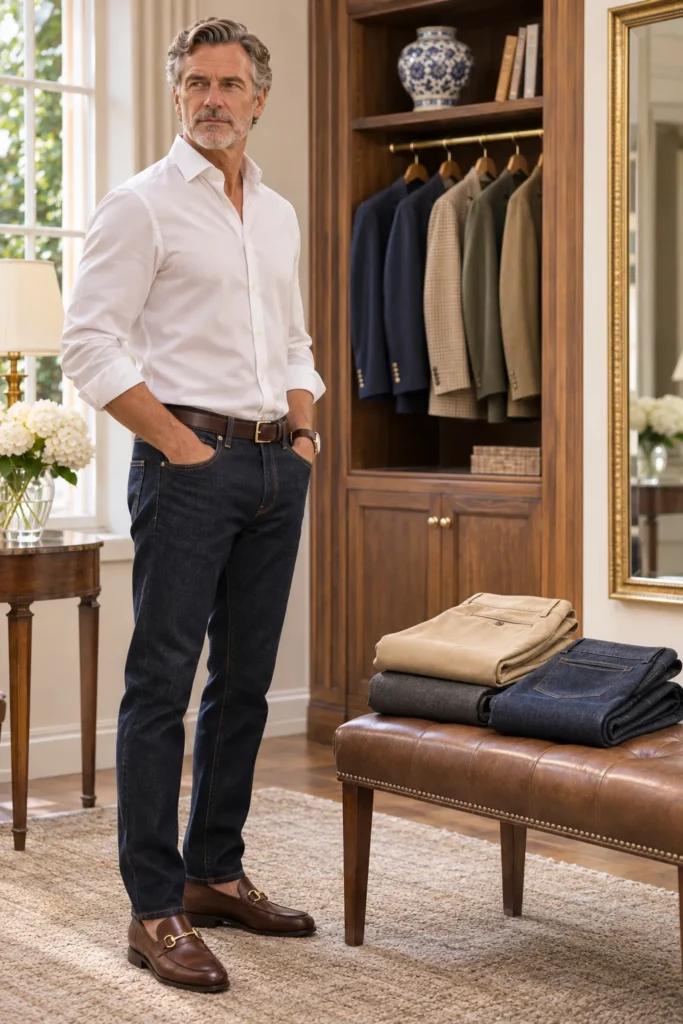
Trousers get plenty of use, so choose pairs that feel comfortable and hold their shape. Spend a little more on well-made wool trousers or chinos if you wear them often for work or social events.
For casual jeans, a mid-priced pair can work well. Check the waistband, pockets, seams, and length before paying. Straight or slim-straight cuts are good starting points after 50.
Avoid very tight jeans or overly loose trousers that make an outfit look untidy.
7. Save on Seasonal Trends and Fashion Accessories
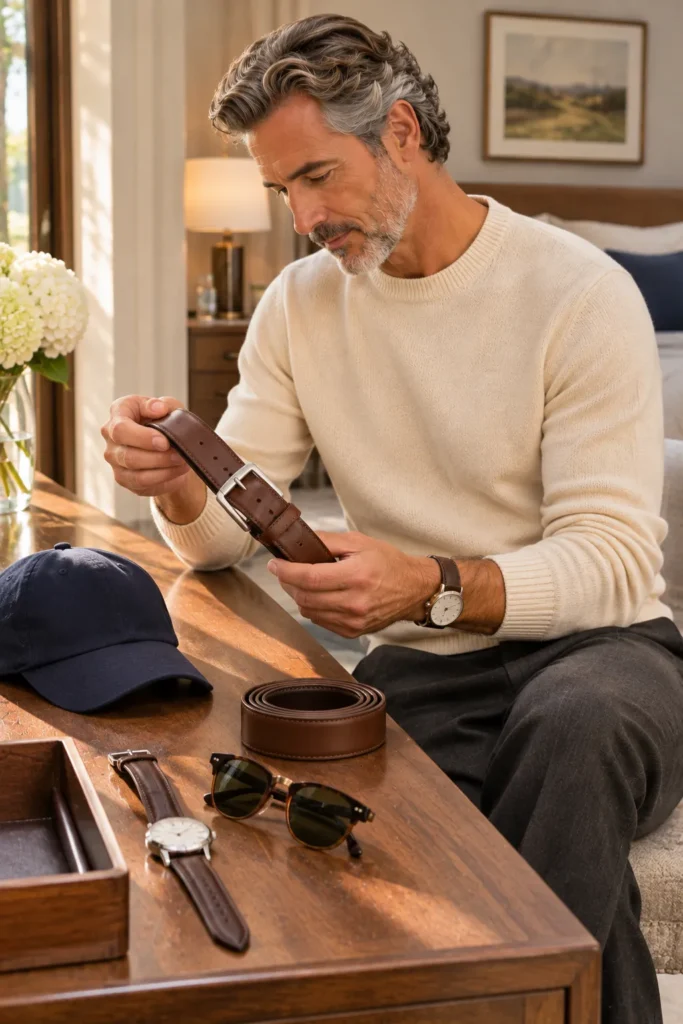
Fashion trends change every season, but your clothing budget does not need to change with them. Avoid spending too much on bright prints, unusual cuts, or accessories that may go out of style quickly.
A simple leather belt, classic watch, and good sunglasses are often more useful than several trendy items.
If you want to try a new color or style, buy an affordable version first. This lets you enjoy new looks without spending too much.
Before buying a seasonal item, think about three outfits you can wear it with. If you cannot find three good matches in your wardrobe, leave it at the store.
8. Check Fabric Quality Before Paying More
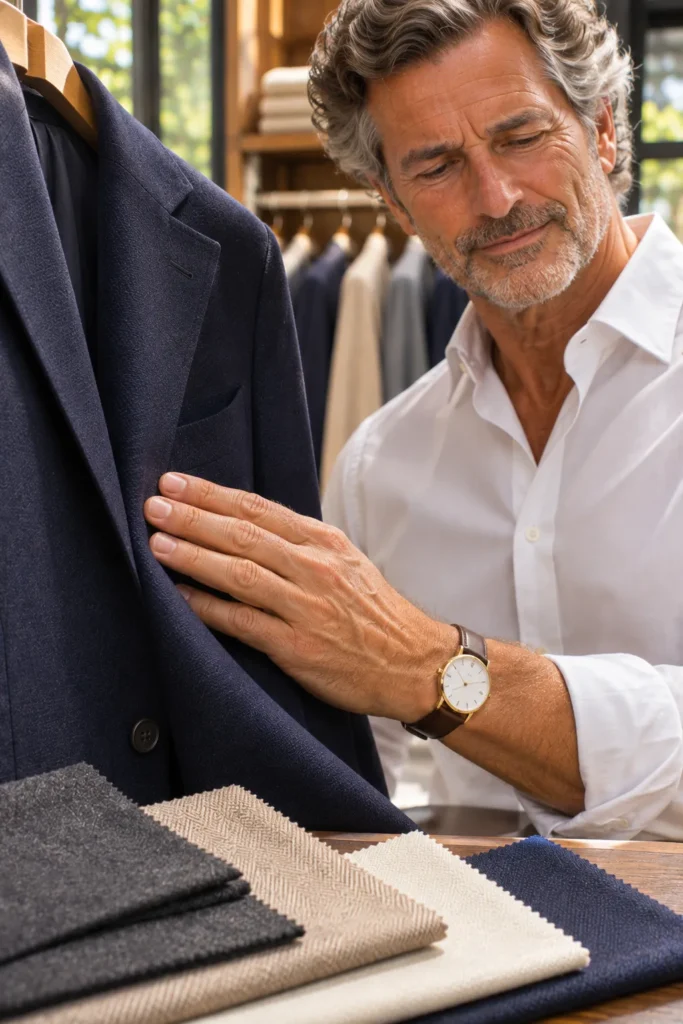
An expensive price tag does not always mean better quality. Check the fabric label before buying any shirt, sweater, or jacket. Cotton, wool, linen, and quality fabric blends can offer good comfort and long wear.
Look closely at the seams, buttons, zippers, and lining. Pull the fabric gently to see if it returns to its shape.
Check for loose threads and uneven stitching. A well-made affordable garment can be a better buy than an expensive branded item with poor construction.
Do not judge fabric quality by thickness alone. Some heavy fabrics feel strong but become uncomfortable in warm weather. Choose fabric based on the season and how often you plan to wear it.
9. Build a Small Wardrobe with Versatile Pieces
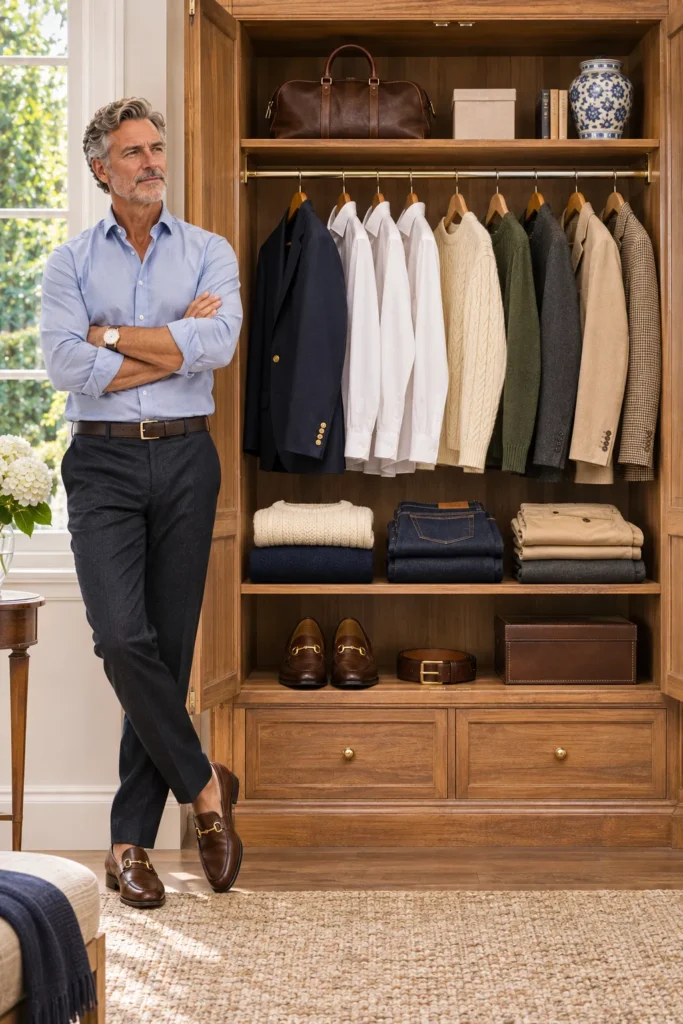
A smaller wardrobe can give you more outfit choices if the clothes work well together. Pick a few basic colors, such as navy, grey, beige, white, and olive. Choose pieces that you can wear in different combinations.
For example, one navy blazer can work with jeans, chinos, or dress trousers.
A white shirt can go under a sweater or look good on its own. Aim for 10–15 useful pieces before adding more clothes. This keeps your wardrobe neat and reduces unnecessary shopping.
Troubleshooting, Common Mistakes & FAQ
Common Clothing Shopping Problems
5 Common Clothing Spending Mistakes to Avoid
1. Paying Extra for Famous Brand Names
A famous label does not always mean better fabric or construction. Compare the quality before spending more.
2. Buying Clothes Without Checking the Fit
Even an expensive jacket can look poor if the shoulders, sleeves, or waist do not fit properly.
3. Buying Too Many Trendy Items
Fashion trends change. Spend more on classic clothes that you can wear for several years.
4. Ignoring Clothing Care
Good clothes also need proper care. Follow washing instructions, clean leather shoes, and store jackets on suitable hangers.
5. Buying Clothes You Rarely Wear
A discounted item is not a good deal if it stays in your wardrobe. Think about how often you will wear it before paying.
Frequently Asked Questions
1. Which clothing items should men over 50 spend more money on?
Spend more on blazers, leather shoes, winter coats, and trousers you wear often. These items benefit from better fabric, construction, and fit.
2. Is expensive clothing always better quality?
No. Some affordable clothes offer good fabric and stitching. Check the material, seams, buttons, and fit instead of trusting the price tag.
3. How many pairs of shoes should a man over 50 own?
A useful starting point is three pairs: one pair of formal shoes, one pair of casual shoes, and one pair of comfortable everyday footwear. Add more only if your daily needs require them.
4. Which clothing colors are worth buying?
Navy, white, grey, beige, brown, and olive are useful choices. They work well together and make outfit planning easier.
5. Should men over 50 buy designer clothes?
Designer clothes are optional. Buy them if you like the quality and can afford them. You can dress well with affordable brands and good-fitting clothes.
6. How can men over 50 save money on clothes?
Set a monthly budget, shop during sales, compare prices, and focus on versatile basics. Avoid buying clothes only because they have a large discount.
Quick Reference Card
THE SMART MEN’S SHOPPING GUIDE
A quick reference for men over 50
SPLURGE ON
- Quality blazers
- Leather shoes
- Winter coats
- Well-made trousers
- Good-quality sweaters
SAVE ON
- Basic T-shirts
- Plain shirts
- Seasonal trends
- Fashion accessories
- Everyday basics
YOUR 9-STEP SHOPPING CHECKLIST
Buy less. Choose well. Wear more.
Spend Smart and Dress Well After 50
Looking stylish after 50 does not require expensive clothes from head to toe. Spend more on the pieces you wear often and save on items that do not need a high price tag.
Focus on good fit, comfortable shoes, and quality fabrics. A smaller wardrobe can give you plenty of outfit choices.
Before your next shopping trip, save this guide to Pinterest and use the checklist to make smarter choices.