

Buying a suit after 50 can be tricky. You want to look sharp, feel comfortable, and avoid spending money on something that does not fit properly.
When comparing tailored vs off-the-rack suits after 50, the price tag does not tell the whole story.
An expensive custom suit is not always the best buy, and an affordable store-bought suit can look excellent after a few small changes.
The good news is that you do not need to spend thousands to get a well-fitted suit. You need to know what to check before paying.
A suit should sit well on your shoulders, close neatly across your chest, and allow you to sit, walk, and move without pulling.
This guide will help you compare both options, check fabric quality, estimate alteration costs, and make a smart buying choice. You will also learn which parts of a suit are worth spending more on and where you can save.
Allow a few hours for shopping and fitting. A made-to-measure or bespoke suit may take several weeks to complete, so plan ahead if you have an event coming up.
Time and Difficulty Strip
What You Need
Your Suit Shopping Checklist
- Suit budget
- Suit occasion details
- Comfortable dress shirt
- Dress shoes
- Existing suit measurements
- Flexible measuring tape
- Full-length mirror
- Tailor’s contact details
- Notebook or phone
- Fabric and care labels
Tip: Wear the type of shirt and shoes you plan to use with the suit. This gives you a more accurate idea of the final fit.
At a Glance
Your 8-Step Suit Buying Plan
Step 1. Decide How and Where You Will Wear Your Suit
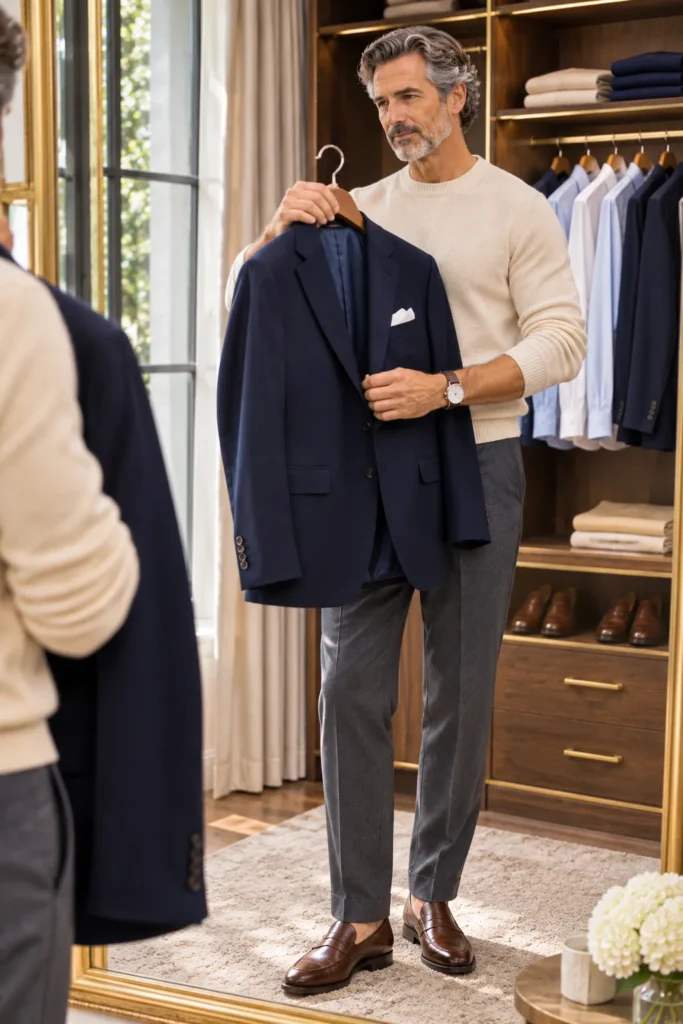
A suit for a wedding has different needs from one you wear to work every week. Think about your main reason for buying it before visiting a store. Write down the occasions you attend most often.
- Weddings and family events
- Office meetings and business events
- Formal dinners
- Funerals and special occasions
If you need one suit for many events, consider navy or charcoal gray. These colors work with several shirt and tie combinations. Your choice of occasion will help you decide how much to spend and which suit style to buy.
Step 2. Set a Realistic Budget Before Shopping

Set your spending limit before looking at suits. Include the cost of the jacket, trousers, alterations, and any extra items you need. A store-bought suit may look cheaper at first, but sleeve and trouser changes can add to the bill.
For example, if your total budget is $600, you could reserve $450 for the suit and $150 for fitting changes and accessories. Your local prices may differ, so check alteration charges before buying. This helps prevent surprise costs later.
Step 3. Compare Tailored and Off-the-Rack Suit Options
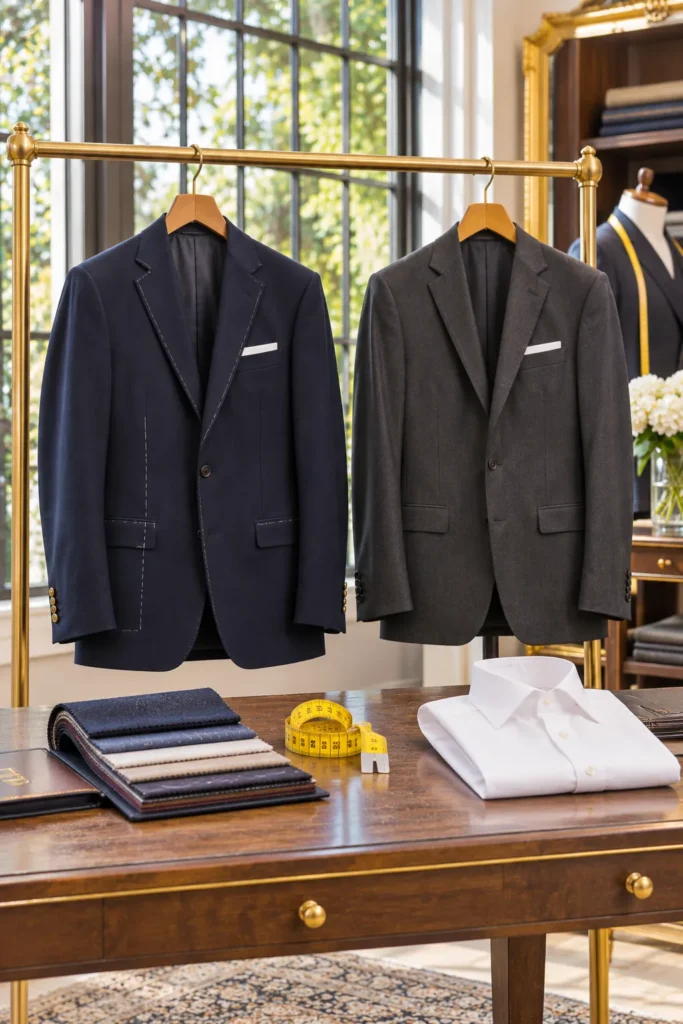
Visit a store that sells ready-made suits and a tailor who offers made-to-measure suits. Ask both about fabric choices, fitting changes, delivery time, and final cost.
An off-the-rack suit is ready to wear after any needed alterations. A made-to-measure suit starts with an existing pattern adjusted to your measurements.
Bespoke tailoring involves creating a pattern for you. Compare the options before making a decision.
Step 4. Check the Fabric and Construction Quality
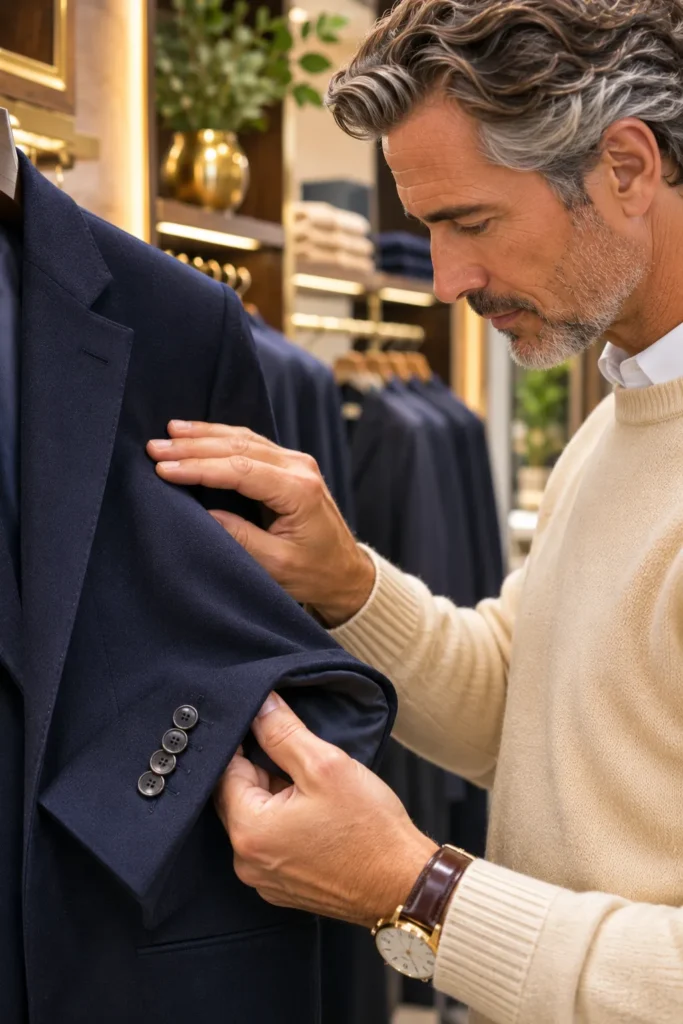
A good suit should feel comfortable and hold its shape after several wears. Check the fabric label before looking at the price.
Wool is a popular choice because it breathes well and works for many occasions. Wool blends can also offer good value.
Check these details before buying:
- Fabric: Look for smooth, even material without thin patches.
- Stitching: Check that the seams are straight and secure.
- Lining: Look for neat stitching inside the jacket.
- Buttons: Check that every button feels secure.
- Trousers: Make sure the fabric feels comfortable around your waist and legs.
A small amount of stretch can help with movement, but avoid fabric that feels too thin or loses its shape.
Hold the fabric near a light source. Check for uneven areas, loose threads, and thin spots. Read the care label before paying. A good fabric should feel comfortable and hold its shape after several wears.
Step 5. Check the Fit Across Your Shoulders and Chest
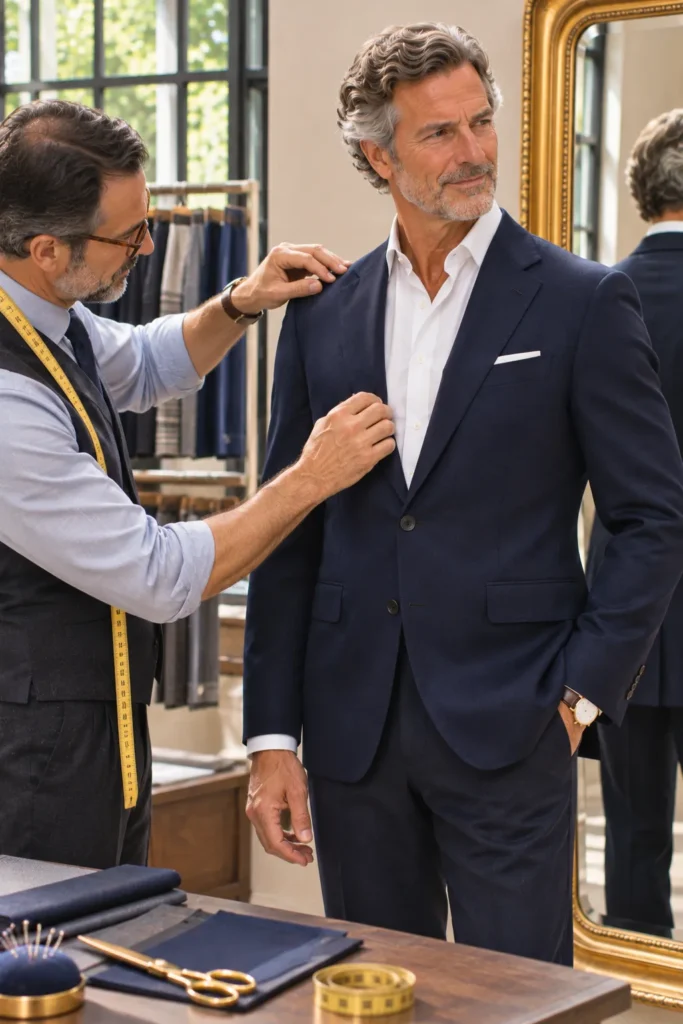
The shoulders are one of the hardest parts of a suit jacket to alter. Start your fitting check here. Put on the jacket, button the top button, and stand naturally in front of a mirror.
Check these five areas:
- Shoulders: The jacket seam should sit close to the edge of your natural shoulder.
- Chest: You should be able to button the jacket without pulling or tight wrinkles.
- Sleeves: Your shirt cuff should show about ¼ to ½ inch below the jacket sleeve.
- Waist: The jacket should follow your shape without feeling tight.
- Jacket length: The jacket should cover your seat in a classic suit style.
Walk around and raise your arms gently. If the jacket pulls across your back or chest, try another size.
Do not buy a jacket with badly fitting shoulders because the price is low. Shoulder changes can be costly and may affect the jacket’s shape. Find a jacket that fits your shoulders before paying for other alterations.
Step 6. Calculate the Cost of Necessary Alterations
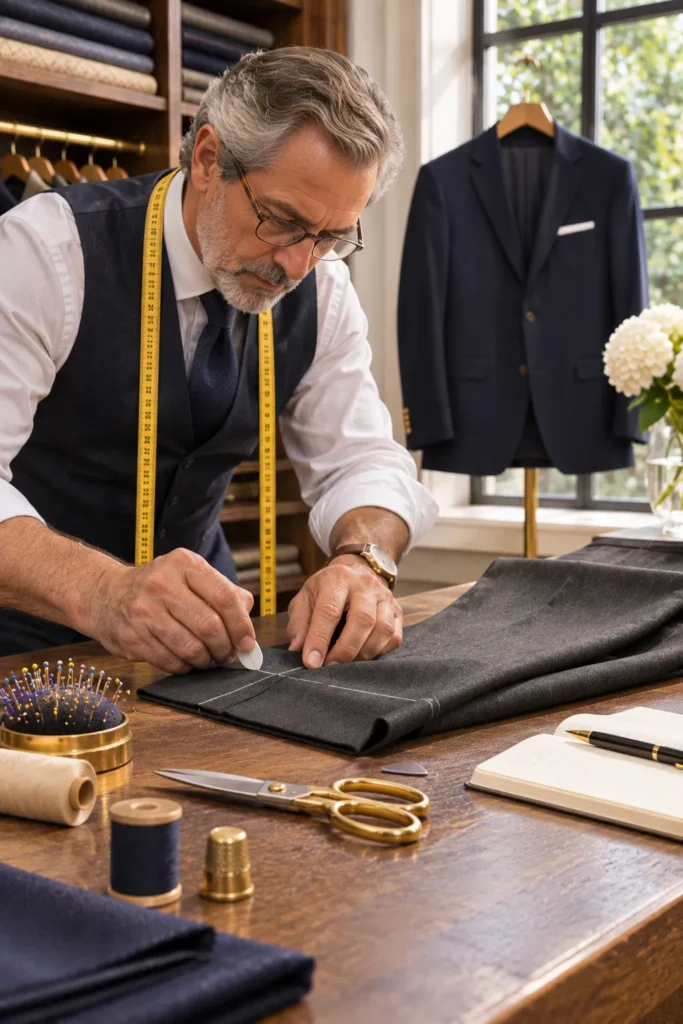
A ready-made suit may need a few changes before it fits well. Ask a tailor to check the jacket and trousers before you buy. Get the alteration price in advance so you can compare the real cost with a made-to-measure suit.
Common changes include:
- Shortening jacket sleeves.
- Taking in the jacket waist.
- Shortening trouser legs.
- Adjusting the trouser waist.
- Tapering trouser legs.
For example, a $400 suit with $80 in alterations costs $480 in total. Compare that amount with a made-to-measure suit offering a similar fabric and finish.
Example of a ready-made suit purchase
Step 7. Choose the Suit That Gives You the Best Value
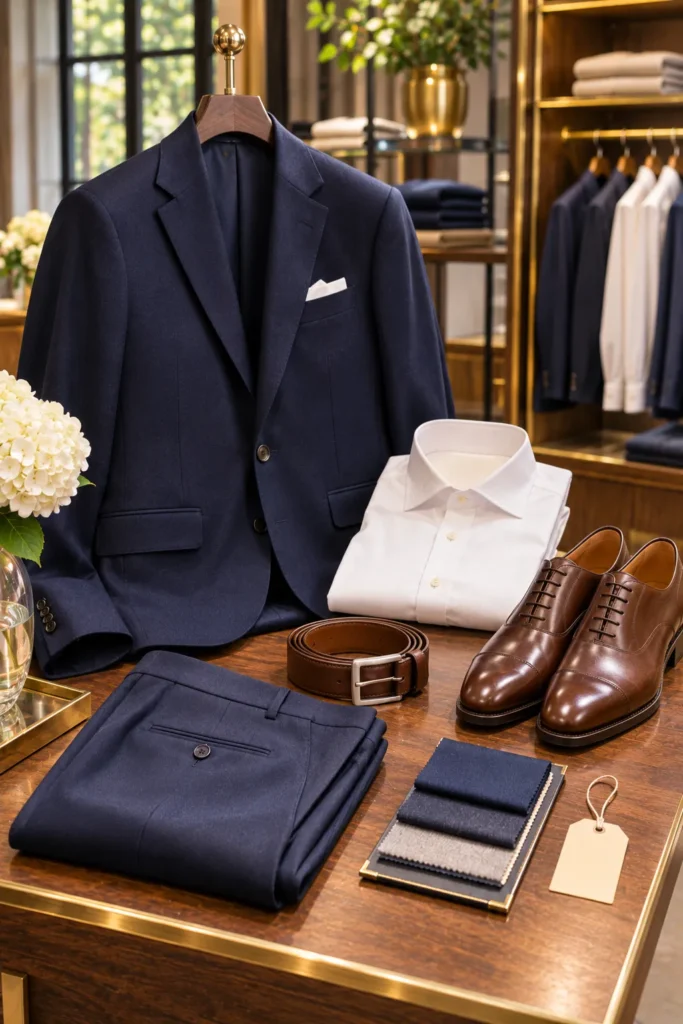
The cheapest suit is not always the best buy. Look at the fit, fabric, comfort, and total cost before making your choice.
A well-made off-the-rack suit can be a better purchase than an expensive tailored suit if it fits your body properly.
Use this comparison to make your decision:
| Feature | Off-the-Rack | Made-to-Measure |
|---|---|---|
| Price | Usually lower | Usually higher |
| Fit | Standard sizes | Adjusted to measurements |
| Waiting time | Available immediately | Usually several weeks |
| Fabric choices | Limited selection | More choices |
| Alterations | Often needed | Fewer changes may be needed |
| Best for | Budget-conscious buyers | Men needing a closer fit |
Choose off-the-rack if you find a jacket that fits your shoulders and chest well. Choose made-to-measure if standard sizes do not suit your body shape.
For men over 50, comfort should be part of the decision. A suit should look smart without making you feel stiff or restricted.
Step 8. Complete Your Final Fitting Before Wearing It
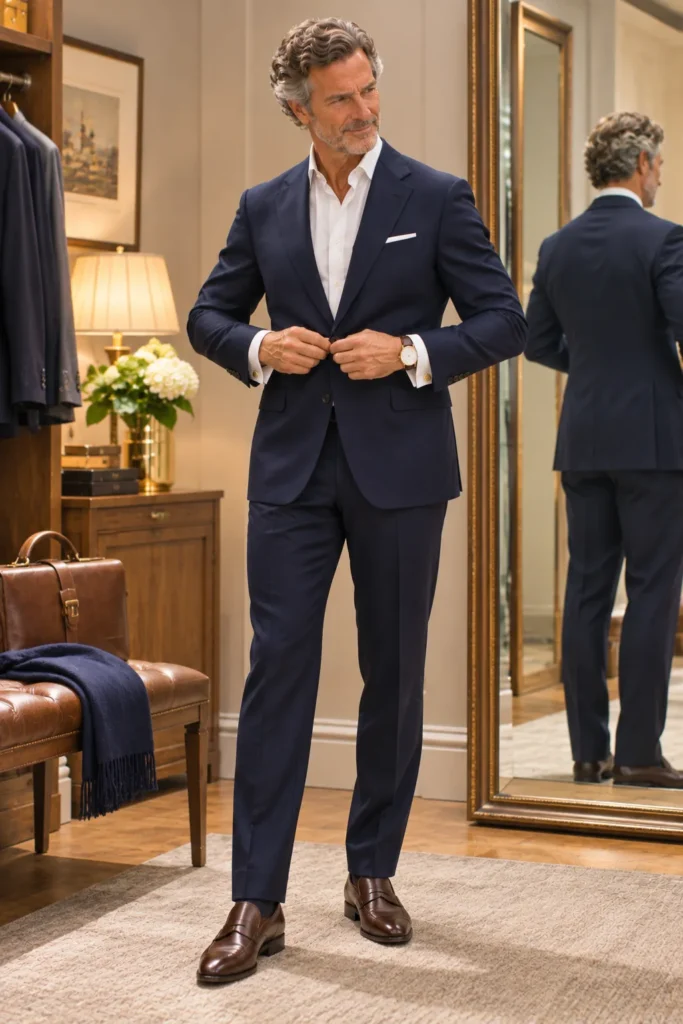
A suit can look different after the tailor makes the requested changes. Try it on again before taking it home. Wear your dress shirt and shoes so you can check the full outfit.
Check these details:
- Button and unbutton the jacket.
- Sit down and stand up.
- Walk several steps.
- Raise your arms gently.
- Check that trouser hems sit neatly over your shoes.
- Look for loose threads or uneven stitching.
Spend at least 10–15 minutes checking the finished suit. Ask the tailor to correct any tight areas or uneven hems before accepting the final work.
Take a photo of yourself from the front, side, and back during the fitting. Photos can help you spot uneven lengths and wrinkles that are hard to see in a mirror. Ask someone to take the pictures while you stand naturally.
Before and After Expectations: See the Difference a Good Fit Makes
Before Fitting
- Loose or tight shoulders
- Sleeves at the wrong length
- Trousers bunching at the shoes
- Jacket pulling across the chest
- Uncomfortable movement
After Fitting
- Shoulders sitting correctly
- Clean sleeve length
- Neat trouser break
- Smooth jacket front
- Comfortable movement
Troubleshooting: Common Suit Buying Problems
| If This Happens | Try This |
|---|---|
| Jacket feels tight across the chest | Try the next size or a different cut. |
| Shoulders extend too far | Try a smaller size or another jacket style. |
| Trouser legs look too wide | Ask a tailor about tapering the legs. |
| Jacket sleeves cover your shirt cuffs | Ask a tailor to shorten the sleeves. |
| Suit feels uncomfortable while sitting | Check the waist, seat, and thigh fit. |
Frequently Asked Questions About Tailored vs Off-the-Rack Suits After 50
Frequently Asked Questions
Not always. A tailored suit offers a closer fit, but a ready-made suit with good alterations can also look excellent.
It can be worth the cost if you wear suits often or need a special fit. Otherwise, a good ready-made suit may be enough.
Navy blue and charcoal gray are useful choices for formal events, work, and family occasions.
It should fit well across the shoulders and chest while allowing comfortable movement.
Yes. Proper alterations can give a ready-made suit a clean and polished appearance.
Two or three good suits can cover most occasions. Start with navy and charcoal gray.
Quick Reference Card: Tailored vs Off-the-Rack Suits After 50
Save this checklist for your next suit shopping trip. It covers the main things to check before spending your money.
YOUR SUIT BUYING QUICK GUIDE
A handy checklist for men over 50
- Set suit shopping budget
- Choose your main suit occasion
- Wear a dress shirt and dress shoes
- Check fabric and construction
- Get alteration prices
- Compare total costs
- Decide how and where you will wear your suit.
- Set a realistic shopping budget.
- Compare tailored and off-the-rack options.
- Check fabric and construction quality.
- Check shoulder and chest fit.
- Calculate alteration costs.
- Choose the suit with the best value.
- Complete your final fitting.
Choose a suit that fits your shoulders, feels comfortable, and suits your budget.
Conclusion
Choosing between tailored and off-the-rack suits after 50 comes down to fit, comfort, quality, and price.
A good ready-made suit with the right alterations can be an excellent buy. A tailored suit may be worth the extra cost if you need a closer fit.
Start with a classic navy or charcoal suit that works for several occasions. Save this guide to your Pinterest board so you can use the checklist during your next shopping trip.