

Buying clothes after 50 does not have to mean filling your closet with expensive pieces you barely wear. The real problem is usually simple: too many random purchases, poor fit, and clothes that looked good in the store but do not work with anything at home.
A better approach is to shop with a plan. You do not need a huge wardrobe or a closet full of designer labels. You need clothes that fit well, work together, and suit the way you actually live.
If you have been wondering how to shop for mens clothes over 50, start with the basics. Look at what you already own, decide what is missing, and spend your money on pieces you will wear often.
The seven ideas below can help you make better choices without turning every shopping trip into a major expense.
1. Start With a Short Shopping List, Not a Full Wardrobe

A shopping trip gets expensive fast when you walk into a store without knowing what you need.
Before buying anything, write down the two or three pieces that are actually missing from your closet. Maybe your trousers are worn out, you need a smart casual shirt, or you need shoes that work with both jeans and chinos.
Keep the list short.
A useful starting point:
- One everyday trouser: chinos, dark denim, or both
- Two easy shirts: one casual and one slightly dressier
- One versatile layer: cardigan, overshirt, or lightweight jacket
- One reliable shoe: something that works with several outfits
This keeps your shopping focused and makes random purchases much less likely.
2. Check the Fit Before You Check the Brand Name
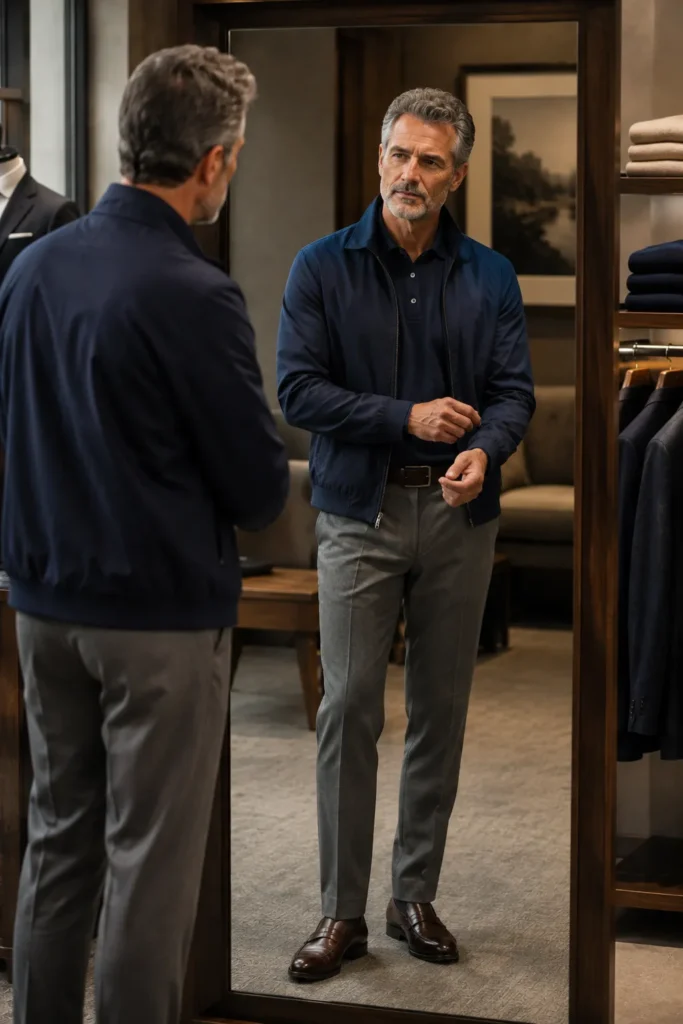
A famous label cannot fix clothing that fits badly.
Look at the shoulders first on shirts, polos, jackets, and coats. The shoulder seam should sit close to your natural shoulder. Sleeves should finish around the wrist, and the shirt should have enough room for comfortable movement.
For trousers, check the waist, seat, and length. You should be able to sit and walk without pulling at the fabric.
Quick tip: When shopping, take one shirt and one pair of trousers that already fit you well. Use them as a simple reference for size and shape.
💡 Quick Tip
Try the garment while standing, sitting, and moving your arms. A good fit should feel comfortable in normal daily positions, not just look good in the mirror.
3. Build Around Two or Three Colors That Work Together
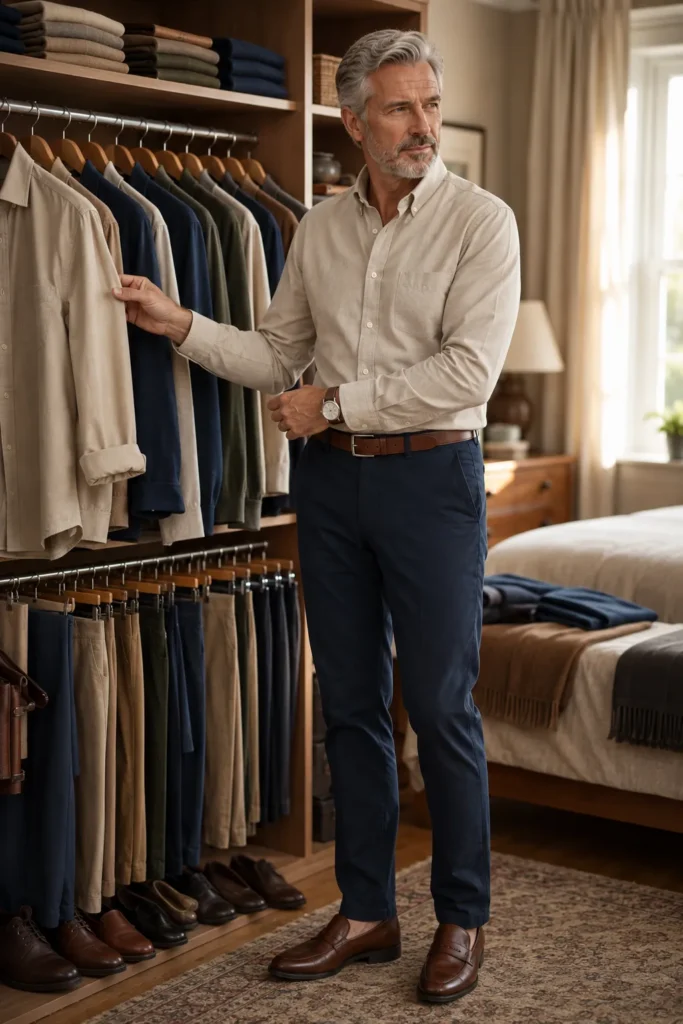
A closet becomes easier to use when most of the clothes can be worn together.
You do not need to avoid color. Just give your wardrobe a simple base. Navy, gray, brown, olive, cream, white, and denim can give you many combinations without requiring a large number of pieces.
Then add a little color through a shirt, sweater, pocket square, or casual layer.
The mistake is buying five shirts in five unrelated colors and then finding that none of them work with your trousers.
Choose a small group of colors that work with your existing trousers and shoes.
Add one or two stronger colors through shirts or casual layers.
Buying a new color simply because it looks good by itself.
Ignoring the clothes already hanging in your closet.
4. Spend More on the Pieces You Wear Every Week
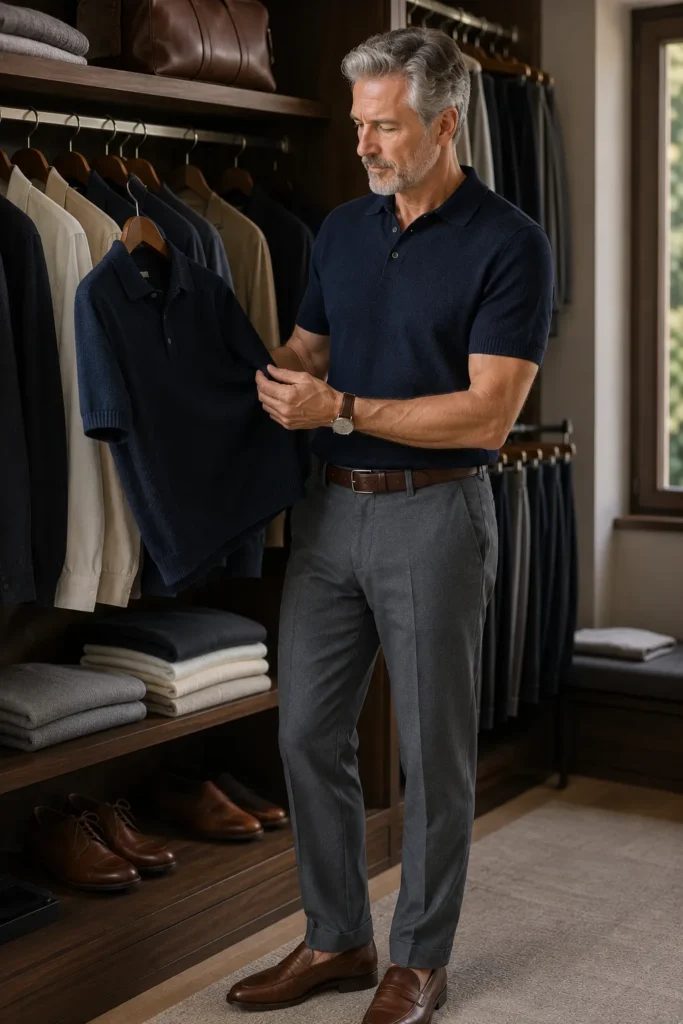
Some clothes earn their place in your closet because you wear them again and again.
Think about the items you reach for on a normal week. Your everyday trousers, walking shoes, knit polo, jacket, or favorite overshirt may deserve more of your budget than a special occasion item worn twice a year.
That does not mean buying the most expensive version.
Look for good fabric, clean stitching, useful construction, and a fit you know works for you.
| Wear frequency | Where to put your budget |
|---|---|
| Every week | Spend more time checking quality and fit |
| Occasionally | Look for good value without overbuying |
| Rarely | Keep the cost modest unless the item has a clear purpose |
| Almost never | Skip the purchase |
The best clothing purchase is often the one that gets worn dozens of times.
| How Often You Wear It | Smart Spending Approach |
|---|---|
| Every week | Focus on fit, comfort, and fabric |
| Occasionally | Look for solid value |
| Rarely | Keep spending controlled |
| Almost never | Ask yourself if you need it at all |
5. Skip Trends That Will Sit Unworn in Your Closet

A trend can look great in a shop window and still be wrong for your daily life.
If you usually wear straight-leg trousers, classic shirts, and simple jackets, buying something far outside that style may leave you with one outfit you wear once.
Your clothes should suit your real routine. Think about where you spend your time, what you already own, and what you feel comfortable wearing.
A simple test helps: Can you name at least three outfits you can make with this new piece?
If the answer is no, put it back.
A trend piece looks exciting in the store but has few partners in your closet.
You choose a piece that works with at least three outfits you already wear.
6. Check Your Existing Clothes Before Buying Anything New
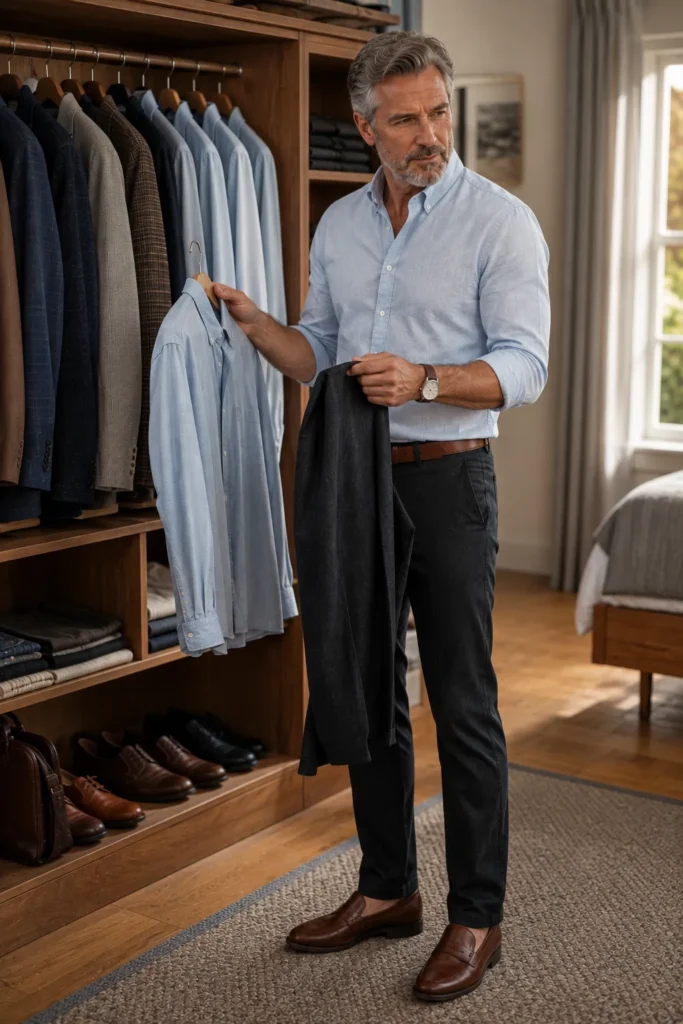
That extra pair of trousers may seem useful until you get home and find three similar pairs already hanging in the closet.
Take ten minutes before shopping and look at what you already have. Pull out the clothes you wear most often and check what is missing. You may find that you need a better shirt to go with your trousers, rather than another pair of trousers.
Use this quick check before spending money:
- Do I already own something similar?
- Can I wear this with at least two pieces I own?
- Is something I own worn out and ready to replace?
- Will I wear this in my normal weekly routine?
- Would I still want it if it were not on sale?
A sale is only a saving if you actually need the item.
Before You Buy, Check These Five Things
7. Use a Simple Outfit Formula Before You Pay
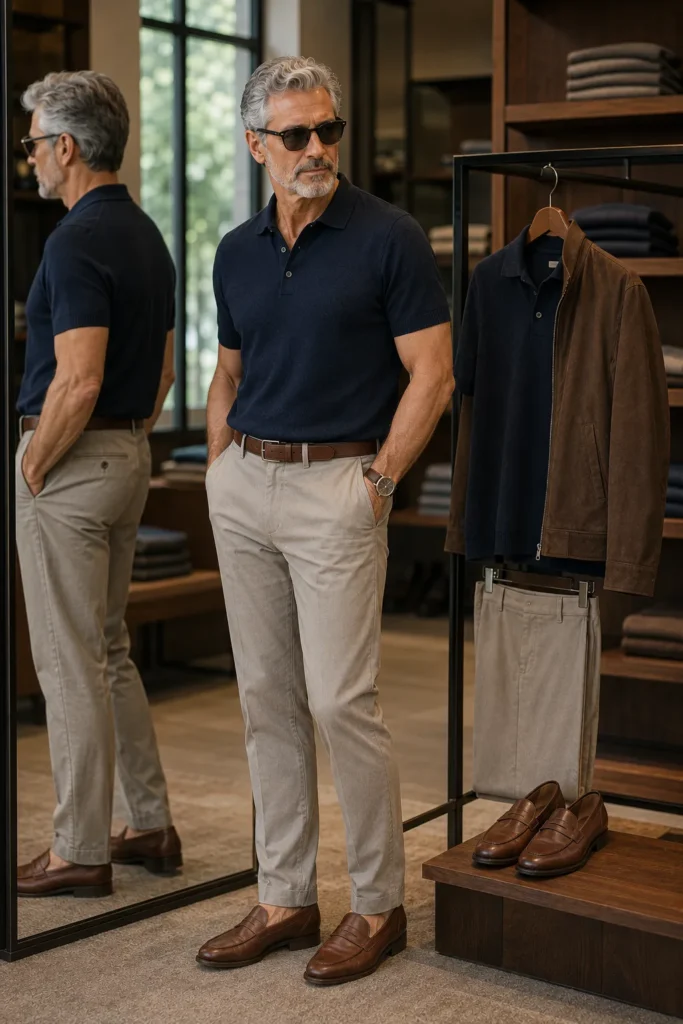
A good shopping choice should make getting dressed easier.
Before buying a shirt, jacket, pair of trousers, or shoes, build a quick outfit in your head. Think about what you already own and ask how the new item would fit into your normal rotation.
For example, a navy knit polo can work with gray trousers, beige chinos, or dark denim. A brown suede jacket can work with denim and chinos. A pair of simple leather loafers can cover several smart casual outfits.
The goal is simple: one new piece should give you several ways to dress.
Before paying for a new piece, make sure you can already name several outfits you would wear it with. Clothes that work with what you own are much less likely to become closet clutter.
Conclusion
Shopping for mens clothes over 50 does not need to mean buying more. It is about buying with a clear reason.
Start with what your closet is missing. Check the fit, stick with colors that work together, and spend more care on clothes you will wear often. Be careful with trends and always check your existing wardrobe before opening your wallet.
These simple habits can make how to shop for mens clothes over 50 much easier. Your closet becomes easier to use, your outfits become more consistent, and you waste less money on clothes that sit untouched.
Save this list on Pinterest so you can check it before your next shopping trip.