
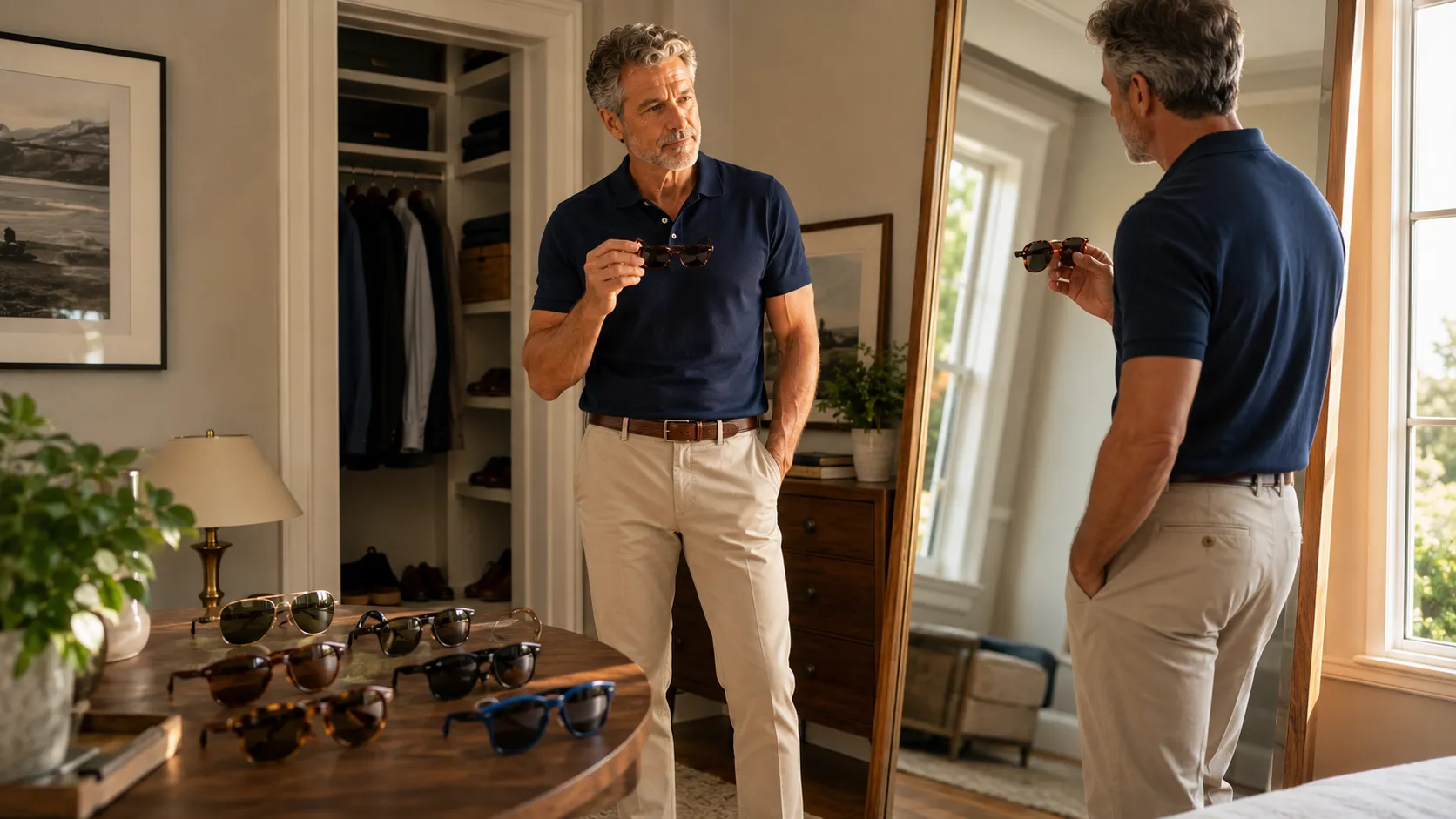
Finding sunglasses that look good after 50 does not need to be hard. The problem is that many men pick a pair because they like the color or shape, then find out the frames are too wide, too small, or do not suit their face.
I have made that mistake myself. A frame can look great on the shelf and completely wrong once you put it on.
This sunglasses guide for men over 50 focuses on the things that make the biggest difference: face shape, frame size, color, comfort, and how the glasses work with your clothes.
You do not need to follow every fashion trend. A good pair should make your face look balanced and feel natural.
You can make a good choice in about 20–30 minutes if you already have a few pairs to compare. The goal is simple: find sunglasses that protect your eyes, fit well, and look like they belong with your personal style.
What You Need
At a Glance
- Check Your Face Shape
- Match the Frame to Your Face
- Choose the Right Frame Size
- Pick a Color That Works With Your Style
- Compare Classic and Modern Frames
- Choose Lenses That Fit Your Needs
- Check the Fit Around Your Nose and Ears
- Avoid Frames That Look Too Young or Too Old
- Test the Sunglasses With Your Everyday Clothes
- Choose the Pair You Will Actually Wear
Check Your Face Shape

Stand in front of a mirror with your hair away from your face. Look at the width of your forehead, cheekbones, and jaw. Your face will usually look round, square, oval, or longer than it is wide.
If the shape is hard to spot, take a straight-on photo in good light and look at the outline of your face. You do not need a perfect match. You are only looking for a rough guide before choosing frames.
Match the Frame to Your Face
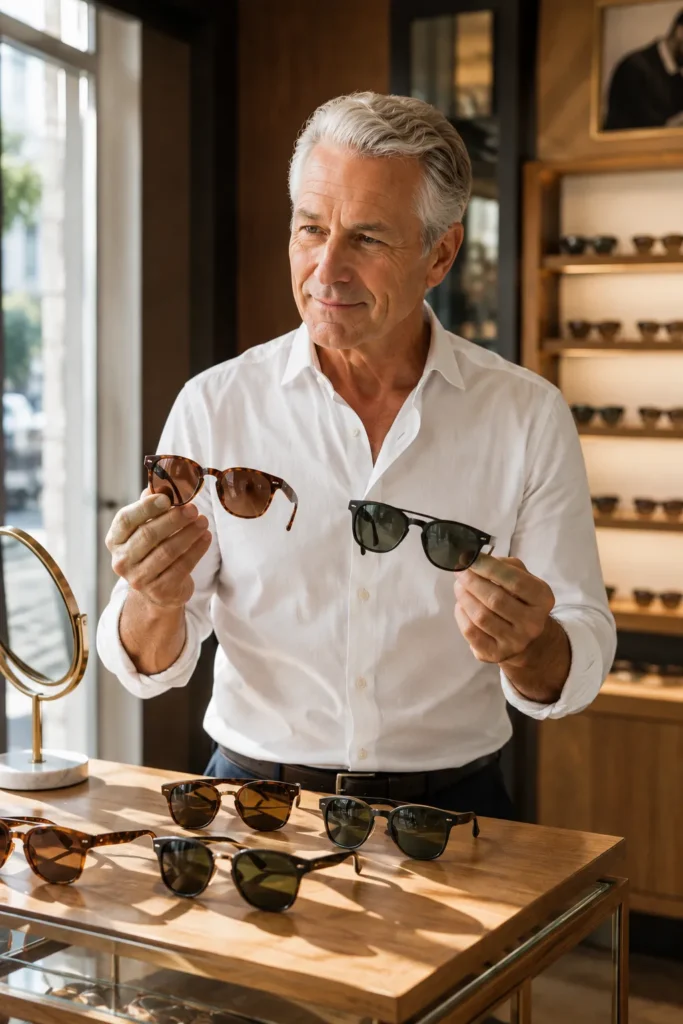
Use frame shape to create a balanced look. Rounder faces often look good with frames that have more straight lines, while square faces can work well with softer or rounded frames. Oval faces give you more choices because many frame shapes can work.
Look at the frame from the front, not only from the side. The top and bottom edges should sit naturally with your facial features instead of covering too much of your face.
Choose the Right Frame Size
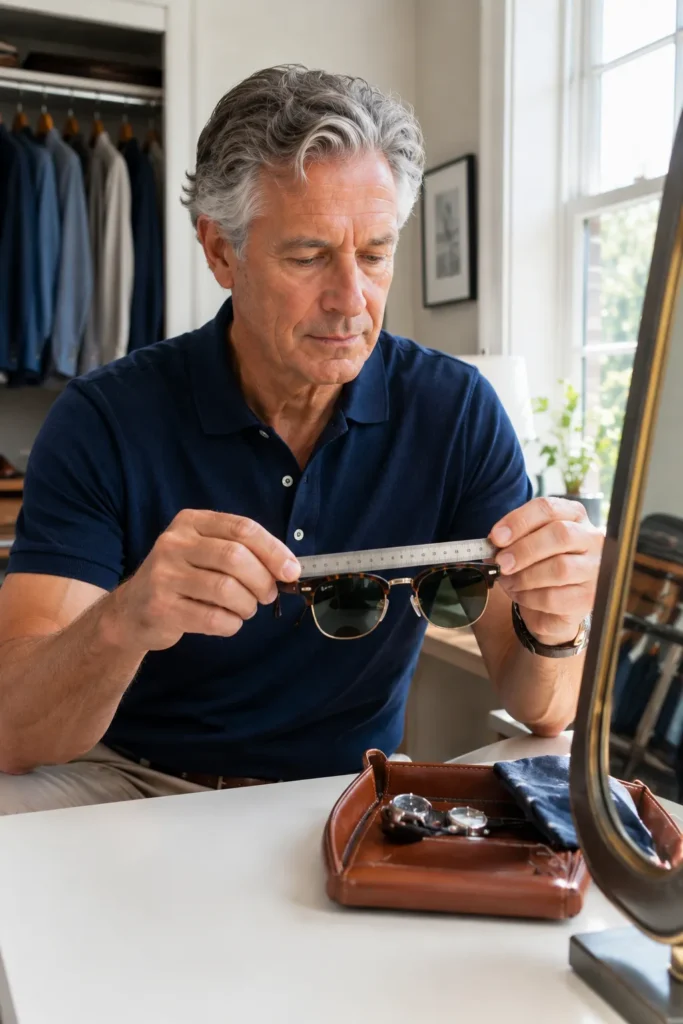
A good frame should feel balanced across your face. The sides should not press hard against your temples, and the glasses should not slide down when you move your head.
Check the numbers printed inside the frame if they are available. A common size may look like 52-20-140, where the numbers refer to lens width, bridge width, and temple length. If your current glasses fit well, use their measurements as a useful starting point.
Pick a Color That Works With Your Style

Your sunglasses should work with clothes you already wear. Brown, tortoiseshell, black, and dark blue are safe choices that pair well with shirts, polos, jackets, and chinos.
If most of your clothes are navy, gray, beige, or brown, try brown or tortoiseshell frames for a softer look. Black frames give a stronger look and can work well with darker clothes. Hold the frame near your face in daylight because indoor lighting can change how the color looks.
Compare Classic and Modern Frames
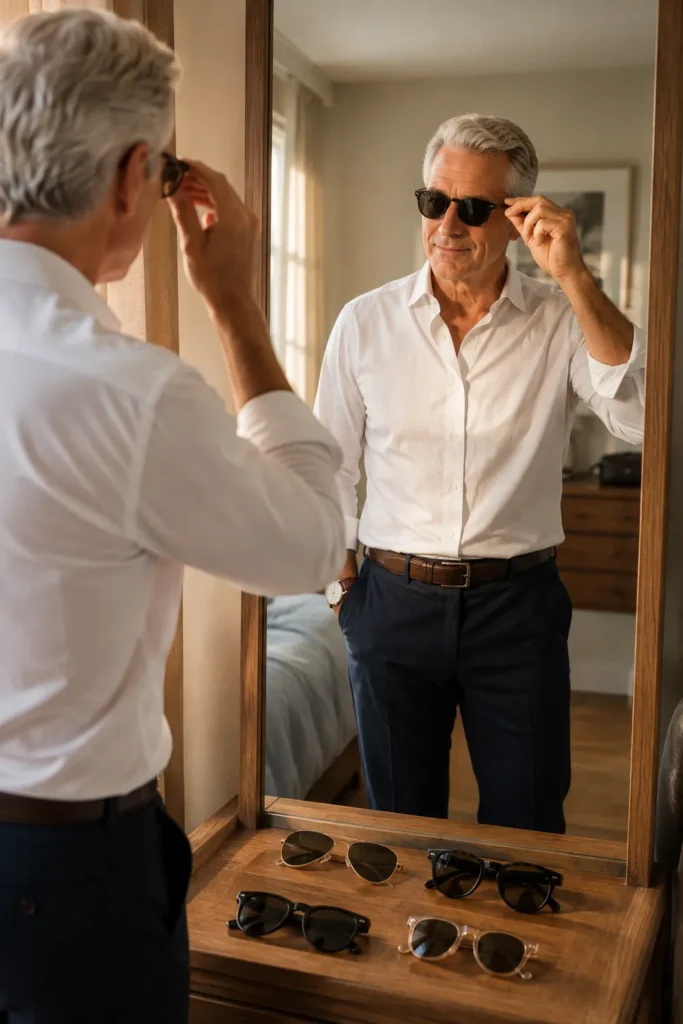
Classic frames are a good choice if you want sunglasses you can wear for many years. Wayfarer-style, aviator, and softly rounded frames can work well with many casual outfits.
Modern frames can also look good, but avoid shapes that feel too extreme for your normal style. Try 2–3 different shapes side by side. Look at yourself from the front and side, then pick the pair that feels natural rather than the one that gets the most attention.
Choose Lenses That Fit Your Needs
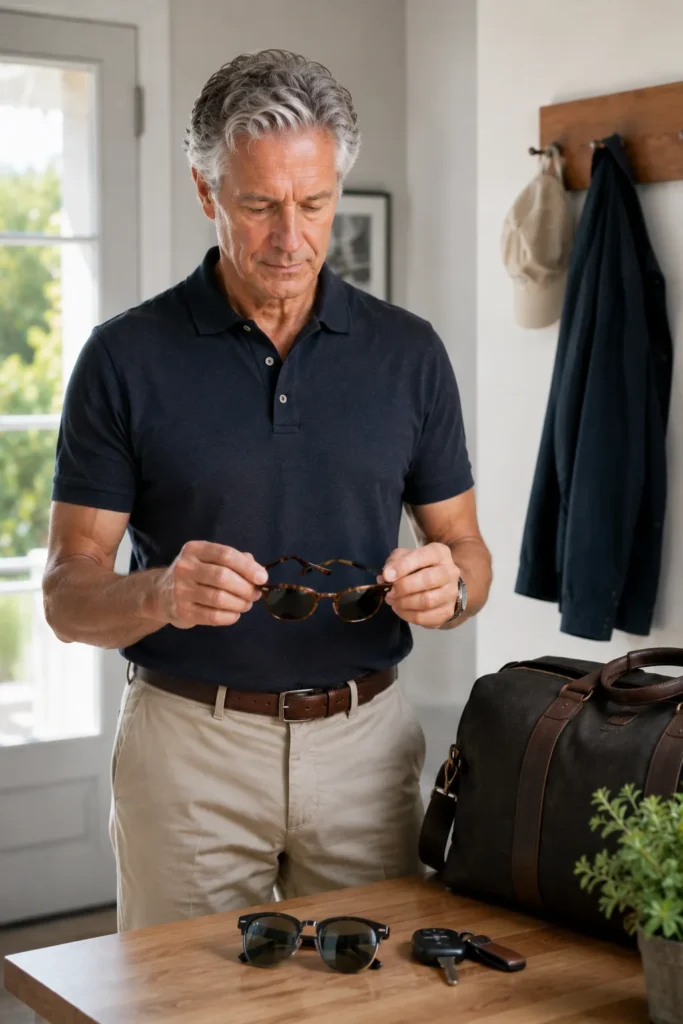
Think about where you will wear the sunglasses most. For driving, walking, travel, or outdoor use, look for lenses that provide 100% UV protection. Polarized lenses can also reduce glare from roads, water, and other bright surfaces.
Lens color affects the look too. Gray lenses keep colors fairly natural, while brown lenses can give the view a warmer feel. If you wear prescription glasses, ask your optician which lens options suit your daily use.
Check the Fit Around Your Nose and Ears
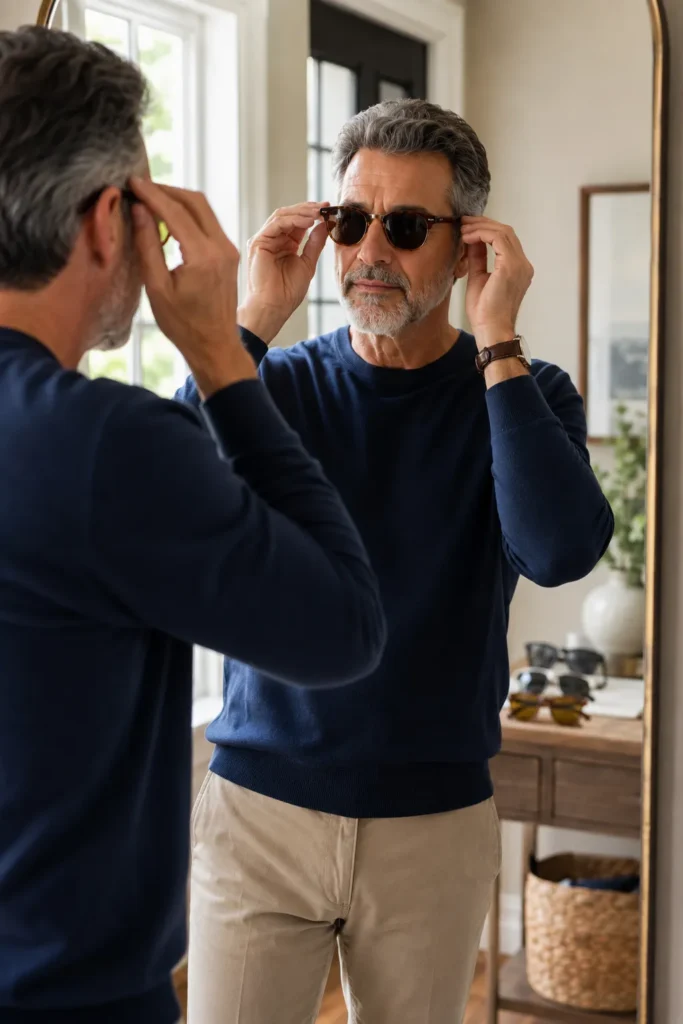
A frame can look great and still be uncomfortable after an hour. Put the sunglasses on and keep them on for a few minutes. Check that the bridge sits comfortably on your nose without leaving strong pressure marks.
The temples should rest gently near your ears. The frame should stay in place when you look down or turn your head. If it keeps sliding, feels tight, or touches your cheeks, try another size before deciding on the style.
Avoid Frames That Look Too Young or Too Old
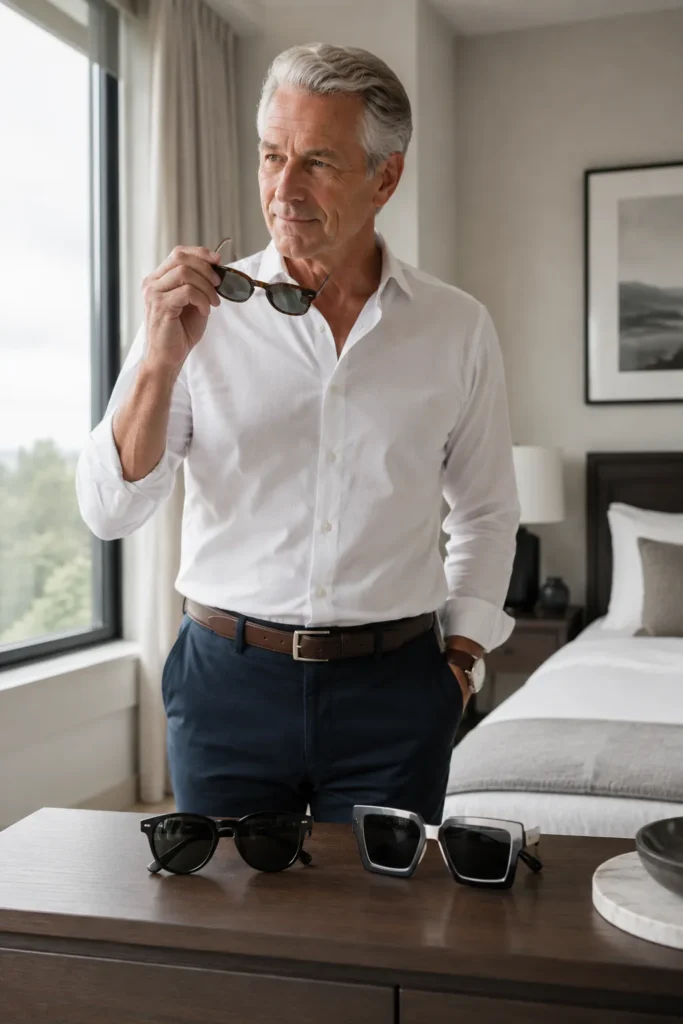
You do not need an old-fashioned frame because you are over 50. You also do not need a very bold shape to look younger. The better choice is a frame that fits your face and matches the clothes you already enjoy wearing.
Look for clean shapes, good proportions, and colors that feel natural on you. If a pair makes you feel like you are wearing a costume, leave it behind. Your sunglasses should feel like part of your outfit.
Test the Sunglasses With Your Everyday Clothes
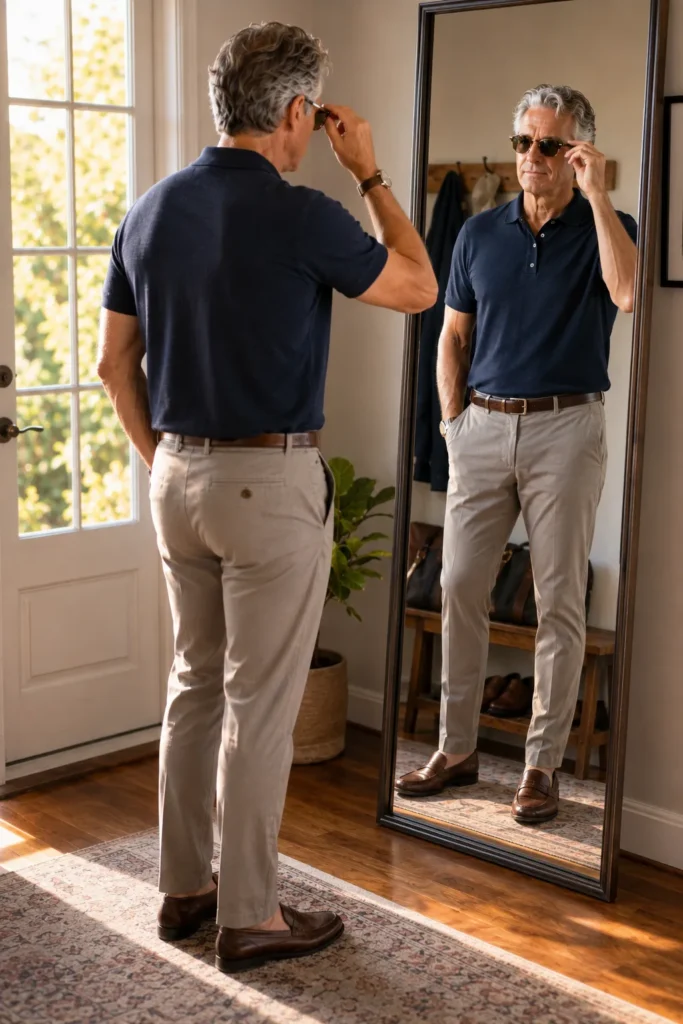
Put on the sunglasses with an outfit you would normally wear for lunch, shopping, travel, or a weekend outing. Check the full look in a mirror instead of judging the frames on their own.
Pay attention to the balance between your face, shirt, jacket, and shoes. A pair that works with 3–4 regular outfits will give you more use than a pair that only suits one special look. Try the glasses in daylight before making your final choice.
Troubleshooting, Mistakes & FAQ
Troubleshooting: If This Happens, Try This
| If This Happens | Try This |
|---|---|
| The glasses keep sliding down | Try a smaller frame or have the fit adjusted by an optician. |
| The frame feels tight | Choose a wider frame. Do not keep wearing one that presses your temples. |
| Your face looks hidden by the frame | Try a smaller lens or a lighter frame shape. |
| The color feels too strong | Try brown, tortoiseshell, gray, or another softer neutral shade. |
Common Questions
What sunglasses look best on men over 50?
Classic shapes with good proportions are a strong starting point. The best pair still depends on your face shape, size, and personal clothes.
Should older men wear dark sunglasses?
Yes. Dark lenses can look great, but darkness does not tell you how much UV protection the lenses provide. Check for proper UV protection before buying.
Are aviator sunglasses good for men over 50?
They can be. Choose a size that fits your face without being too wide or heavy.
Should sunglasses cover my eyebrows?
The frame can sit near your eyebrows, but it should not cover most of them. Check the full frame balance on your face.
How do I know if sunglasses are too big?
Look for frames that extend far beyond the sides of your face or slide down easily. Try a smaller size if the fit feels loose.
Is comfort more important than style?
Yes. A pair that looks good but hurts your nose or ears will probably stay in a drawer. Choose a pair you can wear comfortably for several hours.
Quick Reference Card + Conclusion
Quick Reference Card
- Check your face shape.
- Match the frame to your face.
- Choose the right frame size.
- Pick a color that fits your style.
- Compare classic and modern frames.
- Choose lenses for your needs.
- Check the fit around your nose and ears.
- Avoid frames that feel too young or too old.
- Test the sunglasses with your everyday clothes.
- Choose the pair you will actually wear.
Choose the Pair You Will Actually Wear
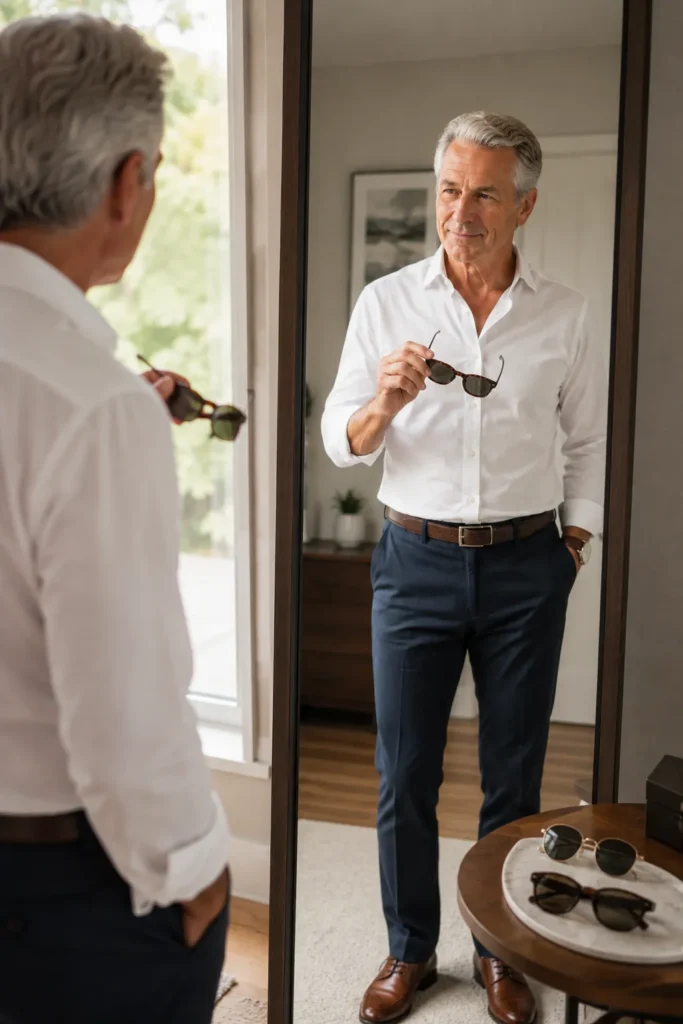
Do not buy a pair only because it looks good in a store photo. Put it on, check the fit, and see how it works with your normal clothes.
A good pair should feel comfortable, suit your face, and give you the UV protection you need.
Take your time comparing two or three pairs. Your best choice is the one you feel good wearing again and again.
Save this sunglasses guide for men over 50 on Pinterest so you can check these points the next time you shop.