
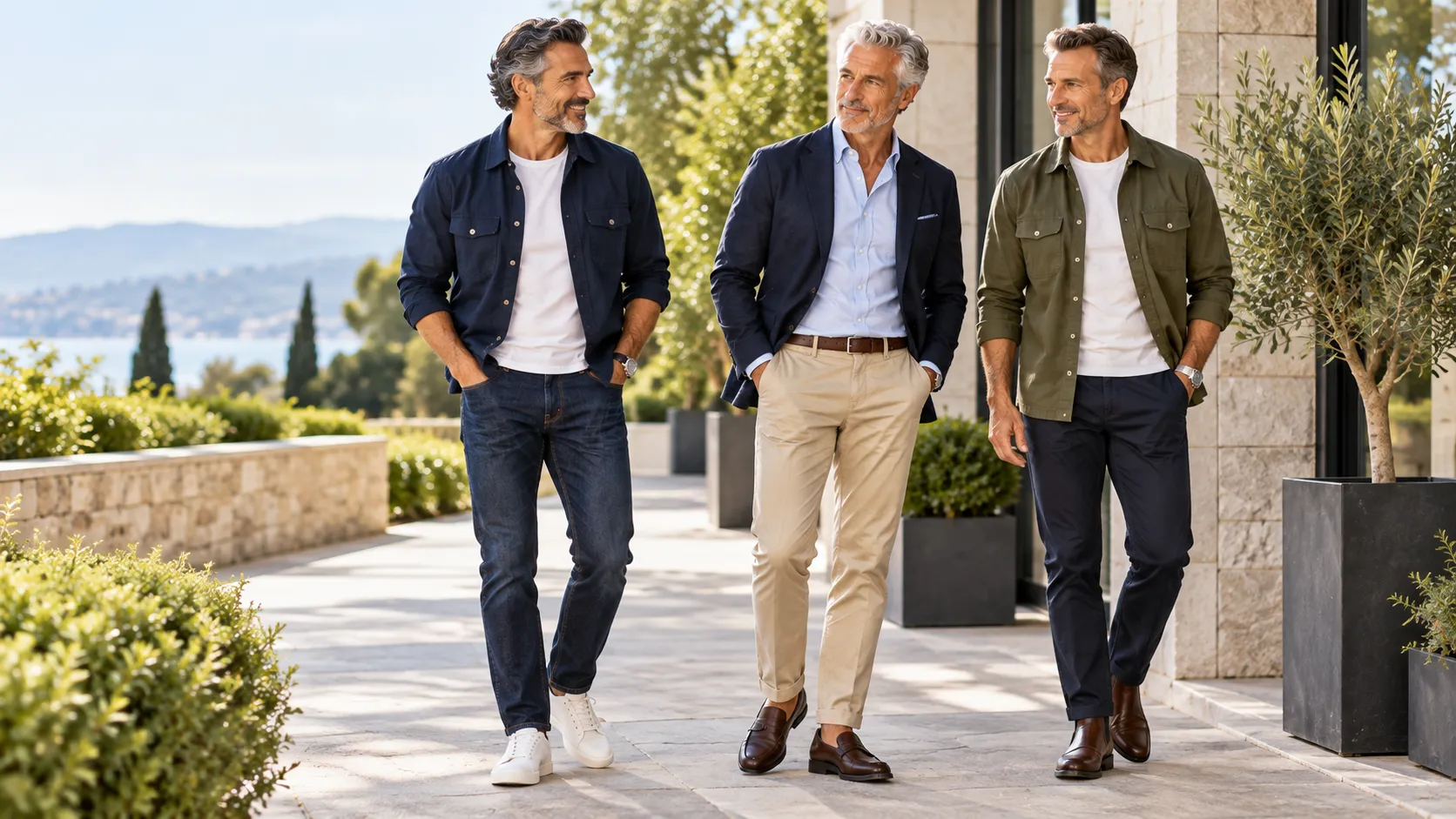
Getting dressed after 50 can feel frustrating when your clothes look older than you feel. Your old favorites may no longer fit well, and some new trends may feel too young or uncomfortable.
The good news is that you do not need a new wardrobe to look fresh and modern. These 7 Ways to Dress Younger Without Trying Too Hard After 50 will help you make better use of your clothes and find a style that feels natural.
The secret is to focus on fit, color, clean shoes, and a few modern basics. Small changes can make a big difference without forcing you to follow every new trend.
You can start with the clothes already hanging in your closet, which keeps the cost low.
In this guide, you will learn how to spot dated pieces, choose clothes that fit your body today, and add modern basics to your everyday outfits. Each step gives you a clear action to follow, so you can make progress at your own pace.
Set aside about 60 to 90 minutes to review your wardrobe and plan your first outfit. You do not need expensive brands or a complete style makeover. A few thoughtful choices can help you look neat, confident, and comfortable at any age.
Time and Difficulty
What You Need
At a Glance
1. Check Your Wardrobe for Outdated Clothes
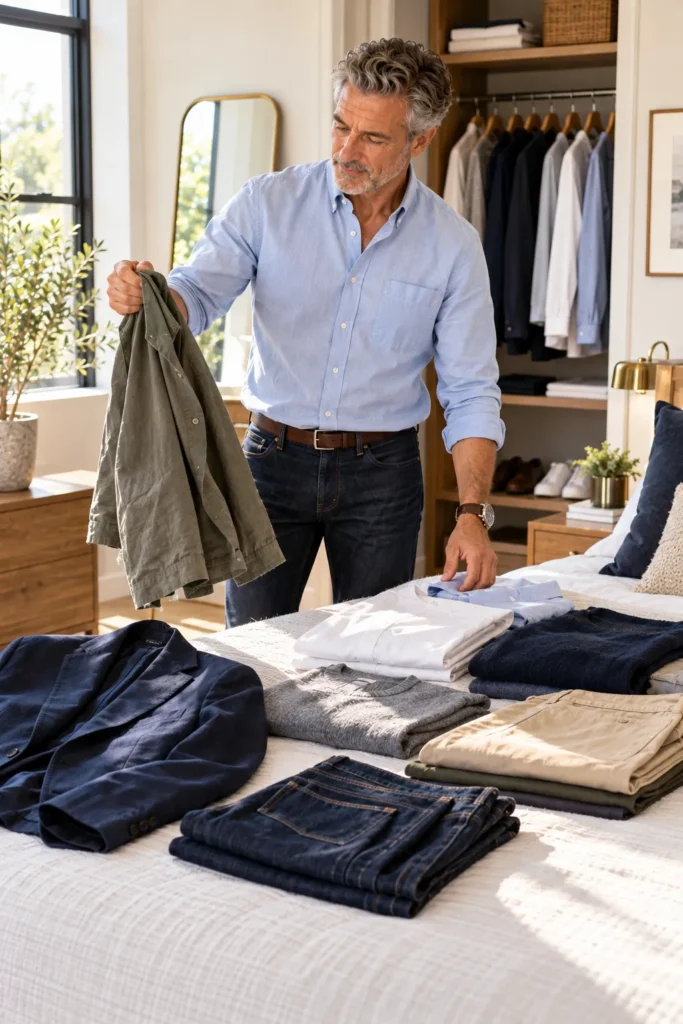
A crowded wardrobe can make getting dressed harder than it needs to be. You may have shirts you no longer wear, trousers that feel uncomfortable, or jackets that have lost their shape.
Take 15 minutes to pull out the clothes you wear most often. Place them on your bed or a clean surface where you can see everything.
Look for faded fabric, stretched collars, worn elbows, and old fits that no longer suit you. Make three piles: keep, repair, and donate. Keep clothes that fit well and feel good. Set aside repairable pieces instead of throwing them away.
Do not judge a shirt or jacket by its age alone. A classic navy blazer can look current for years if it is in good shape and fits well.
2. Choose Clothes That Fit Your Body Today
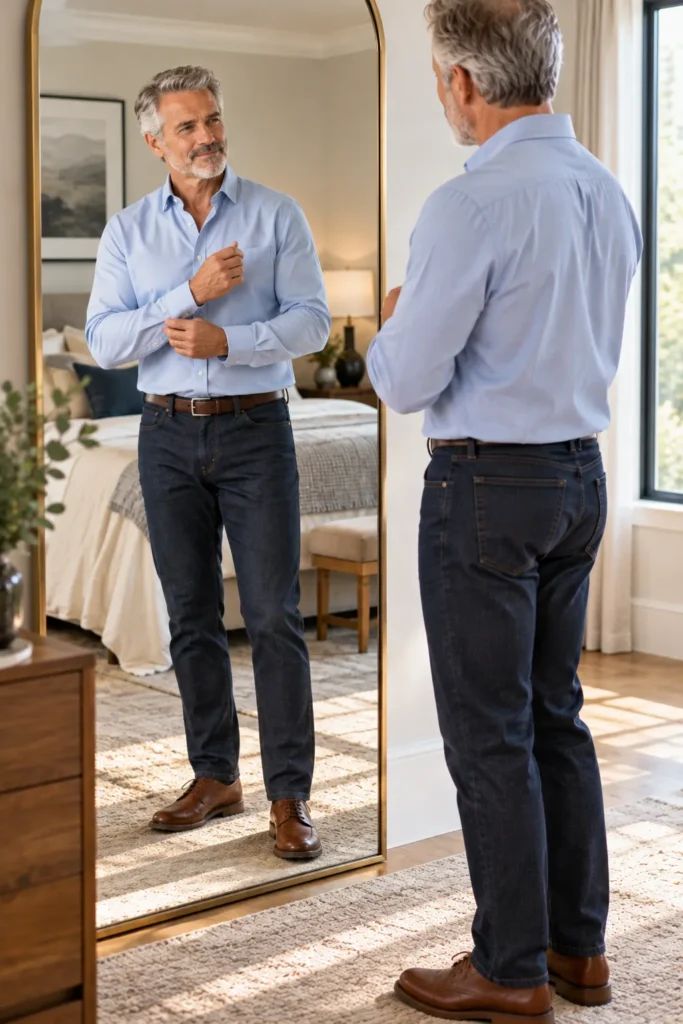
Clothes can make you look older when they hang too loosely or pull tightly in the wrong places. Put on a plain shirt and a pair of trousers you wear often. Stand in front of a full-length mirror and check how each piece sits on your shoulders, waist, and legs.
Your shirt seams should rest near the ends of your shoulders. Sleeves should reach your wrists without covering your hands. Trousers should sit comfortably at your waist and fall without large folds around your shoes.
You should be able to sit, walk, and raise your arms without feeling restricted.
A good fit matters more than a brand name. If a favorite item is close to fitting well, a tailor may be able to fix the sleeves, waist, or trouser length.
3. Add Modern Basics to Your Everyday Outfits
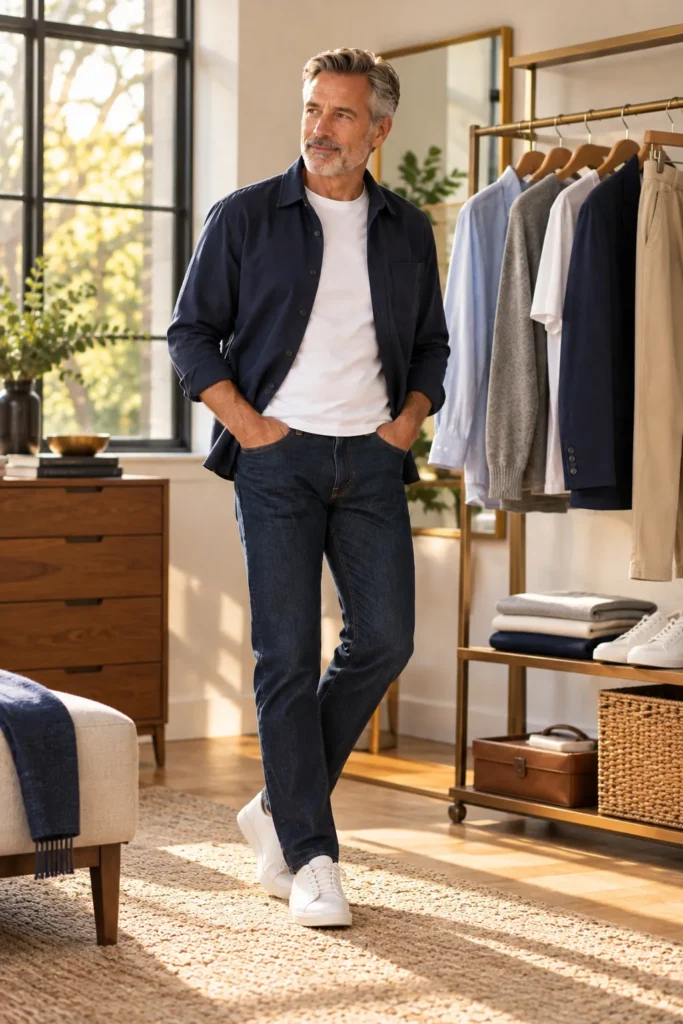
You do not need a closet full of new trends to refresh your style. Start with one modern basic that works with several pieces you already own.
A plain white T-shirt, a light blue button-down shirt, dark straight-leg jeans, or a simple navy overshirt can be a good choice.
Pick the item that fills the biggest gap in your wardrobe. For example, pair a clean white T-shirt with dark jeans and tidy leather sneakers for a casual day out. For a lunch or family gathering, swap the T-shirt for a light blue shirt and add a brown belt.
Choose solid colors and clean shapes before trying bold patterns. This gives you more outfit options and helps you avoid buying clothes that match only one item.
4. Wear Colors That Freshen Up Your Look
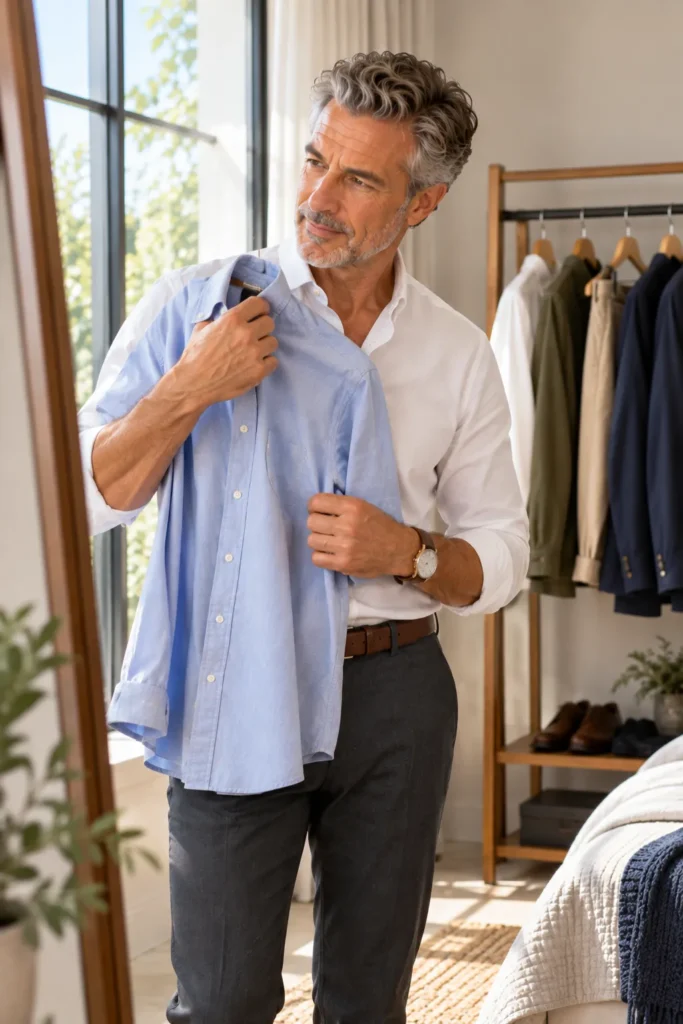
The colors near your face can change how your whole outfit looks. You do not need bright clothes to look younger. Start with shades that work well together, such as navy, white, light blue, olive, beige, and charcoal.
Take a shirt you already own and hold it near your face in front of a mirror. Check how the color looks in natural daylight. A clean white or light blue shirt can brighten a dark outfit, while an olive overshirt adds color without looking loud.
Try this simple combination: a light blue shirt, dark jeans, and brown shoes. Keep the rest of the outfit plain so the colors do not compete. If you enjoy darker shades, add a lighter shirt to break up the look.
5. Replace Worn Shoes With Modern Styles

Old, worn shoes can make an otherwise good outfit look neglected. Check the pair you wear most often. Look for cracked leather, loose soles, badly worn heels, and dirty laces.
If the shoes are still in good shape, clean them before spending money on a replacement.
For everyday wear, consider plain leather sneakers, brown loafers, or simple Chelsea boots. Choose a style that suits your daily routine and feels comfortable for walking.
White or neutral sneakers work well with dark jeans, while brown leather shoes pair nicely with chinos and a button-down shirt.
Comfort comes first. Try shoes on later in the day, when your feet may be slightly larger. Walk around the shop for a few minutes and check for rubbing or pressure. A modern shoe should look good without hurting your feet.
6. Update Your Accessories Without Overdoing Them
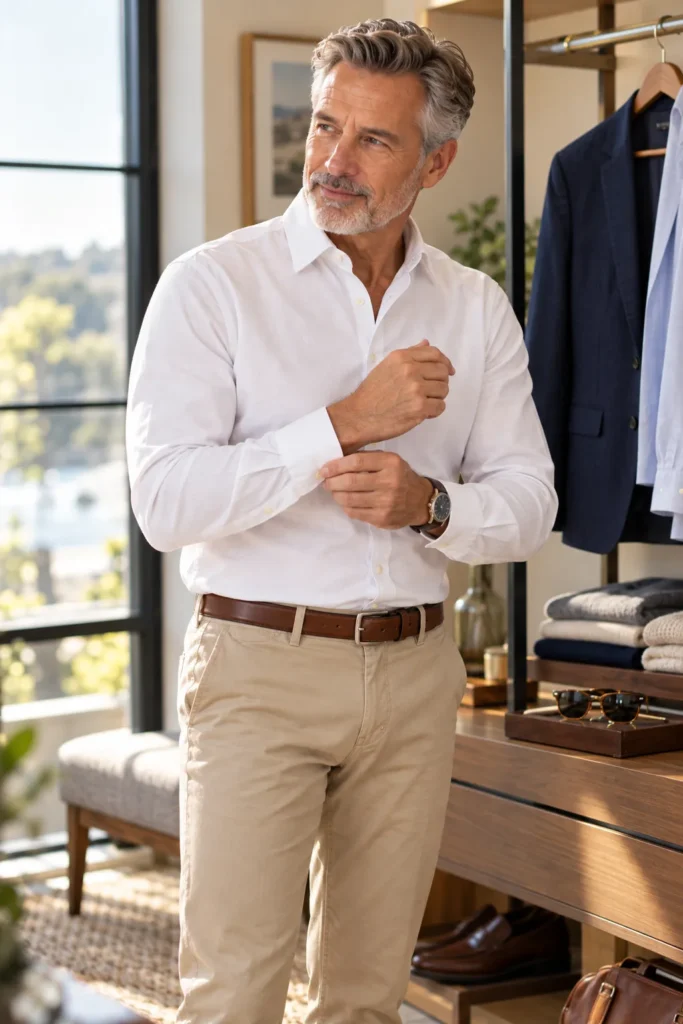
Accessories can make familiar clothes feel more current. You do not need a large collection. Pick one item that adds something useful to your outfit, such as a clean leather belt, a simple watch, or a pair of classic sunglasses.
Start by matching your belt to your shoes when the outfit is formal or smart casual.
For example, wear a brown belt with brown leather shoes and beige chinos. A simple watch can finish the look without drawing too much attention.
Check the accessories you already use. Replace a cracked belt, clean your watch strap, or remove a worn bag from your daily outfit.
Avoid wearing several bold items at once. One or two well-kept accessories usually look better than a collection that competes for attention.
7. Build One Complete Outfit That Feels Like You
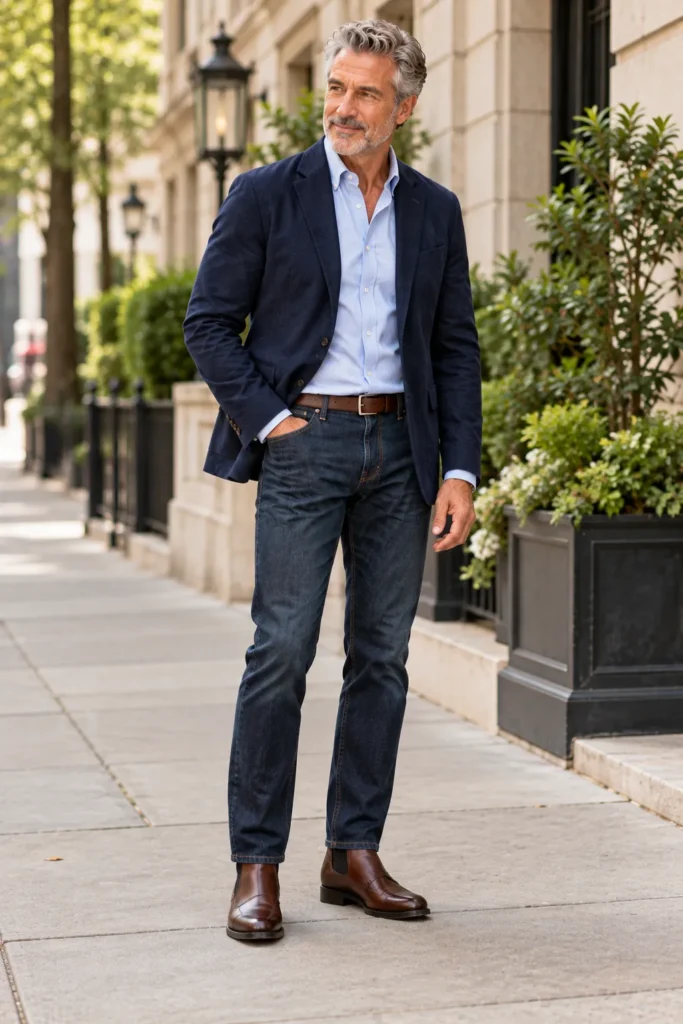
A good outfit does not need many pieces. It needs clothes that fit well, colors that work together, and shoes that suit the occasion. Use the items you kept from your wardrobe review to put together one complete look.
Try this combination for a casual lunch or a weekend outing:
- A well-fitted white or light blue shirt
- Dark straight-leg jeans or beige chinos
- Brown leather loafers or clean white sneakers
- A matching brown belt
- A navy overshirt or casual blazer if the weather calls for it
Stand in front of your full-length mirror and check the outfit from the front and side. Make sure your shirt sits neatly, your trousers have the right length, and your shoes look clean. Walk around and sit down to check your comfort.
Take a photo of the finished outfit on your phone. You can use it as a reference when getting dressed again.
Once you have one outfit that works, try changing one item at a time to create more looks without buying a whole new wardrobe.
Troubleshooting Common Style Problems
Even a good outfit can look wrong if one or two details are off. Use these quick fixes before you decide to replace your clothes.
Frequently Asked Questions
How can a man look younger after 50 without buying new clothes?
Start by checking the fit and condition of your current clothes. Clean your shoes, remove worn accessories, and pair familiar pieces in fresh ways. A well-fitted shirt and clean trousers can make a noticeable difference.
What colors should men over 50 wear?
Navy, white, light blue, olive, beige, and charcoal are good starting points. Choose shades that suit your skin tone and work with the clothes you already own.
Should men over 50 wear jeans?
Yes. Dark, straight-leg or slim-straight jeans can look good at any age. Choose a pair that lets you sit and walk comfortably without pulling at the waist or thighs.
Do men over 50 need to follow fashion trends?
No. Pick trends that fit your daily life and personal taste. A modern shirt, updated sneakers, or a well-fitting jacket can refresh your look without changing your whole style.
Is it better to wear fitted or loose clothes after 50?
Choose clothes that follow your natural shape without feeling tight. Very loose clothes can hide your shape, while tight clothes may pull or bunch. Comfort and fit should guide your choice.
Quick Reference Card for Dressing Younger After 50
□ A full-length mirror
□ A well-fitted shirt and trousers
□ Clean everyday shoes
□ A belt and one simple accessory
Conclusion
Looking younger after 50 starts with the clothes you wear every day. Focus on good fit, fresh colors, clean shoes, and a few useful accessories. You do not need to replace your whole wardrobe or follow every trend.
Start with one outfit this week and see how it feels. Save this guide on Pinterest so you can return to these seven steps whenever you need fresh outfit ideas.