

Finding your personal style after 50 can feel confusing, especially if your wardrobe is full of clothes that no longer fit your taste.
You may have shirts you rarely wear, trousers that feel uncomfortable, or jackets that never seem to match anything. Buying more clothes will not fix these problems if you do not know what suits you.
This guide will help you find your personal style after 50, starting with the clothes you already own. You will learn how to choose colors, find a better fit, pick useful basics, and put together outfits for daily life.
You do not need a large budget or a brand-new wardrobe to get started.
My advice is to take this process slowly. Start with your own preferences, pay attention to comfort, and choose clothes that suit your body and routine.
A well-fitting pair of jeans, a clean shirt, and good shoes can be more useful than a wardrobe full of trendy pieces.
You can complete the first steps in an afternoon. Building a wardrobe that feels right may take a few weeks, especially if you need to replace older clothes.
By the end, you will have a clear plan for creating outfits that look neat, feel comfortable, and reflect who you are.
Time and Difficulty
What You Need
You can start with what you have at home. These items will help you review your clothes, test outfits, and plan future purchases without wasting money.
At a Glance
Step 1: Check the Clothes You Already Own

Set aside 30–45 minutes to review your wardrobe before buying anything. Take out your shirts, trousers, jeans, jackets, and shoes. Place them where you can see them clearly.
Make three groups: clothes you want to keep, items that need a closer look, and pieces you no longer wear. Check each item for fit, comfort, damage, and color. Try on clothes if you are unsure about them.
Do not throw away every older item. A classic shirt or jacket may still work well with other pieces. Your aim is to find useful clothes and spot the gaps in your wardrobe.
✓ Feels comfortable
✓ Matches your taste
✓ In good condition
✓ Needs a small change
✓ May match other items
✓ Worth trying again
✓ Uncomfortable
✓ No longer suits you
✓ Cannot be repaired
Step 2: Pick Three Words That Describe Your Style
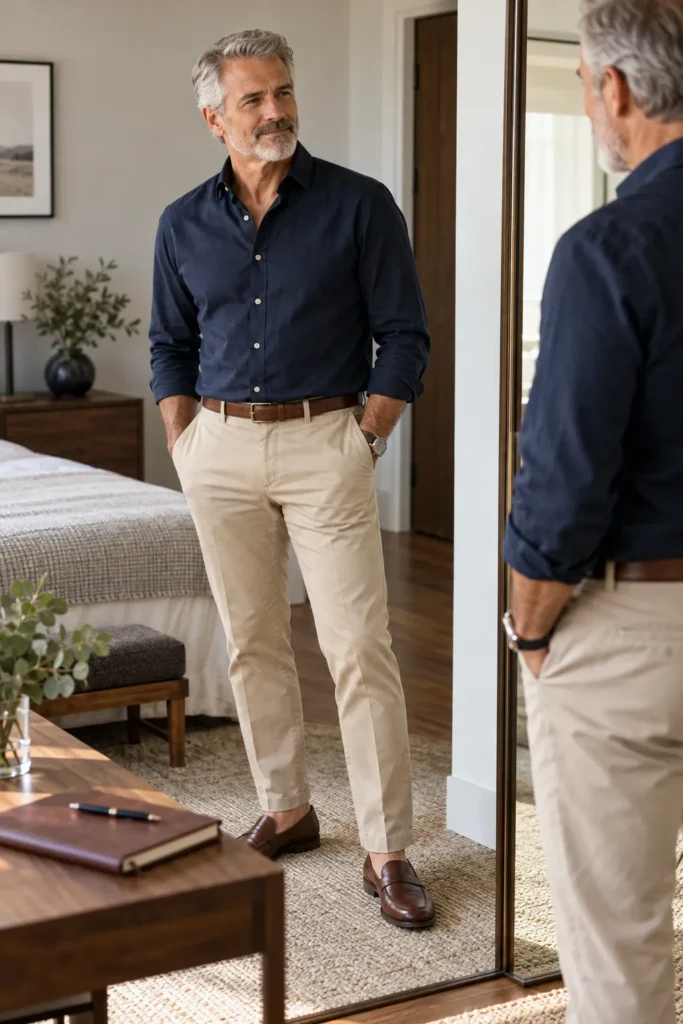
Choose three words that describe how you want to look and feel in your clothes. These words will guide your choices and help you avoid buying items that do not suit you.
For example, you might choose classic, comfortable, and simple. That could mean plain shirts, straight-leg jeans, neat trousers, and clean shoes. Another man may prefer modern, relaxed, and practical, which could lead to polo shirts, chinos, and casual jackets.
Write your three words in your phone or notebook. Use them as a guide whenever you review your wardrobe or shop for something new. Your style should suit your taste, body, and daily life.
Step 3: Save Outfit Photos That Match Your Taste

Open Pinterest and save 10–15 outfit ideas that you would feel comfortable wearing. Look for men around your age in clothes that suit your daily routine. Save a mix of casual, smart-casual, and formal outfits if you need all three.
Look at the full outfit instead of focusing on one expensive item. Notice the colors, shirt styles, trouser cuts, jackets, and shoes. After saving your ideas, check which details appear most often.
Write down your three favorite details. You may prefer navy and beige, straight-leg jeans, or brown leather shoes. These notes will help you recreate similar outfits with clothes you already own.
Step 4: Find Colors That Work Well Together
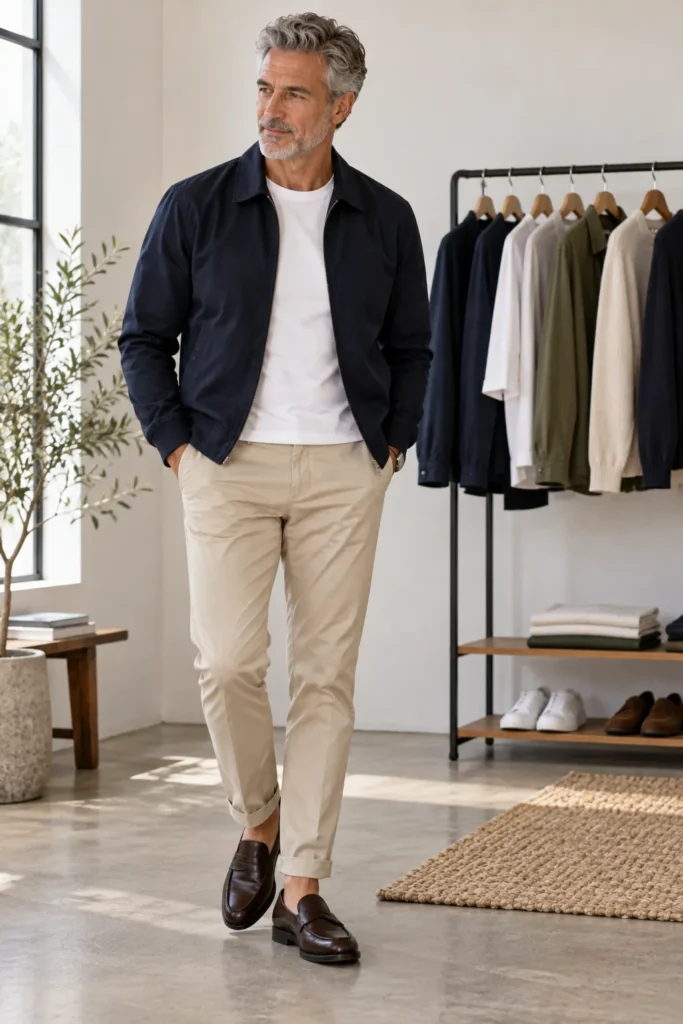
You do not need dozens of colors to dress well. Start with three neutral colors and two accent colors that work with your existing clothes. Navy, white, gray, beige, and olive are useful starting points for men’s outfits after 50.
Choose your colors by laying two or three clothing items next to each other. Check whether the shirts, trousers, and jackets look good together. For example, a white shirt works with navy chinos, gray trousers, or dark jeans. This gives you several outfit options without buying more clothes.
Step 5: Learn Which Clothes Fit Your Body Best
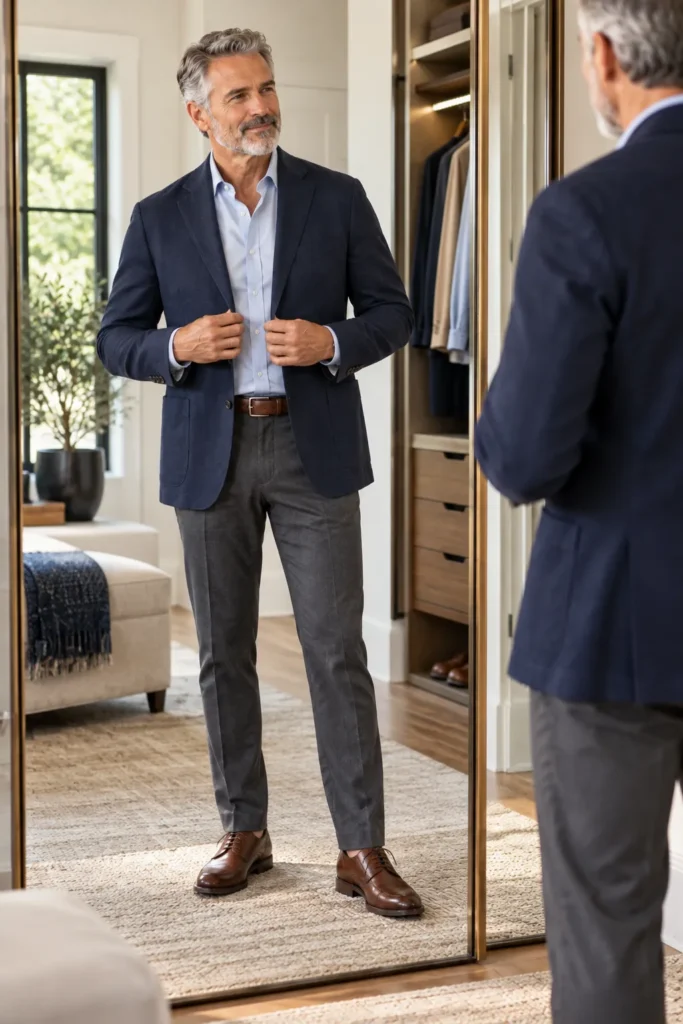
Good fit matters more than a famous brand. Clothes should follow your natural shape without pulling, sagging, or making movement difficult. Take 10–15 minutes to try on your main shirts, trousers, and jackets in front of a full-length mirror.
Check these areas:
- Shirts: Shoulder seams should sit close to your natural shoulders.
- Sleeves: Cuffs should reach your wrists without covering your hands.
- Trousers: The waistband should feel secure without digging into your stomach.
- Jackets: You should be able to button the jacket without strong pulling across the chest.
Do not assume you need loose clothes because you are over 50. Choose a fit that feels comfortable and looks balanced on your body. A local tailor can shorten sleeves or trouser hems if the rest of the garment fits well.
Step 6: Build a Wardrobe Around Basic Pieces
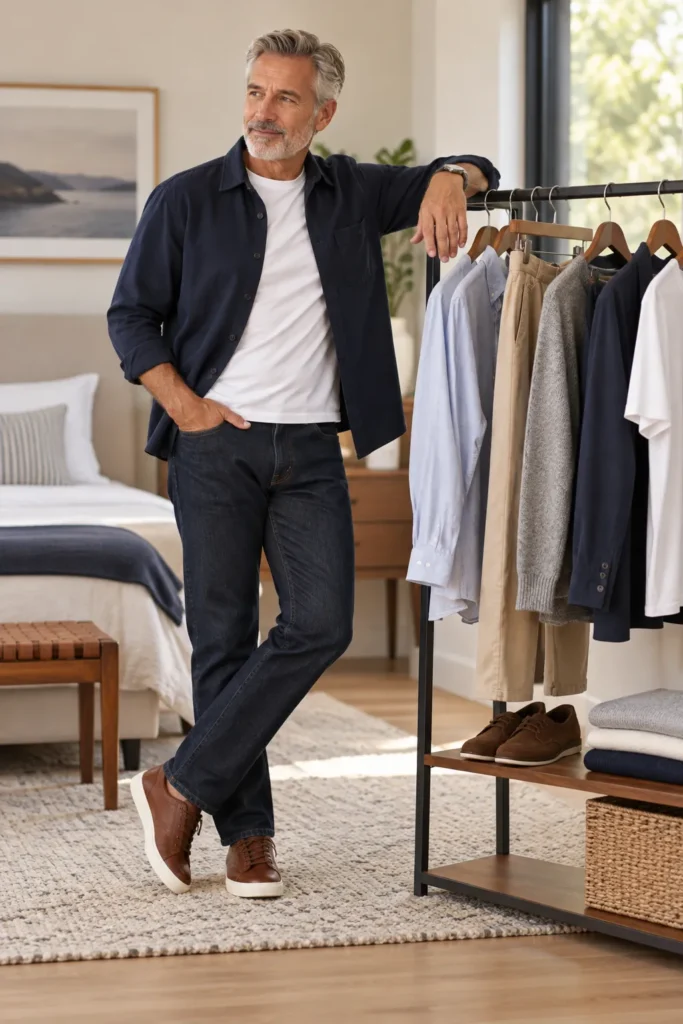
Start with clothes you can wear in several combinations. You do not need to buy every item at once. Check what you already own and make a short list of missing pieces before shopping.
A useful starting set includes two plain T-shirts, two button-down shirts, one pair of dark jeans, one pair of chinos, one lightweight jacket, and one versatile sweater. Adjust these numbers to suit your routine and budget. If you work in a formal setting, you may need dress trousers and a blazer instead of extra casual pieces.
Choose solid colors and simple patterns first. They are easier to match than large prints or bold designs. Once your basic wardrobe works well, you can add pieces that show more of your personality.
Step 7: Choose Shoes That Match Your Daily Life
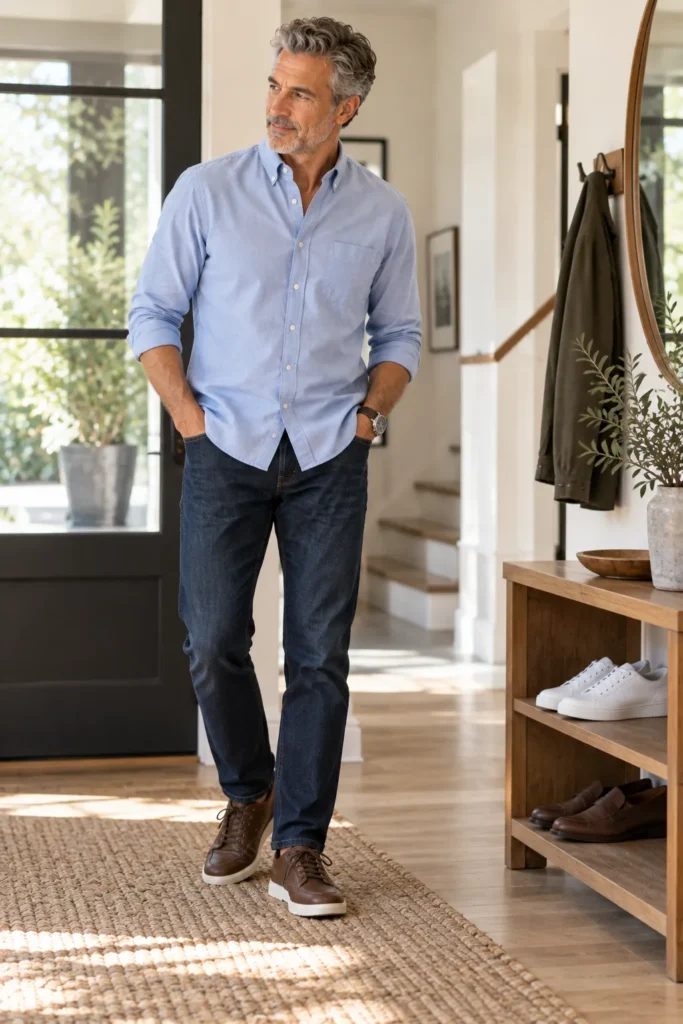
Your shoes affect how an outfit looks and feels. Start by checking the pairs you already own. Keep shoes that are comfortable, clean, and in good condition. You do not need a large shoe collection to dress well after 50.
Choose footwear based on your daily needs. Clean sneakers work with jeans and casual trousers.
Brown leather loafers suit chinos and smart-casual outfits. Leather boots work well with denim and thicker trousers, while dress shoes are useful for formal events.
Step 8: Add One Layer to Make Outfits More Interesting
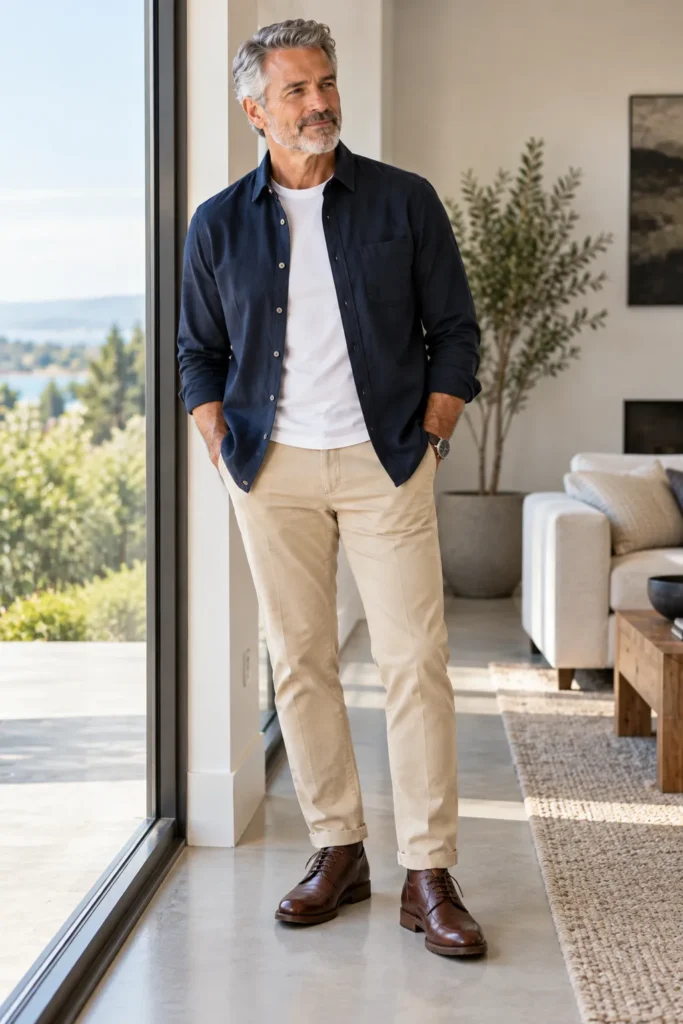
A simple outfit can look more complete with one extra layer. Try wearing an open overshirt over a plain T-shirt, a cardigan over a button-down shirt, or a casual jacket over a polo shirt.
These combinations work well for men over 50 because they offer variety without requiring many new clothes.
Start with one layer that matches your style words and color palette. Navy, olive, gray, and brown are useful choices.
Check the weather before dressing, and make sure the added layer does not pull at the shoulders or bunch around the waist.
Step 9: Try One New Style Detail at a Time
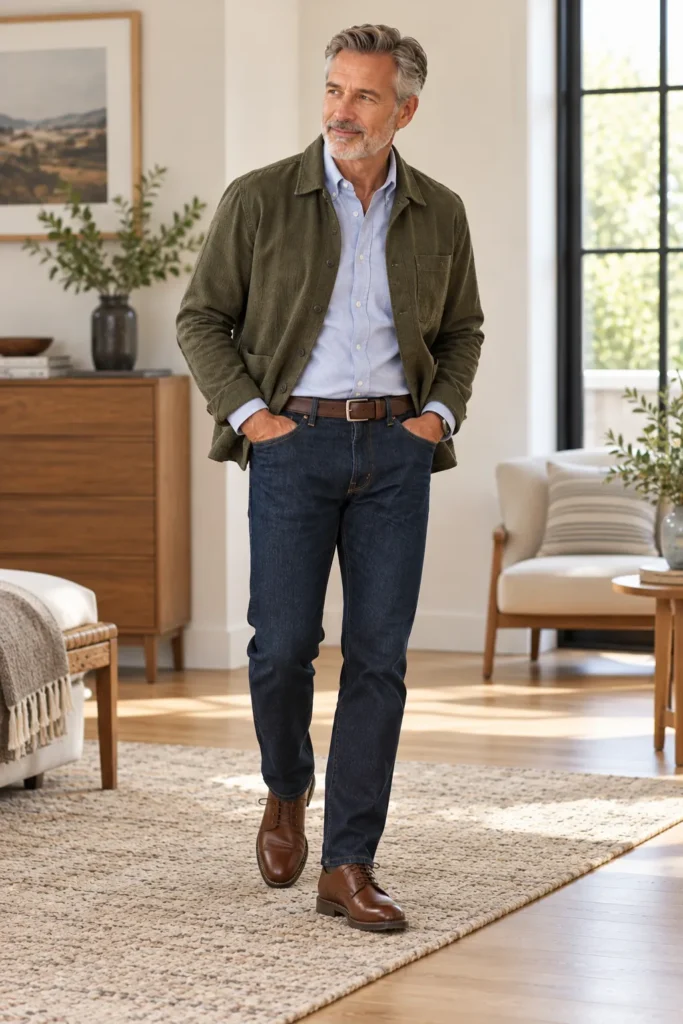
Changing your whole wardrobe at once can waste money and leave you with clothes you rarely wear. Test one new detail at a time instead.
You could try a different shirt color, switch from loose trousers to a straight-leg cut, or wear a textured sweater with your usual jeans.
Wear the new combination for a full day before deciding whether it suits you. Notice how comfortable you feel, how well the pieces match, and whether the outfit fits your normal routine.
If you like the result, keep the idea. If you do not, return to the clothes you feel good wearing.
Step 10: Add Accessories That Match Your Personal Style
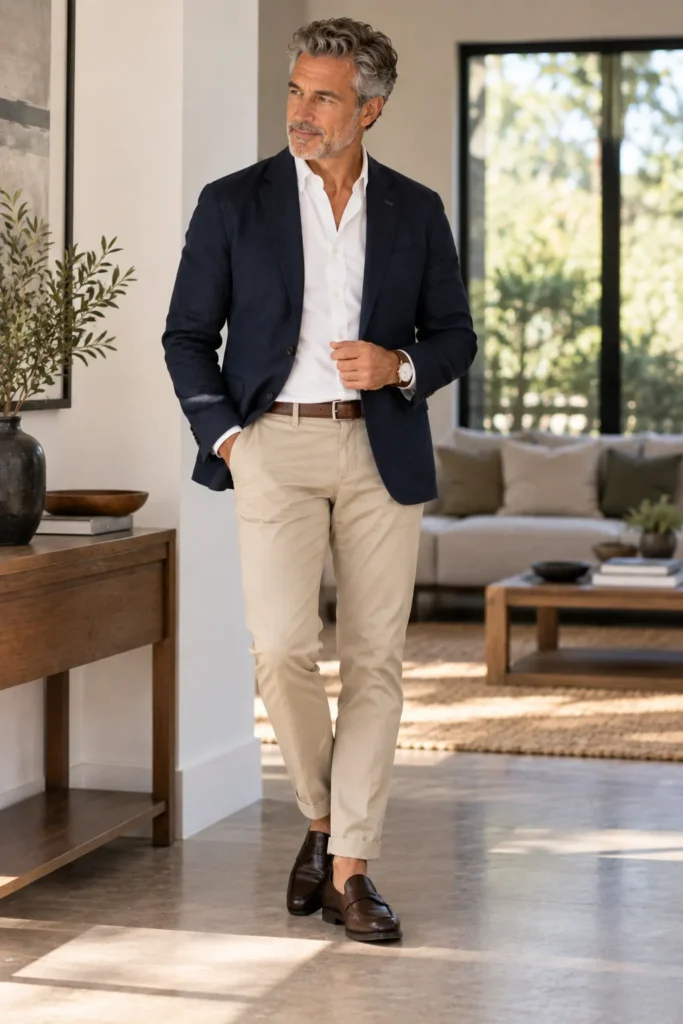
Accessories can make a simple outfit look more complete without adding many new clothes. A classic watch, a leather belt, a pair of glasses, or a simple bracelet can work well for men over 50.
The best choice depends on your taste and the clothes you wear most often.
Start with one or two accessories that you already own. Match your belt and shoes when it makes sense, and avoid wearing too many statement pieces at once.
For a casual outfit, try dark jeans, a plain shirt, clean sneakers, and a simple watch. For a smart-casual look, wear chinos, a button-down shirt, brown leather shoes, and a matching belt.
Step 11: Dress for Your Daily Routine
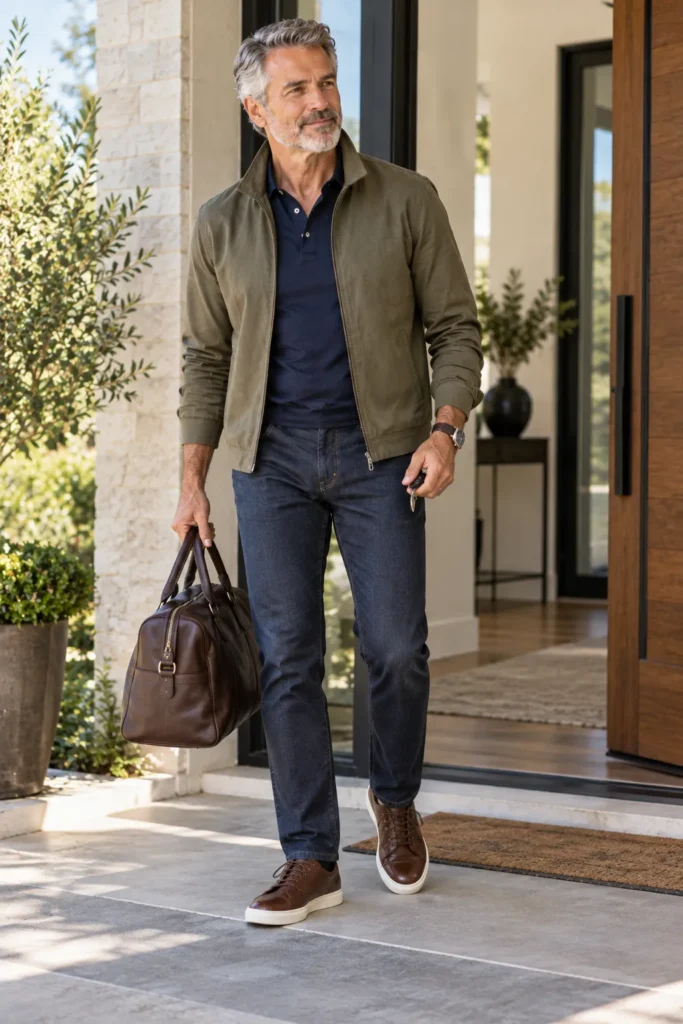
Your personal style should work for the life you live. If you spend most days running errands, meeting friends, or taking walks, focus on comfortable jeans, chinos, polo shirts, casual button-downs, and shoes that support your feet.
If your work or social life calls for formal clothing, include dress trousers, a blazer, and suitable shoes.
Make a short list of the places you visit most often. Then plan outfits for those settings instead of buying clothes for rare events. This helps you spend your money on items you will wear often.
It also makes getting dressed easier because you already know which combinations work.
Step 12: Check Every Item Before Buying It

Before you buy something new, check whether it fills a real gap in your wardrobe.
A shirt may look good on its own but be difficult to match with your trousers or jacket. Try it with clothes you already own, and check the fit in front of a mirror.
Set a budget before shopping and compare the quality of different items. Check the stitching, buttons, zippers, fabric, and care label.
For non-urgent purchases, wait 24 hours before making your final choice. This gives you time to decide whether you really need the item or simply like it at the moment.
Step 13: Create Five Complete Outfits From Your Existing Clothes
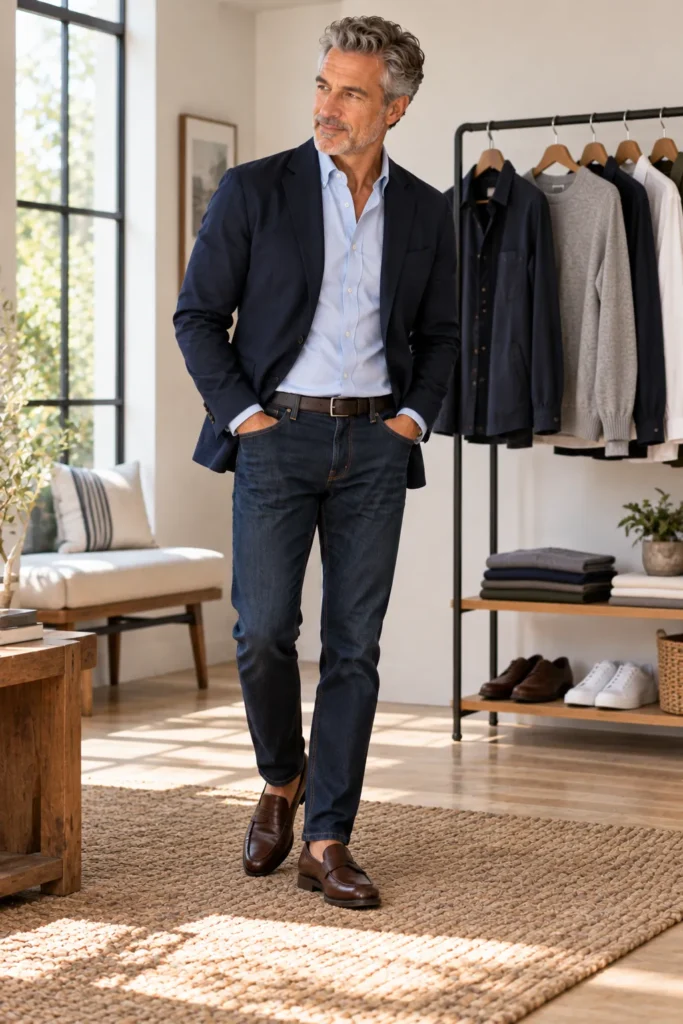
Once you know your favorite colors, fits, and clothing styles, start putting complete outfits together. You do not need to buy new clothes for this step. Use the shirts, trousers, jackets, and shoes you already own.
Choose five outfits for different days or activities. For example, wear a white shirt with dark jeans and brown shoes for a casual lunch. Pair a navy polo shirt with beige chinos for a relaxed afternoon.
For a smart-casual event, try a light blue button-down shirt, gray trousers, and a navy blazer.
Lay each outfit on your bed or hang the pieces together. Check that the colors work well and that each item fits comfortably. This simple task will help you get dressed faster during the week.
Step 14: Take Photos of Your Favorite Outfits

Taking photos of your outfits can help you see what works well together. You may notice that a shirt looks better tucked in, that your jacket needs a small adjustment, or that another pair of shoes makes the outfit feel more balanced.
Stand in front of a full-length mirror or ask someone to take a photo. Use natural light when possible, and wear the complete outfit, including shoes and accessories.
Save the photos in a folder on your phone. Give each photo a simple label, such as casual, work, dinner, or weekend.
After you have saved several outfits, compare them. Look for the combinations you feel most comfortable wearing.
These can become your go-to outfits for busy mornings or days when you do not want to spend much time choosing clothes.
Include your shirt, trousers, shoes, and any accessories.
Use labels such as weekend, casual, or dinner.
Keep the outfits that fit well and suit your routine.
Step 15: Improve Your Style One Step at a Time
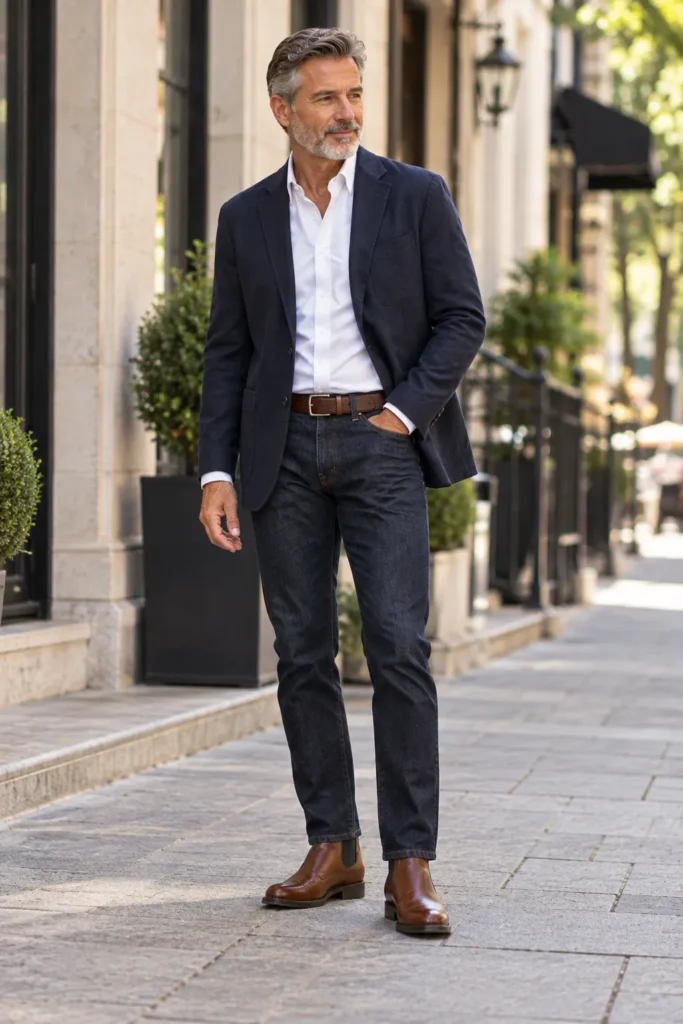
Building a personal style takes practice. You may find that some outfits work well right away, while others need a few changes.
Give yourself time to test different combinations and learn what feels right for your body, taste, and routine.
Review your wardrobe once a month. Check which clothes you wear often, which pieces stay unused, and whether anything needs repair. If you decide to buy something new, start with the biggest gap in your wardrobe.
You might need comfortable shoes, a well-fitting pair of trousers, or a jacket that works with several outfits.
Do not feel that you must follow every fashion trend. Your personal style should make getting dressed easier and help you feel comfortable in your clothes.
Small changes made over time can lead to a wardrobe that works much better for you.
Final Thoughts
Finding your personal style after 50 starts with learning what you already have and what you enjoy wearing. Review your wardrobe, choose a few style words, and save outfit ideas that match your taste. Then focus on colors, fit, useful basics, shoes, and small details that make your outfits feel complete.
You do not need to spend a lot of money to dress well. Start with your current clothes, create five outfits, and take photos of the combinations you like best. Make changes only when you find a real need.
The best personal style is one that works for your daily life and makes you feel comfortable. Take your time, try new combinations, and keep the pieces that suit you best.